What is most worrying about the Morrison government’s ‘technology not taxes’ slogan – for that’s all it will ever be – is that even ‘green technology’ won’t work without genuine commitment to implementation.
That means changing the way we do some things. And that, my friends, is night unspeakable in modern capitalist politics.
Frenzied consumption, travel and ‘lifestyle’ (of the wealthy) are the key drivers of the heavy extraction of resources and greenhouse gas emissions that have swollen our collective carbon footprint. You could ask the glutton to not have yet another helping, but by now he’s simply addicted. And feels entitled to his addiction.
We have a clear case in point in land transport. As we highlighted recently, electric cars alone won’t save the planet. After pondering that for a week or so, it’s even worse than I thought.
Currently the purchase price of an electric car is high, relative to fossil fuel vehicles. The running costs however are low, with the ‘fuel’ of electricity being much cheaper and maintenance costs generally lower as well.
High petrol prices are a disincentive to drive, and effectively encourage other modes of transport and indeed sharing. But once your fuel is incredibly cheap, it would be entirely consistent with human nature for electric car owners to drive a hell of a lot.
Bring the glutton a longer menu please!
Increased car use is bad news for everyone. Let’s start with roads. Even more congestion may prompt governments to go for populist, expensive and resource intensive programs of road building. In the midst of a housing crisis, the ridiculously-named Department of State Growth are still proposing to demolish a bunch of homes for a fifth lane on the Southern Outlet. Because cars.
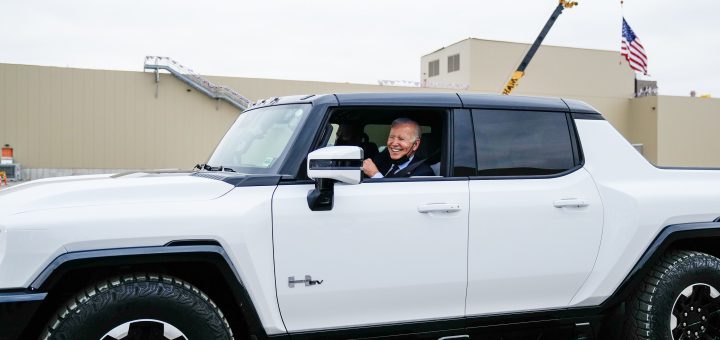
Then there’s road maintenance. Electric vehicles tend to be heavier than their fossil fuel counterparts, so the damage that they cause to roads is going to be greater. The new Hummer EV weighs over four metric tonnes, more than an Asian elephant. Even if our Joe Suburban drives an electric ‘compact’ car, is he going to regularly roll half a tonne of batteries a lazy kilometre to pick up a loaf of bread? You bet he is.
Air quality may improve slightly with lower tailpipe emissions as electrification is rolled out, but that’s not the whole story. Particulates from tyres and brakes cause a lot of respiratory illness and … yes, braking those heavy EVs is going to see more particulate pollution, particularly in urban environments.
And in the end, electric cars are still cars. We know they hog huge amounts of space, destroy liveability of cities and cause a huge toll of death and injury, despite all the safety improvements of recent decades.
There are other ways. We can support remote work, both lifestyle- and carbon-friendly. We can invest in better public transport. We need affordable and accessible taxis. We can support car-share schemes. We need to make walking and cycling easier options. We need to invest in the benefits of smaller, lighter vehicles; Australians have a terrible habit of buying the biggest car they might ever need, then using it for every single journey they make regardless of the circumstances.
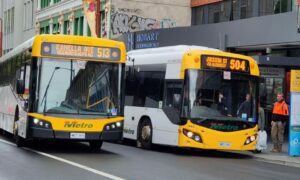
The better public transport might include battery- and hydrogen-powered buses, light rail and ferries. It also needs planning and land-use strategies to make it a priority, not an afterthought.
The need to grow walking and cycling’s share of transport journeys requires better and safer infrastructure. Thirty years after the establishment of the intercity cycleway in Hobart, there’s not a single decent spur into the many residential suburbs that lie either side of it. We also remain without key arterial cycle routes such as Hobart-Rosny, Rosny-Glenorchy, Kingston-Hobart, Sorell-Hobart, Brighton-Glenorchy.
I’ve been an electric bike enthusiast for several years. I’m not alone: electric bikes massively outsell electric cars, even here in Tasmania. For many, they provide a near-ideal combination of exercise, convenience and utility. What’s not to like? Cities and towns also benefit immensely from car traffic being replaced by low-impact, low-pollution, low-noise solutions like electric bikes.
So where are the various levels of government in all this? The federal government has recently done a grudging back-flip on opposing electric vehicles, but has not uttered a word of support for electric bikes. It’s big ticket agency, Infrastructure Australia, only looks at macho projects like ports and freeways, not cycling infrastructure.
The Tasmanian state government has spent hundreds of thousands of dollars on the roll-out of an electric vehicle charging network, yet not a dollar on electric bikes. Curiously they are now very supportive of e-scooters, so we’ll see how that pans out. Its wholly-owned transport operator, Metro, has expressed support for park and ride yet these facilities are only gradually appearing. Notoriously Metro has been lousy at supporting last-kilometre solutions that don’t involve cars. It’s one bike-carrying trial, on the Ferntree route, was quietly ended seven years ago. The long-promised underground bus mall for Hobart, that might have been a great location for end-of-trip facilities? Boo.
Local governments? I recently wrote to five councils suggesting that if they provided electric bike charging and secure lockup facilities, they would attract more visitors from Hobart. Ride out, lock up and leave the bike recharging, stretch your legs for a few hours and have a meal. Neither Brighton, Derwent Valley, Huon Valley nor Clarence (with reference to Richmond) bothered to reply. There was a reply of sorts from Sorell, something like “well, there’s a power point behind the church, that ought to do you.”
Against the backdrop of a climate crisis, and a groundswell in public support for real action, it’s a bit wan.
We don’t have to wait for the manna of ‘can do capitalism’, e-bikes are here now. There is already a huge range of good, reliable and affordable bikes for various purposes and niches: commuter, delivery, mountain, urban, road, cruiser, family/cargo and so on. As a concept, it ticks several must-address-transport-to-battle-climate-change boxes. Yet the support for e-bike uptake in Tasmania, particularly key urban areas, is non-existent.
Is it just us? Judging by initiatives elsewhere – Durham (North Carolina, USA) has a population only slightly larger than greater Hobart, a similar standard of living, and a comparable car-centric background – there’s a lot more we could be doing. Their integrated campaign focuses on selling the positives of active and sustainable transport: reduce congestion, improve your health, save money, improve air quality, save time.
Several cities in Europe already have share schemes of electric cargo bikes; businesses can access them for their immediate ‘around town’ light commercial needs, without needing to own a vehicle themselves. The auld continent has realised that there are some pretty big wins to be had in replacing short distance commercial trips by van and cars with light electric bicycles or tricycles. Think postie trikes, but for all kinds of urban commercial and utility uses.
We have plenty of good technologies right now that can be deployed to give us fast reductions in emissions plus all the other benefits. But only if we want to change, starting now.
Good luck with worshipping that fickle and distant false god of future technology.