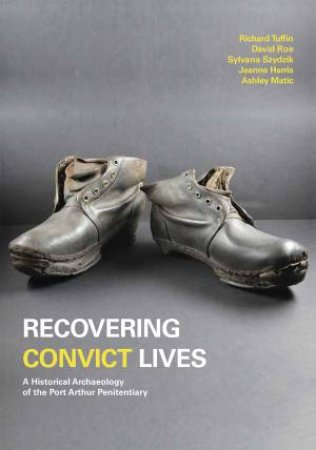
 The Port Arthur Historic Site has launched a new book: ‘Recovering Convict Lives: A Historical Archaeology of the Port Arthur Penitentiary‘ based on findings from the archaeology excavations over the last decade. As part of a series published by the Australasian Society for Historical Archaeology, this book is collaboratively done with University of New England. The official book launch was held where it all began, the Penitentiary in the World Heritage-listed Port Arthur Historic Site this morning at 10:00am.
The multi-award-winning Port Arthur Historic Site is one of Australia’s most visited historical sites and an iconic tourism attraction. Between 1830 and 1877, it served as a place of banishment, and its name became synonymous with the lash and backbreaking work.
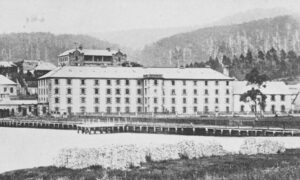
Perhaps the most widely recognised structure at Port Arthur is the Penitentiary, a prison-within-a-prison designed to hold 480 men. In 2013, archaeologists began uncovering its hidden stories, in one of the largest ever digs on an Australian convict site. Their findings offer fascinating insights into the day-to-day lives of Port Arthur convicts and the inner workings of the penal system. This new book, Recovering Convict Lives, makes these findings accessible to the public for the first time.
The penitentiary began life as a flour mill and on its completion in 1845 was hailed as “the largest edifice in the colony”. Built by skilled convict workers, it was designed to produce enough flour to feed the station’s growing population.
However, the project was an abject failure, and in less than a decade the building was repurposed as a penitentiary. Colonial administrators used the Penitentiary to implement new ideas about prison design, experimenting with different methods of punishment and confinement.
As Richard Tuffin, one of the authors, explains, through the remains of the building and the things convicts left behind – gambling tokens dropped between floorboards, a clay pipe discarded in a washroom – “we gain insight into previously unwritten histories, from the intensely personal to the bigger social, economic and political contexts.”
Recovering Convict Lives takes readers inside these hidden histories, revealing a side of Port Arthur that few have previously had a chance to see.