Few grape varieties have more polarising effects on consumers than Sauvignon Blanc.
Revered by some – and reviled by others – Bordeaux’s renowned white grape rarely draws blank stares. Even those who grow and make wine can be quick to pass judgement on the vine’s nobility.
Adelaide-born winemaker Larry McKenna didn’t beat about the gooseberry bush when I met him some years ago on his company’s home turf in Martinborough, New Zealand.
“All Sauvignon Blanc wines taste the same to me,” he said as we navigated a path through the Escarpment Vineyard’s Sauvignon-free developments on New Zealand’s North Island.
“Once you’ve had one, you might as well not have another.”
The bloke often referred to as New Zealand’s ‘Prince of Pinot Noir’ doesn’t dispute Sauvignon Blanc’s importance to the domestic and international successes of the industry he’s been a part of for the past 35 years. He simply doesn’t see the point in devoting time and energy to a variety that provides winemakers with so little intellectual challenge and also rewards consumers with so little interest and complexity.
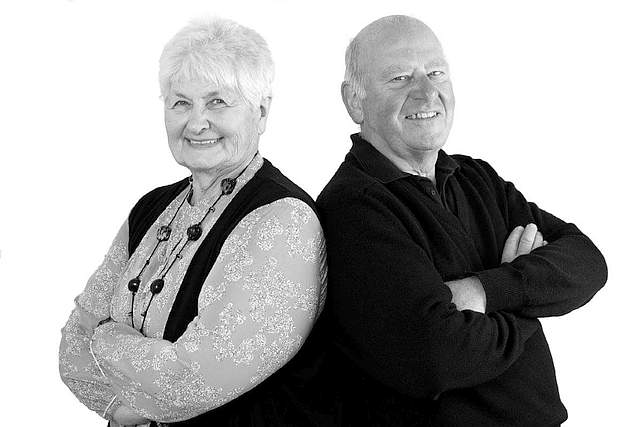
Domaine A founders Ruth and Peter Althaus. Image supplied.
But winemaker Peter Althaus had a different point of view.
When the former IBM executive emigrated to Tasmania with his wife Ruth and daughter Franzis in July 1990, Althaus had his own ideas about what he was going to do to develop the small, 16-year-old vineyard the couple had purchased from George and Priscilla Park in December 1989.
Back then, the emerging Tasmanian wine industry was a new frontier at the bottom of the world, awaiting exploration and development by those willing to put a vine stake or two in the ground. Not far short of turning 50 years of age, the Swiss couple were prepared to take chances in their adopted homeland.
Althaus’s first Domaine A Cabernet Sauvignon – crafted from a couple of barrels of 1990 Stoney Vineyard fruit – would become the forerunner of a whole portfolio of venerated Tasmanian red wines. Yet it was brought to life in a small garage on the Campania property. Its maker, meanwhile, held only a temporary tourist visa. The bureaucratic paperwork that opened the door to Australian residency would have to wait.
Sticking to the conventional was never going to be the Althaus recipe for success in their New World of wine. Well-established business and social connections to some of the best wine estates in Europe’s Old World encouraged them to believe that Stoney Vineyard’s ancient soils and cool maritime climate would enable them to carve out a special niche in the Australian domestic wine market.
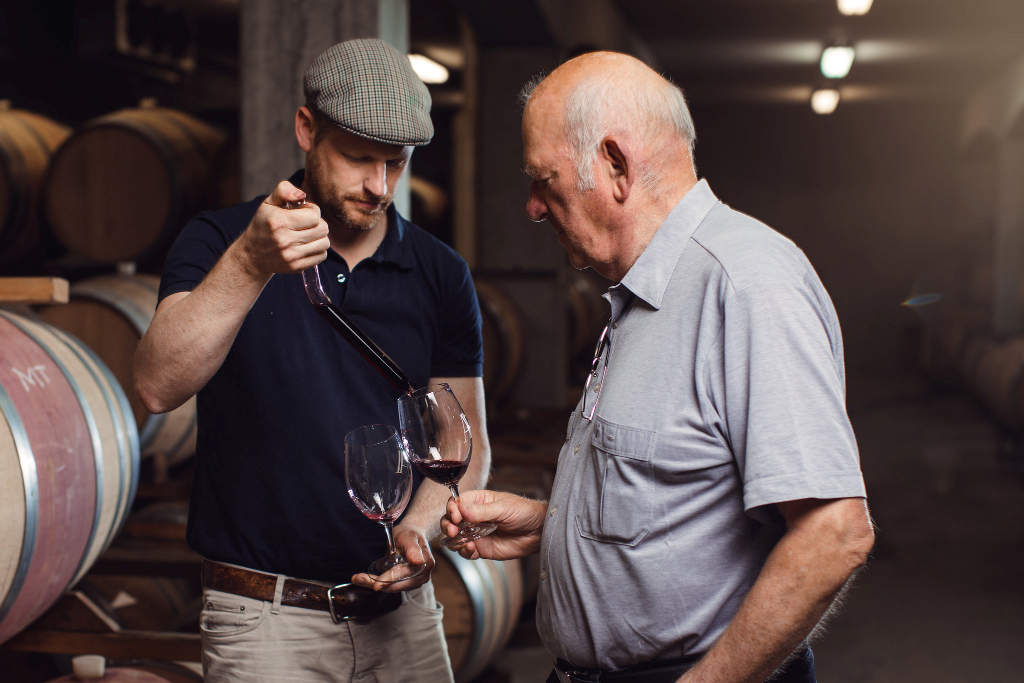
“Peter’s renowned Lady A – a white wine made from Sauvignon Blanc grown on the property – evolved as a consequence of his respect for the uniqueness of his vineyard and its capacity to break the mould that other sites maintained for the variety,” says the iconic wine’s incumbent maker, Conor van der Reest.
The deep-thinking former Canadian inherited the Domaine A mantle some three-and-a-half years ago.

Wine lover, entrepreneur and MONA-founder David Walsh purchased the Althaus family’s 11ha vineyard and winery in early 2018 upon hearing of the couple’s decision to move into retirement.
Walsh already owned St Matthias Vineyard in the Tamar Valley and the historic Moorilla vineyard planted 60 years earlier by industry pioneer Claudio Alcorso. The change of ownership saw van der Reest’s critical company role expand to oversight and management of winemaking on three disparate vineyard sites.
This month sees the official release of the 2018 Domaine A Lady A, a wine Althaus and the Moorilla winemaker created together during Tasmania’s record-setting harvest that year.
Van der Reest says it has come with mixed emotions. His 79-year-old winemaking sidekick died on January 2 this year, after Althaus suffered a serious head injury in an accidental fall sustained near his home in Switzerland.
The Domaine A founders had previously retired to the country of their birth.
Sadly, Ruth Althaus – the lady that had put the A in her family’s celebrated white wine – died in January 2019.
“Although I knew a lot about Peter as a winemaker, I knew little of him personally before we began working together during ownership transition,” van der Reest says.
“I’ve been lucky to live and work in the wine industry all over the world but I can’t think of anybody else who was as passionate as Peter was in all that he did. I admired him greatly for taking the chances he did during the past 30 years.
“It was really interesting to discuss the 2018 vintage with Peter, especially when deciding vineyard picking dates and the use of oak in the winery. I was pleased to discover that despite our different backgrounds and experiences, our ideas and decision-making were really quite similar.
“The last time I saw Peter was in late 2018. He was still on top of his game as we carried out the rigorous schedule of tasting, assessment and blending we had planned for the wines we’d created. I was really looking forward to continuing our work together as custodians of the iconic Domaine A brand.”
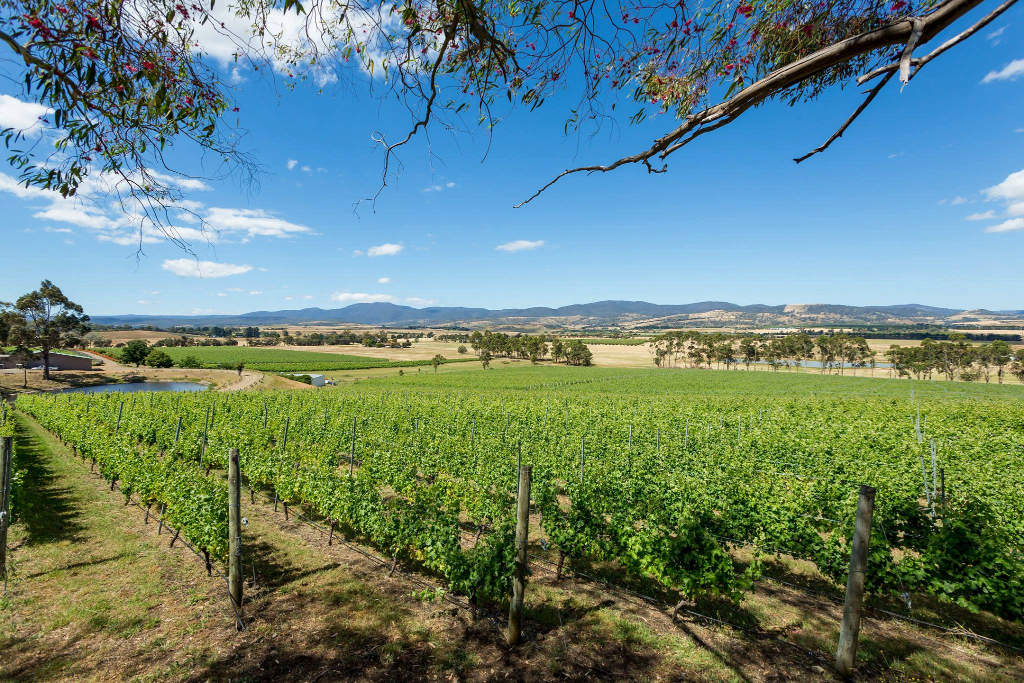
Domaine A Sauvignon Blanc vines (foreground). Image supplied.
More than a quarter of a century has passed since Althaus crafted his first 50 dozen bottles of barrel-fermented Sauvignon Blanc. The wine-wise Swiss couple were no fans of the pungent, grassy Sauvignon Blanc wines that made Marlborough virtually a household name during New Zealand’s boom times of the late 1990s and early 2000s.
“The first vintage of Lady A was made in secret as a present for Ruth in 1996,” van der Reest explains.
“It was inspired by the couple’s love for each other and by their shared love of Pavillon Blanc, the famous oaked Sauvignon Blanc wine produced by Bordeaux’s iconic Chateau Margaux. Peter’s interpretation of the style was a barrel-fermented wine, aged in 100 percent new oak for 12 months before then being released as a three-year-old. The fruit was sourced from a single hectare of Sauvignon Blanc planted at Stoney Vineyard back in 1991.”
Van der Reest says it’s one of life’s ironies that long before that initial glass of liquid indulgence first appeared in her wine glass, Ruth believed the variety had little future on the property. Indeed, she had been more than happy with the quality of the dry white wines Peter had created from his quirky blends of whole-bunched pressed Cabernet Franc, Cabernet Sauvignon, Sylvaner and Gewürztraminer.
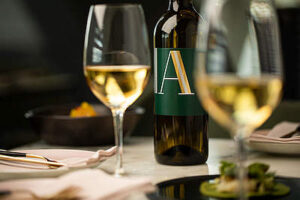 “It wasn’t long before respected winemaker, author and critic James Halliday was describing Lady A as ‘the finest oaked Sauvignon Blanc’ he’d ever tasted,” the Domaine A winemaker recalls.
“I think what Peter achieved here was briliant. The challenge for us now is not to simply replicate what he did each vintage. We’re not working to a recipe. Winemaking is a journey of discovery and even Peter changed what he did over time.
“His later wines now include a small but significant proportion of Semillon. That gives the wines real drive and concentration. The cooperage and use of French oak also differs from those early days.
“Our goal is to ensure the vineyard is able to fully express in its wines what Peter and Ruth first saw in their special site all those years ago. It’s a matter of maximising each wine’s potential because the story behind them is really quite exceptional.
“Doing anything else would be a disservice to Peter and Ruth and a disservice to this unique Tasmanian vineyard.”
Hobart’s Mark Smith wrote his first weekly wine column back in 1994. Now more than 1700 features and 25 years later, he continues to chart the successes of Tasmania’s small scale, cool climate wine industry with regular contributions to some of Australia’s leading industry publications.
PICK OF THE CROP
Mark gives you his honest opinions about the best wines available right now from Tasmania’s wine makers.
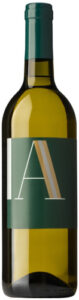
2018 Domaine A Lady A $66
A lover of Bordeaux reds, Peter Althaus developed a fondness for the small plot of Sauvignon Blanc he and Ruth grew on their Campania property. In later years, Semillon was added to the mix, providing a broader palette with which the Domaine A owner could demonstrate his artistry. The 2018 harvest ended a dry, high-yielding season in the Coal River Valley. What this wine loses in outright power and authority when compared with low-cropping vintages it makes up in elegance and finesse, thanks to some deft oak management along the way. There’s lovely, subtle stone and tropical fruit here; good length, too. Enjoy now – 5 years. www.domaine-a.com.au
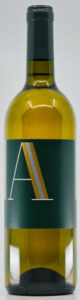
2016 Domaine A Lady A $N/A
The driest spring in the Coal River Valley followed by the warmest summer on record prompted a 2016 vintage that was close to three weeks ahead of what would be considered normal in this part of southern Tasmania. Long since sold out at the vineyard, this Lady A is a polarising wine. Many will love it for its rich, tropical, almost unctuous fruit and measured sweetness; others will find it too soft and cuddly and high in alcohol to partner the kinds of food we regularly choose to eat these days. Somewhere in its journey, the fruit moved from optimum to opulent ripeness, with vibrancy a casualty. I much prefer the 2018. www.domaine-a.com.au
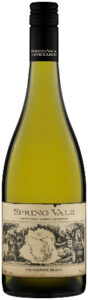
2021 Spring Vale Sauvignon Blanc $28
Spring Vale at Cranbrook is one of the east coast’s most popular cellar doors. This release of the vineyard’s ever popular SB is likely to have the variety’s most loyal fans hammering down the doors over summer. It’s a very user-friendly drop, with fresh ripe fruit, aided and abetted by pleasing texture and fresh natural acidity. Herbaceous notes and residual sugar are largely well hidden, ensuring the wine will add vibrancy and lift to practically any alfresco dining setting you can bring to the table. Available in 375ml and 750ml bottles. A practical, common sense, consumer-focused move. Good thinking. www.springvalewines.com
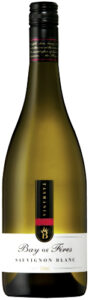
2020 Bay of Fires Sauvignon Blanc $47
The 2022 edition of the Halliday Wine Companion rated this wine as Tasmania’s best offering in the Sauvignon Blanc space. The team at Bay of Fires have somehow managed to successfully combine the variety’s ‘good cop’ and ‘bad cop’ personalities. It’s a dry, juicy, refreshing style with plenty of mint and green pea elements accompanied by riper, almost exotic fruit. Careful use of barrel fermentation had added pleasing texture and some welcome mid-palate weight without masking the wine’s inherent varietal characters. Partner it with sashimi or mild curries prepared from the east coast’s pristine, deep sea fisheries.
ADVERTISEMENT – ADVERTISEMENT – ADVERTISEMENT