Media release – Circular Head Coastal Awareness Network, 22 June 2021
RIGOROUS ASSESSMENT AND PLANNING REQUIRED FOR PROPOSED ENERGY PROJECTS IN TASMANIA
The Tasmanian Government needs to go back to the drawing board and come up with a smarter strategy for our renewable energy future, according to the Circular Head Coastal Awareness Network Inc.
Completely inappropriate large scale industries are currently being proposed for highly important rural sites in Tasmania, due to a lack of overall planning for renewable energy projects across the state, CHCAN says.
“At the moment we have a situation where any private landholder can offer up their land for an energy project,” said Kim Anderson, Convenor of CHCAN. “Private landholders and big companies should not be dictating where our energy infrastructure is placed,” Mrs Anderson said.
“Instead we say the State Government should be putting in place publicly agreed planning laws which identify appropriate areas – and importantly, specify no-go zones.
“We call on Premier Peter Gutwein and his Cabinet colleagues to make this important shift for the good of rural and regional Tasmanians.”
CHCAN Inc formed in opposition to The Robbins Island Wind Farm project. “We are a broad group of local people who have unified over the fact that this is very much the wrong project in the wrong spot,” Mrs Anderson said.
“And we are one, among a growing number of community groups around Tasmania, who are determined not to see their beautiful rural districts environmentally damaged by these large scale projects.”
The Robbins Island project could involve building up to 163 wind turbine towers, each of them up to 270 metres high on the island, a hybrid bridge/causeway 1.8 km long across the unique Robbins Passage waterway, and a 500 metre long wharf to bring the turbine components ashore.
“The towers on the island would be visible up 60 kilometres away, and we have great concerns about the extent of their visual impact and noise on communities around the Circular Head region,” Mrs Anderson said.
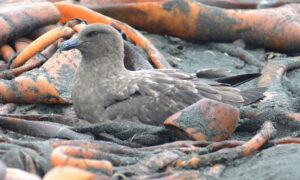
The Robbins Passage – Boullanger Bay waterways are vital for the largest flocks of migratory and resident shorebirds in Tasmania, and they are a key nursery for many fish species. The Tasmanian Devil population on Robbins Island is one of the remaining disease free populations in Tasmania. Aboriginal people have inhabited the area for many thousands of years, and today local families have a long tradition of using them for recreation.
“We do not oppose wind farms, but we believe that there needs to be a comprehensive plan for the state that must include no-go zones for these developments,” Mrs Anderson said.
“Proposing a wind farm at this scale, amid what is probably Tasmania’s most important wetland, is absurd“
“We do not want our coastline, wetland and farmland to become a guinea pig for the biggest industrial development in North-west Tasmania.”