This is a sequel to my 2020 short story, ‘Shellshocked’. If you have not read ‘Shellshocked’ yet, I strongly recommend that you do. You can find it here.
There’s an almighty boom, and the whole world shakes violently.
Shells!
Robert Freeman sits bolt upright in bed, panting and sweating. Once his eyes adjust to the darkness, he sees that he’s in his bedroom. Heavy rain is hitting the tin roof furiously. He looks out the window just in time to see a flash of lightning illuminate the night sky. Another boom shakes the cottage. Dogs bark in the distance.
It’s just a storm, Robert thinks to himself with relief. You’re okay.
He lays back down once his breathing returns to normal, pulling the sheets up to his neck. But he’s wide awake, so he just lays there and listens to the thunderstorm until it ends.
*
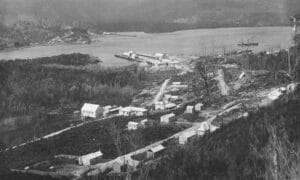
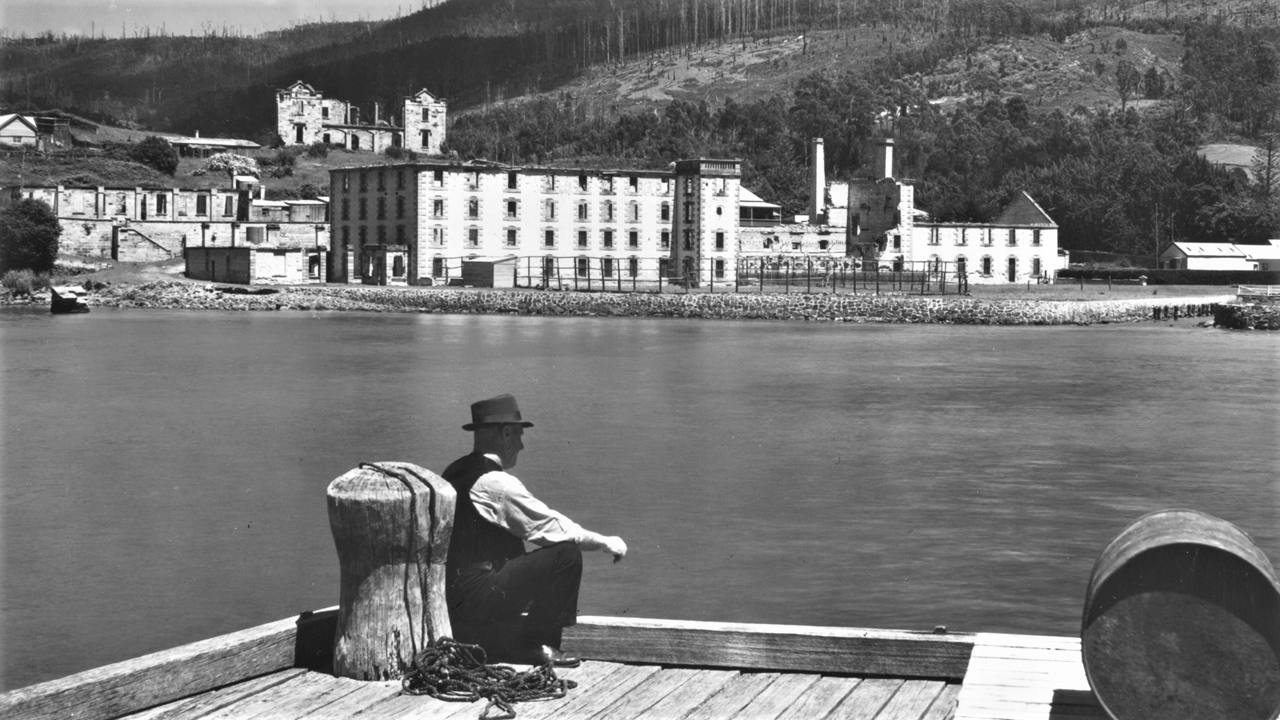
At eight o’clock the next morning, Robert puts on his prosthetic wooden leg (kindly made for him by one of the local carpenters) and walks out the front door of Willow Cottage. He takes a moment to breathe in the pleasant smell of clean air and wet earth. Then, he hobbles up to Carnarvon’s town hall, which served as the lunatic asylum when the town was the infamous Port Arthur prison settlement. The building originally had four wings radiating out from a central hall. A bushfire in 1895 damaged the asylum’s clock tower and north wing. The north wing was never re-built, but the clock tower was promptly repaired.
Since returning to Carnarvon in 1915, Robert has written articles for the local newspaper, The Carnarvon Clipper, established in 1914 by its editor, John Woodhull, a kind man who always works too hard. It operates out of a cluttered office in the town hall, which is complete with a Linotype machine. Published weekly, the paper has a handful of writers – including Robert – who cover local news and events. News from Hobart is sent via telegram.
As Robert enters the office, he sees John already sitting at his desk, smoking a cigarette and going through a stack of telegrams and papers. His black cat, Milton, is purring on his lap. John has a portly frame, and his auburn hair is thinning at the top of his scalp. Taking a drag from his cigarette, he looks up and sees Robert.
“Robert!” he says, exhaling smoke out his nostrils. “There you are, my boy. Quite a storm we had last night.”
“Certainly was. It woke me up.”
John picks up a telegram and holds it out to Robert. “This came in this morning,” he explains.
Robert takes the telegram from him and reads.
Eight nominations were received yesterday for the five vacant seats on the City Council, and consequently an election will be held on Thursday next, the polling places being the Mayor’s court-room, St. Matthias’ Sunday school, Sandy Bay, and the municipal chambers, New Town. Polling hours are from 9 a.m. till 6 p.m.
“Mind typing up a short article about that?” John asks.
“Certainly.”
“Good lad.”
Robert heads over to his desk and plants himself in the chair. He writes the first draft of the article on a piece of paper, proofreads it, and writes a second draft, which he hands to John.
“Excellent!” he says after reading it. “Short, concise, straight to the point. It’ll go in tomorrow’s edition.”
After Robert writes a few more articles – including one about a skeleton being found in the forest near Carnarvon with a pair of leg irons around its ankles – John says, “You’ve done well, my boy. You can have the rest of the day off.”
“Thanks, John. See you tomorrow?”
“Of course. Now be off!”
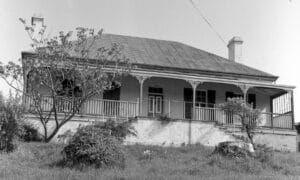
Robert heads back to Willow Cottage, which he’d renovated in 1916 with the kind help of a few local tradesmen. It’s now more comfortable than it was before, with new oak panelling and new mahogany furniture.
He heads inside and plonks himself at his desk. In front of him is the corona junior typewriter he purchased earlier this year. He’s been writing short stories on it, but hasn’t shown them to anyone, just letting them gather dust in his desk drawer. He doesn’t think they’re any good, but he keeps writing them to keep his mind off things. It’s also his way of making sense of the world.
This afternoon he feels like writing a compelling, flawlessly-written story.
He slides a page into the typewriter and starts writing the story, the incessant clacking of the typewriter filling the room. Labouring over every word and phrase, Robert writes and rewrites it until he’s satisfied with every line.
Six hours later, he pulls the last sheet out of the typewriter and thinks, This is perhaps the best story I’ve ever written.
He gathers up the pages and heads out to the kitchen, where his mother Abigail is making chunky pumpkin soup.
“What have you been up to?” she asks, looking up at him. “I heard you tapping away at the typewriter.”
“I’ve just finished writing a short story.”
She nods at the pages in his hand and asks, “Is that it there?”
Robert nods.
“Read it to me.”
Robert does so.
“That’s really good, Robert,” his mother says. “Very moving. Well-written, too.”
“You think so?”
“Absolutely. I think you should give it to John for publication in the Clipper. Go up and show it to him now. You’ve got nothing to lose.”
Robert makes his way back up to the town hall, his heart pounding against his ribs. Did his mother simply say the story was good because she felt obliged to, because he was her son? Was the story actually no good?
If it isn’t any good, why would she have suggested I show it to John? Robert thinks.
The Clipper’s office is thick with cigarette smoke when he walks in. John often chain-smokes without opening windows.
“Robert,” he says, looking up from a typed document. “Back, I see.”
“I wrote a short story this afternoon,” Robert explains, “and was wondering if you’d be interested in publishing it in the Clipper.”
John holds out his hand. “Give us a look,” he says.
Robert sits in his desk while John reads the story, making corrections with a red pencil. Milton leaps off a window sill and jumps onto John’s lap.
John eventually hands the pages back to Robert and says, “Make the edits I’ve suggested and I’ll happily publish it.”
“Thank you, John. I’ll make the edits tomorrow.”
“Good man. And think about another story for me. You’ve got talent.”
Overwhelmed with gratitude, Robert doesn’t know what to say. Pride swells up inside him.
“Thank you,” he says again.
“You’re welcome. Now off with you.”
*
The next morning, Robert makes the edits John suggested. He hands in the final manuscript during the afternoon.
It’s published in the next week’s edition of the Clipper, and positive reviews come flooding in immediately. Some people stop Robert in the street and tell him what a great tale it is. Others write in to the Clipper, explaining that it moved them greatly.
“You’ve done a good job, my boy,” John tells Robert.
“Thank you.”
John smiles and takes a drag from his cigarette. “Have you thought of another story yet?” he asks after a moment, tapping cigarette ash into an ashtray on his desk.
“I’ve got a few tucked away in my drawer at home.”
“I’d like to publish them.”
“They’re not any good.”
“Edit them. Make them good.”
*
Robert spends the next two months re-working his stories, which were subsequently published in the Clipper.
The day after the last one is published, John summons Robert to his desk.
“How would you like to write a serialised novel for the Clipper?” he asks.
“I’d love to!” Robert says. He’s always wanted to write a novel. “How many chapters do you want it to be?”
“I’ll leave that up to you. But I want you to hand in a typed chapter of decent quality every seven days.”
*
Despite always wanting to write a novel, Robert had never come up with an idea for one. So, later that day, he sits down at his desk with a blank piece of paper in front of him.
For some writers, story ideas flow into their minds like water in a river. Not so with Robert. For him, creative writing is a more deliberate process. When composing short stories, he always creates compelling plot ideas based on real-life events. Deciding to do the same for his novel, Robert jots down one-sentence summaries of events that he’s wanted to base a story on for a while. Once he’s done, he reads back over the summaries to find one that’s worthy of adapting into a novel. After much deliberation, he chooses one: Jack the Ripper.
He slides a fresh page into his typewriter and immediately starts writing.
*
Titled The Ripper of Carnarvon, Robert’s novel tells the story of Carnarvon’s clumsy detective, Aloysius Grant, trying to solve a series of brutal local murders seemingly perpetrated by the same person. Aloysius eventually manages to catch the killer, an unhinged psychopath whose pupils don’t dilate when they see something disturbing. To celebrate, Aloysius and members Carnarvon’s police force have a few drinks at the Tasman Villa bar. A recurring subplot throughout the novel is Aloysius’ attempts to move on from a troubled childhood.
The fact that Robert has to hand in a typewritten chapter of decent quality every seven days is crazy, but it has the advantage of not giving him much time to think about it. He often gets drunk while writing so that he can conjure up the scenes as clearly as if he witnessed them in real life. He always ends up collapsing from drunkenness and exhaustion at the end of each day, spending the night having alcohol-fuelled nightmares about the Great War. He’d wake up in the morning drenched in sweat and gasping for air.
*
The day after Robert finishes The Ripper of Carnarvon, he heads to the Tasman Villa bar to celebrate. Old Bill is chatting to the bartender when Robert enters.
“G’day, Robert!” he calls. “Come over and have a drink with an old fella.”
“How are you, Bill?” Robert asks, sitting down.
“I’m doing just fine. How’s The Ripper of Carnarvon coming?”
“I finished the last chapter this morning.”
Bill slaps Robert on the back and says, “Good on you. I look forward to reading it.”
“Thanks.”
Just as Robert orders a drink, one of his fellow Clipper writers, fifty-something Edward Downey, bursts into the bar.
“Ah, Robert, I’ve found you,” he says, wiping his lined forehead with a sleeve. “John wants to see you at the office.”
“What about?”
“He didn’t say. Just said it’s important.”
Robert tells the bartender to forget about the drink and makes his way over to the Clipper’s office.
“We received a telegram just before,” John says when Robert arrives. “A new publishing house has opened in Hobart. Ritchie and O’Brian, it’s called. It’ll obviously want stuff to publish. You should send them The Ripper of Carnarvon.”
“You think it’s good enough to be published in book form?”
“Of course I do! Wouldn’t have suggested it, otherwise.”
Gratification swells up inside Robert. He never expected someone to think his novel would be good enough to be published in book form. He never thought he’d become a published writer at all. He’s proud of how far he’s come.
“Thank you,” he says. “I’ll post the manuscript this afternoon.”
“Excellent.” John scribbles the address on a scrap piece of paper and hands it to Robert. “Make sure you also send them a telegram saying it’s on its way,” he adds.
“Will do.”
*
Dark clouds are slowly covering the sky as Robert makes his way up to the local post office. The unique, earthy smell associated with rain fills the air.
The post office is located in what used to be Port Arthur’s parsonage. It’s equipped with an electric telegraph machine, a telephone switchboard, and, of course, pigeon hole shelves that store letters and parcels.
The postmistress is an outgoing and observant woman named Elizabeth Walker. She always wears her dark hair in the pompadour style.
“Hello, Robert,” she says as he walks in.
“Hello, Elizabeth. How are you?”
“I’m very well, thank you. How are you?”
“In a state of disbelief.”
“Oh? Why’s that?”
“John has suggested I send The Ripper of Carnarvon to a publishing house that’s recently opened in Hobart.”
“How exciting!”
“Indeed.”
Elizabeth nods at the block of paper under Robert’s arm and asks, “Is that it there?”
“It is. Do you mind parcelling it up and sending it to them?”
“Not at all.”
“Thank you.” He passes her the scrap piece of paper with the address on it.
“Much obliged.”
“Can you also send them a telegram saying it’s on its way?”
“Of course.”
“Thanks, Elizabeth,” Robert says, handing her some money.
*
A storm hits at seven o’clock in the evening. Strong winds and heavy rain batter Willow Cottage. Thunder booms across the land, generating shock waves that spread out from the strike centre, stretching and diminishing. Lightning cuts zig-zags in the sky.
Shells! Robert keeps thinking. Bullets!
Images of barbed wire, craters, bloated corpses, trenches, dug-outs, and tents flash across his mind.
Stop it!
Falling to pieces, he bangs his head against the wall of his bedroom. Tears run down his face.
Stop it!
Robert holds his head and tries to stuff the images back into the depths of his mind, but he can’t. They keep coming, faster and faster. He sees the bullet flying into his right leg. He sees half the Sergeant’s head being blown away. All he can hear are screams, the boom of exploding shells, and the whistle of flying bullets.
Stop it!
The sounds and images don’t stop; they keep coming.
Robert opens his bedside table drawer, pulls out the pistol he inherited from his father, and pushes the barrel against his temple.
God forgive me!
He pulls the trigger. The wall is splattered with blood as the gunshot rings out. Robert drops to the floor like a puppet with the strings cut. A pool of blood forms under his broken head.
The storm, undeterred by Robert’s suicide, continues to batter Carnarvon.
*
Robert’s funeral service is held in the Carnarvon town hall a few days later. His mother sits in the front row, sobbing. Old Bill, who delivers the eulogy, is solemn. John, sitting at the back, keeps his head bowed for the duration of the service, wiping a tear away at one stage.
After the service ends, Robert’s body is taken to Hobart, where it is buried next to his father and grandparents at Cornelian Bay Cemetery.
Ritchie and O’Brian publishes The Ripper of Carnarvon in book form a month later. It is read by many people across Tasmania and receives a lot of positive reviews. One commentator describes it as ‘vividly-written’, ‘provocative’, and ‘complex’.
Unfortunately, though, the novel gradually falls into obscurity as more sensational crime novels are published.
If you or someone you know is suffering from mental illness, you can call Lifeline on 13 11 14, Beyond Blue on 1300 22 4636, or the Suicide Call Back Service on 1300 659 467. For immediate assistance, call 000.
Author’s note
This story is a work of fiction. Its characters never existed. Having said this, the events and places described in it draw on historical fact.
The Carnarvon Clipper is based on The Clipper, a weekly Labor-orientated newspaper that was published in Hobart, Tasmania, between 1893 and 1909.
I would like to thank Maggie Veness for providing me with valuable suggestions and feedback on this story.
Bibliography
For those interested, I found the following sources helpful during the writing of this story.
- Dodgson, Lindsay (2018), ‘You can spot psychopaths by looking at their eyes, new research suggests’, Insider, 19 December, viewed 12 January 2021.
- Gane, Jamie (2018), ‘How Does it Feel to Walk on a Prosthetic Leg?’, Jamie Gane, adaptive athlete, viewed 12 January 2021.
- Prepressure (2021), ‘The history of print from 1900 to 1949’, Prepressure, viewed 12 January 2021.
- Ritchie, Geoff (2015), ‘The Asylum, Port Arthur’, On The Convict Trail, viewed 12 January 2021.
- Ritchie, Geoff (2015), ‘The Parsonage, Port Arthur’, On The Convict Trail, viewed 12 January 2021.
- The Clipper (1893-1909), Trove, viewed 12 January 2021.
- The Editors of Encyclopaedia Britannica (2018), ‘Linotype’, Encyclopaedia Britannica, viewed 12 January 2021.
- The World (1920), ‘City Council Elections’, The World, 7 December, page 3, viewed online 12 January 2021.
About the author
Callum J. Jones studied English, History, and Journalism at the University of Tasmania. He has written fiction and non-fiction for The Tasmanian Times since 2018. He can be traced by the smell of fresh coffee.
Follow him on Twitter (@Callum_Jones_10) and Facebook (@callum.j.jones.creative).