John Whelan, one of Australia’s worst ever criminals, was of heavy build. Standing at 185cm, he was nicknamed ‘Rocky’ because he had crags and pockmarks on his face.
Biography
It’s not known when Whelan was born.
In 1827, he was found guilty of stealing at the Chester Quarter Sessions. He was sentenced to seven years transportation and put on the Marquis of Hastings, which arrived in Sydney on 31 July 1827.
Whelan quickly absconded and took to highway robbery. He was eventually captured and transported to Norfolk Island.
While serving time on Norfolk Island, Whelan committed at least forty offences and received 700 lashes. He and a group of other convicts also seized control of a brig called Governor Phillip. The Launceston Examiner published the following account of the event in 1886.
About the middle of the month of June, 1842; the Government brig Governor Philip arrived from Sydney with prisoners and stores for the island. There was a military guard on board, consisting of one sergeant and 12 rank and file of the 28th Regiment. The crew consisted of Captain Boyle, two males, and 14 seamen. Shortly after landing the mail and prisoners the weather became unsettled, the wind being strong from the S.W. prevented any communication with the settlement, consequently the brig ran round to the Cascades, which was the lee side of the island, and the only other landing place on Norfolk Island. On the 20th June one of the large launches was conveyed across the island – a distance of four miles – to the Cascades with a crew of 14 convicts.
The following are the names of some of them: Bartholomew Kelly, James Moss, John Woolfe, Thomas Whelan, and Flash “Gatty.” The others I have forgotten, but that is of no moment. I had better explain that it was part of Captain Maconochie’s system to dispense as much as possible with military supervision over the convicts, consequently no boat guard accompanied the boats to and from the vessel when discharging stores, etc. There being no anchorage, the mode of discharging cargo was in this way:– As soon as the brig saw the boat put off from the landing place, she stood in to pick her up, and then stood off the land, In the meantime the crew of the brig commenced loading the boat, the boat’s crew remaining in her not being allowed or had any occasion to board the vessel whilst at work.
When the boat was loaded the vessel stood in for the landing place as far as she safely could do, let go the boat, which pulled for the landing place (a huge flat rock, with sheer legs erected to assist the unloading). On the occasion of the seizure, the last boat put off to the brig and, according to the usual custom, the boat was secured to the brig, and her convict crew placed in the prison on board for the night. The brig then stood out to sea. On the following morning, the 21st June, at daybreak, whilst the vessel was standing in for the shore, one of the prisoners was let out to get the boat alongside, to make preparation for loading, after which the remainder of the boat’s crew were brought on deck and separated, half going to the port side, and the remainder to the starboard. At a preconcerted signal the sentry on each side of the vessel was seized by the two parties of convicts. The sentries resisted, but were soon disarmed of the pistols and cutlass and thrown over board. Having their heavy watch coats on they were unable to make any effort to save themselves; one was drowned and the other was saved, I will explain in what manner further on.
The noise on deck roused the soldiers, who were down in their berths. Sergeant Whitehead, seizing a musket, was going on deck to ascertain the cause when he was struck on the head with a hand-pike by one of the prisoners and rendered insensible. The prisoners immediately placed the grating over the hatch, covering it with the tarpaulin, placing one of the ship’s cannonades over the grating to secure it. The sailors were ordered into the forecastle, and were kept there by one of the prisoners, who was armed with the cutlass and pistol taken from one of the sentries. In the confusion that ensued, the sailor (Smith) at the wheel became frightened and ran forward, which consequently brought the brig up into the wind, the mutineers were compelled to let some of the sailors up to trim the sails and head the vessel away from the land. One of the prisoners (Moss) was also armed with a pistol and cutlass to keep sentry over the man at the wheel.
The upper deck of the brig was now in full possession of the convicts. It must not be supposed that those below were idle all this time. Captain Boyle, hearing the noise in his cabin, made an attempt to reach the deck, but found he was fastened down; he therefore took in the situation of affairs at once, and having a stand of arms in the cabin, he got on the cabin table and looking through the companion skylight saw the prisoner Moss standing (armed) sentry over the man at the wheel. He took a deliberate aim and shot Moss, who instantly fell on the deck dead, the bullet having entered below the under lip, and blowing nearly the half of his head away. The soldiers, with the assistance of Captain Boyle, broke through from the barracks into the cabin.
They now had a good opportunity of watching the prisoners and firing at them as they passed the companion skylight. Several of them were wounded in this manner and rendered powerless. It now became a matter of consideration among the surviving convicts whether the possession of the upper deck by them was of much benefit, as so many of their number were now dead and wounded. They, therefore, deserted the deck; some ran down the fore hatchway into the prison. One of them, Woolfe, ran up aloft, and in so doing he espied the sentry, who had been thrown overboard in the beginning of the fray, clinging to the gunwale of the boat towing astern. Apparently it occurred to Wolfe that rescuing the sentry from his perilous position would tend very much to mitigate his share in the seizure of the vessel. He came down from aloft, and dragged the soldier into the boat, who by this time had become quite exhausted. Woolfe then remained in the boat with the sentry until the vessel was retaken.
It was stated, but how true I cannot say, that the soldiers on regaining the deck were so exasperated that they deliberately shot dead some of the convicts who had been wounded. After securing the living prisoners, nine in number, several of whom were wounded – the remaining five having been shot dead – the brig stood in for the shore for the purpose of landing the dead. The whole occurrence, from the time of the seizure of the brig until she was retaken, did not exceed an hour. The prisoners employed at the landing place suspected that something unusual was taking place on board the brig as they could hear the firing. The boat was sent from the vessel to the landing place in charge of the military guard, conveying the dead, wounded, etc.
I cannot help recalling to memory a very harsh remark made by one of the convicts employed in landing. He was commonly known as the “Pieman,” and when he saw the dead body of Moss remarked, “Here’s Captain Maconochie’s fancy man with half his head off.” The dead were conveyed to the settlement for burial, and wounded to the hospital for treatment; Sergeant Whitehead to the military hospital, when it was found that he had sustained a slight fracture of the skull. The surviving convicts were sent to Sydney for trial at the Supreme Court. They were all sentenced to death; seven were executed in Sydney, and two reprieved, viz., Woolfe and Whelan, the former for saving the sentry, and the latter because he was not properly belonging to the boat’s crew, but was taking the place of another.
This seizure of the Governor Philip caused great excitement in the settlement at the time, and still further showed the fallacy of Captain Maconochie’s management of convicts on a penal settlement by his social system.
Whelan served a sentence of eighteen years on Norfolk Island for his part in the unsuccessful taking of the Governor Phillip.
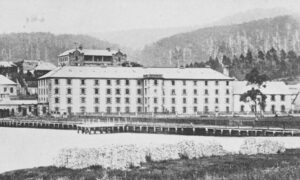
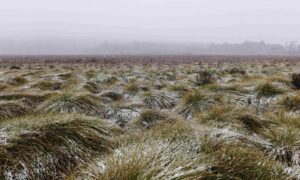
When Norfolk Island closed in 1854, he was sent to Hobart and assigned to a public works gang. He absconded into the rugged bushland of kunanyi / Mount Wellington shortly after, but was eventually captured and sent to Port Arthur. He escaped from Port Arthur on 28 January 1854 and evaded the dogs and soldiers at Eaglehawk Neck. He took to bushranging, remaining at large for twelve months. Living in a cave on kunanyi, Whelan targeted many isolated homesteads for plunder. He also ambushed and robbed individuals travelling alone through forests.
Whelan was eventually captured outside a Hobart bootmaker shop on 19 May 1855. He confessed to the murders of five men and was sentenced to death, hanging with three other men at Hobart Gaol shortly after.
Legacy
Whelan ranks alongside Alexander Pearce and Thomas Jeffries as one of the most infamous criminals in Australia’s colonial history.
His record lists a series of 112 offences. He’d been flogged twelve times. Various other punishments had been handed down to him during his servitude.
After Whelan died, a former accomplice of his said Whelan was delighted about being made a public spectacle at his hanging. This helped influence the abolition of public hangings in Tasmania.
Bibliography
- Flying Fish (1886) ‘The Seizure of the Government Brig Governor Philip by Convicts at Norfolk Island in 1842’, Argus, viewed 15 March 2021.
- ‘John “Rocky” Whelan (1800-1855) Bushranger’ (Our Tasmania).
- State Library of Queensland (2021), ‘John Whelan’, Convict Records, viewed 15 March 2021.
- Unknown author (1855) ‘Confession of “Rocky” Whelan’, The Courier, viewed 15 March 2021.