The role of the Governor
Queen Elizabeth II is constitutionally Tasmania’s head of state, but because she resides in the UK, her powers and duties are exercised by a ‘representative’ here. This representative is the Governor.
The Governor’s include:
- Safeguarding the Tasmanian constitution and the state’s democratic parliamentary system of government.
- Ensuring that there is an orderly and peaceful transition from one government to the next.
- Facilitating the work of the Parliament and the government of the state.
- Signing bills that have been passed by both Houses of Parliament so that they can become law.
- Exercising executive power, but only on the advice of ministers. The only exceptions to this are very unusual cases (see below).
- Presiding over meetings of the Executive Council, and ensuring that its processes are conducted regularly and lawfully.
- Dissolving Parliament and issuing writs (commands) for a general election.
- Appointing ministers and dismissing them if necessary.
- Appointing judges, royal commissioners, and other senior public servants.
- Issuing regulations and proclamations under existing laws.
- Exercising the prerogative of mercy. This means the Governor can issue pardons to prisoners, and can also remit fines and/or sentences imposed by the courts.
According to economist and writer Walter Bagehot, the Governor has “the right to be consulted, the right to encourage, the right to warn.” Accordingly, he/she holds regular meetings with the Premier to discuss state business, though the Governor has to remain officially neutral.
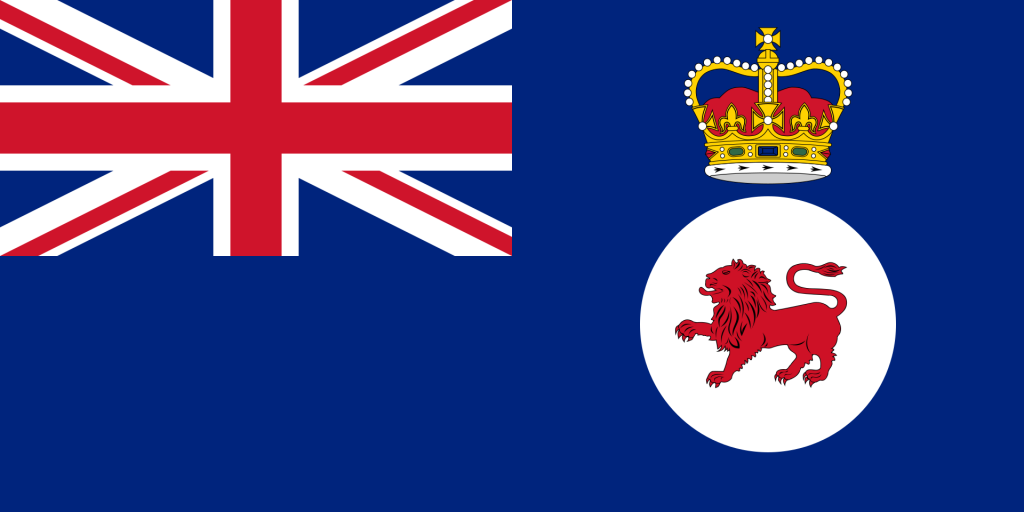
The flag of the Governor of Tasmania.
Past Governors
This list does not include Lieutenant-Governors (e.g. Sir George Arthur) and Commandants (e.g. Colonel David Collins).
-
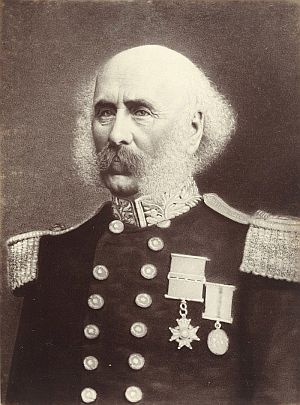
Thomas Browne.
Sir Henry Young (1855 to 1861). Young was an efficient civil servant when he ascended to the governorship in 1855. The first Governor to live in Government House, he withdrew from politics early in his term, content to just be a figurehead.
- Sir Thomas Browne (1861 to 1868). When Browne was appointed Governor of Tasmania in 1861, a week-long carnival was held in Hobart to welcome him. He helped make important changes to public education and the teaching of trades. A busy man, he also served as Governor of St Helena, Bermuda and New Zealand.
- Sir Charles Du Cane (1869 to 1874). During his term as Governor, Du Cane attended agricultural shows, visited mines, laid foundation stones, and opened the Launceston-Deloraine railway. Tasmania was also connected to Victoria via telegraph during his time in office.
- Sir Frederick Weld (1875 to 1880). Weld had served as Governor of Western Australia before being appointed Governor of Tasmania. He found Tasmania’s governorship less taxing than its Western Australian counterpart because Tasmania had achieved self-governance, whereas Western Australia had not. His only main duty was to preside over meetings of the Executive Council.
- Sir John Henry Lefroy (1880 to 1881). There’s not much to say about Lefroy’s governorship because it only lasted fourteen months.
- Sir George Strahan (1881 to 1886). Strahan was an able, far-sighted, and popular Governor, described as “generous in his time and charity”. He was interested in hospitals and other public institutions.
- Sir Robert Hamilton (1887 to 1892). As Governor, Hamilton promoted public works, encouraged people to invest British capital in Tasmania, and opened museums and art galleries. He also presided over the meeting of the Federal Council in Hobart in 1887. He founded the University of Tasmania and organised celebrations for the Queen Victoria’s golden jubilee, as well.
- Viscount Gormanston (1893 to 1900). During his term as Governor, Viscount Gormanston refused to give out knighthoods and was disappointed with the state’s lack of enthusiasm for Federation.
- Sir Arthur Havelock (1901 to 1904). Havelock suffered from ill health for the duration of his time as Governor. He resigned three years into his term and passed away in 1908.
- Sir Gerald Strickland (1904 to 1909). Strickland was the third Catholic to govern an Australian state.
- Sir Harry Barron (1909 to 1913). Barron served as a soldier before becoming Governor of Tasmania. After leaving office, he was appointed Governor of Western Australia.
- Sir William Ellison-Macartney (1913 to 1917). In April 1914, Ellison-Macartney agreed that a Labor ministry should formed because the Premier, a Liberal named Albert Solomon, lost a no-confidence motion. Ellison-Macartney said a state election should immediately follow, but the Labor ministry sought no dissolution of Parliament, despite pressure from all sides. Ellison-Macartney’s approval of a Labor ministry was eventually rejected by the Secretary of State.
- Sir Francis Newdegate (1917 to 1920). Although Newdegate found Tasmanians closed-minded at the beginning of his time as Governor, he eventually came to identify with them. He enjoyed a politically uneventful term.
- Sir William Allardyce (1920 to 1922). In 1921, Allardyce complained to the Colonial Secretary that his salary of £2,750 was inadequate. It was not increased, so Allardyce resigned because he could not afford to continue holding office.
- Sir James O’Grady (1924 to 1930). O’Grady was the first Labour politician to be appointed Governor. He advocated economic development during his term.
- Sir Ernest Clark (1933 to 1945). The governorship had been vacant for three years when Clark took office. The vacancy was caused by a lack of funds. Clark turned out to be a hard-working and efficient Governor. His term was extended three times.
- Sir Hugh Binney (1945 to 1951). As Governor, Binney often travelled the state extensively, attending numerous public functions. He had a modest and friendly demeanour.
- Sir Ronald Cross (1951 to 1958). Cross was a family man who was addicted to ‘fat cigarettes’. He liked to shoot and fish.
- Lord Rowallan (1959 to 1963). Genuinely affectionate of Tasmania, Lord Rowallan protected the state’s interests.
- Sir Charles Gairdner (1963 to 1968). Gairdner’s time as Governor was devoid of drama.
- Sir Edric Bastyan (1968 to 1973). Bastyan didn’t enjoy being Governor very much. He ended up relinquishing office in 1973. He also served, prior to Tasmania, as Governor of South Australia for seven years.
- Sir Stanley Burbury (1973 to 1982). Burbury was the first Tasmanian to serve as Governor.
- Sir James Plimsoll (1982 to 1987). Plimsoll was a popular Governor. He paid some of his official expenses out of his own pocket. His term was extended three times. He died in office in 1987.
- Sir Phillip Bennett (1987 to 1995). While serving as Governor, Bennett was called on to act as an adjudicator of the sensitive constitutional problem that followed the inconclusive 1989 state election.
- Sir Guy Green (1995 to 2003). Green was, according to The Age, “[a] tall, quietly spoken man with a mixture of aloofness and the common touch.” He spoke “with depth to many audiences…”
- Richard Butler (2003 to 2004). Butler caused controversy when he married his third wife the day after being sworn in as Governor and embarking on a three-week honeymoon overseas. He was also criticised during his term for making some political statements on issues of the day. He resigned in 2004. Former Australian Labor Party leader Mark Latham wrote in The Latham Diaries that Butler as Tasmania’s representative was drunk at the 2004 Danish royal wedding and ‘it cost him his job’.
- William Cox (2004 to 2008). Cox was the second Tasmanian to serve as Governor. He was first appointed Acting Governor after the sudden Butler resignation, and was then confirmed later in the year.
- Peter Underwood (2008 to 2014). In June 2014, Underwood had a kidney tumour removed. He returned to work shortly after, but suffered a setback and died in office in July.
Present Governor
- Professor Kate Warner (2014 to present). A Hobart-born lawyer, Warner is Tasmania’s first female governor. Her term ends on 21 June this year.
Bibliography
- ‘Young, Sir Henry Edward Fox (1803–1870)’ (Australian Dictionary of Biography).
- ‘Browne, Sir Thomas Gore (1807–1887)’ (Australian Dictionary of Biography).
- ‘Du Cane, Sir Charles (1825–1889)’ (Australian Dictionary of Biography).
- ‘Weld, Frederick Aloysius’ (Dictionary of New Zealand Biography).
- ‘Lefroy, Lieut.-General Sir John Henry’ (The Dictionary of Australasian Biography).
- ‘Strahan, Sir George Cumine (1838–1887)’ (Australian Dictionary of Biography).
- ‘Hamilton, Sir Robert George (1836–1895)’ (Australian Dictionary of Biography).
- ‘Gormanston, fourteenth Viscount (1837–1907)’ (Australian Dictionary of Biography).
- ‘Havelock, Sir Arthur Elibank (1844–1908)’ (Australian Dictionary of Biography).
- ‘Strickland, Sir Gerald (1861–1940)’ (Australian Dictionary of Biography).
- ‘Barron, Sir Harry (1847–1921)’ (Australian Dictionary of Biography).
- ‘Macartney, Sir William Grey (1852–1924)’ (Australian Dictionary of Biography).
- ‘Newdegate, Sir Francis Alexander Newdigate (1862–1936)’ (Australian Dictionary of Biography).
- ‘Allardyce, Sir William Lamond (1861–1930)’ (Australian Dictionary of Biography).
- ‘O’Grady, Sir James (1866–1934)’ (Australian Dictionary of Biography).
- ‘Clark, Sir Ernest (1864–1951)’ (Australian Dictionary of Biography).
- ‘Binney, Sir Thomas Hugh (1883–1953)’ (Australian Dictionary of Biography).
- ‘Rowallan, second Baron (1895–1977)’ (Australian Dictionary of Biography).
- ‘Gairdner, Sir Charles Henry (1898–1983)’ (Australian Dictionary of Biography).
- ‘Bastyan, Sir Edric Montague (1903–1980)’ (Australian Dictionary of Biography).
- ‘Plimsoll, Sir James (1917–1987)’ (Australian Dictionary of Biography).
- ‘Solomon, Albert Edgar (1876–1914)’ (Australian Dictionary of Biography).
- ‘Sir Guy a man of ‘grace and style’’ (The Age).
- ‘Furious Butler quits as governor’ (The Sydney Morning Herald).
- ‘New governor is a break with the past’ (The Age).
- ‘Peter Underwood, Tasmania’s Governor, dies aged 76 following kidney surgery’ (ABC News).
- ‘Kate Warner to be appointed first female Governor of Tasmania’ (ABC News).
- Tasmanian Government Gazette, Wednesday 10 December 2014.
- ‘Role of the Governor’ (Government House).
- ‘Previous Governors and Lieutenant-Governors of Tasmania’ (Government House).
- ‘Governors of Tasmania (including Lieutenant-Governors and Administrators)’ (The Parliament of Tasmania).