Bridgewater has been an important River Derwent crossing place since the earliest settlement days.
Rowing boats, punts and small sailing vessels were the means for travellers and goods to access the hinterland; their crossing journeys were somewhat eased following the completion of the convict-built causeway in 1836 as they only needed to negotiate a much shorter route from the end of the earthworks to the northern side.
Four bridges have spanned the deep water section of the river with the first road bridge completed in 1849. It and all subsequent bridges, except the current structure, were fitted with opening sections for river traffic. The first bridge’s opening span operated by rolling back and forth, but the 1874 railway and 1893 road/rail bridges contained swing spans with manual winding mechanisms to engage movement.
Between 1906 and 1907, it became necessary to shift the railway line from its 1874 bridge to the 1893 road bridge, which had been designed to take the railway in due course. The sharing of both road and rail lasted until the upgrading of the old railway bridge allowed road traffic to be permanently transferred to it.
It is interesting to note that the builders of the first railway bridge in 1874, the Tasmanian Main Line Railway Co., attempted to convince ship owners to fit their vessels with fold-down funnels and masts to obviate the need to have opening bridge spans. Happily and sensibly, the shipping companies rejected the notion out-right, otherwise the river may have been permanently closed north of Bridgewater to anything bigger than a run-about.
The final crossing link was a much more satisfactory and long-lasting structure that would maintain road and rail traffic comfortably for many years. The steel towers of its lift-span stand out as sentinels when viewed from any direction adjacent to Bridgewater. It was fully opened for land and river traffic in 1946. Its opening section was similar to that of the Hobart Floating Bridge, but such surviving designs are now quite rare.
About a dozen years ago, a substantial sum amounting to approximately $20m was injected into refurbishment of the current bridge. The work included replacement of cables that hold the lift-span in place. The exercise was expected to keep the bridge in excellent working condition for another 50 years. Although there have been occasional problems with the lift-span’s mechanism, the bridge has maintained reliable service for 74 years. It is not in danger of falling down nor is it expected to regularly misfunction.
The construction of the bridge was a test case in a new process of stress-relieving for steel fabrications. The success of that has provided the structure with a heritage listing in engineering processes and therefore, allows it to remain in situ for many years. That fact assisted the decision in earlier new bridge proposals to leave the bridge where it is as a conduit for local and Boyer Rd. traffic and, of course, to accommodate the railway. More recent proposals appear to disregard that decision.
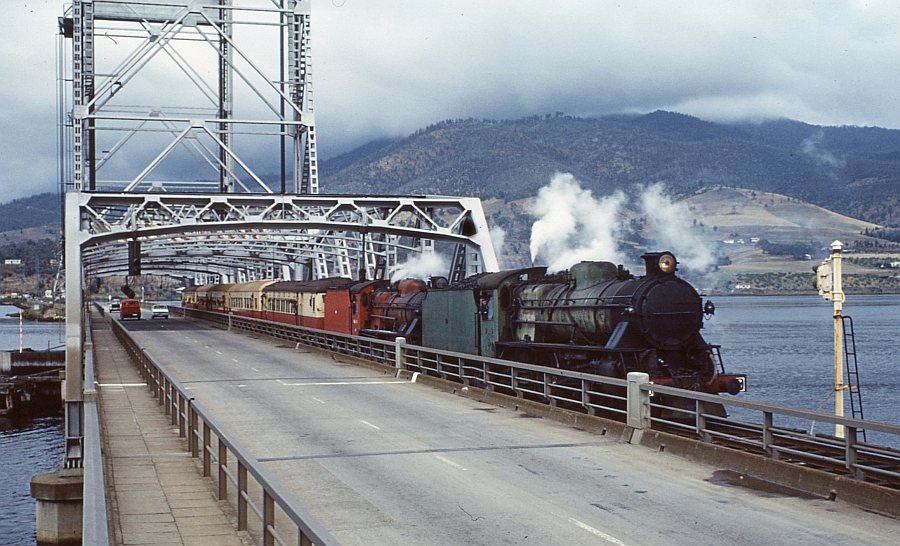
Until the railway line between Bridgewater Junction and Hobart closed to traffic in June 2014, trains had been crossing the river at that point since 1874, a period of 140 years.
The vision for integrated public transport between all forms of transit means within Hobart’s suburban and regional areas has been a long and seemingly ongoing debate with a fruitless outcome. The obvious and first choice for large mass-transit vehicles is trains. The connections with local buses, ferries, car and bicycle parks is the way to go. Industry, housing and community business centres will be attracted to those places and along the railway route. The idea is a no-brainer!
Trains provided for commuter transport would be best suited to tram-style (‘light-rail’) conveyances. Such modes can run along streets, up steep hills and around sharp curves and, if needed, across a new bridge.
But, there are other railway-oriented transport forms: conventional trains. Tourist and heritage (T&H) railways are big business anywhere in Australia and everywhere overseas. Tasmania seems to be the only place left off the map when it comes to T&H rail operations. There are four T&H operators in Tasmania that have been hindered from accessing the main rail network ever since they were stopped from so doing 15 years ago through no fault of their own.
Getting in and out of Hobart is seen as an important and essential part of the tourist market. One of the operators is based in Glenorchy and therefore could be isolated from going anywhere should a rail connection over the River Derwent be dispensed with. The market for round trips with trains, ferries and coaches from Hobart (e.g., cruise ship visitors) to places like Salmon Ponds and National Park was huge in years gone by and with value-added bits, is still clamoured for today.
The point that I now make is that conventional trains are not capable of doing things that ‘light rail’ vehicles can. They won’t climb steep bridges, such as the type proposed for Bridgewater, nor will they negotiate sharp curvature that would be required to gain access to any new bridge at Bridgewater, particularly on the Granton side. The answer to all of that is, naturally, to retain the current bridge in operating condition, even if it is only used for train services (‘light’ and conventional). Restricted periods for raising the lift-span for shipping can be booked by pre-arrangements and the cost of maintaining the bridge will pale into insignificance compared to constructing any railway line over any new bridge. Retaining the bridge also links in well with its heritage status.
The people who elect their government representatives must make efforts to convince them and their advisers that if the current bridge is not maintained and used in its designed capacity and is allowed to fall down or worse, be destroyed, Hobart will permanently lose its railway connection for potential tourist trade and also future freight requirements. Tasmania’s great railway history and colourful past will not just be delivered more coffin nails in preserving its heritage, but the intrepid dedication of the volunteers who look after the magnificent working steam and diesel locomotives and the grand carriages of a bygone era will have been worth nothing.
Tony Coen inherited a strong interest in railways and anything driven by steam ever since he could remember. It was no surprise that he took on a career in the Locomotive Department of Tasmanian Government Railways immediately on leaving school in 1966. After a long career in rail, he is now Vice President of Tasmanian Association of Tourist Railways Inc.
Featured image above: M 3, MA 4 at Bridgewater Junction on tour train Sat. 28 March 1970. Image © Tony Coen.
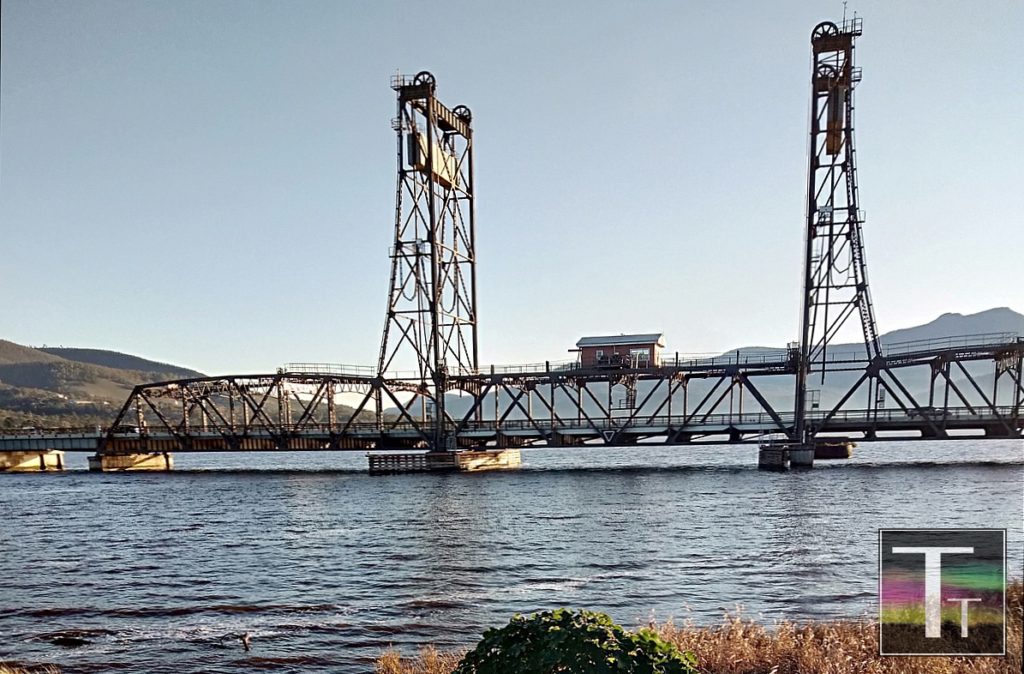
Bridgewater Bridge, July 2020.