Royal Tasman Bridges (‘Roy’) was a journalist and Tasmania’s most prolific author.
The volume of his work, as well as his knowledge of the times that he wrote about, makes his contribution to Australian literature substantial.
He was a small man who was shy, sensitive, lonely, and often ill. He suffered from nervous depression.
Early life
Bridges was born in Hobart on 23 March 1885. He was a descendant of Tasmanian pioneers.
He was educated at Queen’s College between 1894 and 1901, and graduated from the University of Tasmania in 1905 with a Bachelor of Arts degree.
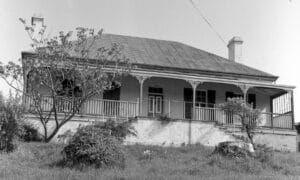
Bridges was interested in Tasmanian history, and was very attached to Wood’s Farm near Sorell, which had been in his mother’s family for over a century. He eventually inherited it in 1930 following the passing of his uncle.
Career
 His journalistic career began in 1904, when he joined the Tasmanian News as a cadet.
In 1907, he became junior reporter for The Mercury, which he later called ‘a rotten sweatrag’.
Bridges then worked for the Australian Star in Sydney between 1908 and 1909. He left the paper to write his first novel, The Barb of an Arrow, which was serialised during 1909.
In late-1909, he joined the Melbourne Age. He began as a court reporter, but was eventually promoted to chief parliamentary reporter.
Bridges left the Age in 1919 and worked as a full-time novelist for two years. He then re-joined the Age.
He left the Age once again in 1926 and moved to London, but became homesick and returned to Melbourne in 1927. He worked for the Herald for six months before joining the Age again. He left the newspaper yet again in 1928 due to nervous tension.
Roy Bridges moved to Wood’s Farm in 1930. It was here that he wrote 36 novels and 3 non-fiction books during the next 41 years. Some of them are about convictism and bushranging in Australia. A group of others are set in England. He elicited compassion for victims of the transportation system, and occasionally touched on religious intolerance. His more mature works include a group of six known as The Hobart-Richmond-Sorell Novels, which show his deep delight in the beauty of the Orielton valley that runs between Richmond and Sorell.
The sheer volume of his work makes his contribution to Australian and Tasmanian literature significant, although a common view is that his novels lack profundity.
Death and Legacy
Bridges died of cardio-vascular disease on 14 March 1952. He was buried at Sorell.
His final novel, Youth Triumphant, was posthumously serialised in the Saturday Evening Mercury during 1954.
Most of Bridges’ works are out of print, though a few reproductions have reappeared in recent years. If you’re lucky, you might find an original print edition in an antiquarian book store or even an op shop.
BELLS OF HEAVEN
A Short Story of Tasmania in the Days of Governor Denison, by Roy Bridges
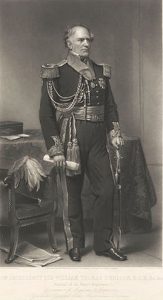
William Denison.
MOYLAN, alone in his office, opened the window so that he might hear clearly the triumphant voices of the bells of Holy Trinity on the hill.
He should have made holiday with the people, rejoicing in the abolition of transportation. He had borne his share with the members of the Anti-transportation League in denunciation of the iniquitous system. He had spoken with daring against Sir William Denison, the Home Government – the Throne itself. He had been ardent in advocacy of – in demand for – the reform.
Though conscious that his Inconsistency would further Frame’s design – sharpen Helen’s suspicions – he used the absence of his partner and his clerks as his pretext for his going to his office on the morning of the holiday. Uninterrupted, he might concentrate his mind on the Victorian correspondence; it had been heavier, month by month, with the development of the goldfields.
Helen said, smiling: “Surely Mr. Frame isn’t making holiday!”
“I hope he Is,” Moylan said, with fervour. “I want only to be alone.”
“As you told me,” she said, with faint satire. “Alone to concentrate your mind on your letters. Not, of course, on Mr.Frame.”
He glanced across the breakfast table at her. Her eyes were clear and challenging. He detected scorn in her gaze and on the red curl of her lips. He controlled his resentment – his hate – of Frame. Rising, he said: “I confess that Frame’s state of mind baffles my understanding. If I’d been sent out and had suffered as he must have suffered, and, even so, won back my place in life, I’d have wanted only to make an end of convictism. I’d have fought with the league and West, not on the side of
Government House, and Denison and his officers, and all the contemptible colonists who’ve battened on the system. You saw my difficulty in holding myself in check last night – even in my own house – listening to Frame…. I fear he plans deliberately to force on me a dissolution of our partnership and an end of our friendship.”
“Really, Mr. Moylan! And you’ve always been so noble to him!”
He had not seemed to heed, but he had heeded, the note of mockery. The fear persisted – of his wife’s interest in Henry Frame’s motive for opposing the abolition of transportation – his expressed disgust at the colony’s triumph, and the public rejoicings of this day. Frame, dining at Moylan’s house the night before, had talked contemptuously of the Home Government and its weakness, measured by the dogged strength of Sir William Denison through his Governorship. Helen had questioned … questioned … By Frame’s design!
“And you’ve always been so noble to him!”
Sneering. Hinting at reparation only – a sop to conscience that Moylan of his free will had followed his friend Frame on his transportation from England to the colony. Of his free will he had raised Frame – as assigned servant, as emancipist – from clerkship to partnership and to prosperity with his own prosperity. Not for nobility, splendour, even in his reparation to Frame, suffering for the embezzlement of which his fellow clerk George Moylan had pointed the means to him, to his own profit as to Henry Frame’s.
Frame had kept silent on Moylan’s guilt. The boy, selfless in sacrifice for his friend, had uttered in his defence no word to send Moylan to trial, conviction, and transportation The man, redeemed and prosperous through Moylan, would not have broken the silence, would not have hinted – hinted hatefully – but for Helen!
Love of Helen. Jealous hate of his friend. What other motive in his talk last night? What other motive in the emancipist’s open advocacy of the continuance of transportation, for its values to the colony, than questions, questions, suspicions, scandal against Moylan? For this jealous hate of him! Because of Helen, her beauty … rose and white! Helen!
Moylan did not heed the letters lying on his desk. He strove to counter his suspicions and fears with the satisfaction of the thought that transportation had ended. None again should suffer as Frame had suffered … as he might have suffered! He moved to the window and stood listening to the voices of the bells.
For his absorption in the glory of the bells, and their significance to him, he did not hear the opening of the door. Only with the sense, the fear, that someone was watching him, he turned – to face Frame, dark in the doorway. The cold gleam of Frame’s eyes seemed baleful to him, and his grim smile a mockery of him.
Controlling himself, he greeted him coolly: “Good morning, Frame. I did not hear you. I was listening to the bells. They sound triumphant to me. Bells of Heaven.”
“Only the bells!” Frame stepped into the room.
Frowning, Moylan raised his hand to the window: “They offend you! I’ll shut them out.”
Frame stood by the desk. He seemed idly to read the letters, turning the sheets from the files. “What should the bells mean to me, Moylan?”
“More to you than – .” Moylan hesitated on the taunt.
“Than to you?” Frame’s voice was toneless. “Yes!”
“I did not say so.”
“You would have said so.”
“I tell you – no!”
“I think – yes, Moylan.”
“My memory’s not so short. I meant that the meaning of the bells should have counted to you. I don’t understand your attitude toward the end of transportation. Your talk last night distressed us. We want you to be happier than you seem.”
“You – and Helen.”
“My wife and I – yes.”
“I wanted her to question, Moylan.”
Controlling still that surging hate of him, Moylan said slowly: “You want her to guess that you suffered in silence a punishment I should have shared? You want my wife to learn the truth of me? You want to break the silence after all these years!”
“I want her to guess.”
“Why, Frame? Why want to destroy me – now?”
“Can I destroy you, if I wish? Will anyone believe?”
“Yes. Helen!”
Frame dropped the papers and turned to the door, but halted and looked at Moylan standing by the window. “Yes, I want her to guess. Knowing her … how fine she is; how much she cared, believing in you! How noble you seemed to her – because of me, your friend, in my disgrace! You made yourself seem so to her – noble , and me seem so to her – degraded! All you were not – all I might not have been! You won her by your nobility to me! … She’s learning, as I learnt-too late-what you are, Moylan! She’s learning from yourself. Not from me! You’ve shown to her how much it means to you – the end of convictism. As though you’d been the emancipist – and I the free colonist. …Well, I leave you to listen to the bells. Bells of Heaven, didn’t you say, Moylan?”
- published in The Argus, Melbourne, 1 July 1939.