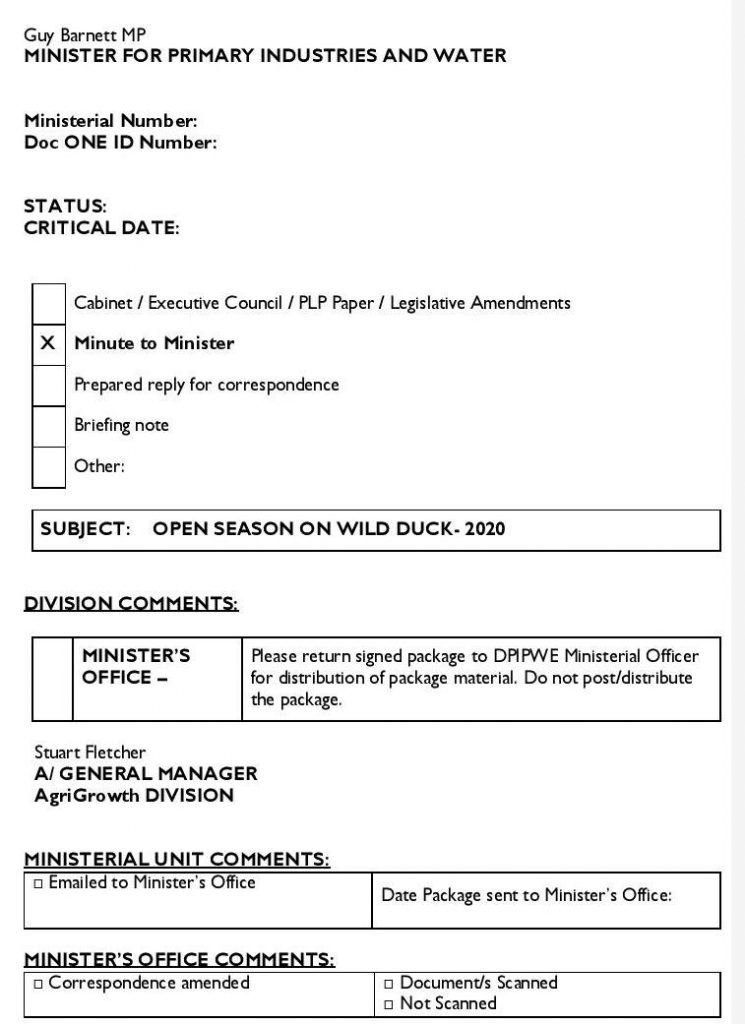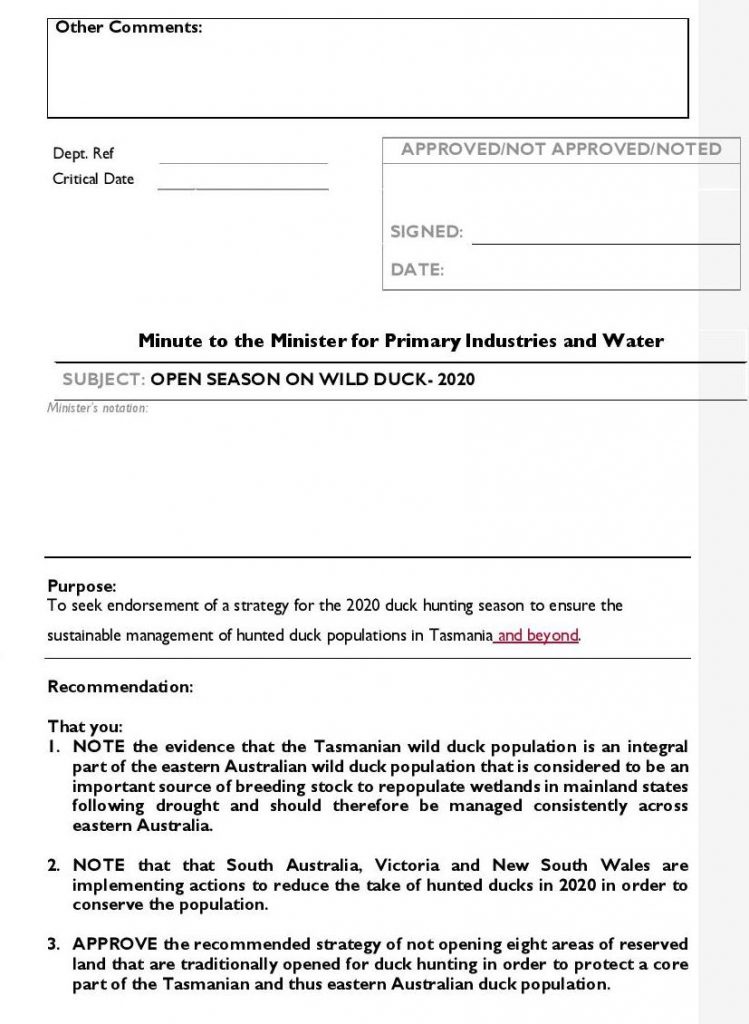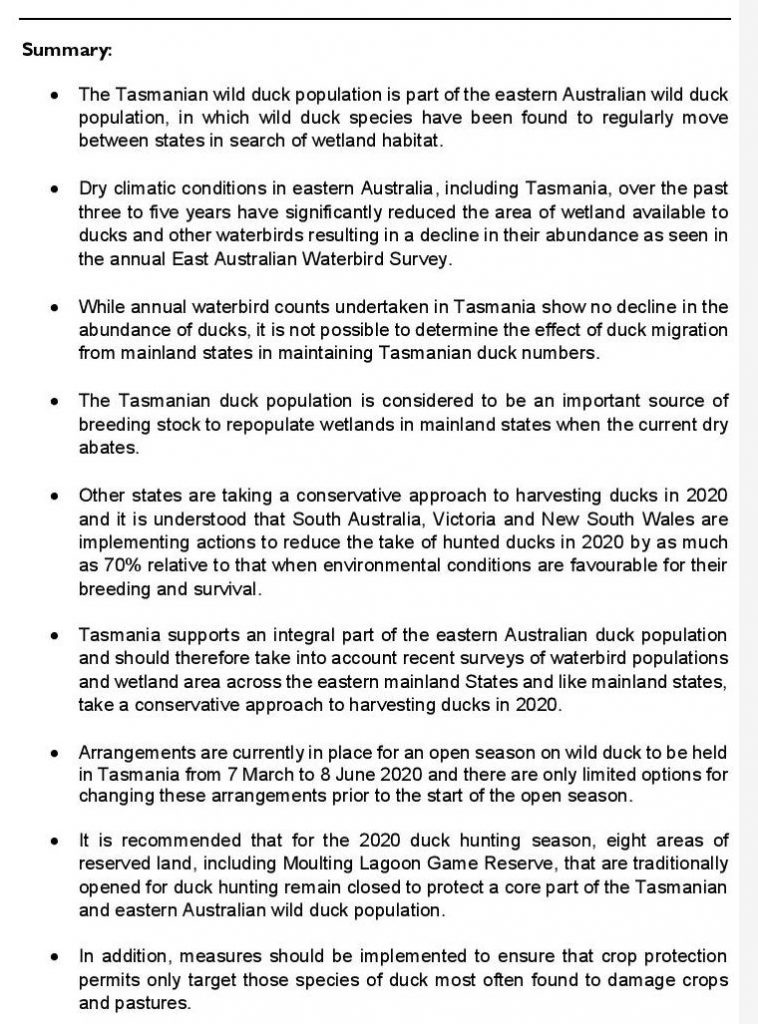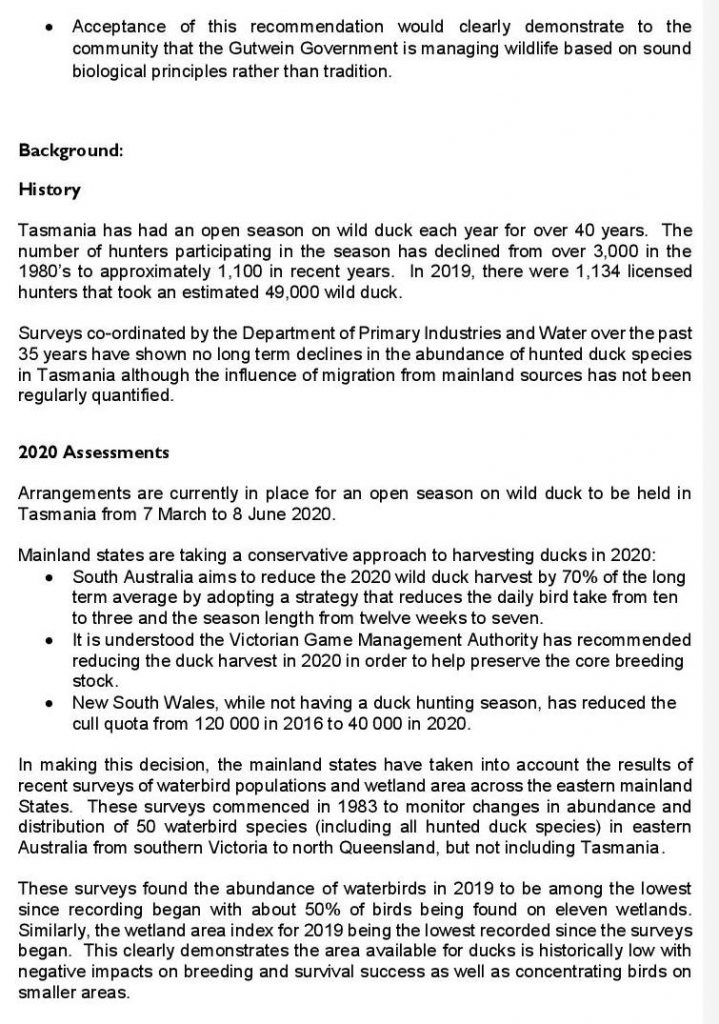

The 2020 duck hunting season should not have gone ahead after the relevant department advised against it, newly released right-to-information documents show. (See bottom of page for full documents)
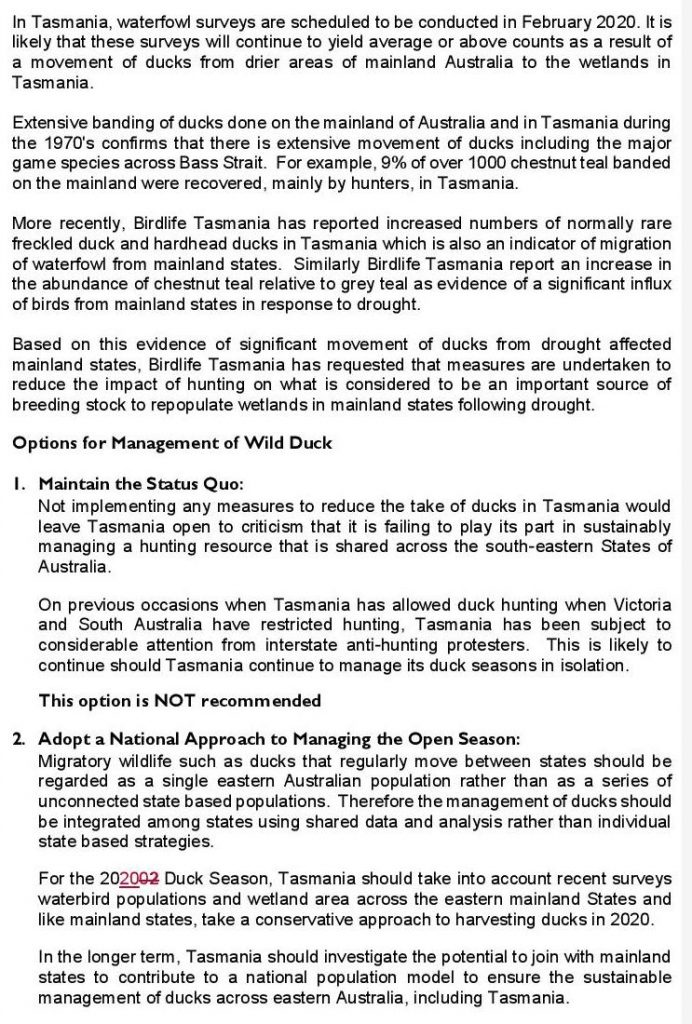
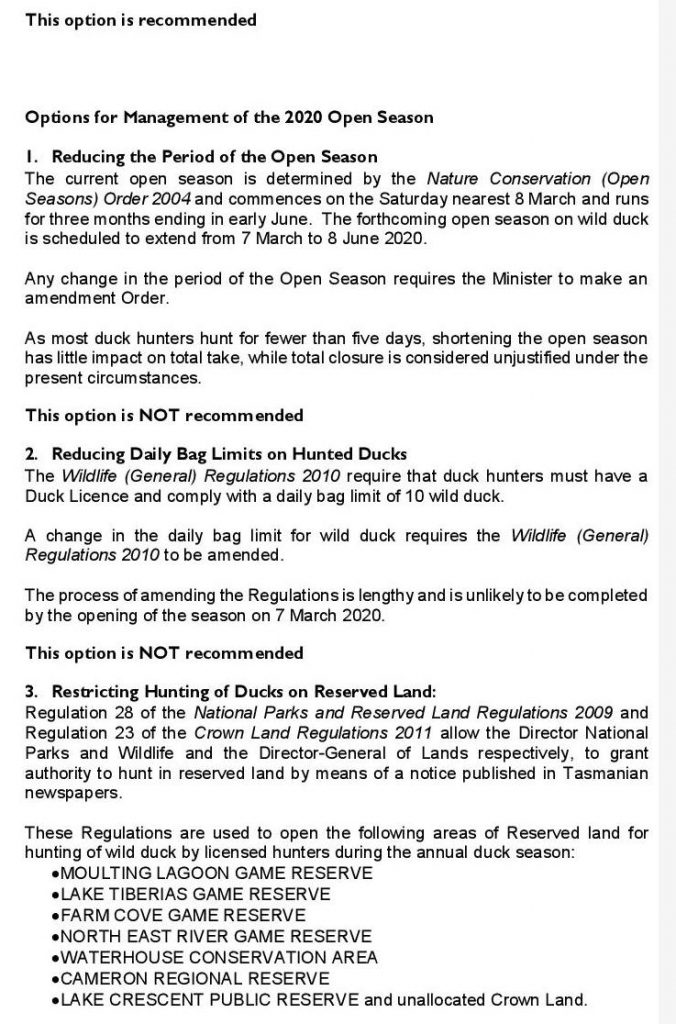
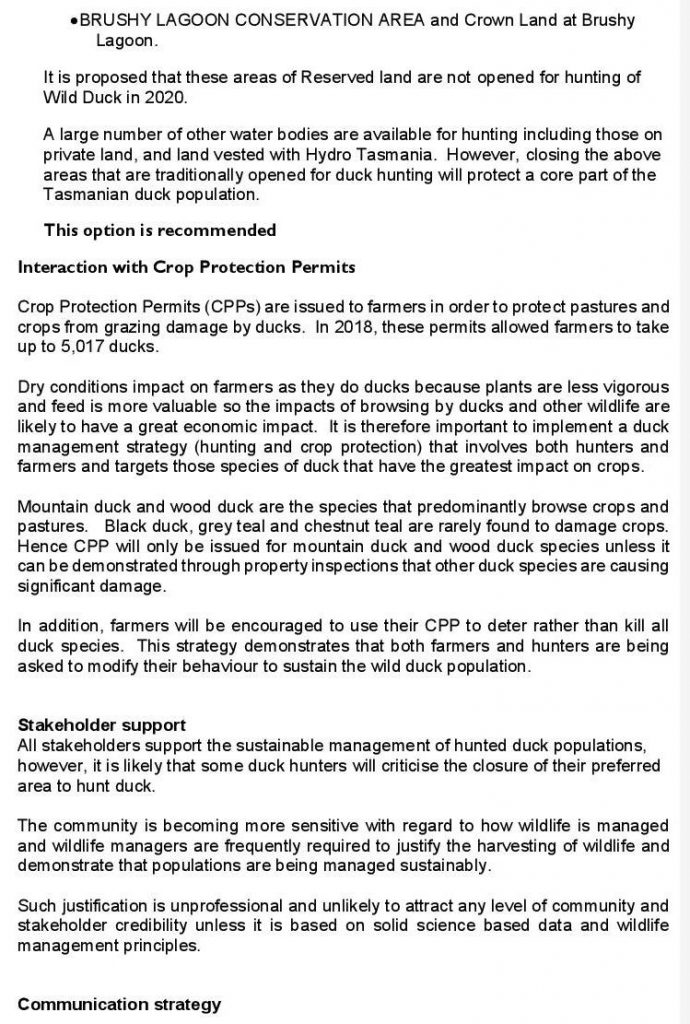
The draft Minute to the Minister for Primary Industries and Water, Guy Barnett, advised “not opening eight areas of reserved land that are traditionally opened for duck hunting in order to protect a core part of the Tasmanian and thus eastern Australian duck population.”
All eight areas were however subsequently approved for shooters.
“What we know now is that the Minister went ahead with the duck season against advice,” said Greens leader Cassy O’Connor. “That is a crime against nature.”
The minute contained advice from the experts in the Department (DPIPWE) that the waterfowl population on the mainland is crashing due to drought. “The Tasmanian duck population is considered to be an important source of breeding stock to repopulate wetlands in mainland states when the current dry abates,” it said.
“We don’t believe there’s justification for a duck shooting season under any circumstances,” said O’Connor. ‘But when your own Department is advising that a duck season is unsustainable government has a responsibility to reign it in.”
She accused the Minister’s mishandling of “pushing even troubled species of waterfowl to the brink.”
O’Connor also said the public should be able to see the advice from the department where they say they surveyed Tasmanian waterfowl populations earlier in the year. “We need to see the critical survey work the Department did; it’s hard to believe it exists until we actually see it.,” she said.
She found it hard to understand how the Minister hadn’t been aware of the minute. “It was a draft minute prepared for the Minister with very important advice and recommendations relating to the protection of waterfowl species,” she noted. “If the minister didn’t see this advice it would mean it was stopped somewhere up the chain, and that would be a political act, whether it happened inside the Department in upper management levels or in the minister’s office, if the minister hasn’t seen this advice it’s deliberate, and that’s concerning.”
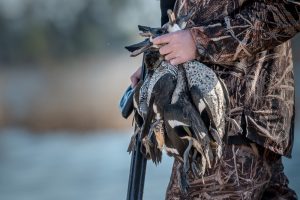 O’Connor called on Barnett to ‘listen to the science’. “He needs to listen to his own experts in the Department which have in my experience made the unprecedented move of recommending that their be curbs on this past duck shooting season and that advice was ignored, and we believe it was ignored for political reasons to pander to those 1134 licensed duck shooters that in the last season killed around 50,000 birds. Minister Barnett has a responsibility to protect native species. He’s failed in that … we believe the Premier should call him to account.”
The Greens’ leader put the issue in the context of the government pandering to shooters. “The advisory board for game in Tasmania is totally stacked with shooters and farmers, there isn’t an ecologist on it,” observed O’Connor. “We’ve got a government department that protects a feral animal solely for the pleasure of shooters. We’ve got feral deer breeding up in our landscape damaging farming properties and the wilderness, and that breeding is as a direct result of government policy.”
Refuge
“It’s utterly indefensible,” said Dr Eric Woehler, Convenor of Birdlife Tasmania. “There’s no way a government can say with one breath ‘we’re sustainably managing our waterfowl populations’ and then allow birds to be shot at a time of catastrophic drought on the mainland.”
“We know from the influx of birds that Tasmania serves as an important climate refuge for waterfowl in Australia. So by these birds coming to Tasmania to survive the catastrophic mainland drought, and then being shot here and not being able to return to the mainland, means that the duck hunting season in Tasmania has had an effect on waterfowl populations in south-eastern Australia.”
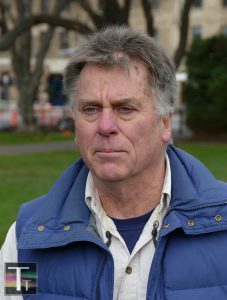
Dr Eric Woehler.
He said the minuted advice from the department reinforced all the claims that Birdlife Tasmania over the past few years about the role of Tasmania as a refuge. “We see rare species coming here to escape the drought. You can’t separate out the Tasmanian birds from mainland birds.”
Dr Woehler is aware of problems with Tasmanian government count each year which only takes place at selected wetlands. “How representative that survey is of the population as a whole is unknown,” he said. The government is known to have been collecting data on duck population for decades, those data are not in the public domain. “So they’re not subject to independent verification and scrutiny of the data,” he argued. “We need to see those data released so that independent experts, population ecologists, can look at and make the determination of whether the species are being managed sustainably or not.”
Another problem with the reliability of data collection, usually undertaken by DPIPWE staff, volunteers, farmers and shooters themselves. “Clearly the farmers and shooters are compromised in terms of a conflict of interest,” he said.
Lobby group Animals Tasmania (AT) said they were ‘very concerned’ that expert advice to the the Environment Minister about native ducks was ignored ahead of the 2020 duck shooting season. “Recent conditions for native waterbirds have been some of the worst seen in decades,” said spokesperson Chris Simcox.
“It is time the Minister responded to important expert advice within his own department and treated the whole of Tasmania as a sanctuary for waterbirds escaping drought on the mainland. Better still we would hope that by now the Minister would recognise changing public sentiment and stop the shooting altogether.”