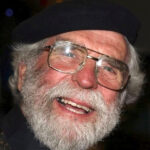

Ian Paul, from the council’s website here, where you can see all the other councillors
Huon Valley Guessing Games Mayor Robert Armstrong’s “independent” and “non-political” power bloc — sometimes known as the Huon Valley Team, sometimes as the Futures Team, sometimes as something else — voted strictly along party lines at Wednesday night’s (August 29) “special meeting” of the Huon Valley Council.
Three main items were on the agenda:
— The installation of Ian Paul (defeated at the October 2011 election) as the councillor replacement for Deputy Mayor Gary Doyle, who died in early August. Paul got the job on a count-back of votes cast at last year’s election.)
— Election of a deputy mayor.
— Election by councillors of a replacement for Doyle* on the HVC governance committee, which comprises the mayor and three other councillors.
The first item was a formality. The second and third saw the Armstrong team at work at its ruthless, party-machine worst.
Presented with an opportunity to demonstrate that they really do work for the betterment of the people of the Huon Valley — and do believe in a democratic process characterised by a sensitivity to the interests of a minority that is subject to the rule of the majority — the mayor’s men had no truck with such happy-families stuff. Rather, they voted to maintain their vice-like grip on all council decision-making.
The first 6-3 vote made Cr Mike Wilson deputy mayor (a job he had been unable to win via a people’s vote). The second, identical vote elevated Councillor Rohan Gudden to the governance committee.
Neither the mayor nor General Manager Glenn Doyle felt moved to advise the public gallery’s two occupants of the identities of the nominees for the governance committee. (On reflection, that was, perhaps, all the gallery deserves: apathy towards local government is such that it is usually possible to count public attendees at council meetings on one’s fingers, often even of only one hand.)
The nominees’ names for deputy mayor were announced. Competing with Wilson was Cr Peter Pepper, who returned to council last October (after a long absence), ousting Paul in the process. Pepper’s return meant the Armstrong bloc’s vote fell to six, still a comfortable majority in a nine-member council.
Both ballots were “secret”, but I’ll lay odds that, in each, they went this way: Armstrong, Tony Duggan, Gudden, Bruce Heron, Paul and Wilson on one side; Pepper, Liz Smith and Rosalie Woodruff on the other.
The declaration of the governance committee ballot revealed Gudden as victor. But still no mention was made of whom he had defeated. Only later, after the meeting and outside the council chamber, did Woodruff say she was the other nominee.
Another interesting aspect of the meeting — and a classic demonstration of Armstrong’s system of “guided democracy” — was that the mayor invited none of the nominees to explain why they felt themselves qualified, either for the job of deputy mayor or as a member of the governance committee. Armstrong is not renowned for his chairmanship skills, but he would not have wanted a verbal contest between the nominees to have revealed that, judged on skills and experience, it would have been a no-contest.
It would have been very interesting to see the two youngest members of council — Woodruff, late 40s, and Gudden, mid-20s — explaining to their peers why they thought they were suited for election to the council’s most influential committee.
Woodruff, an internationally known epidemiologist who has worked on the impacts of climate change for the past decade, has been a stickler for proper process since she was elected to council in late 2009; and she is never reluctant, “through you, Mr Mayor”, to speak her mind around the council table. (Woodruff arrived at Wednesday’s meeting after being launched in Hobart as the Australian Greens candidate for the federal seat of Franklin.)
Gudden remains much more difficult to assess. In his three years on council (he was elected at the same time as Woodruff), he has spoken, and only briefly, at open council meetings probably fewer times than I have fingers and toes. Consequently, his attributes remain a fairly guarded secret from those who do not personally know him.
What Wednesday’s meeting boiled down to is that the mayor and his mates — doggedly clinging to all the old ways that have brought the valley and Tasmania to its present disastrous state of economic and social dysfunction — predictably chose to vote for more of the same.
There was no olive branch in a spirit of council harmony; or of a willingness to work towards narrowing of the brutal and damaging gulf that has characterised this excuse for a council since it was established in 1993.
On Wednesday evening it was politics as usual, bugger the need for a council united in its determination to find a way for it to play a constructive role in a process that could give the valley a new and optimistic direction.
Now, in addition to a real-estate salesman as mayor, the Huon Valley has a tourism developer as deputy mayor. (I’ve always believed journalists, real estate sellers and developers should not stand for election to any local government body.)
If nominees had been given a chance to speak, it would have been most interesting to hear deputy-mayoral candidate Peter Pepper reciting his qualifications. Pepper, in his first year on council, has brought a breath of fresh air and a sharp intellect to debate.
Once, in the council chamber, he did describe forest activists as “terrorists”, but on other topics he comes across — as do Smith and Woodruff — as moderate and well aware that the Huon Valley must change its ways if it is to survive as a viable economic entity in a wider and rapidly changing world.
I don’t recall an original, truly constructive idea emanating from the Armstrong team in the years I have been attending council meetings. And, in that respect, the future looks bleak.
Wednesday was not the first time strange bedfellows Forestry Tasmania liaison officer Pepper and Greens councillors Smith and Woodruff have voted together. Maybe they have done so on occasions because they are all eminently sensible, and alert to the real long-term needs of the people of the valley. — Bob Hawkins
* I got this wrong in a note to ‘Too little, too far away’ — http://oldtt.pixelkey.biz/index.php?/article/too-little-too-far-away/. I incorrectly thought that the deputy mayor’s position would be decided on an election vote count-back.
Bob Hawkins is a close friend of both Greens on the Huon Valley Council.