Margie Jenkin
Rabbits and rats are a severe threat to World Heritage values on Macquarie Island, as research reveals widespread damage to terrestrial ecosystems. This includes destruction of vegetation (habitat for threatened albatross species and other seabirds) and catastrophic erosion.
First introduced in approximately 1880, rabbits provided dietary diversity for sealing gangs. But of course they ‘breed like rabbits’ and the effect on the tussock grassland ecosystem is extreme.
Dr Jenny Scott from the University of Tasmania is one of a large number of researchers working on Macquarie Island. ‘There is a horrific problem now with rabbit grazing’ Dr Scott explains. ‘I have been working on Macquarie for over twenty five years examining vegetation changes through both natural processes and the presence of rabbits. Recent changes are shocking.’
With a number of unusually dry seasons and temperature increases, rabbits are now breeding year round. Introductions of the myxoma virus in the late 1970s caused a massive decrease in rabbit numbers however the impact of this control measure has now been greatly reduced and the virus is no longer available. The successful cat eradication program has also influenced rabbit numbers and the population explosion is devastating the island’s slopes.
‘New erosion damage is evident’ Dr Scott reports ‘and this will compromise the Island’s geoconservation and aesthetic values. The damage is island-wide, but my special concern is the spectacular steep coastal slopes in the south of the island. These slopes had always managed to escape rabbit damage, but now they are being literally trashed, and albatross habitat with them. The main tourist boardwalk area in the north of the island is also being devastated, which is really upsetting’.
Situated about 1500km south south-east of Tasmania, about half way between Tasmania and Antarctica, Macquarie Island was listed as a World Heritage site in 1997. At the time it met two of the four natural criteria — special features that represent the earth’s evolutionary history, and ‘superlative natural phenomena or areas of exceptional natural beauty and aesthetic importance’ (Department of Environment, Sport and Territories, 1996).
Macquarie Island is the only island in the world composed entirely of oceanic crust and rocks from the mantle, deep beneath the earth’s surface. The geodiversity of the Island provides for the unique landforms, soils, vegetation and wildlife.
Sixteen species of fauna and one plant species are found on Macquarie Island that are listed on the Tasmanian Threatened Species List. The area has also been listed as habitat critical to the survival of two albatross species on the Register of Critical Habitat under the Environment Protection Biodiversity Conservation Act 1999. Four species of albatross breed on Macquarie Island, and all are vulnerable to extinction.
The Department of Environment and Heritage explains that it ‘is an island of unique natural diversity, a site of major geoconservation significance and one of the truly remarkable places on earth’ (2006).
The Macquarie Island Nature Reserve and World Heritage Area Draft Management Plan 2003 recognises that the eradication of rabbits, rats and mice from the island is one of the highest conservation priorities due to their effect on biodiversity and landscape.
Environment Australia and the Tasmanian Parks and Wildlife Service recently compiled the Plan for the Eradication of Rabbits and Rodents on Sub-Antarctic Macquarie Island. The method for proposed eradication is based on a New Zealand model that proved successful on Campbell Island where helicopters were deployed to drop baits in targeted areas.
‘At this stage the technology exists, the plan has been written, but funding is yet to be allocated’ Dr Scott said. ‘It is very frustrating, with destruction on the island spreading as we speak’.
But it won’t be cheap. The price tag to implement the program will run into the millions of dollars.
And what is the cost if it doesn’t go ahead? The deterioration of unique habitat? Further loss of the planet’s biodiversity? The decline of geoconservation and aesthetic values? Can we afford not to address this issue?
For more information and images see http://www.tnpa.asn.au/macquarie/index.html
1996, Department of Environment, Sport and Territories. in association with the Tasmanian Parks and Wildlife Service 1996. Nomination of Macquarie Island by the Government of Australia for Inscription on the World Heritage List.
2006, The Department of Environment and Heritage, Macquarie Island, www.deh.gov.au/heritage/worldheritage/sites/macq/ viewed on 26 March 2006
2003, The Macquarie Island Nature Reserve and World Heritage Area Draft Management Plan, Parks and Wildlife Service Tasmania, Department of Tourism, Parks, Heritage and the Arts.
Coastview has also taken up the MI issue:
http://www.coastview.com.au/
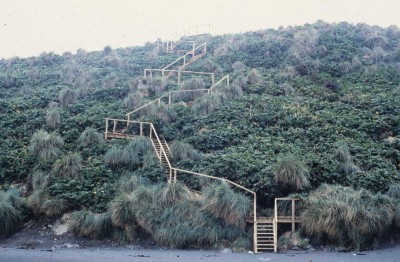
before
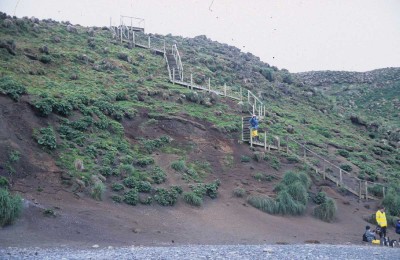
after

after
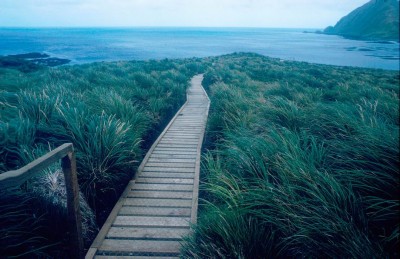
before
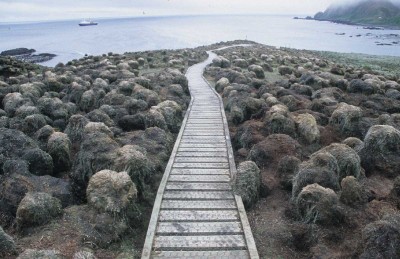
after
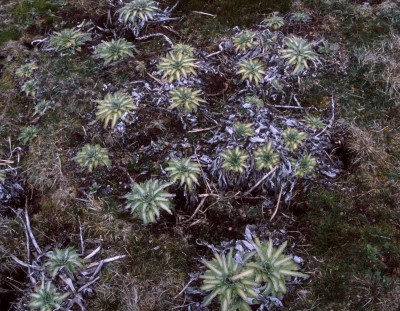
after
Margie Jenkin believes in conservation outcomes on reserved land — and beyond. She lives on the shoulders of the Mountain in a little place with a large greenhouse.
First published, 27/10/2006. Republished March 28, 2007