Gerard Castles
Furthermore, under Rolley and Lennon we have seen a direct wealth transfer from the people of Tasmania (who own the old growth forest) to Gunns. That’s the Lennon-Rolley legacy.
TODAY I saw photos of coupes destined for logging in the upper Weld and upper Florentine Valleys.
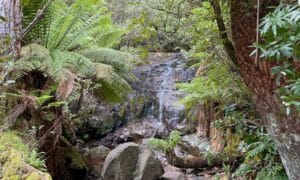
They are full of old growth rainforest — Myrtle, Sassafras, Celery Top, Leatherwood and huge eucalypts that tower above the rainforest canopy. It is the epitome of what it is people around the world imagine Tasmania to be and the foundation of our international brand.
And then I saw the Mercury coverage of Evan Rolley and Paul Lennon fronting the GBE enquiry into Forestry Tasmania on Monday blaming conservationists in part for the collapse of the woodchip and sawlog market.
Rolley and Lennon are wrong and hiding the truth.
The reason why Forestry Tasmania is in trouble is not because of conservationists but because the international price has dropped.
That’s the risk you take when you compete in an international commodity market against low cost producers.
Once it’s gone
The industry is also in trouble because international buyers understand what Rolley and Lennon do not — that clear felling and burning old growth rainforest is not sustainable. Once it’s gone and replaced by plantation the rainforest is gone. That is not sustainable forestry and ordinary people and buyers of Tasmanian woodchips increasingly understand this.
Furthermore, under Rolley and Lennon we have seen a direct wealth transfer from the people of Tasmania (who own the old growth forest) to Gunns.
That’s the Lennon-Rolley legacy.
The analysis by actuary Naomi Edwards highlighted in the documentary Two Visions shows that as Gunns profits have soared in the past few years Forestry returns have plummeted.
This is not right and Rolley and the Premier must be held to account.
The future for Tasmania lies elsewhere other than commodity industries like woodchips, sawlogs and even paper pulp.
Our future lies in high value products and services. This is where the Government should put its efforts not defending the indefensible.
First published, Saturday, August 5, republished, Tuesday, August 8, Thursday August 10.
*Notes on the photos: It’s shot over the Weld a couple of weeks ago. They’re still pushing up the valley to the WHA, you can see where they intend going from this Weld coupe map:

They’ve allowed the high ground to go into protected zones, few trees there. The Upper Florentine is another area that’s going to get the treatment this summer. It’s even more intact.
Gerard Castles is a strategic communication consultant; helping clients in the manufacturing, banking, telecommunications, construction and mining industries in Australia, Asia, New Zealand and the United Kingdom deal with issues such as post merger management, service improvement, brand repositioning, restructuring and enterprise bargaining. He has also worked with a range of public sector organizations. Before setting up his own business, Gerard spent 7 years working in Sydney as a communication consultant with McKinsey & Company. Gerard was also a member of the Tasmanian Community Leaders Group established under the Bacon Government to develop a long-term vision and strategic plan for Tasmania. He is currently President of Headway Support Services — an organisation that assists people with acquired brain injury rebuild their lives.
Sue Neales, Saturday: Plantations chips fear