Once the Upper Florentine is saved, the site of the struggle could become a tourism and education drawcard, writes Steve Biddulph, patron of the Florentine Protection Society.
Slowly, and painfully, it looks like we might actually be seeing the turning of the tide in saving Tasmania’s last wild places. Perhaps more than that, its conceivable that our little state might one day become a place in the world that is known as a refuge, a beacon, for living with nature.
If so, it will be due to the efforts of thousands of people who gave it all they had, including their health, and in some cases their lives. This effort goes back as far as the saving of Cradle Mountain Reserve, which was bitterly opposed, in the 19th century, and of of the Franklin in the 20th, and the loss of Lake Pedder out of which the worldwide Greens were born.
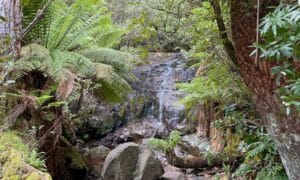
The Upper Florentine, home of some of the most lovely lowland forests in the world, and also of a bitter and determined struggle, has elements of all of this story. The famous Camp Flozza, the tracks leading deep into untouched places, and the scar of the most ugly clearfell, deep in wasted logs and trashed watercourses, showing what almost happened to the whole region.
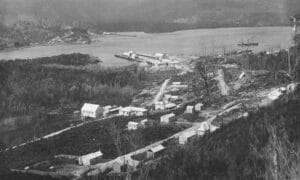
The story of Tasmania has to encompass all of this, the clash of interests, the human strengths and weaknesses – on both sides, and in a once indifferent public that was slowly aroused. The Franklin River and Strahan demonstrate this; a tourist attraction drawing hundreds of thousands each year, because it was precious, because it was saved, because it mesmerized a nation.
The roadside along the Upper Florentine tells its own story; where the bulldozers reached, where they were stopped; the ragtag places where young protestors put themselves on the line. The struggling hamlets along the road where communities struggled with their own consciences about what was right and wrong. The lovely valley of the Derwent like a history timeline going back to creation. And still, just a few minutes down a leafy track, the vast Gondwana forests.
These elements – the camp, the forest, the clearfell, tell a story. With interpretive signs, with some curating, with proper walkways and parking, this site could become a significant tourist and educational destination, telling a wonderful story. The Derwent valley and its townships can all benefit. And tourists find another reason to spend longer in this unique state.
Wild places are the most precious resource on earth now. Wildness the most healing and regenerative force. Being part of nature the most true and guiding light for a sane society. Children, teenagers and older people need the hope that the forest still lives, and it was saved by great effort.
The Florentine’s immeasurable worth is ready to share.
“Tasmania is slowly evolving towards goals we cannot now see. If we can revise our attitudes towards the land under our feet; if we can accept a role of steward and depart from the role of conqueror; if we accept the view that man and nature are inseparable parts of a unified whole – then Tasmania can be a shining beacon in a dull, uniform and largely artificial world”.
Olegas Truchanas 1969
A community information day will be held in the Upper Florentine this Sunday 7th November at 11am, which has been organised by Faces of the Florentine and the Florentine Protection Society. Community members will gather at Timbs Track (21km west of Maydena) to enjoy guided forest tours and listen to guest speakers.
Download:
walk-brochure.pdf
First published: 2010-11-02 09:47 AM