

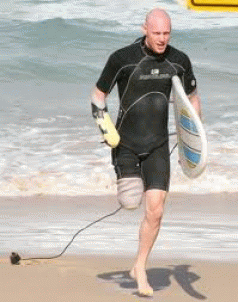
They’ve lost arms, legs and ankle parts but nine survivors of encounters with sharks, including Australian navy diver Paul de Gelder, say that the oceans’ greatest predator – not man – should fear the water.
The survivors gathered at the United Nations in New York on Monday to tell the world that their attackers, like the great white, desperately need protecting.
De Gelder, whose right hand and lower right leg were torn off last year in Sydney Harbour, said he wanted to “speak out for an animal that can’t speak for itself”.
Rampant overfishing is driving some species to the brink of extinction, with 73 million sharks killed annually just to feed Asia’s demand for shark fin soup.
“We’re decimating the population of sharks just for a bowl of soup,” de Gelder said.
Pew Environment Group, a Washington-based organisation that brought the survivors to the UN, says 30 per cent of shark species are threatened or near-threatened with extinction, while the status of 47 per cent is not properly known.
Scientists say that wiping out sharks, which are at the top of the ocean food chain, creates a destructive ripple effect throughout the marine eco-system.
For example, sharks eat seabirds, so that a reduction in shark numbers leads to more seabirds, which then eat up the bait fish needed by tuna, another endangered big fish.
Another example is the gradual collapse of life on coral reefs once the primary predator is removed from the balance.
“The ramifications on the ocean eco-system are vast,” said Matt Rand, director of shark conservation at Pew.
…











