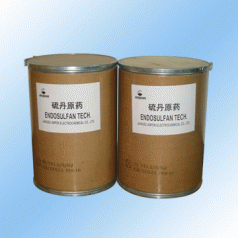
AUTHORITIES are reviewing the use of the controversial insecticide endosulfan, which poses threats to wildlife as far away as the Arctic and Antarctic circles, after it was banned by the United States this week.
The US Environmental Protection Agency said on Wednesday it would end the use of endosulfan because of health concerns.
It cited research since 2002 showing unacceptable ”neurological and reproductive risks to farmworkers and wildlife”.
Australia is among a handful of countries, including India and Brazil, which still use endosulfan. More than 60 countries, including New Zealand, have banned it.
A spokesman for the Australian Pesticides and Veterinary Medicines Authority said yesterday it had requested a review of research that showed endosulfan was able to travel great distances in the atmosphere, even being found in the body fat of Arctic mammals.
”The [Environment] Department has confirmed these risks exist and will soon provide advice … on whether it believes they trigger legislation that might enable the [authority] to take action on endosulfan in Australia,” the spokesman said.
He said the review would take a month to complete.
A spokeswoman for the Environment Department said Australia’s use of the insecticide did not contravene international environmental conventions protecting the Antarctic and Arctic.
In a recent decision by the Stockholm Convention on Persistent Organic Pollutants endosulfan was nominated to be listed as a ”persistent pollutant”.
A global ban on its use is being considered under the convention, which bans 21 other toxic chemicals including DDT.
The authority’s spokesman said yesterday said there was no evidence the insecticide posed health risks for humans in Australia, adding a review of the use of endosulfan here from 2005 had set strict controls on its use.
He said recent advice from the Health Department showed those controls were working.
Sales of endosulfan in Australia were worth $2.3 million in 2008-09.
It is mainly used in the cotton and macadamia industries.
What the Pesticides Action Network says …
U.S. phaseout of endosulfan has immediate global impact
Endosulfan victoryThis week, EPA announced that the persistent pesticide endosulfan will be eliminated in the United States. The announcement had almost immediate reverberations outside the U.S., with the Australian government committing to reevaluate use of the chemical in light of the U.S. phaseout. Already banned in more than 60 countries around the world, a global ban on endosulfan is currently being pursued under a UN treaty: the Stockholm Convention on Persistent Organic Pollutants.
Used primarily on Florida tomatoes and cotton grown in California and Nevada, this antiquated chemical has been linked to autism, birth defects, and delayed puberty in humans. “This decision is a long overdue victory for the farmworkers who work with this poison, the families that live near fields where it’s sprayed, and the Indigenous communities in the Arctic who are exposed to it in their traditional foods,” said Karl Tupper, staff scientist with Pesticide Action Network North America, in the group’s press statement. “Our work has finally paid off.” PANNA and allies have campaigned to ban endosulfan for years, collecting tens of thousands of signatures on petitions to the EPA, filing legal petitions, submitting detailed comment letters, and challenging the agency’s 2002 decision to reregister endosulfan. According to Tupper, who participates in the Stockholm Convention negotiations, “EPA’s announcement takes away one of the most powerful talking points of those few countries that are determined to stop a global ban.” Jayakumar Chelaton, Director of the Indian NGO Thanal, agrees. “We expect that India will be encouraged to act after hearing the decisions of the U.S. EPA to protect health and the environment, since Indian law makers have been referring to U.S. provisions when framing Indian law. This is now the opportunity for all to stay ahead in saving the world and making it toxic free. ”