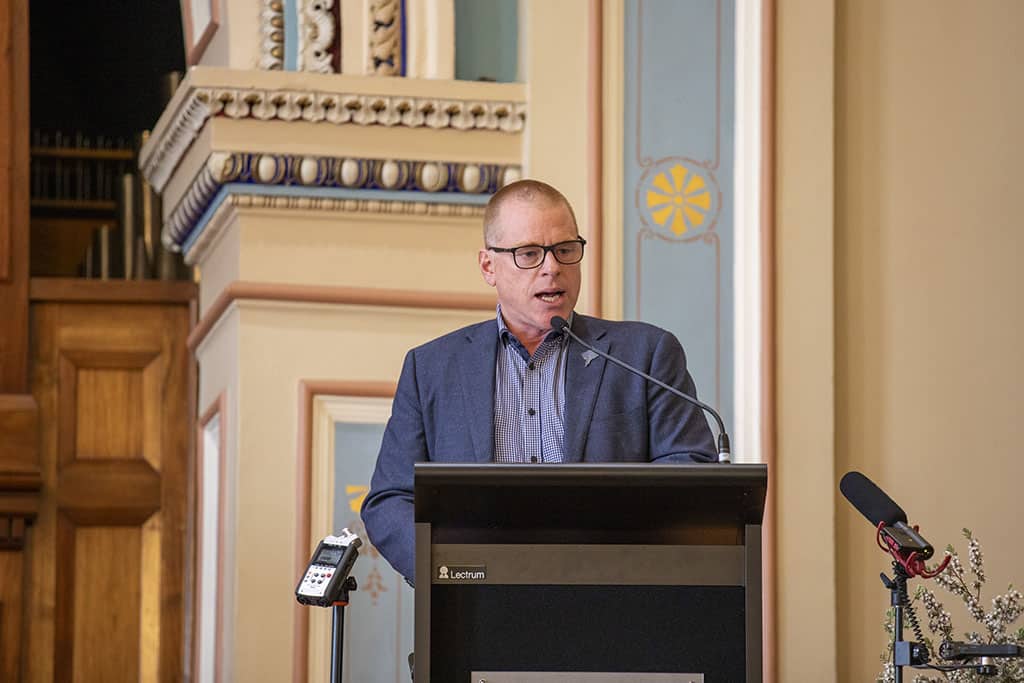
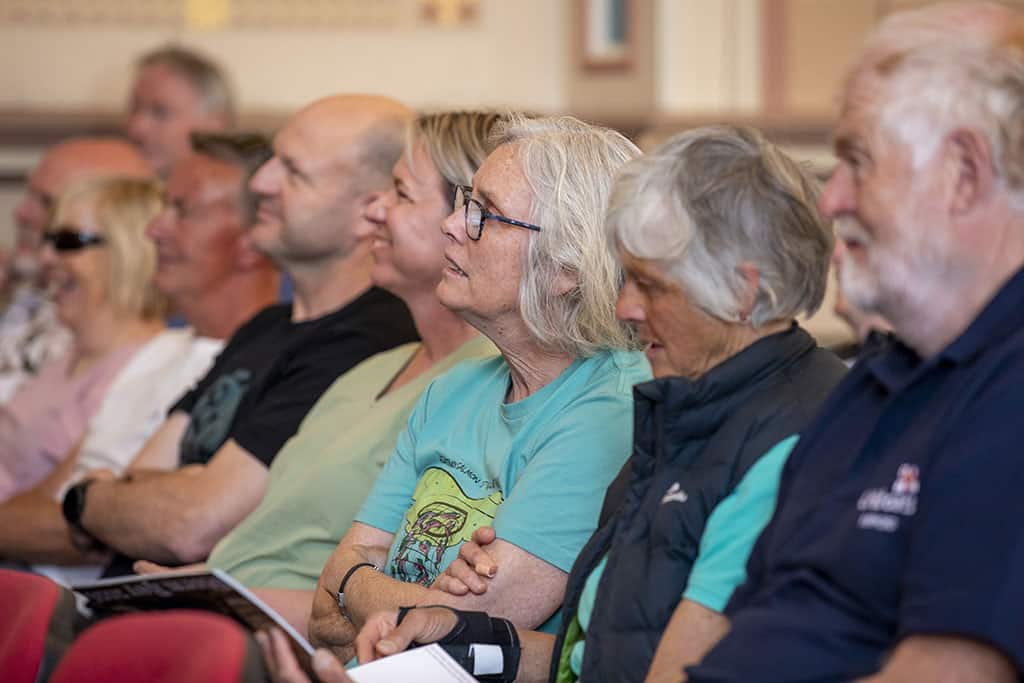
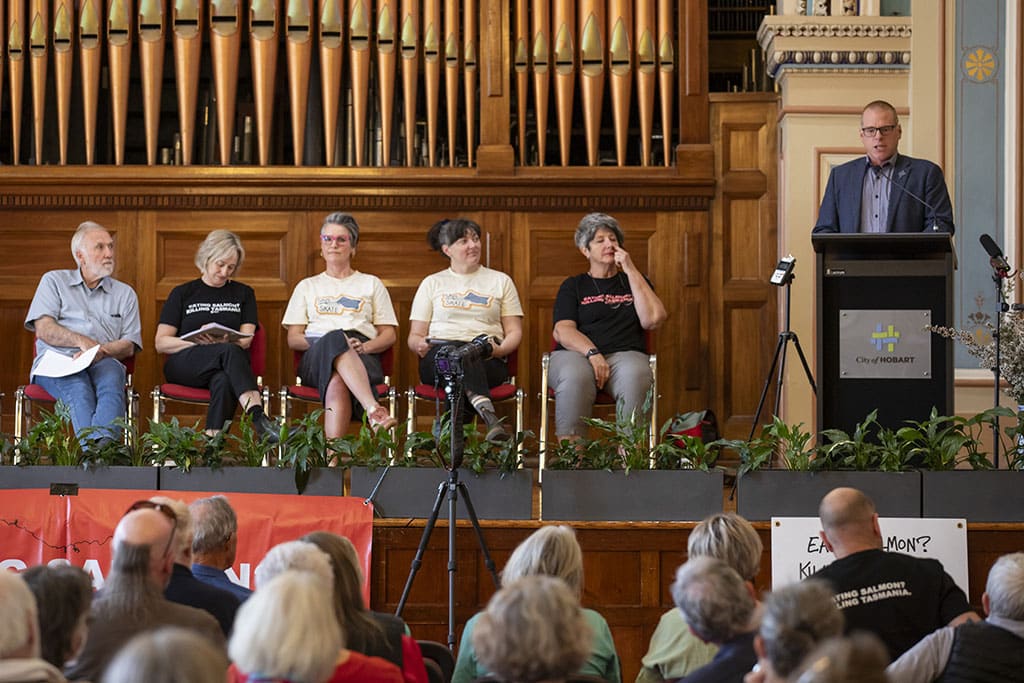
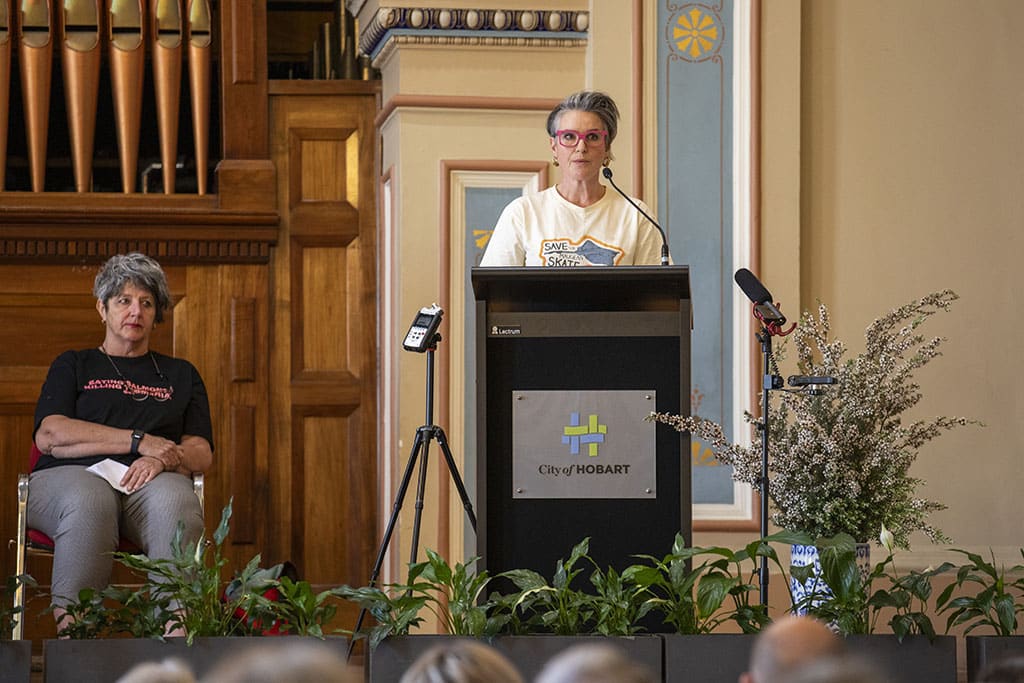
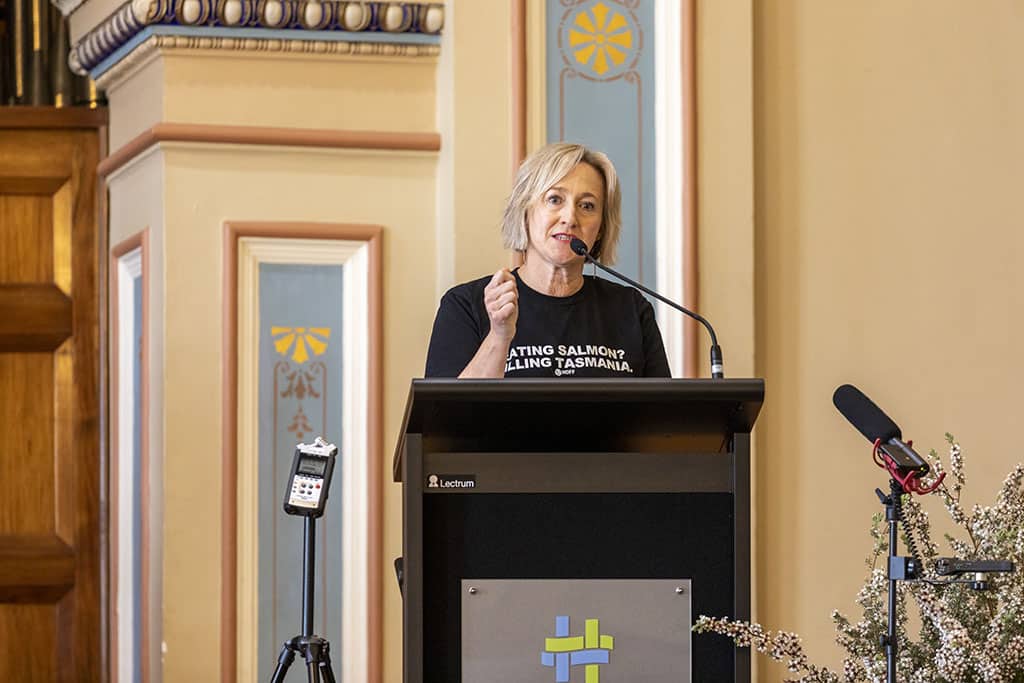
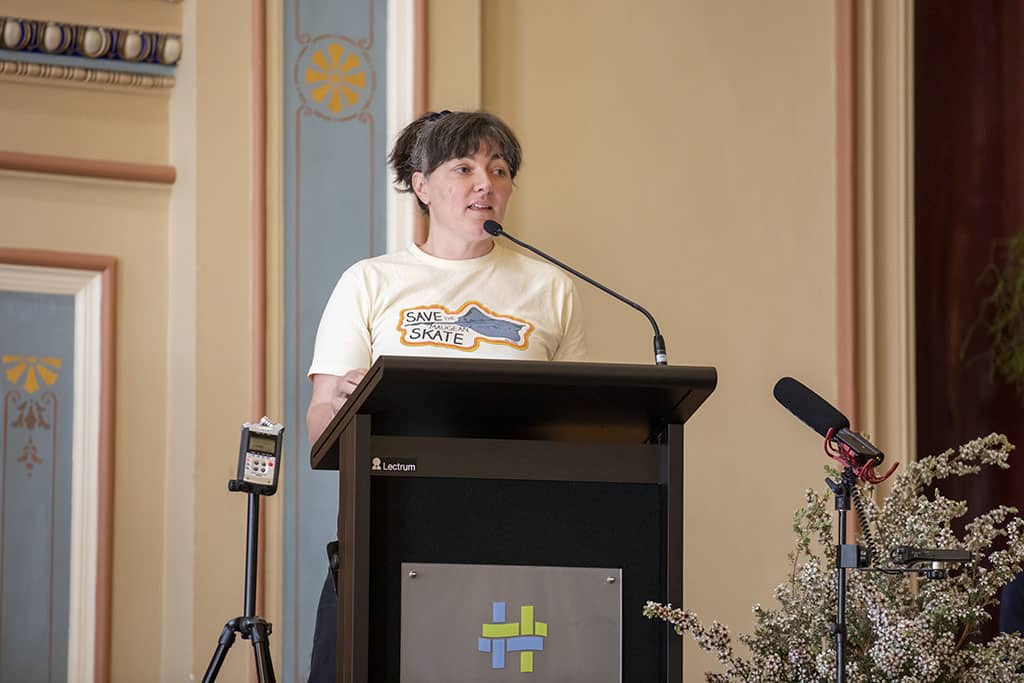
A well attended Hobart Town Hall on Friday 12 December delivered a resounding message to the multinational salmon industry and the Tasmanian government – the era of open-net farming in warming, shallow coastal waters is functionally over.
Hosted by Neighbours of Fish Farming (NOFF), the ‘Summer of Antibiotics’ meeting transformed from a grim warning into a powerful display of democratic strength. It presented a compelling case for the inevitable transition away from destructive practices, fuelled by a unification of science, policy and grassroots action.
Speakers presented irrefutable evidence that the industry’s current model is physiologically unsustainable due to climate change, creating a biosecurity crisis that threatens human health and marine ecosystems.
The meeting was opened by Peter George MHA for Franklin and former NOFF President. George noted that Tasmania’s reputation for pristine produce is taking a battering as the industry relies heavily on medication to keep fish alive through summer.
“We’re entering a period of rapidly warming waters, a harbinger of a summer of antibiotics,” George told the audience, highlighting that the marine environment is ‘badly out of whack’.
The Climate Reality Check
The scientific underpinning of the industry’s demise was illustrated by Stewart Frusher, a marine ecologist specialising in climate change. Frusher dismantled the idea that salmon farming can continue business as usual in Tasmania’s heating waters.
Frusher explained that Atlantic salmon are cold-water species that become chronically stressed once temperatures exceed 18°C—a threshold now regularly breached in Tasmanian summers.
“Imagine wearing a fur coat in a sauna and being unable to leave. That is the reality for these fish,” Frusher said. He described the attempt to breed tolerance overnight as impossible: “It’s biology, not magic.”
The Toxic Risks of ‘Life Support’
With fish physiologically compromised, the industry’s response has been a massive increase in antibiotic use. Sheenagh Neill, a data expert who has tracked the industry’s chemical use, detailed how the government fast-tracked emergency permits for Florfenicol without baseline environmental data.
“How can the use of an antibiotic in a fishery in any way be compared with use in confined public marine waterways?” Neill asked. “Without proper scientific data testing and background testing, the Tasmanian government has aided and abetted the salmon industry to get their emergency permit.”
The human cost was laid bare by Dr Claire Smith, who spoke on antimicrobial resistance. Smith explained that the resistance gene created by Florfenicol use acts as a pump that spits out a wide range of essential human antibiotics.
“The FloR gene has essentially become a global environmental contaminant, present wherever Florfenicol is used extensively,” Smith warned. “We have been warned,” she said.
Regulatory Capture and Democratic Pushback
Environmental consultant Louise Cherrie provided an insider’s view of regulatory failure, describing a system reliant on industry self-reporting.
“The Environmental Protection Authority, the EPA, is supposed to be the independent watchdog that protects our environment. But in the case of the salmon industry, it has become a lapdog,” Cherrie stated.
Despite the regulatory gloom, speakers emphasised that the power dynamic is shifting. Eloise Carr, Director of the Australia Institute Tasmania, highlighted that the community’s relentless campaigning has changed the political landscape.
“Governments regulate industries, but citizens regulate governments. That is the essence of democracy,” Carr said.
Greens MHA Vica Bayley reinforced this, noting that parliamentary pressure has forced a government inquiry. Bayley described the industry’s reliance on antibiotics as proof their social licence is gone.
“To be clear, the application of Florfenicol is a desperate measure to keep diseased fish on life support long enough to get them to market,” Bayley said.
The Path Forward
Closing the speeches, NOFF campaigner Jess Coughlan celebrated the vigilance of the community, whose documentation of mass fish deaths forced the issue into the mainstream.
“We are shining a light on their dark secrets,” Coughlan said. “Stay angry, stay active, and together we will win.”
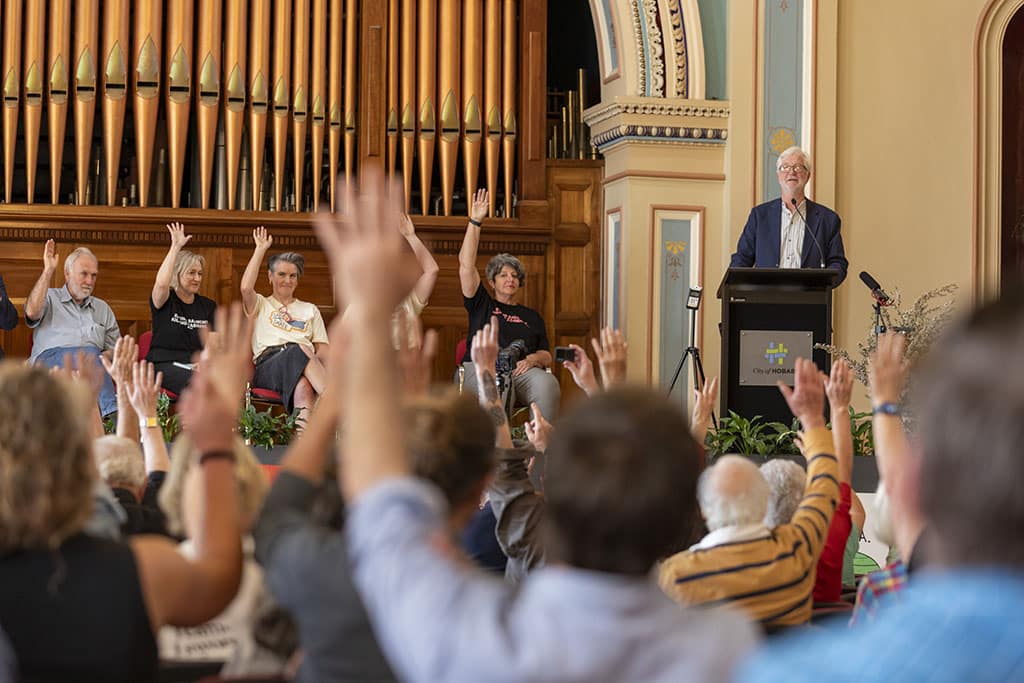
The meeting concluded by unanimously passing motions demanding the government estimate the cost of environmental damage caused by antibiotics and ensuring the foreign-owned industry foots the bill.
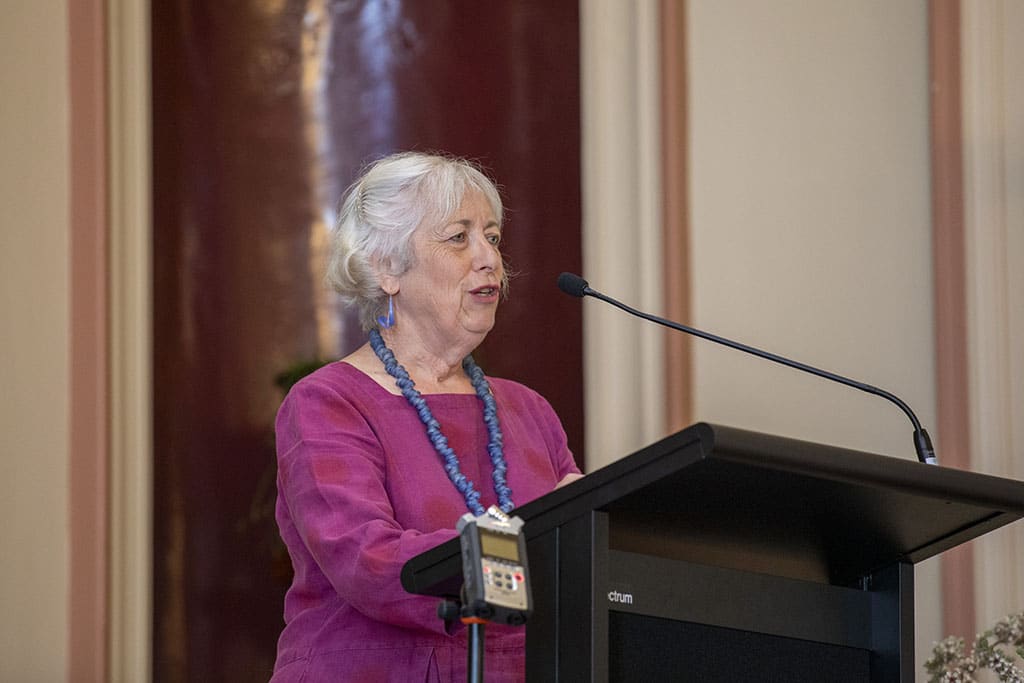
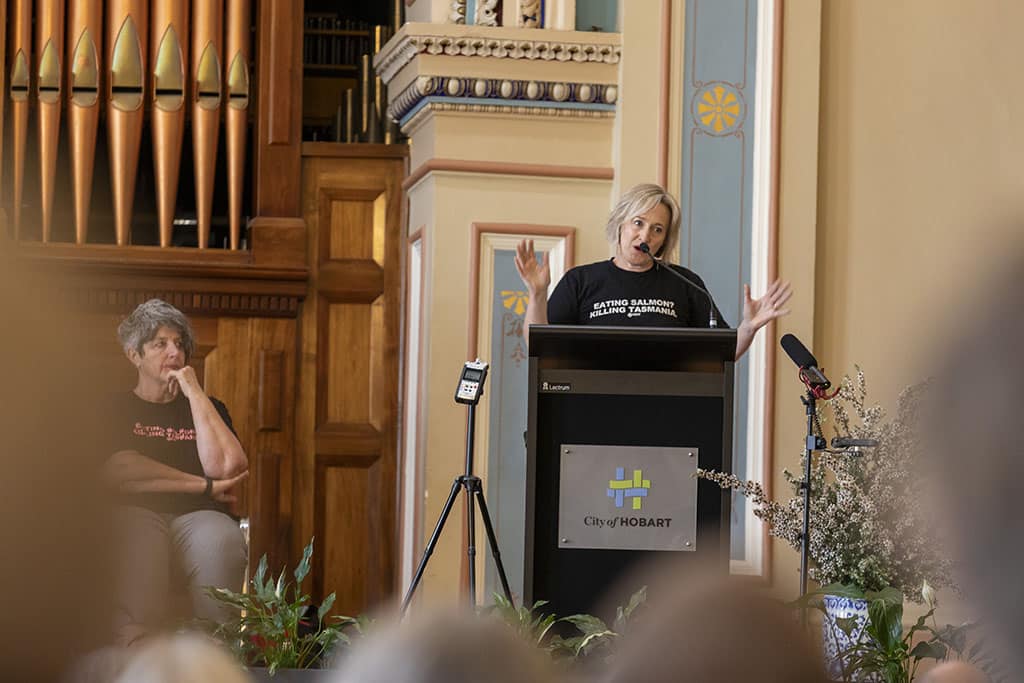
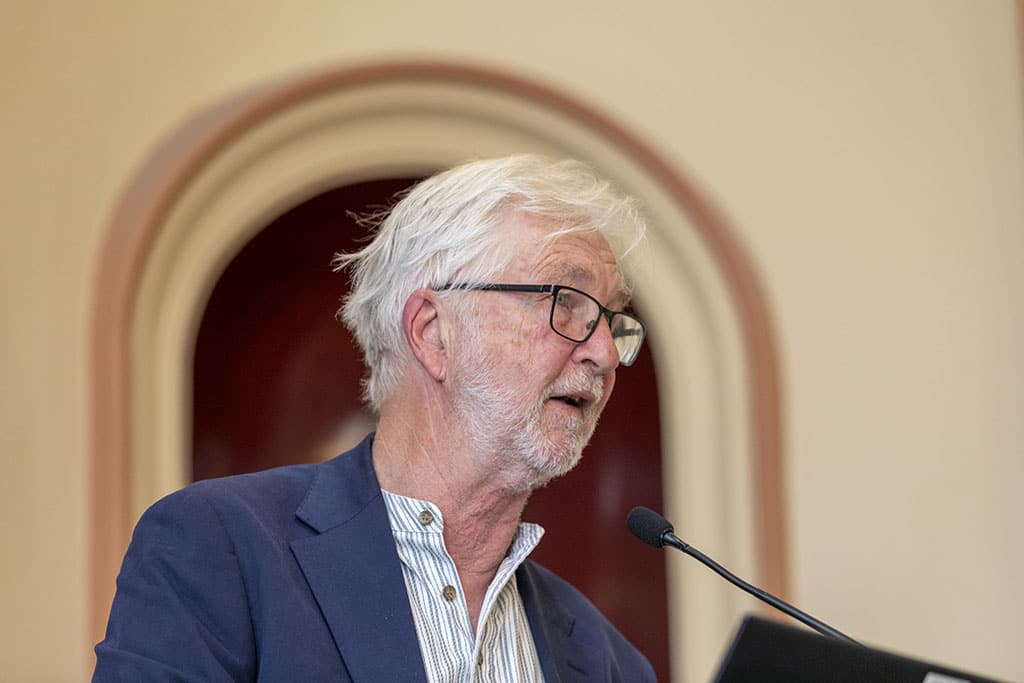
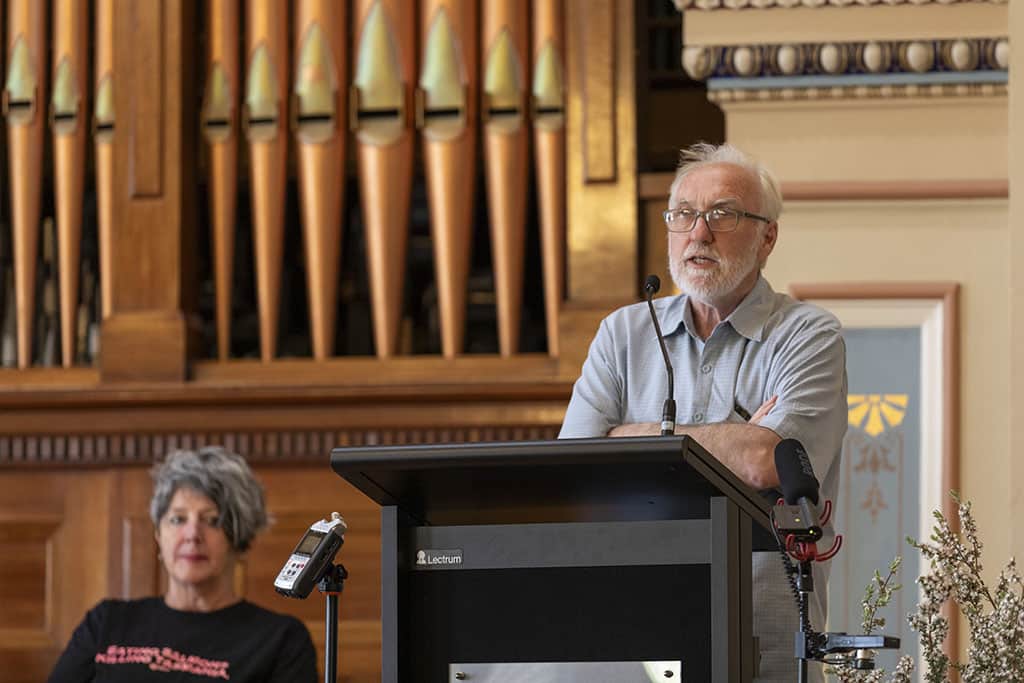
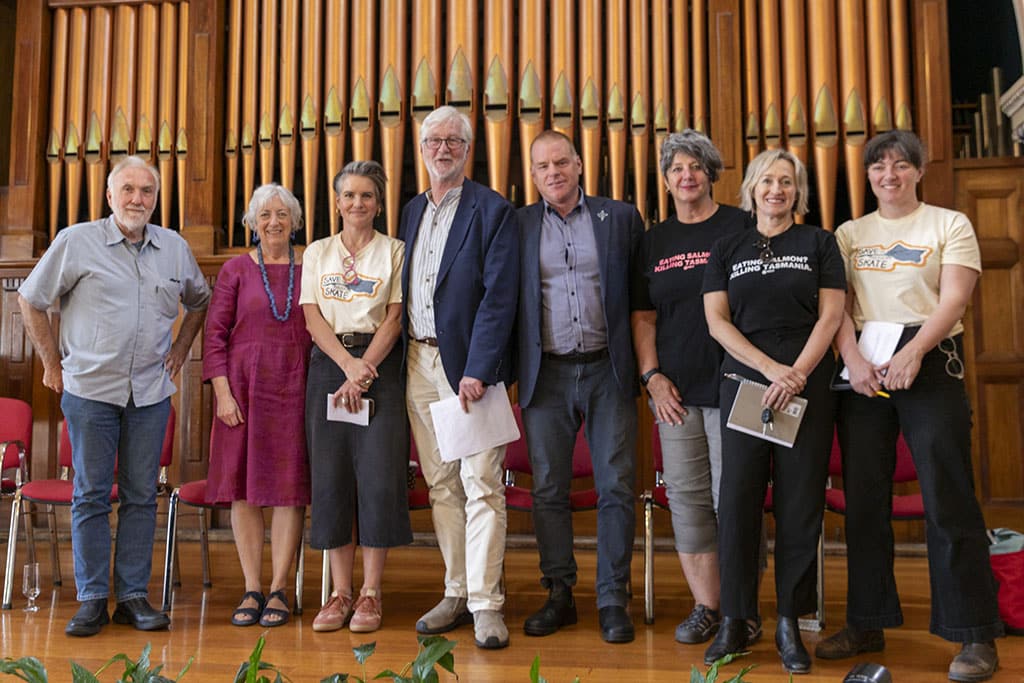
Images courtesy Dan Broun a prominent Tasmanian wilderness photographer, videographer and environmental advocate.
Tasmanian Times (TT) is a community-based news and current affairs service covering the island state of Tasmania. It exists to provide a diverse presentation of Tasmanian issues. TT creates and supports independent media content utilising the best of modern technologies and tried-and-true practices of public-interest journalism.
Support us in expanding our coverage and developing new content by and for Tasmanians.
New initiatives on the way include … what our contributors and readers suggest! Please get in touch with your suggestions.