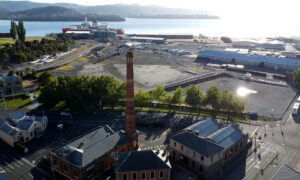
The Legislative Council has approved the Macquarie Point Stadium, a multi billion dollar project that has caused widespread concern across Tasmania regarding fiscal responsibility amid a cost-of-living crisis.
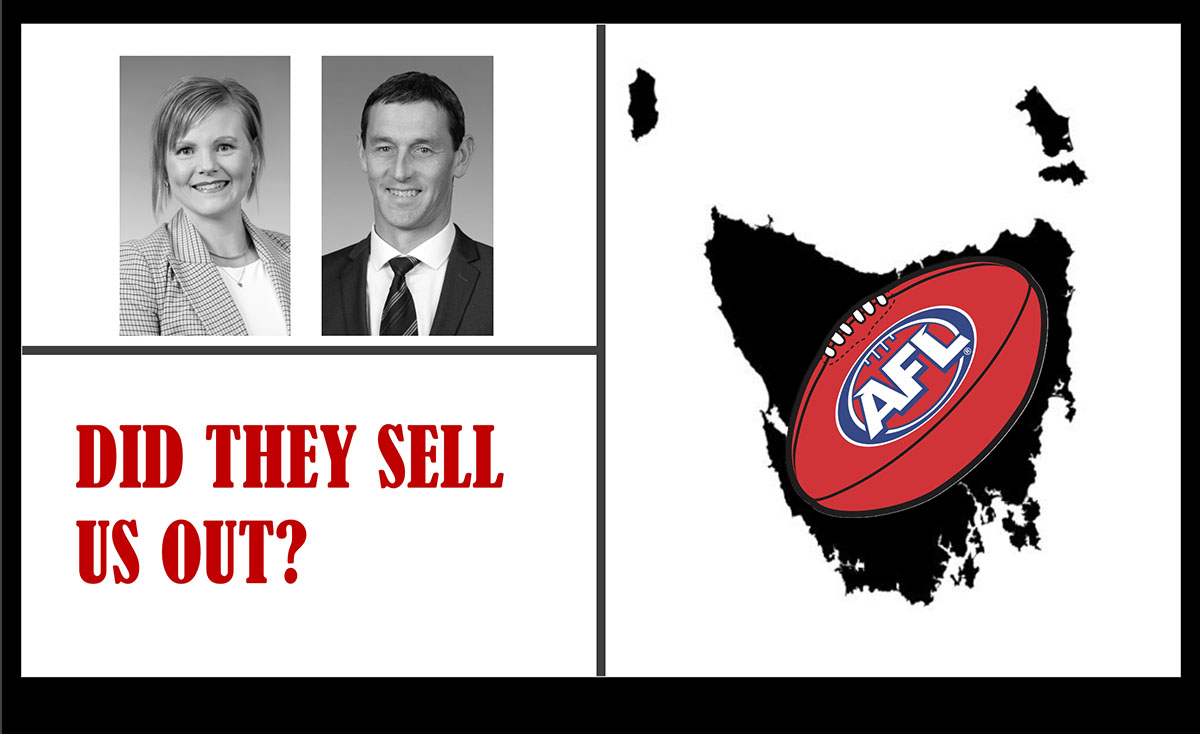
For many, Independents Bec Thomas and Dean Harriss are now in the firing line for their votes. However, in this piece, Christine Bayley, a spokesperson for People Before Major Parties – Tasmania, argues that the decision by Thomas and Harriss was not a betrayal but a calculated strategic choice about leverage and accountability—the very reason voters elect independents.
Bayley contends that a clean ‘No’ vote, while popular, carried the high risk of achieving nothing, potentially allowing the project to proceed without any fiscal limits. By leveraging their votes, Thomas and Harriss secured structural constraints from the government Bayley argues.
Why Thomas and Harriss Chose Leverage Over Protest — and Why Tasmanians Must Back Them
by Christine Bayley
Macquarie Point Stadium has scraped through the Legislative Council — and disbelief has erupted across Tasmania. For many, the $1.13 billion project feels like reckless extravagance in the middle of a cost-of-living crisis and an era of shrinking essential services.
Two names now sit squarely in the firing line: Bec Thomas and Dean Harriss. But before writing them off as having “sold out,” we need to understand the far more uncomfortable truth: this vote was not a simple yes-or-no. It was a narrow, strategic calculation about leverage, risk and accountability — the very reason Tasmanians keep electing independents in the first place.
Tasmania doesn’t vote for independents out of novelty. Voters do it because major parties have failed, repeatedly, to provide genuine scrutiny or financial discipline. Independents are asked to fill that vacuum — and this vote is exactly where that reality collided with political theatre.
The Vote – More Than a Yes or No
If both Thomas and Harriss had voted against the stadium, the Legislative Council would have been tied. Under convention, the President votes to maintain the status quo — which should mean the stadium would fall.
But conventions are not laws, and this Parliament has broken several already. With an AFL licence on the line and heavy corporate and political pressure in the background, nobody can honestly say what the President would have done in such a combustible moment.
Thomas and Harriss faced a brutal possibility: A clean “no” may simply have delivered the stadium without any fiscal limits — and without forcing the government to concede a thing. So, they used the only real bargaining power available in minority politics: leverage before the vote.
And for the first time in this entire process, the government was forced to give something up.
What Thomas and Harriss extracted were not not just symbolic gestures — they were structural constraints Tasmania has not seen before in any major project.
Bec Thomas
Secured a hard cap of $875 million on state funding.
Required that any blowouts must be covered by the Commonwealth, AFL or private sector — or the project must be scaled back.
It is the first serious attempt by anyone to put an end to the government’s blank-cheque behaviour.
Dean Harriss
Secured a Premier-signed commitment to cut $500 million in government business borrowings.
Extracted an admission that doing so breaks an election promise — a rare and politically costly concession.
These commitments are public and on the record — and the Premier now carries them like a relic from our convict past: a ball and chain shackled to his ankle, always there, always dragging.
They can be used against the government in every Budget, Estimates hearing and media appearance from here on. The real question is, who is prepared to push that weight down on him?
If you want to see why Thomas and Harriss made the choices they did, their inaugural speeches are the clearest guide.
Bec Thomas
Her speech centred on housing, health, youth justice and the long-promised northern suburbs transit corridor. She is not a politician who shows up to green-light billion-dollar monuments. Her support was explicitly conditional — tied to fiscal restraint and transparency.
Dean Harriss
He spoke about his Indigenous heritage, his years in the building sector and his warnings about rising debt. His push for reduced government borrowing perfectly mirrors what he told voters he cared about.
Neither of them are party loyalists. Neither owes the government their position. Neither can be whipped or punished into silence. That independence — that refusal to be owned — is exactly why Tasmanians keep electing people like them.
But they cannot do this alone. They need the public behind them. Their concessions will only matter if three things happen:
They continue to publicly hold the government to account.
They drag any cost blowouts into daylight — loudly.
They refuse to let the Premier quietly rewrite or soften what he promised.
Tasmania has turned to independents because our major parties have failed to deliver fiscal discipline, oversight or even basic transparency. The public knows it, which is why independent and minor-party representation keeps rising.
Now the same public must help ensure the stadium’s concessions don’t evaporate.
You’ll notice nobody in the pro-stadium camp is talking about these commitments. They’re hoping we forget them. The government would love to bank the win and allow scrutiny to fade. We are here to ensure that does not happen.
These two independents played their best hand.
A clean “no” would have been popular — but it may have achieved nothing.
A conditional “yes,” however, delivered concessions the government must now wear every single day of this project.
But leverage only matters if someone uses it.
If Tasmanians want accountability, if they want the stadium’s costs contained and the government’s promises honoured, they must stand with independents and demand transparency at every turn. Not because we all agree on the stadium — but because we agree that governments must be held to their word.
Thomas and Harriss have done what they believed would deliver the strongest safeguards. Now it falls to all of us — supporters and sceptics alike — to make sure those safeguards stick.
Christine Bayley is a spokesperson for People Before Major Parties – Tasmania who are on Facebook.
Tasmanian Times (TT) is a community-based news and current affairs service covering the island state of Tasmania. It exists to provide a diverse presentation of Tasmanian issues. TT creates and supports independent media content utilising the best of modern technologies and tried-and-true practices of public-interest journalism.
Support us in expanding our coverage and developing new content by and for Tasmanians.
New initiatives on the way include … what our contributors and readers suggest! Please get in touch with your suggestions.