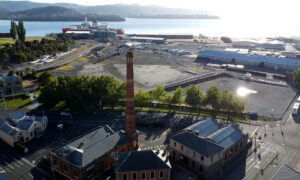
The Beauty Point Tourist Park
Guy Barnett’s submission to the Supreme Court regarding long term residence in Tourist Parks – where to from here?
Finally, our government here in Tasmania has decided to take some action. As widely reported in recent media our Attorney General is to make a submission to the Supreme Court on matters relating to, it would appear, the rights of long-term residents at the Beauty Point Tourist Park and similar parks here in Tasmania.
As an interim measure one would hope that the Attorney general would be able to introduce a Regulation into the existing Act to offer necessary protections to tenants and park owners. No doubt any intervention made by our State Attorney General into matters of court proceedings would be in keeping with the Partition of Powers convention.
What may not be known to many readers is the fact that there are several cases pending between residents and owners of the Beauty Point Tourist Park. Several residents have lodged or about to lodge claims in the Magistrate and Supreme courts. There is also a case listed to be heard in the High Court.
Little wonder our Attorney General is moving into ‘high gear’ on this issue. Should cases progress to the High Court who knows where the issues raised in lower courts would take us, especially with Park Owners, local and state governments all in the firing line over potential matters of due diligence, fair trading, consumer rights, land use planning and elder abuse (all of which have been raised with state and federal authorities, including politicians and the Prime Minister).
In short, all parties involved should have foreseen the unfolding and in some cases, tragic events over this past year.
– Philip J Tattersall, Beauty Point
Clash of Rights – Park Owners, Residents Caught in Legal Mess
Liberal-Green Government – Did we miss the announcement of an Accord?
Janie Finlay in her recent October 17 media release referred to the “Liberal-Green Government”.
So, is there such a thing or did we all miss something? Oh, maybe Janie has now appointed herself as the anointer of titles including political parties? Surely we can’t have two governors?
Well, after all it is Tasmania, so who knows?
– Philip J Tattersall, Beauty Point
Open Letter to Premier Rockliff – Reconsider Your Greyhound Racing Ban Date
Dear Premier Rockliff,
I write to you publicly because the Government’s decision to pursue a ban on greyhound racing in Tasmania is not just unnecessary – it is a serious misstep that will devastate regional communities.
Greyhound racing is no different to other long-standing Tasmanian traditions, pig races at country shows, horse racing, sheep racing at Kempton, or ferret racing at Latrobe on Australia Day. None of these are cruel, none are inhumane and none deserve to be banned.
Targeting greyhound racing is inconsistent, unfair and gives the appearance that your Government is bending to fringe activists instead of standing with ordinary Tasmanians. The real impacts of this ban will be felt hardest in regional Tasmania – Jobs and small businesses lost, trainers, handlers, vets, hospitality workers, feed suppliers, accommodation providers, pubs and local shops all rely on the racing industry. Communities weakened, race days are more than sport, they are one of the few major social events that bring entire towns together.
A dangerous precedent set, if greyhound racing can be banned without cause, what is next? Horse racing? Agricultural shows? Hunting? As Patron of the Devonport Racing Club, you know the cultural, social and economic value racing provides.
Greyhound racing deserves the same respect. To destroy it would be politically reckless and socially damaging.
Premier, this decision risks alienating thousands of Tasmanians, particularly in the regions, who will not forget being abandoned. Rural and regional communities deserve support, not further erosion of their traditions, livelihoods and way of life. I urge you to reconsider.
Stand with Tasmanians, not against them.
– Adrian Pickin, Chair of Shooters, Fishers & Farmers Party Tasmania
A Letter to Major Party Members
The Honourable MP,
Please spare a moment of introspection by asking yourself this question.
If you had a crystal ball or a ‘time machine’ and could see or visit Hobart in 2033, and the dire prognoses of the Tasmanian Planning Commission, Dr Nicholas Gruen, Saul Eslake (Tas. Debt Dilemma, April 2025), and other independent assessments had come to fruition, would you still vote in favour of a Macquarie Point stadium?
By comparison, if an adjacent ‘Futurescope’ foresaw the benefits and economic optimism outlined in the Tasmanian Government’s circulated promotions, which of the two contrasting visions would you endorse as the more reliable forecast?
This exercise is based on Nietzsche’s ‘forecast intuition’ test or more commonly ‘gut feeling’.
No one needs reminding that the volumes of expert analyses and the printed promotional material have been funded by the Tasmanian taxpayer, but only a minority of those four-hundred-thousand voters could, in all honesty, favour the weight of evidence contained within the government’s utopian brochures over and above the tomes of professional research undertaken by highly qualified delegates chosen and remunerated by the same government whose Premier and Ministers have deceitfully portrayed each as though they were anti-stadium collaborators . . . ‘shoot the messengers’.
It’s insulting to all Tasmanians to suggest these professors, lawyers and academics had set about their year-long directive instilled with an anti-stadium sentiment, yet this is the Rockliff Government’s veiled dismissal of its own appointees’ findings.
Although hypothetical, the psychologist’s ‘crystal ball’ evaluation serves as a sobering litmus test of each Member’s acceptance or otherwise of government and media influence, and further, provides a critical assessment of an individual’s rational thinking.
Should you, (MP), disregard this ‘future shock therapy’, you may have glimpsed the degree to which your Major Party rhetoric has manipulated your logic and plain common sense.
For the fiscal health of our state and the hard-won civility of a human-scale Hobart, surely it is the responsibility of each and every MP to resolve this critical question by respecting their own intuition – their own logic – and not by timidly adhering to Party convention.
It is too important and highlights the compelling necessity for this cerebral exercise.
Thank you for your time, (MP), and here is your introspective conclusion . . .
Yes, of course you would still support it, regardless of the projected consequences, and no, you have not respected your intuition. There is a clinical term for this condition.
– Mark Pooley, Hobart
Greyhound Racing
When Greyhound Racing NSW threatened legal action against writer Susan Metcalfe for posting race footage, it crossed a moral line.
Metcalfe’s work meticulously documents what the industry refuses to reveal — the shattered bodies and silent deaths of the greyhounds it exploits. Each week, dogs are injured or euthanised after collisions on tracks still subsidised by public money. Rather than fix the system, the governing body has chosen to attack the messenger.
This is not about copyright. It’s about control. When whistle-blowers show the truth, industries built on suffering panic. We’ve seen it before – and the pattern is always the same: deny, deflect and threaten.
But Australians are not fooled. We know that an industry reliant on gambling losses and taxpayer handouts cannot claim moral legitimacy while dogs die for profit. The fact that government-funded organisations would spend money on lawyers instead of safety reforms is appalling.
Sunlight remains the best disinfectant. The public deserves to see what happens in its name and with its money. Silencing critics only strengthens the case for abolition.
And that is why the state government has decided to ban greyhound racing in Tasmania from 2029.
If the racing authorities in all codes want respect, they should earn it – by prioritising welfare, publishing full injury data and phasing out dangerous tracks.
Until then, people like Susan Metcalfe will continue doing the job they refuse to do – telling the truth.
Because you can’t sue your way out of cruelty.
– Jan Davis, Tasmania
Australia’s Paper Pandemic – Pay Rates and Taxes, Get PDFs
From paperwork to practice
Australia has a paperwork problem hiding in plain sight, where we pay rates and taxes and receive PDFs, plans and glossy reports while the practical, neighbourly work that actually makes communities safer and more resilient struggles to begin and to endure, and one study counted 2,266 local food policies in New South Wales and Victoria, which tells us the ideas are not the issue because the real difficulty is turning intent into shared practice that builds confidence and capability where people live.
The money exists in the system, and that makes the gap harder to accept, because the Preparing Australia Program set six hundred million dollars aside for risk reduction, the Disaster Ready Fund commits up to one billion dollars across five years from July 2023, and federal consultancy spending has hovered around the billion-dollar mark despite promises to reduce reliance, yet too often funds move as large, episodic programs routed through state processes that are heavy on applications and acquittals and light on the needs of local communities.
For years, as a designer focused on impact, I have watched this pattern while learning that practical, place-based projects are the most reliable way to improve life, and I have found myself in repeated battles with councils and agencies that want to commodify ideas and capture them as outputs on paper rather than help turn them into gardens, kitchens and programs that ordinary people can touch.
We have proof that practice works in community gardens that become meeting grounds, in the Huon Valley Food Hub showing local procurement from the ground up, in food prescription schemes that link health to markets and farmers and in local food grants that help small producers take the next step, yet time and again the system asks for a longer document instead of a smaller experiment that could start next month.
If we look at the issues demanding care in these transitional and economically strained times, the path is clear – local food systems need small grants for seed libraries, crop swaps, shared kitchens and community procurement that actually run on Tuesdays and Thursdays; river and ocean health, including the contentious salmon question, requires place-based forums that join monitoring with practical remediation and plain-language reporting, while policy settings fund credible transition plans and pilot projects that diversify protein sources and steadily reduce the ecological load on our waterways; mental health and community wellbeing need regular, low-overhead gatherings in halls and on farms where people learn skills, make food, move their bodies and rebuild friendship networks, because connection is not a slogan but a set of practices that can be hosted, repeated and measured lightly.
This is the essence of funding patterns rather than paperwork – small, hosted experiments that turn a single line of policy into something you can try next month, with clear timelines, numbers and care, a few light measures, and a one-page note so the next street can repeat it tomorrow.
In my Scenario Two article I argued for a shift beyond narrow community benefit schemes toward a billion-dollar Tasmanian Community Fund dedicated to this practical work, with strict rules that prefer less reporting and more action, because small is a safety feature, and trials that work spread through trust while government earns it back by directing briefs toward practice. If you are someone who has interest in this work, please reach out via my design studio, Regen Era Design.
– Dr Emily Samuels-Ballantyne, Magical Farm Tasmania
Opportunity cost?
An Internet meme reminds us that a Million seconds takes less than 12 days, but a Billion seconds takes nearly 32 years.
The Macquarie Point stadium may cost at least $1.3 Billion dollars – over 41 years in seconds. That 1,000 multiplier makes a big difference.
Let’s say a house costs half a $Million. $1.3 Billion dollars could build 2,600 homes – a modest suburb. Do we really want to give up so much for just a few football games each year?
– Bob Elliston, Bruny Island
The original AFL – the Anti-Football League
Last century, circa 1967, worn down by the constant hoopla over Aussie Rules football, journalists Keith Dunstan and Douglas Wilkie formed the Anti-Football League.
To identify like-minded individuals a badge in the form of a cubical, unbouncible (sic), football was struck. The hope being that a wearer of said insignia could be engaged in, untainted by football, intelligent conversation.
The group’s yearly award, named for foreign affairs journalist Wilkie, was given to individuals who had done the least to support football in that year.
Winners of the Wilkie medal included Prime Minister Harold Holt and comedians Barry Humphries and Wendy Harmer. In her acceptance speech Harmer said “outreach programs should be established to help school children kick the footy habit.”
Given the pernicious effects on Tasmanian society of the Australian Football League, perhaps it is time to restart a Tasmanian chapter of the original AFL.
– BFN (mousehammer)
The stadium proposal
As evidenced by his continued addiction to building a new stadium, premier Rockliff must have a gambling problem.
The Tasmanian Planning Commission’s report is the latest of several reports that have assessed the economics of the proposed stadium. Just like its predecessors the Gruen and Eslake reports, the TPC found the proposed stadium was seriously wanting on several levels.
The TPC concluded the Macquarie Point site was unsuitable being too small for the ‘disproportionately large, monolithic building’, while the costs were too great and the social and economic welfare of Tasmanians would be diminished. The release of a federal climate report a few days earlier revealed another aspect that must also be factored into the stadium and its Macquarie Point location.
Sea levels are rising sooner and faster than scientists predicted previously. Yet it seems our premier is willing to ignore the findings of the TPC, and dismiss the warnings in the National Climate Risk Assessment report.
He is determined to gamble with the future of this state by pushing ahead with an unaffordable and highly risky project. He’s apparently comfortable not only with cementing community division about the stadium, adding further to a debt burden on Tasmanians that will take decades to repay, but he’s also comfortable about building a massive piece of infrastructure on a site that is manifestly unsuitable in an era of increased climate volatility.
It’s high time Mr Rockliff had a reality check and ended this unnecessary stadium fiasco that – ‘will diminish the economic welfare of Tasmanians’.
– Anne Layton-Bennett, Swan Bay
Special Planning Laws – Stadium
Jeremy Rockliff leans on “special planning laws” for stadium approvals, as if bypassing normal planning scrutiny is proof of good governance rather than a political shortcut. Special planning laws he’s currently pushing through with his chosen ‘independent’ panel.
Rockliff’s spin on the Planning Commission report paints the stadium as Tasmania’s golden ticket: transport and safety are “manageable,” noise is brushed aside, and the supposed “social and economic benefits” are inflated as though they’ll magically outweigh cost blowouts and long-term debt.
Stadium economics Rockliff-style; if you’re broke, just buy something really expensive…
The flaw is simple – Rockliff treats the stadium as “vital for growth,” when in reality Tasmania’s biggest economic and investment (not to mention social and infrastructure) growth barriers are housing, health, workforce shortages, local business support and current infrastructure strain. A stadium won’t ease the rental crisis, reduce crime, shorten hospital waiting lists, or fix underfunded schools.
None of that (performing poorly) attracts the private investment he’s so reliant on for all this to balance out either. It may bring short bursts of confidence-building (fake news) economic activity, but that comes at a cost of billions in public money that could be invested where the community is proven (by leading economists) to need it most.
Moving forward, what’s best isn’t rushing through a billion-dollar vanity project, It’s facing facts and providing transparent, community-first planning that balances economic development with core social needs.
Growth isn’t just about shiny infrastructure; it’s about resilience, equity, and leaving Tasmanians better off every day, not just on game day.
– Kelly Sims, Independent Community Advocate
Tasmanian Socialists Party
It was great to visit T-Bone in North Hobart several weeks ago for the launch of the Tasmanian Socialists.
Featuring Jordan van den Lamb or Purple Pingers, who has actively campaigned for housing justice in Victoria.
Many young people were in attendance, not surprising when you have a system that is driving young interstate or overseas to look for work and pursue a decent career. House prices going up is great for people who own homes, but not for first home buyers.
In a trip to Melbourne, I overheard people discussing how they would go to Tasmania for Dark Mofo.
Tasmania great for the tourists, but we have to do better for young people.
– Karl McBeath, Victoria
Tasmanian Times (TT) is a community-based news and current affairs service covering the island state of Tasmania. It exists to provide a diverse presentation of Tasmanian issues. TT creates and supports independent media content utilising the best of modern technologies and tried-and-true practices of public-interest journalism.
Support us in expanding our coverage and developing new content by and for Tasmanians.
New initiatives on the way include … what our contributors and readers suggest! Please get in touch with your suggestions.