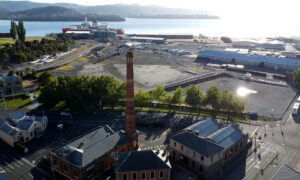
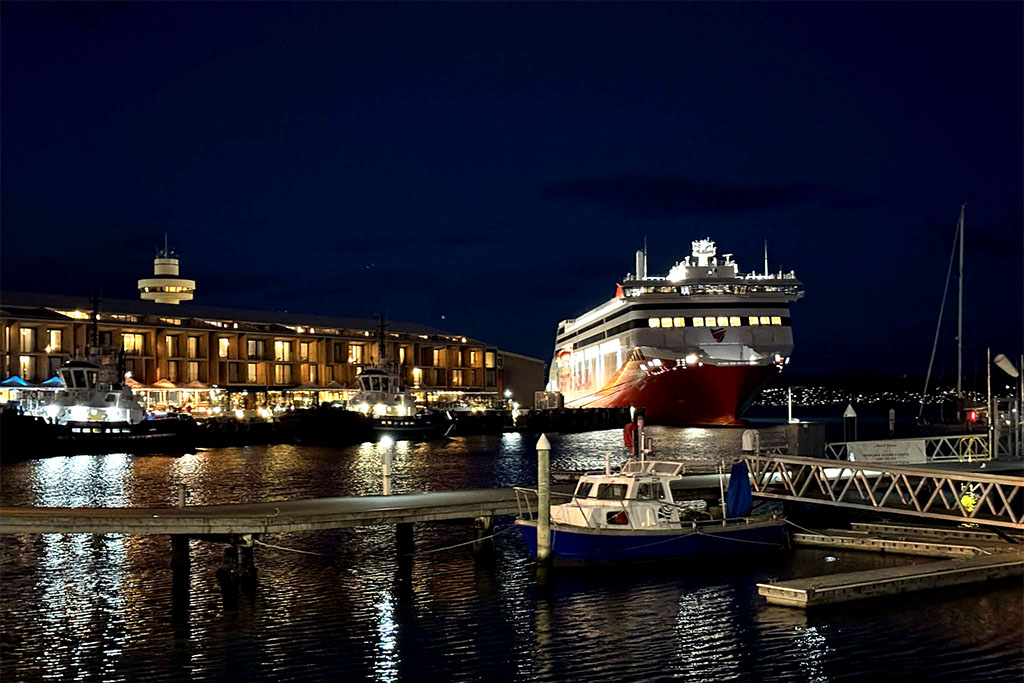
Euphoria abounds as the new Spirit of Tasmania IV lies idle in Hobart, while our political leaders offer platitudes and spin. We hear of “significant milestones” and “fiascos fixed,” but a closer look at the project reveals a governance failure of epic proportions.
Premier Rockliff’s recent admission that “the buck stops here” rings hollow. The behavioral conflict between two Government Business Enterprises (GBEs), TT-Line and TasPorts, was never on the Cabinet agenda for discussion. Treasury input was absent until it was too late, causing irreparable and long-lasting damage to the state. The Premier’s suggestion of a “bailout” for TT-Line, a public company, is also misleading.
A GBE is not a public company in the traditional sense; its shares are owned entirely by the government on behalf of all Tasmanians. A bailout simply means increased government borrowing, with all citizens responsible for the resulting interest and capital costs.
Let’s cut through the platitudes and political spin and examine the abysmal governance of this project by the Liberal government, aided by a weak and disorganised Labor opposition.
The new ferries were originally scheduled to begin service in 2021, but are now not expected to commence operations until October 2026 for the 2027 tourist season—a delay of five years. Conservative estimates suggest a loss of opportunity and economic benefit of approximately $400 million per year, bringing the total delayed costs to $2 billion.
The initial shipbuilder went into insolvency, leading to a new contract with a Finnish company for $850 million. No costs for this change have been released, but they were certainly substantial. When the new contractor faced financial difficulties, TT-Line paid an additional $80 million to complete construction. The fit-out costs for the two ships, while never publicly released, are believed to be around $100 million, bringing the estimated total construction cost to $1 billion.
Compounding this, TT-Line and TasPorts were locked in a protracted negotiation over a new berth to accommodate the larger vessels without ministerial input. The Mersey berth was initially budgeted at $90 million, but delays and disagreements have escalated the cost to $500 million.
The berthing costs incurred due to these delays are staggering:
-
- Spirit of Tasmania IV in Scotland: 7 months at $6.4 million.
- Spirit of Tasmania IV in Hobart: 2 months at $1 million per month.
- Spirit of Tasmania IV in Victoria: 6 months at an estimated $600,000 per month.
- Spirit of Tasmania V in Europe: 6 months at an estimated $5 million.
- Spirit of Tasmania V in Hobart: 6 months at an estimated $1 million per month.
The estimated additional costs incurred through a lack of government control and planning for their GBEs are as follows:
-
- Extra Construction & Fit-out Costs: $80 million + $100 million = $180 million
- Increase in Hobart Berth Cost: $400 million
- Scotland berthing: $6.4 million
- Spirit IV 2 months in Hobart before going to Geelong: $2 million
- Spirit IV 6 months in Geelong: $3.6 million
- Spirit V in Europe: $5 million
- Spirit V in Hobart: $6 million
- Loss of opportunity and economic benefit: $2 billion ($400m p/a over 5 years)
The last 11 years of secretive, abysmal governance of Tasmania, devoid of due process, have therefore resulted in extra costs to replace the two spirits of approximately $625 million plus non cash and commercial opportunity so total cost of delays $2.625 billion.
Added to this, there are other substantial costs that either remain unaccounted for, remain secret, or are just not taken into account. These include roads and access for an estimated 40% traffic increase, no accounting for the disposal of the two former ferries where an extra 5 years of depreciation would represent further substantial losses, and the establishment of liquid gas bunkering and storage, which has not yet been mentioned by those in project control.
The Spirit of Tasmania debacle is not an isolated incident. This project, along with other crises in health, housing, and education, highlights a pattern of secretive, abysmal governance over the last 11 years.
Other examples include:
-
- A future $13 billion deficit.
- The autocratic signing of a new AFL stadium deal, which ignored due process and independent advice.
- The poor management of the multi-national salmon industry.
- The shipping fiasco involving TasPorts’ refusal to allow the Antarctic ship to refuel at Self’s Point.
Tasmania is now in a precarious state, facing financial failure with a discredited minority government and an ineffective opposition.
The growing strength of the Greens and independents is the state’s best hope for change.
They offer a path to overcome the broken two-party system and establish a more representative and accountable form of governance, accelerating Tasmania from the least to the best-governed state in Australia.
To put perspective into these cost estimates we can conclude that the over spend on manufacturing and storage over the wasted five years until the projected launch in October 2026 is an overrun costs of $625 million represent 66% of the total estimated cost of $950 million, and interestingly this $625 million is also 66% of our governments estimate of the Macquarie Point stadium cost.
To my mind, the Macquarie Stadium and its attached high performance centres is way and beyond the capabilities of this government, well demonstrated by its incompetence, secrecy and bungling of the Spirits fiasco.
As a society how could we have allowed this parlous situation to have arisen?
Richard Dax is retired however remains active with over 25 years of experience of dealing with governments. Foundation Director of peak body Tourism Industry Council of Tasmania, Director Royal Agricultural Society, creator of peak Rec Fishing body ‘Anglers alliance’, created Public facilities at Lake St Clair, Chair Southern Tourism Association, Chair North West Tourism association and past member World Heritage Ministerial Advisory Committee.
Featured image above courtesy Lisa-ann Gershwin.
Tasmanian Times (TT) is a community-based news and current affairs service covering the island state of Tasmania. It exists to provide a diverse view of Tasmanian issues. TT creates and supports independent media content utilising the best of modern technologies and tried-and-true practices of public-interest journalism.
Support us in expanding our coverage and developing new content by and for Tasmanians.
New initiatives on the way include:
-
-
-
-
-
- a weekly podcast covering current affairs
- a revamped website
- a monthly cartoon competition
- a user-friendly app for both Android and Apple devices
- a weekly roundup of key stories
-
-
-
-