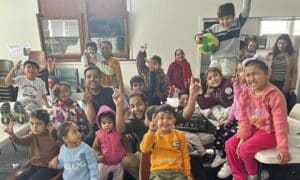
Sponsorship of one child in India costs me a dollar a day. A half-decent carton of wine a year provides an education, a roof over his or her head, three meals a day and a chance at making something of their lives. For me, living in comfort in Australia, it is not too much to ask to forgo a carton of wine. In truth I still buy the wine but only for medicinal purposes.
We have decided to visit our little people at the orphanage in the Indian state of Andhra Pradesh. To be specific, we fly to India stopping over in Mumbai and Hyderabad before landing in the growing industrial port city of Vishakhapatnam more commonly known as Vizag.
Vizag has one of the busiest ports in Asia and is in the top 100 fastest growing cities in the world. The harbour accommodates the Naval fleet on the east coast of India, features a large ship building facility, and is home to the largest single site integrated steel plant in India and South East Asia. The city is now also becoming renowned as a centre for the development of Information Technology.
We stay at a hotel in Vizag and travel to the orphanage at Kottavalsa, approximately an hour by slow-moving car. The driver spends most of the time with his hand on the car horn whilst dodging between animals, people and other vehicles. The constant tooting is not meant to be an aggressive “get the hell out of my way” as is most often the case in Australia but more a warning there is a moving vehicle approaching and one ought to be careful, please.
The orphanage at Kottavalsa caters for hundreds of children orphaned by virtue of their parents having abandoned them, having contracted AIDS, or another disease including leprosy. Sadly some children have been abandoned because they are disabled and a handicap for their family, others because their parents have died or are expected to die in the short term (the parents are cared for by the orphanage in the interim), and the children of leprosy patients. The latter group are not actually orphans but unless they are so labelled the orphanage cannot take them in for full time care.
I am struck by the laughter and happiness amongst the children upon our arrival. They appear happy to greet visitors to their home. The children we sponsor are anxious to demonstrate to the other children their attachment and quickly gather around us.
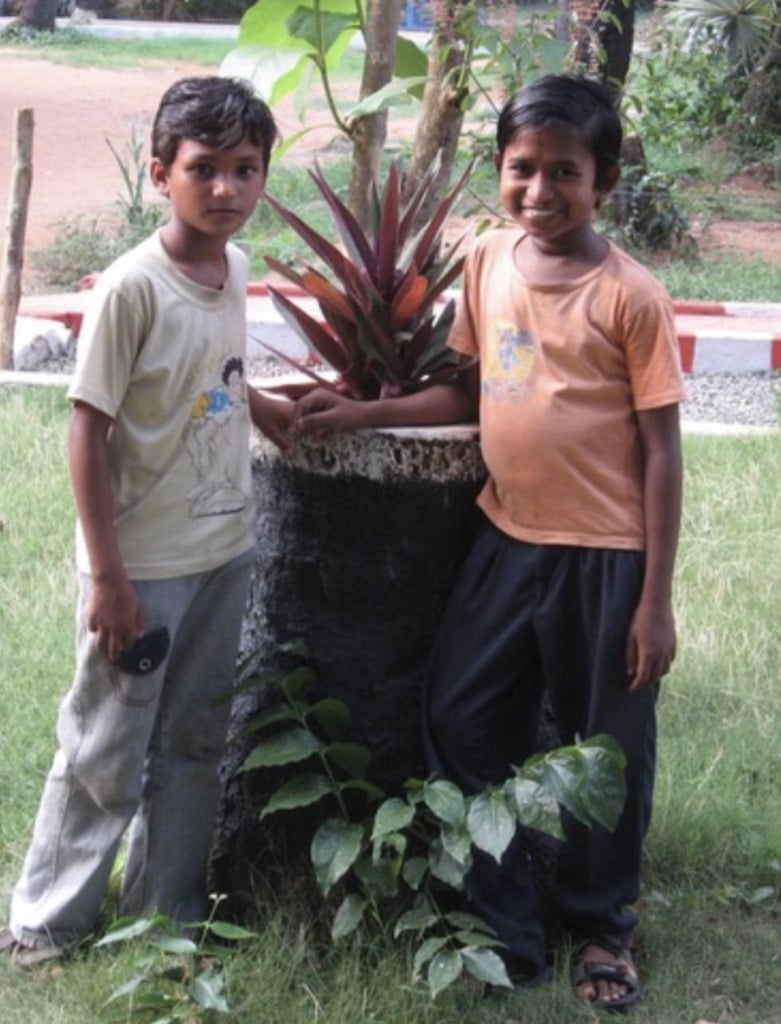
Subbu on the left with his friend Wamsi who sadly passed away from AIDS passed to him at birth.
Knowing how the people of India are fanatical about their cricket we have brought with us a complete cricket set – bats, stumps, batting gloves and pads. Most importantly we have been given a cricket ball autographed by Adam Gilchrist.
One of the children we sponsor is a young boy by the name of Subramanian, commonly called Subbu. Not knowing his given name that was the name assigned to him by the orphanage.
The story of Subbu’s early childhood is a tragic one but it has a great ending. We know nothing of his very early years but at the age of four years, he spent his days train-hopping between stations begging for money to support his family.
On one such trip he occupied his usual place on the deck between carriages. As the train rounded a bend an unlatched door flew back and hit Subbu in the back, sending his frail little body flying through the air. He landed on gravel as the train powered on to the next station.
When the train ground to a halt not far down the track there was some good fortune. A staff member from the orphanage was also on the train and he rushed back to where the accident had occurred. He found a little boy in a serious condition and rushed him to hospital.
Subbu had a fractured skull, paralysis and loss of sight. His condition deteriorated when he suffered a brain infection. After some months his eyesight returned and amazingly he gradually recovered. During the time he was in hospital we commenced the sponsorship and after leaving hospital he was given a new start in the orphanage. He made a complete recovery.
On this day we have given Subbu the Gilchrist-autographed cricket ball. You would think he was given gold. That ball was his prize, never to be used in a game. Most youngsters in Australia take a teddy bear or such-like to bed. Not Subbu. He takes his cricket ball.
We spend some time visiting various areas of the orphanage including the kitchen area where solar dishes focus heat onto cooking equipment. In the dining area fingers scoop morsels from stainless steel plates later washed in a communal trough, reminding me of my Army training days.
We visit the vocational training area. A young boy born without legs requires an electric sewing machine so that he may become a tailor. For A$100 we bought him a machine in the hope it may give him a chance in life.
We were later told that the young aspiring tailor very quickly learnt how to operate the electric powered sewing machine. He now has a thriving business meeting the tailoring requirements of local villagers. Such a small donation changed a life.
Satisfied that our annual donation is being well used we make our way back towards the car for our return to Vizag. We hesitate to watch dozens of children, boys and girls, playing cricket.
There are numerous games in progress. Each game has one piece of equipment from Australia in use – one bat, one pad, one keeper’s glove, one batting glove. Ironically I noticed the stumps had these words embossed: “Made in India.” Purchased in Australia, returned to India; the full circle.
It is also enormously gratifying to know that Subramanian excelled at school having graduated with outstanding grades. He speaks several languages, including English and Japanese. He is a determined young bloke, destined to succeed at whatever he turns his mind to.
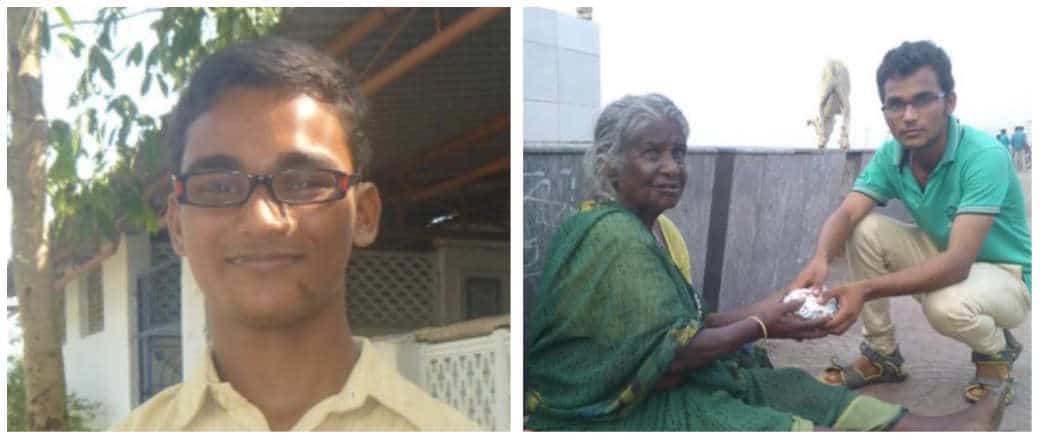
Gordon d’Venables has been, inter alia, a teacher, soldier, farmhand, lawyer and businessman. As a lawyer he travelled extensively for international clients. His letters from various times and places around the globe (PNG, England, Ireland, France, USA, Saudi Arabia, Serbia, Iran and others) refer to some of his experiences. Gordon’s recently published book, The Medusa Image, can be obtained from Pegasus at www.pegasuspublishers.com, ISBN: 9781784658939 www.amazon.com.au or https://www.amazon.com/Medusa-Image-Gordon-DVenables/dp/1784658936
GORDON D’VENABLES: Letters.
GORDON D’VENABLES: Letter from USA, pre-Soviet Union Breakup.
GORDON D’VENABLES: Letter from Belgrade.
GORDON D’VENABLES: Letter from Iran.
GORDON D’VENABLES: Letter from India.
GORDON D’VENABLES: Letter from Saudi Arabia.
GORDON D’VENABLES: Letter from Vietnam.
GORDON D’VENABLES: Letter from Germany.
GORDON D’VENABLES: Letter from London.
GORDON D’VENABLES: Second Letter From London.
GORDON D’VENABLES: Second Letter From Iran.
GORDON D’VENABLES: Letter from Moscow.
GORDON D’VENABLES: Second Letter from Moscow.
GORDON D’VENABLES: Letter from St Petersburg.
GORDON D’VENABLES: Letter from Ireland.
GORDON D’VENABLES: Letter from Hua Hin, Thailand.
GORDON D’VENABLES: Second Letter from Thailand.
GORDON D’VENABLES: Letter from Tanzania.