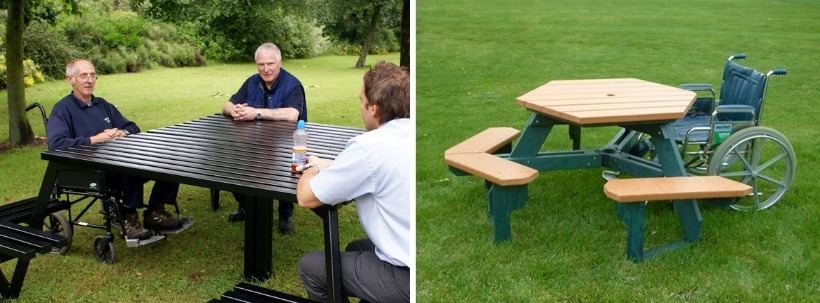
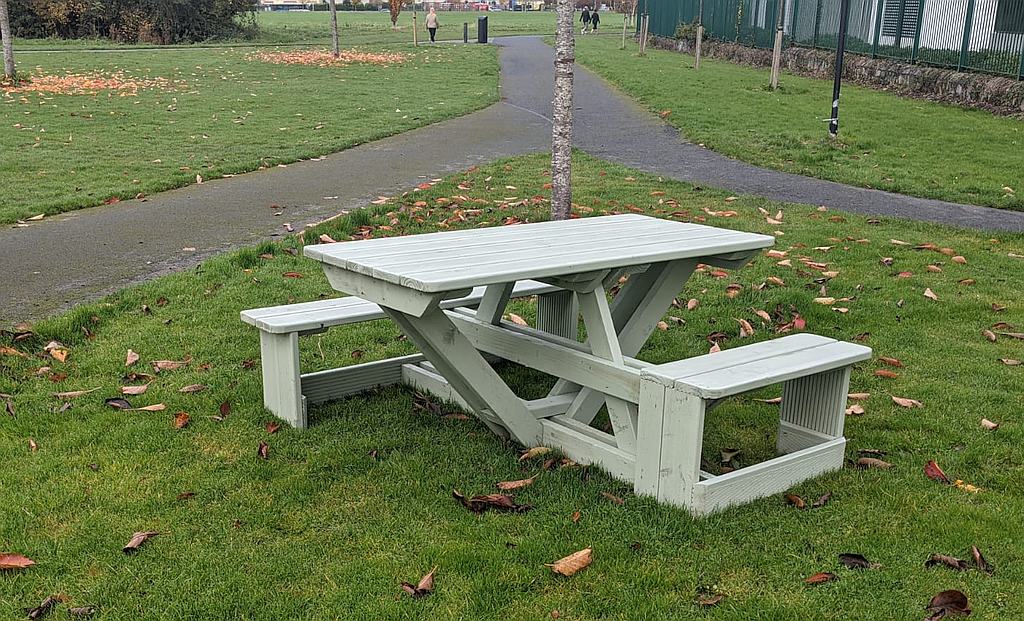
Essential things to bring on a picnic include lovely food and something to bring. And of course your friends. But have you ever thought about how people in wheelchairs don’t actually have access to seating around a picnic table?
There is physically nowhere that their wheelchair can fit. There has been some movement on this in recent years with some local government areas providing accessible picnic tables at parks, beaches and recreation reserves in general. I’m guessing the wider and growing knowledge of disability inclusion has lead to the uptake of these measures by some while others lag behind. That’s largely the case here in Tasmania.
This speaks to the larger picture of access of people with disabilities (PWD) in our community. Some councils have now dedicated access and inclusion committees that look at issues effecting PWD in their local government catchment areas. Some councils do and some councils don’t. Many are lagging behind.
Councils often use the old tried and true, ‘what will it cost?’
Well the cost is not allowing a significant proportion of your residents access. The benefits are having a vibrant community of inclusion that sees every person that lives in that community included.
Since the introduction of the NDIS I have personally witnessed the growth of PWD who with support are able to get out and about. New technology funded by the scheme has seen people able to physically leave their homes more often, either independently or with support workers, and enjoy the community in which they live. Whereas once it was an anomaly to see a cluster of wheelchair users in town, now it’s the norm in some areas.
The humble picnic table exemplifies the larger picture of the infrastructure that councils need to now be looking at. The NDIS has provided the mean for people to integrate into community more freely, now local government and authorities that manage state and national parks need to look at infrastructure and the physical barriers that might stop us.
Surveys need to go out to PWD or in local government areas to see what we need. Its all very well to have a footpath strategy or a public toilet infrastructure replacement strategy but if these are not meeting the needs of a significant proportion of the community they are not valid.
They need to change, infrastructure need to improve and attitudes need to change too. PWD have a fundamental human right to be included.
Tammy Milne is a deaf interpreter, a community activist in various fields and a person living with Arthrogrophosis Multipex congenita.
Editor’s note: This article was prompted by the observation of the wheelchair accessible picnic table shown in the featured image above. That particular one is sold and indeed manufactured by Irish social enterprise PACE.
There are a few different models kicking around, as in the photo below. And surely, with some design skill and ingenuity applied to the issue, many more innovative designs are possible.
So how about it Tasmania, will you take up the challenge? Is there a social enterprise that would like to design and manufacture a wheelchair accessible picnic table for use here? Men’s Sheds? TAFE and training centres?
Let’s make it happen.