Policy Statement – Tasmanian Liberals, April 2021
Maximising the Potential of our Tourism Industry
A majority Liberal Government will:
- Maximise our State’s potential as a tourist destination with an investment package of $83 million, backing a key industry worth $3.6 billion to the State, while underpinning around 43,200 direct and indirect jobs, representing over 17 per cent of our total workforce*.
- Investing $8.45 million into unique tourism product through:
- Showcasing our maritime heritage, with a $1.25 million investment into the Wooden Boat Centre at Franklin.
- Providing a further $2.7 million into the exciting Transformer Project at Ida Bay.
- Awakening our convict heritage, with a $1.25 million Convict Heritage Hub in the Penitentiary Chapel in Hobart.
- Enhancing the Don River Railway with $2 million to develop a world-class rail experience.
- Creating a new short walks destination in the Meander Valley with a $500,000 investment, over two years.
- Building the tourism potential of Tasmania’s Aboriginal Heritage with $750,000 over three years with $450,000 of this to support the wukalina walk.
- Implementing a $50 million program providing interest free loans of up to $1 million to operators to recover and improve their product offerings post COVID.
- Identifying the tourism potential of the Far North-West, with an analysis of opportunities through a $275,000 investment with local industry, and a $2.75 million* investment to revitalise the Edge of the World experience at Arthur River.
- Developing a world-class Visitor Information Technology model, with a $1 million investment over two years, with the East Coast and the West Coast pilots for this project.
- Supporting the tourism industry’s goal to become a carbon neutral destination by waiving registration for electric vehicles purchased by car rental companies and coach operators for two years.
- Elevating the attraction of Tasmania as a preferred destination for business events, with an additional $1.2 million over four years committed to the Business Events Attraction Fund managed by Business Events Tasmania.
The Tasmanian Liberals remain the strongest supporters of the State’s tourism industry and that will continue under a re-elected Majority liberal Government.
We will work in partnership with industry to:
- Maximise the economic and social benefits that tourism delivers, in every corner of our State, underpinning jobs in all local communities.
- Continue our nationally-recognised T21 industry partnership model to drive tourism outcomes and harness the energy and resources of four Regional Tourism Organisations and the Tourism Industry Council of Tasmania, and operators at a local level.
- This Government acknowledges that Tourism Tasmania will be operating in a highly competitive marketplace as the world recovers after COVID and must have the capacity to do so aggressively and effectively. The continuation of marketing funding at the minimum of the current level, beyond 2021/2, estimated to be up to $6 million per annum, will be dealt with in the 2022/3 budget.
This approach will see tourism continue to be one of the State’s largest employers of Tasmanians, while ensuring all Tasmanians can reap the benefit of a flourishing visitor economy.
This Government will also commit to the continuation of the Premier’s Visitor Economy Advisory Council (PVEAC).
Under a re-elected Majority Liberal Government, a Liberal Premier will also remain the Minister for Tourism.
Investing $8.45 million into unique tourism product
Tasmania is already recognised as a must-visit destination due to its range of pristine natural environment, its depth and diversity of cultural experiences and its amazing events and produce.
It is critical that we work with industry to continually enhance and expand our product range and particularly focus on those products that are strongly Tasmanian.
Showcasing our maritime heritage, with a $1.25 million investment into the Wooden Boat Centre at Franklin
Our maritime heritage is incredibly rich and yet relatively understated.
There is an opportunity to bring together all the elements of this heritage underpinned by a hub in the form of the Wooden Boat Centre, where not only the stories of our maritime past are told and presented, but where the artisanal skills of boat building are still taught and enjoyed.
In addition to the tourism value of this Centre there are significant training and educational benefits that can be optimised.
The Wooden Boat Centre is a unique facility in the Southern Hemisphere and its classes are sought after by people from all around the world.
It is also proposed that this initiative will provide an outcome for the SS Cartela as an important element of the future precinct.
A re-elected Majority Liberal Government will provide $1.25 million to the Wooden Boat Centre to enable it to expand its training and tourism interpretation capacity.
Providing a further $2.7 million into the exciting Transformer Project at Ida Bay
Previously known as Project X, this exciting initiative will be located at the Ida Bay Reserve.
The exhibit will be the work of world-renowned artist Doug Aitken and is being project managed by Dark Lab.
Transformer will be a year-round attraction that will combine the elements of nature, natural light, architecture and ecology and will be truly unique to Australia. It is scheduled to open in June 2022.
We will provide $2.7 million, with the balance of funding to be contributed by both the Australian Government and MONA.
Awakening our convict heritage, with a $1.25 million Convict Heritage Hub in the Penitentiary Chapel in Hobart
Tasmania’s convict heritage is unique and filled with rich stories that link us to our past and to the rest of the world.
This colourful history will be further embellished through the establishment of a Convict Heritage Hub in the Penitentiary Chapel in Hobart.
This facility will be a central hub for Tasmania’s fascinating convict trails and our existing attractions including Port Arthur, Maria Island and Sarah Island.
The descendants of the 75,000 convicts transported to Tasmania now number over 5 million worldwide.
The virtual presentation of our vast records of convict history will provide an immersive opportunity for local and international visitors to trace convict movements throughout the State and across the globe and learn the stories of their ancestors.
A re-elected Majority Liberal Government will provide $1.25 million to the Port Arthur Historic Site Management Authority to oversee the establishment of the hub and manage this attraction.
Enhancing the Don River Railway with $2 million to develop a world class rail experience
Rail journeys are a significant motivator for people to visit our State.
There is a great opportunity for Tasmania to establish a world class tourism rail experience and one that would be unique to Australia by combining heritage rail rolling stock along our coastal scenery.
The Don River Railway offers now a quality educational and tourist experience.Its team has identified the opportunity to take this to the next level with a range of offers that will drive interstate, and ultimately international visitation to the State’s North West, as well as servicing an existing strong local community following.
The critical first step is to install necessary line infrastructure (switches) to enable access to the TasRail mainline.
A re-elected Majority Liberal Government will provide $2 million to develop this world class experience.
Creating a new short walks destination in the Meander Valley with a $500,000 investment
Bushwalking and hiking continue to be major drivers of visitation to Tasmania, with a strong focus on multi-day experiences.
It is important we build the range of options for those visitors that appreciate the opportunity to build in short duration walks to their overall itinerary.
The Meander Valley has been identified by industry, Visit North Tasmania and the local Council as an ideal area for this type of activity.
A re-elected Majority Liberal Government will commit $500,000 over two years to realise this opportunity.
Building the tourism potential of Tasmania’s Aboriginal Heritage with $750,000 over three years
An opportunity clearly identified in the T21 Visitor Economy Action Plan and by each of the four Regional Tourism Organisations is the engagement with the Tasmanian Aboriginal community to identify and promote in an appropriate manner the range of rich cultural and location-based experiences throughout the State.
It is critical this opportunity be pursued through culturally appropriate and inclusive engagement with Aboriginal people. It must be nurtured in a sustained and practical manner, ensuring that these stories and products are interpreted appropriately.
The ground breaking wukalina walk operated by palawa Enterprises will be provided support under this initiative to enable it to reach self-sufficiency and set the standard for new Aboriginal operated experiences that will be identified through this initiative.
A re-elected Majority Liberal Government will commit $750,000 over three years to this initiative.
Identifying the tourism potential of the Far North-West, with an analysis of opportunities through a $275,000 investment with local industry, and a $2.75 million investment to revitalise the Edge of the World experience at Arthur River*.
The Far North-West region has a disproportionate reliance on the visitor economy but low levels of investment in visitor infrastructure and experiences.
The Liberal Government commissioned a “Re-imagining the NW” Report which identified a number of opportunities for the area.
What is required now is for further analysis of the opportunities to be undertaken through demand testing and viability considerations.
West by North West Tourism will undertake “Project FNW” to understand the best development opportunities for enhancing tourism and growing demand through new and diversified visitor experiences in the area.
A re-elected Majority Liberal Government will commit $275,000 to this critical project with the objective of identifying with local industry where the genuine sustainable opportunities exist.
To get the ball rolling, and encourage visitors to venture further west than Stanley, we will provide funding of $2.75 million to revitalise the ‘Edge of the World’ experience at Arthur River.
Currently, the far north-west region receives about 150,000 visitors, yet only about 30,000 venture further west than Stanley. This project will provide another high-quality natural attraction to draw visitors to the coast and provide a reason to stay another night.
The upgrade will:
- Provide new and increased car parking infrastructure.
- Construct a new non-obtrusive, all-weather shelter offering visitors the opportunity to take in the breathtaking vista of the west coast landscapes and the pounding Southern Ocean.
- Provide interpretative materials (in consultation with the Aboriginal Communities) which highlight the outstanding values of the Western Tasmania Aboriginal Cultural Landscape.
It is anticipated that construction on this project will commence in 2023-24 and that it will be completed in 2025-26.
Developing a world-class Visitor Information Technology model, with a $1 million investment over two years, with the East Coast and the West Coast pilots for this project
Today’s travellers are discerning and better informed than ever about the destination they are travelling to.
A critical competitive element in motivating people to commit and then maximise their visit is to provide current, accurate and comprehensive information and advice in an easily accessible and efficient manner.
A holistic, multi-faceted model is required that incorporates both bricks and mortar information centres and quality digital information delivered via easily promotable and accessible technology channels.
The model must cater to the needs of travellers prior to arrival and during their visit to the State.
Consistency of language, technology and accessibility throughout the State is key.
Central to this is the enhancement of the Discover Tasmania website and the creation of digital tools that will equip our regional service providers with consistent and current information to share with visitors.
The model will incorporate a new Ambassador/Host program that equip industry and local communities to provide visitors with a consistent Tasmanian welcome and support.
A re-elected Majority Liberal Government will commit $1 million over two years to this project.
Supporting the tourism industry’s goal to become a carbon neutral destination by waiving registration for electric vehicles purchased by car rental companies and coach operators for two years
There is a very real opportunity for Tasmania to become a genuine carbon neutral tourism destination which would place the Tasmanian tourism industry in a unique global position.
In line with this Government’s broader climate goals, tourism can lead the way through a tangible initiative to facilitate the gradual transition of the State’s rental car and coach fleets towards electric vehicles.
To support car rental and coach operators to adopt electric vehicle technology, a re-elected Majority Liberal Government will:
- Waive vehicle registration for electric vehicles purchased for the next two years.
As these fleets are replenished regularly with vehicles making their way into the used car market there will be the downstream effect of more EVs entering the general vehicle market.
This initiative is in addition to other Liberal commitments to support greater uptake of EVs including a further investment of $600,000* in grants towards our State-wide electric vehicle charging network for our regions and key tourism destinations.
The expected cost is $1 million over two years for this transformative initiative.
Elevating the attraction of Tasmania as a preferred destination for business events, with a $2.4 million Business Events Attraction Fund
The Business Events, meetings, incentives and exhibition market is an extremely competitive one, yet it generates significant economic benefit with high yielding, and not as seasonally influenced.
In order to be competitive, Business Events Tasmania must be equipped to build on the State’s reputation as a world class business event destination for small to medium sized opportunities.
A re-elected Majority Liberal Government will commit a further $1.2 million over four years to Business Events Tasmania to bolster the Business Events Attraction Fund to a total of $2.4 million
Provision of a $50 million Interest Free Loan Program
In recognition of the unprecedented impact of the COVID pandemic has had on our tourism industry, a re-elected Majority Liberal Government will provide a $50 million interest free loan scheme to enable our tourism businesses to develop their products so that Tasmania is the most sought after destination in the country as we rebuild from COVID and travel returns to normal.
In order to enable our industry and its product to be nation leading and world class, Government will make available an interest free loan scheme that will provide individual businesses with interest free loans up to $1 million for three years.
Liberals delivering for tourism:
- Directed the TT Line Board to proceed with the purchase of the two new Spirit vessels for TT Line with the first due to arrive in 2023 and the second in 2024 and guaranteed a local spend of $100 million in the agreement.
- Reintroduced direct air travel between New Zealand and Tasmania after a 20-year hiatus, through an underwriting agreement with Air New Zealand.
- $10 million in partnership funding towards the cost of development of the interim terminal facility to enable the border processing of regular international passenger flights.
- $1.5 million to enable tourism businesses undertake carbon audits and implement measures to maximise opportunities to drive the shared T21 goal of becoming a carbon positive destination.
- $600,000 in grants, if re-elected, towards fast-charging and destination stations in regional Tasmanian locations and key tourism destinations
- Initiated Hobart to King and Flinders Islands flights from September 2020, and if re-elected, will extend service to March 2022. Total commitment of $1.75 million.
- Delivering Tasmania’s next Iconic Walk in the Tyndall Ranges with a $20 million commitment.
- $12.5 million Make Yourself at Home travel voucher – resulted in close to $40 million spend throughout regional Tasmania, with intrastate trips by Tasmanians increasing 51% over the period.
- Successfully lobbied for $6 million extension of the Bass Strait Vehicle Equalisation Scheme.
- $8 million Innovation and Tourism development Grant program to expedite key strategic product initiatives in consultation with industry.
- $4 million commitment capped at $100,000 per operation to support key attractions and experiences as they rebuild from the COVID-19.
- $1 million Travel Agent Support Fund providing grants capped at $100,000 to support agencies continue trading and securing jobs.
- $1 million for industry led Registered Training Organisations.
- $92,200 to Don River Railway for Business Plan.
- $600,000 to Tasmanian Association of Tourist Railways to assist them in meeting the cost of insurance.
- In excess of $40 million to for upgrading key National Parks and Reserves, including Freycinet National Park and Maria Island.
- $8 million support to the West Coast Wilderness railway to offset the impacts of COVID and enable the iconic experience to maintain operations.
- In excess of $20 million to PAHSMA to offset the impacts of COVID and enable this iconic experience to maintain operations.
Costings:
The cost of this policy is $32.9 million over five years which includes $3 million for loan interest coverage for three years on a $50 million loan package.
*Costed against other portfolio policies.
*Pre-pandemic job and economic numbers.

Policy statement – Tasmanian Labor, April 2021
Tourism, Hospitality & Events Package
INTRODUCTION
Tasmania’s tourism, hospitality and events sector is a key driver of our economy, a major job creator and an important contributor to the strength of Tasmania’s brand.
The Tasmanian tourism industry delivers an economic benefit to the state of $3 billion annually and provides direct and indirect employment for close to 17 per cent of Tasmania’s workforce.
The Tasmanian hospitality industry is made up of around 2,500 businesses which contribute $480 million annually in wages and contribute $744 million annually to the state economy.
We understand the necessity to provide a pathway into work for Tasmanians who want a career in the sector and we will rebuilt TAFE and the reputation of Drydale. This will give people the chance to get a foot in the door to a job and support growth across the sector.
A majority Labor Government supports the aspiration for Tasmania to become a carbon neutral tourism destination by 2025 and we will continue to support the important cultural events that make Tasmania so iconic as a visitor destination.
Increased funding of $18 m for Tourism Tasmania – The State Budget shows Tourism Tasmania’s marketing budget falling off a cliff from 2022/23, with a $6 million cut in annual funding in the forward estimates, as several one-off funding commitments come to an end.
There is a direct correlation between Tourism Tasmania’s destination marketing resources, visitor numbers and flight access into the State, and jobs in the visitor economy. This is one area of government expenditure that generates a direct return to the State through increased economic activity.
TT Line – Tasmania has the advantage of owning the two Spirit of Tasmania vessels and a majority Labor Government will ensure they are working for Tasmanians to maximize the benefit to the state.
We will:
- Commit to replacement of Spirit of Tasmania vessels as quickly as feasible.
- Lobby the Federal Government to extend the subsidy for free car travel on the Spirit of Tasmania beyond June 30 to make sure visitors continue to travel to our state throughout winter.
- Given the shortage of hire cars in the state we need to do everything we can to get people travelling to Tasmania with their own vehicle.
- Direct TT Line Board to increase the number of day sailings over winter and spring by 30 to support regional tourism destinations that are more heavily reliant on drive tourism.
$2 million King Island and Flinders Island flights – continue to underwrite direct flights from Hobart to each of the islands until March 2022 to support operators during the winter period and enabling operators to be prepared for a busy spring and summer, with the ultimate goal of the flights becoming commercially sustainable.
$500,000 Getting Tourist Rail Back on Track – Tourist and heritage rail can play an important role in the recovery of our tourism sector. Supporting rail projects will create jobs and other new attractions for visitors and locals alike. Labor would appoint a Tasmanian Rail Access Coordinator (TRAC) within the Department of State Growth to progress stalled heritage rail projects.
A majority Labor Government will also:
- Progress the Cradle Mountain sustainable transport solution.
- Progress the Next Iconic Walk on the West Coast of Tasmania.
- Progress real action on Hobart’s Waterfront by activating Macquarie Point.
- Progress the T21 Tasmanian Visitor Economy Action Plan 2020-22 – Continue to work with industry on progress as we continue to confront the challenges and disruptions of COVID, rebuild our visitor economy, and lay the foundations for Tasmania’s future tourism development as a carbon neutral destination.
- Commit to a Premier for Tourism – The Premier will hold the Tourism Ministry in Government providing whole of government leadership, action as a brand ambassador for Tasmania and action on the priorities for growing our visitor economy.
- Maintain the Premier’s Visitor Economy Action Plan (PVEAC) – we will maintain the model as the principal forum for senior leadership and collaboration across government and industry stakeholders engaged in the visitor economy.
- Develop the Future T30 – Commit within the next term of government to develop with industry a new ‘T30’ – a joint industry plan and strategic framework to manage tourism to Tasmania over the next decade.
$3 million THAs Strategic Plan and Workforce Development program – Labor recognises the importance of supporting the growth and development of the hospitality industry and we are committed to continuing to fund the Tasmanian hospitality industry’s strategic plan, its programs and initiatives.
$3 million Great Customer Experience Program – we will continue to provide funding to support the program’s work right across the state.
$1.5 million Clubs Tasmania – we acknowledge the value that Clubs Tasmania represents in supporting the sustainability of Tasmania’s community and sporting clubs and promoting active and healthy lifestyles.
$500,000 Mental Health – we will provide funding to support the continued development and delivery of mental health services to venue owners, operators and their staff as they look to rebuild their businesses and lives in the wake of the Coronavirus pandemic.
A majority Labor Government will also:
- Maintain a dedicated Hospitality Unit within the Department of State Growth.
- Have a Minister for Hospitality in Government.
$5 million Reimagined Events Fund – Labor’s Reimagined Events Fund will support events and festivals to adapt to the changed environment. We will support the iconic events across the state that play an important part of Tasmania’s events calendar. Events including Unconformity Festival, MONA FOMA, Festivale, Falls Festival and Junction.
Backing our Events Continued uncertainty has led to many events being cancelled or scaled back. Labor will give confidence to our events sector, from the Symphony Under the Stars to Festivale by offering to underwrite insurance costs of up to $10,000 so these important events can proceed. Each year, tens of thousands of people attend these events, which injects millions into our economy. With the confidence of the underwriting scheme, event organisers can plan with confidence. $2 million
Winning Conference Events for Tasmania The conference and business events sector makes an important contribution to the economy. Labor will provide funding of $2 million to enable Business Events Tasmania to aggressively market Tasmania as a business event destination. This will bring more people to our state and support accommodation, events and hospitality venues.
$5 million Tourism and Hospitality Contingency Support – There are significant unknowns about what the next 12 months will hold for Tasmanian tourism and hospitality businesses. While businesses have adapted to COVID-19 restrictions, the withdrawal of JobKeeper and the slow roll out of the vaccine will continue to put pressure on the sector. This support will be allocated in the form of grants, fee waivers, bill relief or other assistance as needs arise.
$100,000 Digital Ready program – With the closure of many visitor information centres across the state it is more important than ever that businesses have a digital presence. Labor will boost the Digital Ready Program, with additional funding of $100,000 to help tourism and hospitality businesses build an online presence.
$55 million Jobs and Innovation Fund – This Fund will leverage at least two dollars of private investment for every public dollar spent. Experience with similar programs has demonstrated a return of close to $5 of private investment for every public dollar. This fund will enable planned investments to be brought forward, prevent investment being delayed due to current economic conditions, and stimulate innovation and new investment. Funding will be allocated through competitive grant rounds, and priority will be given to investments that will result in business growth and job creation. It is expected to stimulate at least $220 million of business investment and create 1600 jobs.
Small business training – Labor will help small business operators upskill in areas such as accounting, business planning, social media and online marketing, and human resources. Extra support for training will enhance programs offered through Business Enterprise Centres and through face-to-face training in regional areas.
Legal Support for Small Business – Business decisions often need expert advice. Labor will fund free legal advice for small business owners and sole traders on a range of common issues, to support growth and ensure resilience. This will support businesses through periods of change, enable innovation and foster job creation.
Revitalising Main Streets – Reinvigorating town centres in regional areas will attract people to shop and spend, resulting in increased confidence for small business and jobs growth. Labor will match investment in maintenance or upgrade projects that improve the appearance or amenity of shopping, dining and retail precincts. This fund will bring forward investment that may have been delayed due to the uncertain operating environment, and will be open to local government as well as private businesses or property owners.
Cutting the Cost of Doing Business – Labor will help reduce the cost of red tape compliance for small and medium businesses. We will establish a competitive grant fund to help businesses pay for compliance costs such as trade waste, the provision of disability access under the Disability Discrimination Act and other requirements under the Building Code. The grants will cover up to half of the cost of the required upgrades and will support a diverse range of businesses.
Rebuilding TAFE from the Ground Up – Tasmania needs a TAFE system that gives people lifelong skills to get a job and aligns with the needs of industry.
More Teachers, More Relevance – Labor will increase the TAFE teaching workforce by nearly 20 per cent, drawing new teachers and trainers from private and public industry sectors.
Enhancing Regional Delivery – Labor will connect students with training where they need it by creating a TAFE Regional Delivery Fund to deliver training in partnership with relevant local organisations.
Promoting the Value of Vocational Training – Labor will better promote the value of gaining a qualification through Tasmania’s rebuilt and reinvigorated TAFE training system. Enrolling in TAFE and pursuing one of the many respected career paths that follow a TAFE qualification should be highly valued by parents and students alike.
Labor will make TAFE Free – Labor will make TAFE free in areas where there are known skill shortages, including tourism and hospitality.
Creating Pathways to Jobs – More than half of Tasmania’s school leavers are not at work, in training or at university. Labor will create new jobs for career educators in schools and colleges, working with local industry to ensure career programs are regionally relevant, and supporting non-government programs to provide intensive support.
$40 million for Transformative ‘Parks for Jobs Now and Into the Future’ – Upgrade of priority regional visitor infrastructure:
North-West: Edge of the World Visitor Infrastructure and Experience Upgrade (Marrawah) Walls of Jerusalem National Park Camping Upgrade (Meander)
North: Tamar Valley Wetlands Boardwalk Upgrade (Launceston) Flinders Island Camping Facilities Upgrade (Flinders Island) Ben Lomond Visitor Complex (Fingal)
East: Maria Island Master Plan Stage 3 (Triabunna) East Coast Camping Upgrade and Expansion Project (East Coast)
South: Lake St Clair Lake Walk and Narcissus Hut Upgrade (Derwent Bridge) Mt Field Arrival Upgrade and Giant Tree Reserve (Maydena) Tasman Arch & Devil’s Corner Infrastructure Upgrade (Tasman Peninsula) Remarkable Cave Infrastructure Upgrade (Tasman Peninsula) Cockle Creek Camp Site Upgrade (Far South) Reimagining Hastings Caves Master Plan Development (Far South) Bruny Island Light House Car Park Upgrade (Bruny Island)

Policy statement – Tasmanian Greens, 27 April 2021
lutruwita/Tasmania – A Wild State
Background
lutruwita/Tasmania is a wild state. Wildness permeates almost every aspect of our identity, community, culture and industry. It dominates our landscape, underpins our brand, sustains our people and defines our sense of place.
The Tasmanian Greens defend the integrity of Tasmania’s existing national parks and reserves to protect their ecological and Aboriginal heritage values and maintain authentic natural experiences for visitors. Parallel with this defence, we champion the creation of more formal reserves, both terrestrial and marine, to protect values, create new opportunities and enable Tasmania to live up to the reputation we sell to the rest of the world – that of an island of natural wonder with a reserve system that respects and protects our shared inheritance.
lutruwita/Tasmania’s rare and grand wilderness areas are a relic of the supercontinent, Gondwana, shaped over millions of years by the forces of nature and countless generations by the hand of the palawa.
The Tasmanian Wilderness World Heritage Area meets seven of the ten criteria for listing on the UN World Heritage List and is the only property with the word ‘wilderness’ in its name.
This island’s wilderness, wildness and national parks draw visitors from within the state, across the country and around the globe. They also underpin Tasmania’s clean, green, and natural brand, which gives our primary producers and export enterprises a critical edge in global markets.
Tasmania’s Aboriginal heritage tells a unique story of a resilient people able to adapt to change and manage the landscape for intergenerational sustainability. The most southerly people to endure an ice age, lutruwita’s reserves harbour heritage and stories found no-where else on Earth.
In a time of climate emergency and biodiversity crises, Tasmania can show the world how to protect and restore large areas of natural habitat, both terrestrial and marine. Now, more than ever, government has a solemn responsibility to ensure wild places remain just that, safe from privatisation and exploitation, adequately protected from threats and celebrated as some of the best in the world. Government also has a key role in investing in and supporting the restoration of ecosystems across the island.
As intact natural and cultural landscapes, lutruwita/Tasmania’s national parks and other reserves protected under the Nature Conservation Act (2002), and private land covenanted under the Nature Conservation Act (2002), are precious environmental, cultural, social and economic jewels.
However, some are under-protected, remain threatened and as a whole, they do not protect the full range of biological diversity, natural heritage, ecosystem processes or Aboriginal cultural heritage values that exist in Tasmania.
Major additions are required to the parks system if the network of protected areas is to achieve the survival of significant components of the state’s natural heritage and biodiversity, protect all wilderness and conserve all places that warrant it.
The climate emergency makes this goal a necessity. Significant intact ecosystems are more resilient to climate impacts than fragmented, degraded lands. Climate change presents both a significant threat to Tasmania’s national parks and reserves, and an imperative for their expansion. Preserving carbon and enhancing sequestration should also be recognised as a key role of Tasmania’s Reserve Estate.
Current land management practices are destroying large tracts of native vegetation and associated habitats for native fauna, and impacting on Aboriginal cultural heritage.
The management of Tasmania’s public reserves needs to be enhanced, through the development or strengthening of formal management plans, the creation of a statutory process for the assessment of proposed developments on public land, and an increase in funding for the Parks and Wildlife Service (PWS), for investment in the actual management and protection of natural and cultural values.
The management of our protected areas is often confused because of the failure to recognise and resolve such competing interests as nature conservation, Aboriginal heritage protection, recreation and tourism. The PWS should focus its attention on its principle role as a natural and cultural values conservation agency.
Tasmania’s reserves should be managed by the PWS under a stand-alone Environment Department that does not have competing interests with other sectors, as is currently the case with the Department of Primary Industry, Parks, Water and the Environment (DPIPWE).
The rights of lutruwita’s palawa to be on Country and their knowledge of ecological and cultural management systems for national parks and reserves must be recognised, enhanced and built into programs that progress land justice, equality and cultural health.
Tasmania’s Reserve Estate
While Tasmania’s official terrestrial Reserve Estate covers 50.3% of the island[1], many of these areas are under-protected and allow for destructive activities that threaten the natural and cultural values for which these places were proclaimed reserves in the first place.
Under-protection includes the provision for extractive industries (logging and mining) under some categories of reserve tenure, including Regional Reserves, Conservation Areas and Unallocated Crown Land (‘Future Potential Production Forest’ land (FPPF)).[2] 43% of Tasmania’s current reserve estate allows for logging and/or mining.[3]
Inaction and turning a blind eye have also contributed to compromised values, with both the permitted and illegal use of off-road vehicles on reserves such as the Arthur Pieman Conservation area and Southwest Conservation Area impacting on sensitive vegetation, shorebirds and irreplaceable Aboriginal cultural heritage.[4]
Industry-driven decisions have become increasingly common. In the first of a series of assaults on the reserve management system by the Liberal Government, in 2016, the Tasmanian Wilderness World Heritage Area (TWWHA) Management Plan was changed to facilitate the development of private commercial tourism accommodation. Longstanding protections were overturned and specific provision was made in the revised management plan for developments such as the South Coast Track Huts, South East Cape walk and hut, Lake Malbena helicopter-accessed huts, Lake Rodway Lodge and additional huts on the Overland Track.[5]
Also shortly after coming to office, the Liberals opened up 356,000 hectares of former future-reserves (now classed as Future Potential Production Forest Land) to the potential for logging, including clearfell and burning of high conservation value forest ecosystems.[6]
| Protecting our Reserve Estate | |
| We will review the Tasmanian Reserve Estate to upgrade the reserve status of appropriate areas to National Park through the Nature Conservation Act 2002. This includes all areas of existing or proposed World Heritage listing.
We will amend the Nature Conservation Act (2002) to remove the provision for extractive industries, including special species rainforest logging and mining, in any form of reserve. We will protect all 391,000 ha of FPPF land as a formal reserve under the Nature Conservation Act (2002). We will establish a new reserve tenure under the nature Conservation Act to provide for the proclamation of Aboriginal-owned and managed national parks. We support the Aboriginal Land Council of Tasmania’s formal land return claim for kooparoona niara/Great Western Tiers to become an Aboriginal-owned and managed national park under this tenure when presented to Parliament later in 2021. This tenure could be replicated for similar returns of land to deliver a measure of land justice, cultural recognition and development, and to protect natural values. |
|
Private Land Conservation
Biodiversity, carbon, Aboriginal cultural and other values exist on private land and there is significant interest in conservation and land management in the private sector.
The Government’s private land conservation program, offering payment for covenants on private land has been woefully underfunded for many years and the program of recruitment of new covenant uptake has stalled.
| Re-investing in Land Conservation | |
| We will restore funding to the Private Land Conservation Program, including for incentives and outreach to farmers and other landowners in order to expand the important private land reserve estate. | |
Wildcare, Coastcare, Landcare
Much of the vital remote-area work within our reserves is undertaken by dedicated volunteers. Just some examples are –
- The caretakers at Maatsuyker or Deal Island.[7]
- Working bees removing African boxthorn at Roydon Island.[8]
- Campground hosts at popular camping grounds.[9]
- Bird counts for Orange bellied parrots at Melaleuca in Southwest Tasmania.[10]
- The elimination of rats from Georges Rocks or Sea spurge from the Tasmanian Wilderness World Heritage Area (along with the ongoing removal of marine debris).[11]
There has been a decline in Commonwealth funding to support for these activities.
| Investing in Environmental Care | |
| We are deeply thankful for the work of volunteers assisting with management of Tasmania’s parks and reserves.
We will allocate increased funding of $250 000 per annum to support Wildcare, Coastcare and Landcare volunteers’ vital conservation work. |
|
World Heritage
The TWWHA is lutruwita’s wild and ancient heart. It meets more World Heritage listing criteria than any other property on UNESCO’s World heritage list, and is the only World Heritage site with the word ‘wilderness’ in its name.
The TWWHA protects natural and Aboriginal cultural values of immeasurable significance. Similarly, its existence offers Tasmania a global icon that is now central to our identity as a people, to our clean, green Brand and to the economy.
The TWWHA was borne from conflict and stands as a testament to the power of people,[12] to their commitment to wild Tasmania in the face of immense corporate and government power. It reinforces the critical role the Tasmanian Greens play in Tasmania’s politic and Parliament in driving conservation outcomes.
Declared in 1982, the TWWHA has been extended numerous times. The most recent was in 2013, with Greens in a powering sharing Parliament The addition of the tall, wet eucalypt forests of the Styx, Weld and Florentine and northern foothills of the Central Plateau, the forests known as kooparoona niara/Great Western Tiers[13], largely resolved conflict over the eastern and northern boundary.
Now firmly protected from logging and mining, the greatest threats to the TWWHA come from climate change and the drought, fire and pests that come with it, and the ever-expanding agenda of the exploitation faction within the tourism sector.
Recent (2016) changes to the TWWHA Management Plan have diminished protection for wilderness, done away with long standing protections from huts and made other changes to facilitate commercial developments that would degrade the very values the TWWHA was listed to protect – such as intact and remote wilderness. [14]
Meanwhile, other areas of equal World Heritage significance remain excluded from the boundary to languish unprotected or as lesser level conservation reserves directly threatened by mining, rainforest logging,[15] off-road vehicles and the general mismanagement that comes with a lack of recognition in an ever-diminishing land management budget.
To the west of the TWWHA, the boundary remains unresolved and World Heritage status for the glacial mountains of the West Coast Range, the coast and hinterland of the Spero-Wanderer Wilderness, The Vale Catchment and grand old rainforests of the takayna/Tarkine should be progressed.
| Strengthening World Heritage Sites | |
| We will strengthen the TWWHA Management plan by:
· Reinstating the prohibition on the development of huts in the Southwest National Park; · Reinstating wilderness protection as an explicit, overarching management objective; · Reinstating and extending the scope of the Wilderness Zone; · Reviewing the road network, currently zoned ‘recreation’ to establish which should be closed and rehabilitated, which remain open for apiary or other access and which are genuinely required for recreational purposes. We will seek to achieve World Heritage recognition for areas outside the TWWHA, including the takayna/Tarkine, the Spero-Wanderer Wilderness (Southwest Conservation Area), The West Coast Range, the Vale River Catchment, Granite Tor Conservation Area and Recherche Bay. The Tasmanian Greens do not support the proposal for a cable way accessing Dove Lake at Cradle Mountain, nor do we support the kind of high impact, mass tourism Parks infrastructure being constructed at Dove Lake becoming a model for other protected areas. |
|
Next iconic walk
The Tasmanian Greens do not support the proposal for a Three Capes-style ‘iconic walk’ being developed in the Tyndall Range, a view shared by many in Tasmania’s conservation and bushwalking communities.
The Tyndalls are a much loved, though infrequently visited area of Tasmania, comprising sensitive alpine ecosystems in a quintessentially Tasmanian geological setting. It has wilderness and other values of recognised World Heritage value. It forms part of the proposed extension to the Tasmanian Wilderness World Heritage area.
A development of this nature and associated high volume visitation will have a negative impact on those values.
The Tyndalls also experiences a high frequency of poor weather events, high rainfall and regular strong winds. This makes the construction, maintenance, operation and marketing of a commercial tourism venture in the Tyndall Range an unviable exercise likely to fail on both environmental and financial grounds.
Exploration of new walk opportunities should be limited to those likely to generate significant public support and financial viability, in areas with lower wilderness value and less sensitive ecosystems, with existing access and impacts. Examples include the hut-free Trans-Tarkine Track or the current Future Potential Production Forest land, once they are formally protected under the Nature Conservation Act (2002).
Regenerative Tourism
The Tasmanian Liberal Government’s policy of “unlocking our national parks” is developer driven and facilitated by the secretive Expressions of Interest (EOI) process, the Parks and Wildlife Service’s Reserve Activity Assessment (RAA) process and Tourism Master Plans. Collectively, these non-statutory instruments are usurping the role of statutory park management plans. They are also increasingly excluding Tasmanians from having a say in the future of their protected areas.
The EOI process seeks development proposals for parks and reserves even if they contravene the current management plan. History shows the EOI process has been used for two key purposes.
- It has been used for public relations purposes and to build public and political momentum behind development concepts, ahead of assessment and irrespective of their compliance with management plans and relevant legislation or impacts on natural and cultural values.
- The process has been used to identify blockages to formal approval (such as management plan prescriptions) so as to formally remove them ahead of assessment. This has been seen with the Lake Malbena, South Coast Track and Overland Track hut developments.
Ultimately released by the Greens MPs in Parliament after being leaked by a Government whistleblower, the RAA for the Lake Malbena development was exposed as woefully inadequate. This document which would not have been seen by Tasmanians had a whistleblower not come forward to the Greens, denied community consultation, failed to fully assess impacts like those on wilderness and virtually waved through the development despite expert advice and non-compliance with the TWWHA Management Plan.[16]
A Wilderness Impact Assessment, conducted by PWSsubsequent to the Step 7 RAA approval of the Lake Malbena development, demonstrated significant impacts on wilderness values. As wilderness is supposed to be protected under both the Management Plan and National Parks and Reserve Management Act (2002) this assessment should be terminal for the project. As the RAA is not fully approved, this new information should now be considered and the development rejected.
The Lake Malbena debacle highlighted the failures of the current RAA process.
These proposals are degrading the very values our tourism sector relies on. Instead, we should have a tourism sector underpinned by genuine eco-tourism principles. The same principles articulated by famed wilderness photographer, the late Olegas Truchanas, when he said;
“Is there any reason why Tasmania should not be more beautiful on the day we leave it, than on the day we came?… If we can revise our attitudes towards the land under our feet; if we can accept a role of steward and depart from the role of the conqueror, if we can accept that man and nature are inseparable parts of the unified whole, then Tasmania can be a shining beacon in a dull, uniform and largely artificial world.”
Regenerative tourism understands and respects the living systems of a place. Rather than just minimising environmental impacts, regenerative tourism aims to improve the ecological values of an area.[17]
As a wild state, transitioning our tourism sector to a regenerative sector will ensure we can build on its strengths and contribution for future generations, restore our landscapes and special places, and enrich lutruwita/Tasmania by providing opportunities for palawa peoples to share their stories and knowledge of country.
With active support of the tourism sector, expanding the Tasmanian Reserve Estate with new national parks such as the takayna/Tarkine and formal reservation of the FPPF land, offers new opportunities for tourism and a chance for Tasmania to truly live up to its Brand.
To be delivered concurrently with conservation, there exists opportunities for new tourism attractions and infrastructure in currently threatened wild places of immense and iconic potential. The Trans Tarkine Track is one such proposal, a new multi-day walk through the heart of the Tarkine, proposed by conservationists to protect takayna/Tarkine while improving visitor access and boosting the regional economy.
Similarly, the Tasmanian Greens can support a new process to audit, assess and appropriately zone tourism opportunities, including commercial opportunities, as part of formally reserving the future reserve (FPPF) forests as new national parks or other reserves.
Iconic areas such as Wielangta, the Blue Tier, Douglas-Apsley and takayna/Tarkine languish as FPPF land. It is unallocated Crown Land that is part of the Tasmanian Reserve Estate, managed by the Parks and Wildlife Service yet in limbo with an irresponsible and unworkable plan for commercial logging.
These areas are spectacular, iconic and scattered across regional Tasmania. They are located where we need attractions and economic activity in nearby towns. Many have existing roads, bridges, campgrounds and walking tracks and some, like Derby, have already had significant and successful tourism investment deliver tangible benefits.
As part of properly protecting these wild places as the national parks and reserves they should be, we can look for new tourism options and deliver visitor and conservation opportunities hand in hand.
| Regenerative Tourism Licence Process for Parks | |
| We will abolish the secretive EOI process and replace it with a regenerative tourism licencing process. This will be an open and transparent process and allow for public input.
We will ensure a statutory replacement for the Reserve Activity Assessment process that enshrines a rigorous and independent assessment and includes guaranteed community involvement and third-party rights of appeal. We will limit infrastructure in existing formal reserves to sensitively designed and constructed public infrastructure that protects and enhances the values of our reserves. We will not permit any further privatisation of public protected areas. We will initiate an audit of tourism opportunities across all areas of new, formal conservation reserves proclaimed under the Nature Conservation Act (2002), with the view of zoning appropriate areas as tourism zones, concurrent with the conservation process that proclaims them. |
|
Stand Alone Environment Department
Within Cabinet, there should be healthy debate and contestation between a Minister for the Environment who cares and advocates for the protection of environmental values and Ministers for alternative portfolios, such as Primary Industries, which demonstrably impact on environmental values.
Sadly for this island’s living systems and its people, the reverse is happening in Tasmania today.
So long as the Parks and Environment portfolios are lumped in a mega department that is dominated by Primary Industries (Department of Primary Industry, Parks Water and the Environment – DPIPWE) the interests of this island’s natural environment will always be subjugated.
A stand-alone Environment Department responsible for parks management, threatened species management and other core environmental agencies should be established in Tasmania.
| Department of Environment | |
| We will establish a stand-alone Environment Department, overseen by a Minister for the Environment, with responsibility for Parks and reserve management, and environmental protection.
We will increase funding for the Parks and Wildlife Services land and ecosystem management activities to employ an additional 15 FTE Parks rangers, and 15 FTE field officers to maintain tracks in our iconic parks. |
|
kunanyi/Mt Wellington
kunanyi/Mt Wellington is a place of deepest and sacred significance to palawa people, over countless generations. This locally beloved and mighty backdrop to Hobart is a beacon to our changing weather and an anchor to our sense of place. kunanyi sets Hobart apart from every other city in Australia.
Developers see it as an opportunity to make money.
The cable car dream that has dogged kunanyi for a century has again reared its head over the last decade and the mountain faces a renewed, concerted push for its approval. The development is however about much more than just cable cars crossing the iconic Organ Pipes day and night, with towers and lights and a base station carved into a profoundly bushfire-prone forest.
It’s about access to undeveloped, cheap yet priceless public land at the Pinnacle, for the construction of a 4000m3 private commercial entertainment precinct, including restaurant, café, whiskey bar, conference centre and associated services. This 7-level construction would involve excavation up to 12 meters deep on the sensitive alpine summit.
Special legislation has been passed through the Tasmanian Parliament, with support from the Liberal and Labor parties, to facilitate approval of the cable car. The Liberal Government’s Major Projects assessment process is tailor-made to approve developments like the cable car, developments that would fail to be approved under proper, independent planning processes.
Meanwhile, the developer has turned to the courts to appeal an expert-informed request that it carry out a comprehensive on-site survey of the Aboriginal heritage affected by its development. In a shameful attempt to low-bar Aboriginal heritage, this case demonstrates the contempt shown for the protection of Aboriginal heritage by some in the private sector. It is a contempt led by the Liberal Government and its planned expansion of off-road tracks on the irreplaceable takayna coast, home to some of the world’s richest archaeological sites.
Simultaneously, the Aboriginal and European heritage of kunanyi is being increasingly researched and understood. Renewed attempts to have kunanyi/Mt Wellington added to the National Heritage list are building.
| kunanyi/Mt Wellington | |
| We will revoke the Cable Car (kunanyi/Mt Wellington) Facilitation Act (2017).
We will initiate a process to scope and develop a proposal for National heritage listing of kunanyi/Mt Wellington. |
|
Biosecurity and invasive species
Feral species are impacting on the values of Tasmania’s environment, terrestrial and marine, within and outside of protected areas.
Pathogens like phytophthora, fungal infections such as chytrid and feral species like cats, deer, sea urchins, gorse, sea spurge and rock snot kill threatened species or damage the qualities and places that make Tasmania unique in the world
Populations of some invasive species are exploding.
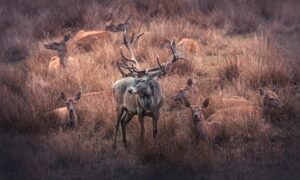
Deer are actively protected by an approach that refuses to declare them official pests and manages them instead as a part-protected species. Official apathy sees management agencies stand by and watch as the population and range of deer expands into Tasmania’s reserve Estate, including the TWWHA, Douglas-Apsley and Freycinet National Parks.
Pressure from hunters and private landowners who profit from commercial hunting safaris has hobbled Government policy on fallow deer for decades. It continues to do so at the expense of natural values and agricultural productivity. This is a fundamental failure in species management.
This, despite the damage deer do to vegetation waterways, fences and the economics of some forms of farming.
Despite clear evidence that recreational hunting is not an effective feral species management strategy, let alone an eradication strategy, the Government’s approach has been to open up an ever-expanding list of conservation reserves for hunting. Meanwhile, a properly funded, professional eradication program is nowhere to be seen.
To date, rock snot has been kept at bay. Ravaging New Zealand’s freshwater systems after introduction from the Northern Hemisphere, this algae clogs rivers and lakes causing significant degradation. Most likely to be introduced via the gear of freshwater fishermen, Tasmania’s biosecurity and parks managers need to be ever vigilant for the introduction of rock snot.
Concurrently, the spread of pathogens and fungal infection is desperately countered and deeply feared.
Phytophthora can infest vast areas of susceptible vegetation, transported on vehicles, boots and bikes. It attacks root systems of plants causing significant dieback. Existing biosecurity measures are helping to manage phytophthora spread, however the risk increases with ever-growing numbers of users, diminishing land management budgets and the opening up of new infection points, including new walking and bike tracks.
Chytrid infects frogs, causing shocking rates of mortality in some species. It poses a real and present danger to Tasmania’s already-endangered frog species, some endemic to this island.
| Biosecurity and Invasive Species Eradication | |
| We will declare deer a pest species and set eradication as the management objective in the TWWHA and other relevant reserve management plans.
We will ban recreational hunting in Tasmania’s formal reserve estate and instead initiate a professional program of eradication in Tasmania’s reserves. We will develop and fund, through Biosecurity Tasmania and the Parks and Wildlife Service, an Invasive Species Eradication Plan for Tasmania’s reserves. In addition to deer, species such as cats, sea urchins, gorse, sea spurge, and others, will be targeted by the program. We will ensure the Parks and Wildlife Service maintains monitoring and programs to prevent the spread of Phytophthora, chytrid and other destructive processes. |
|
Fire
Some vegetation communities in Tasmania have adapted to, or have a dependency on fire,[18] while others, such as alpine conifer communities, rainforest, deciduous beech, sphagnum moss and organic soils[19],[20] are deeply vulnerable to fire.
Some of Tasmania’s most vulnerable and valuable natural treasures are at increased risk in a warming world. The increase in soil dryness and the frequency and severity of dry lightning storms in Tasmania is a portent of a dangerous future.
We need to build resilience in to natural systems and increase our capacity to mitigate fire damage to the sensitive alpine and rainforest ecosystems that date back to Gondwana.
Areas of buttongrass are able to support a fire as soon as four years after a burn,[21] as of 2014, the majority of buttongrass moorland had not recorded any fire within the previous 50 years.[22] In addition to this the fuel-reduction burn plans for buttongrass have not been properly funded.[23] This contributes to a significant risk to natural values.
Remote-area prescribed burns, however, need to be underpinned by science and ecological principles and informed by Aboriginal cultural knowledge. These burns should be conducted in such a way that maintains and enhances the ecological integrity of an area.
While well-managed prescribed burning may help to protect some areas, more must be done to prevent and fight wildfires. This includes early detection and rapid, sustained deployment of appropriately trained fire-fighters. As well as these wildfires potentially destroying ancient and irreplaceable wilderness, if not fought hard and early they can grow into unstoppable conflagrations that spread to settlements, as seen in the 2019 Gell River Fire.
| Remote Area Firefighters | |
| We will invest $3 million per year for 30 rapid response, remote area firefighters in our Parks Service to ensure that values in Tasmania’s parks and reserves are better protected in a warming climate.
We will also fund staffing for the remote area firefighter volunteer training. |
|
[1] Department of Primary Industries, Parks, Water and Environment, Tasmanian Reserve Estate Areas as-at 30th June 2020, 2020.
[2] Mackey, B, Cadman, S, Rogers, N and Hugh, S, Assessing the risk to the conservation status of temperate rainforest from exposure to mining, commercial logging, and climate change: A Tasmanian case study, Biological Conservation, Vol. 215, 2017.
[3] Ibid.
[4] McGlone, P, Arthur-Pieman Conservation Area and Recreational Vehicles, 2010.
[5] Tasmanian Government, Tasmanian Wilderness World Heritage Area Management Plan, 2016.
[6] Department of State Growth, Future Potential production Forest, 2020.
[7] Flinders Council, Deal Island, n.d.
[8] Landcare Tasmania, Friends Of Bass Strait Islands – Removal Of Boxthorn From Roydon Island, 2019.
[9] Workabout Australia, Volunteer Campground Hosts Sought – Cockle Creek And Melaleuca, 2012.
[10] Birdlife Australia, Volunteer in the Winter Surveys, 2020.
[11] Wildcare Tasmania, Wildcare Sprats, n.d.
[12] See: Tasmanian National Parks Association, Creating Today‟s Tasmanian Wilderness World Heritage Area – A Brief History of its Reservation, 2017.
[13] Ibid.
[14] Tasmanian Government, Tasmanian Wilderness World Heritage Area Management Plan, 2016.
[15] Mackey, B, Cadman, S, Rogers, N and Hugh, S, Assessing the risk to the conservation status of temperate rainforest from exposure to mining, commercial logging, and climate change: A Tasmanian case study, Biological Conservation, Vol. 215, 2017.
[16] O’Connor, C, Tasmanian Greens Submission: Wild Drake Pty Ltd, Halls Island, Lake Malbena – Walls of Jerusalem National Park, DA 2018/50, Central Highlands Council, 2019.
[17] Earth Changers, Regenerative Tourism – What is it? (And What is it Not?), 2020.
[18] Tasmanian Government, Tasmanian Wilderness World Heritage Area Management Plan, 2016, p. 114.
[19] Parks and Wildlife Service Tasmania, Fire, flora and fauna, 2006.
[20] Department of Primary Industries, Parks, Water and Environment, Tasmanian Threatened Native Vegetation Communities, 2018.
[21] Ibid, pp. 6-7.
[22] Department of Primary Industries, Parks, Water and Environment, Fire Management in the Tasmanian Wilderness World Heritage Area, Evaluation Report, Nov 2015, p. 12.
[23] Ibid, p. 16.