Tasmania’s first community managed microgrid is off to a flying start providing social housing tenants with cheaper and more reliable power.
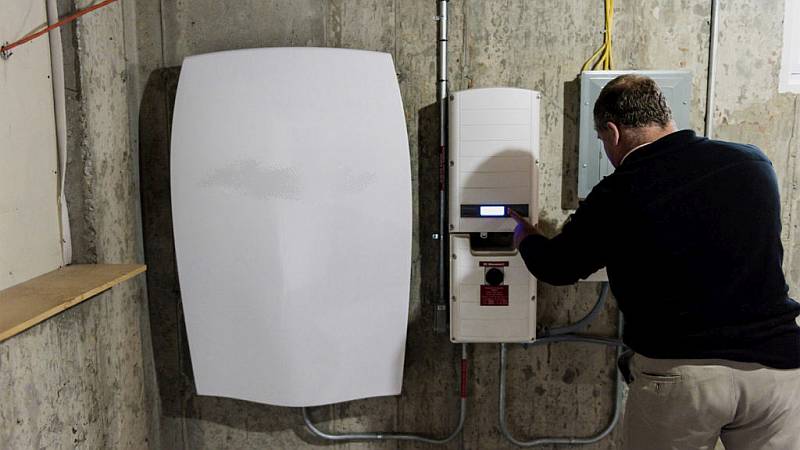
The Nubeena Residential Microgrid (NRM) is a project of non-profit community group Tasman Peninsula Power Inc. (TPP). The 25.6 kW of solar panels and 54 kWh of batteries allow tenants to share solar PV, and provides emergency power when there is a network outage.
The project was designed and installed on five two-bedroom units in central Nubeena on the Tasman Peninsula by Tasmanian firm Mode Electrical. The social housing units were financed by the state government and are managed by the Tasman Council. Under a separate grant from the state government, TPP installed the microgrid and retails electricity to the tenants at a reduced rate.
“We couldn’t be more pleased with our first months of operation.” said Paul Sutton, the chair of TPP. “We both provided surplus energy into the grid, and successfully kept the lights on for tenants during two major grid outages that lasted a total of over seven hours.”
“The drop in how much power I’m paying is phenomenal – it’s almost halved it!” said resident Carol.
“It’s brilliant – I’m loving it here. I’m very lucky to be here.”
She explained in more detail how the microgrid works. “My unit has black double power points which are connected to the microgrid and this means that whatever is plugged into them stays on even in a blackout – and I can connect my airfryer so I can still cook and also the lights always stay on too, which is awesome.”
Tenants are charged a modified time of use tariff. This is similar to Aurora Energy’s tariff 93 but with lower rates. In addition there is an extra low ‘solar bonus’ tariff of 7¢/kWh for 6 hours in the middle of every day.
In the first 3 months in which all units were tenanted, tenants used an average of 307 kWh/unit/month. This is 35% less than a typical 2 person household in this location. This reflects the energy efficient design of the units which have double glazing and heat pump hot water systems as well as the careful usage habits of tenants.
Tenants paid an average of $82/unit for the month (before concessions), a 12.7% saving on the same consumption on Aurora’s tariff 93.
All the tenants in the microgrid are concession holders but Tasmanian electricity concessions only currently apply to tenants who buy their electricity from a nationally recognised retailer. TPP is using some of the grant money to match these concessions for eligible tenants. The state government has agreed to review the concessions arrangement for residents in embedded networks after 12 months of operation of the microgrid.
The pilot project will run for at least two years.
“To really gauge the success of the project we will need to get through winter when solar generation is lower, heating needs are higher and weather events can cause more frequent outages,” said Sutton.
“But so far it has all been positive. We hope this will be the first of many local community energy projects.”