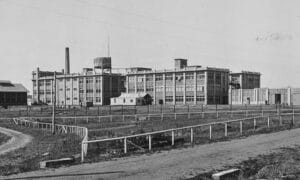

In a ground-breaking judgement on Thursday, the High Court has issued its first decision on the Fair Work Act’s National Employment Standards since their introduction over ten years ago. The decision relates to the case brought by Mondelez Australia Pty Ltd, owner of the Cadbury chocolate factory in Hobart’s northern suburbs, relating to leave entitlements.
The High Court (4-1 in favour) overruled the contentious ruling of the Full Federal Court in Mondelez, finding that employees are entitled to 10 ‘notional days’ of personal leave a year by reference to their ordinary working hours.
This contrasts with the Federal Court’s view that 10 days of personal leave entitles all employees (regardless of their actual working hours) to 10 x 24-hour periods off work each year. The Full Federal Court’s construction, if followed, would have required a significant change in the leave accrual systems commonly used by employers, as it required that leave accrue in days, not hours. The decision was opposed by the Minister for Jobs and Industrial Relations, who intervened in the proceedings in support of Mondelez.
The entitlement explained
Under the High Court’s approach, employees are entitled to 10 ‘notional days’ leave per year; however the duration of a ‘day’ is determined by identifying 1/10th of an employee’s ordinary hours over a 2 week period (which equates to 1/26th of their total ordinary hours over the course of a year).
By way of example:
- For a full-time employee working 38 hours a week and 76 hours a fortnight, they would accrue on the basis of an entitlement to a 7.6-hour ‘notional day’. Over the course of a year, an employee would accrue 76 hours of leave, or 10 x 7.6-hour notional days.
- For a part-time employee working 20 hours a week and 40 hours a fortnight, they would accrue on the basis of an entitlement to a 4-hour ‘notional day’, as opposed to 7.6 hours. Over the course of a year, the part-time employee would accrue 40 hours of leave, or 10 x 4-hour notional days.
- For shift workers working varied patterns of work across fortnights or months, the Court has said employers can determine the value of ‘a day’ by identifying 1/26th of the employee’s ordinary hours over the course of a whole year. This enables the parties to ignore weekly or monthly variations in rosters and assess the total hours of work as a whole. Again, for most full-time shift workers (who ultimately work an average of 38 hours per week over the course of a year), this means that they will be entitled to 10 x 7.6 hour days each year.
Relief for employers, anguish for workers
The ruling should come as a relief to employers across the country, given that almost all payroll systems utilised in Australia can accrue and deduct leave according to the approach identified in the High Court judgement.
The judgement also dispenses with the argument that part-time employees can access the same (or even more) hours of personal leave each year when they do not work the same load as full-time employees.
Under the judgement, part-time employees are still entitled to 10 days’ leave, however, these are ‘notional days’ and the number of hours in each day of leave is to be calculated on a pro-rata basis depending on how many hours the part-timer works in a fortnight.
NRA CEO Dominique Lamb said the decision was a ‘win for common sense’ and continued the industry practice, which had been in place for 30 years.
“Last year’s decision by the Federal Court that both full-time and part-time employees receive 10 days of personal leave each year would have reversed long held industry practice and seen retailers foot the bill at a time when they’re struggling to survive,” Lamb said.
“Under the Federal Court’s ruling, the amount of personal leave owing to an employee become something wholly unpredictable, as the employer would not know how much personal leave the employee had until they actually took it. This not only offered up a payroll nightmare, but also problems for complying with ASIC reporting requirements.”
However the AMWU said they were disappointed by the decision and Tasmania State Secretary John Short said it was a blow to shift workers.
“Cadbury workers do 12-hour days making the chocolate that we know and love. This decision means that they will get fewer days of personal leave per year than someone doing an office job working 9 to 5”, Short said.
“While we are very disappointed in the outcome, we are very proud of our members and delegates who have taken up the fight at every stage. It’s not easy for a food worker to stand up in Court against a big company like Cadbury-Mondelez that has got the backing of the Federal government, but our members held their ground every step of the way”, he Short said.
Short indicated that the union would now call on the Federal government to amend the Fair Work Act to ensure all workers were given access to ten days of paid personal leave.
Focus on Federal Court approach to Fair Work Act disputes
The High Court labelled the ‘working day’ approach adopted in the previous Federal Court ruling as giving rise to “absurd results and inequitable outcomes, and would be contrary to the legislative purposes of fairness and flexibility”.
This decision stands out as an exception to a trend of recent Federal Court decisions pertaining to the Fair Work Act, where employers have complained of ‘impractical or absurd’ outcomes arising from a literal interpretation of the Fair Work Act.