
Victoria has today recorded 723 new COVID-19 cases – the country’s highest daily total to date. There are now 4,516 active cases in metropolitan Melbourne and 255 in regional Victoria. Is the situation out of control or will the measures in place start to work? Is this the peak? What about the crisis in aged care homes? Below Australian experts respond.
Dr Alex Polyakov is a Senior Lecturer in the Department of Obstetrics and Gynaecology at the University of Melbourne and Clinical Director, Melbourne IVF at the Royal Women’s Hospital. He is an expert in female health, reproduction and fertility, in addition to holding masters in epidemiology and biostatistics, and health law.
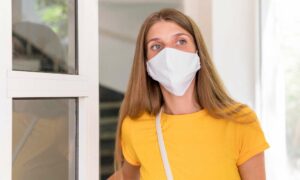
“It is too early to conclude that the current measures are failing. Compulsory masks were mandated only eight days ago and this crucial measure will take two to three weeks to be reflected in the number of new infections. It is becoming clear from the Victorian experience, as well as from overseas reports, that there is significant transmission from asymptomatic individuals and that the virus is airborne and can be transmitted in the absence of close physical contact. This is the main reason why masks should have a substantial positive impact.
It is impossible to predict when the numbers will peak but an educated guess is that we probably haven’t reached that point yet. What is becoming clearer, however, is that the current lockdown measures and compulsory mask-wearing will most likely need to be continued for longer than initially anticipated. Our response to the second spike in numbers was modelled on the initial outbreak that was successfully controlled. Unfortunately, the main difference between the two scenarios is that at the moment an overwhelming majority of new infections are contracted in the community, not brought in by the returning travellers. With the number of new infections skyrocketing, it becomes impossible to effectively implement contact tracing and isolation of close contacts.
A very important aspect of the current scenario that has not received adequate attention is the likely impact of homeschooling combined with increasing number of medical personnel who are required to self-isolate due to contact with COVID-positive individuals. A large percentage of medical professionals, including nurses and doctors, are left without adequate child-minding services, with our health system already showing severe strains, even before the anticipated increase in hospital and ICU admissions. Health workforce shortages are likely to become more acute and the Victorian government needs to address this issue as a matter of urgency.”
—–
Associate Professor Ian Mackay is a clinical virologist at the Australian Infections Diseases Research Centre at the University of Queensland.
“There are no data so far to support any significant change in the viruses in Victoria, and there doesn’t need to be to explain this spread. SARS-CoV-2 is an infectious respiratory virus that spreads from an infected person, even before they show any signs of illness. SARS-CoV-2 spreads better indoors than outdoors, when individuals are close to each other for prolonged periods, when they are in high-density settings, when room sizes are small and when freshly circulated air is not available. Distance, hand hygiene and masks are a simple and effective toolkit to reduce risk and spread.
Cases will peak when they peak. There is nothing to be gained from guessing at the timing and everything to be gained by getting onboard with public health directions. Only when individuals work together with expertise and with the support of their governments can we stop community outbreaks. We know that turning a curve downwards will take longer if we keep handing this pathogen opportunities to transmit. If we don’t listen to advice, if we have no choice but to work, if we think we know best or if we don’t care about our health and the health of those around us, this will go on and on and possibly grow much worse. We are each one step on a path to someone’s death or long-term ill-health. Equally, our experts have the difficult task of continually having to watch and learn from what has happened in other places, to ensure we don’t repeat mistakes or leave opportunities for virus transmission that have already been identified elsewhere.
We should remember that what we are seeing are the kinds of human behaviours and habits we all perform. These are why we have a common cold and flu seasons. Human viruses can’t spread unless human facilitates that. It’s a very simple equation: infectious human + susceptible humans = risk of new infectious humans (outbreak).”
—–
Associate Professor Linda Selvey is is a public health physician and an infectious diseases epidemiologist at the University of Queensland.
“Overall, the Melbourne ‘lockdown’ is definitely reducing the rate of spread of COVID-19. Without the lockdown, cases would be increasing at a much higher rate than they are at present. It is difficult to rely on a single day’s case numbers to get a good picture of what is going on, and these case numbers need to be averaged across a number of days. This is important because people don’t necessarily get tested on the day they develop symptoms and also because there are delays in the test results becoming available. It is too early to know whether this increase in case numbers is likely to be part of an overall trend, or whether it will be followed by fewer cases over the next few days. So far, on average, the daily case numbers are fairly steady, albeit at high numbers.
In order to have the case numbers reduce, additional measures are likely to be required and it is necessary to build on the high level of compliance with the public health measures so that people are even more careful. Recent modelling pointed to the importance of people getting tested and isolating as soon as they develop symptoms, as well as contact tracing happening rapidly as well. It is worth considering taking the additional measure of requiring other household members to stay at home if someone has symptoms while they are waiting on their test result. This will decrease the risk of further spread if a household member becomes infected. This is particularly important as case numbers are high because contact tracing capacity is overwhelmed. There is a lot of work being done in aged care facilities to reduce the spread of COVID-19. This is clearly very difficult to do, and points to the need for higher staff to patient ratios in order to protect staff and patients and enable sufficient human resources for proper infection control measures.”
—–
Associate Professor Lee-Fay Low is an Associate Professor in Ageing and Health at the University of Sydney. She is a key Australian contributor to https://ltccovid.org, an international collaboration producing evidence-based recommendation in relation to COVID-19 in aged care.
“It’s clear that health and aged care systems need to work closely together through this crisis, all the while respecting the needs of residents and their families.
Strategies could include;
1. Keeping facilities currently without COVID-19 cases COVID-free
The Australian Commission for Quality and Safety in Aged Care and/or health care staff with expertise in infection control should be visiting those facilities to observe and give feedback on current infection control practices. Random or facility-wide testing might be considered in hotspots where there is high possibility of community transmission from staff.
2. Preventing spread where a small number of suspected or confirmed COVID-19 cases are present
Health care teams can help facility management to ensure that this is done properly and greater than usual number of staff will need to be rostered to give adequate care during this time. Unless there is a strong rationale to keep a resident who is COVID-19 positive in the facility, the resident should be transferred to hospital.
3. Setting up multiple channels of communication
This includes between residents and family and between facility management and family during this time. A daily zoom meeting and additional updates once or twice a day by email are needed. Setting up a way of families supporting each other and where non-confidential questions can be answered (e.g. via an WhatsApp group) might also help.
4. Sharing background on residents when regular staff aren’t available
In facilities where there are large numbers of COVID-19 cases and regular aged care staff are not available, the new health care teams need to receive a ‘handover’ from staff about the clinical and psychosocial needs of each resident. Aged care staff should also be available by phone to answer questions about those residents. In those facilities when aged care staff return to work after testing and self-isolation, they should receive refresher training on infection control and PPE use and have handover from the temporary health care staff.
5. Sharing and learning from data on COVID-19 in aged care
It would be useful to have publicly available data updated daily on the COVID-19 in aged care cases with sufficient detail at facility level (residents, staff, positive, tested, moved to hospital, died) so that we can understand trends and undertake analysis. NSW facilities should be preparing (ensuring they have arrangements with local healthcare services to provide support, PPE, staff training and communications platforms set up) in case we have further outbreaks in aged care in New South Wales.
—–
Professor Catherine Bennett is Chair in Epidemiology at Deakin University. She has worked in medical research focused on household transmission of superbugs and has also worked in the public health sector in outbreak preparedness and response, including in her role as Olympic Public Health coordinator for Northern Sydney for the Sydney 2000 Olympics.
“It is important to understand where today’s numbers have come from. If these are the awaited results from aged care facilities where a single staff member had tested positive earlier this week, or are linked to other known clusters, then whist devastating numbers, they are telling us about transmission risks already identified and being addressed. It may make no difference to implement tougher community-wide restrictions that close everything down if this does not address the drivers of transmission.
—–
Professor Bruce Thompson is Dean of the School of Health Sciences at Swinburne University.
“These numbers are unacceptably high. However we need to be mindful that it is the reproduction number (R0) that is important. That is, how many people does a single person transmit the virus to? For the past few days, it has been less than one, which provides significant hope.
However everyone needs to be reminded that if you have any symptoms or feeling unwell then you have to assume that you are positive until proven otherwise. Therefore you need to isolate. If you have been tested and awaiting your results, you have to assume you are positive therefore need to isolate until it has been demonstrated that you are negative. This is critically important for the prevention of human to human transmission of the virus.”
—–
Associate Professor Jodi Oakman is Ergonomics, Safety and Health Discipline Lead in the School of Psychology and Public Health at La Trobe University.
“A system in crisis: How did we get to this position in Aged Care?
The aged care sector is in crisis, an entirely predictable situation for anyone that is connected to the sector. The Health Minister Greg Hunt has said he will not ‘hear a word against’ aged care nurses in Victoria:
‘The idea that our carers, that our nurses, are not providing that care, I think, is a dangerous statement to make, they are wonderful human beings. And I won’t hear a word against them.’ (The Age, 28th July)
The regulation of aged care focuses almost entirely on quality and safety of patient care with little recognition of staff safety. The systems in place to manage the complex care needs of elderly and frail residents is being undertaken in very challenging circumstances, often by staff not well equipped to make such difficult decisions. We know that blaming the worker is popular, but they are only doing what is needed to get the job done within systems that are hindering their ability to work effectively.
Research undertaken by La Trobe University has identified significant gaps in the systems to protect aged care workers’ safety. Far more systems are in place to protect residents in aged care facilities. It is not a competition; protection of workers and residents needs to be given equal priority if we are to avoid situations such as the current COVID-19 crisis.
—–
Professor Ian Marschner is a Professor of Biostatistics at the University of Sydney NHMRC Clinical Trials Centre.
“Today’s increase in cases in Victoria is a concern, but day-to-day variation in case numbers needs to be interpreted with caution. In recent days we have seen a reduced number of cases in Victoria, so the large increase today may simply reflect chance fluctuations that need to be averaged out. The average number of cases in the last 3 days is very similar to the average number of cases in the previous 3 days. It is still too early to say that there has been an acceleration of infections.”
—–
Dr Diego Silva is from Sydney Health Ethics in the University of Sydney School of Public Health.
“The outbreak of COVID-19 in Melbourne is, in large measure, a failure of justice. The 723 new cases announced today have been fuelled by the inability of people to remain in isolation or quarantine because of the need to go to work in order to take care of themselves and their families; Premier Dan Andrews has noted as much. The lack of meaningful job security, driven by decades economic policy that has prejudiced workers and the middle class, is a threat to public health and is a factor in spreading airborne infectious diseases like COVID-19. We’ve seen this play out for many years now in the context of other infections like tuberculosis and influenza.
An important part of the solution is to provide people with the necessary social supports to help themselves and protect others. In the short term, this means the federal government and the states working together – and quickly – to establish a paid-leave program to keep people at home. In the medium and longer term, Australians must realise that the path to individual success and meritocracy is built on the basis of fostering public goods.”
—–
Professor Adrian Esterman is Chair of Biostatistics at the University of South Australia.
“This is a very worrying spike in cases. Rather than impose Level 4 restrictions, which would have a devastating impact on the economy, the Victorian government should now immediately declare what is an essential workplace and impose more severe restrictions on who can leave home to go to work, something they should have done when imposing Level 3 restrictions on the 8th July.
Any nursing home resident displaying symptoms should immediately be transferred to hospital. The use of interstate nurses to help in aged care homes and contact tracing, and the ADF for logistics and security is welcome, but again is something that should have happened much earlier. A better public health campaign explaining why these restrictions are needed and what might happen if they are not adhered to is also warranted. For example, the DHHS website is very clinically focussed and not particularly user-friendly for the general public.“
—–
Professor Raina MacIntyre is Head of the Biosecurity Program at the Kirby Institute at the University of NSW. She is an expert in influenza and emerging infectious diseases.
Q: Why is the current lockdown in Melbourne failing to curb cases and should they be considering a stricter lockdown?
“The stage three lockdown is not working, or people are not complying. This is the time to consider a fuller lockdown. If cases continue to grow, the human resources capacity for case finding and contact tracing may be exceeded. The contact tracing capacity will be the first to be exceeded, because for every case there may be 10-25 contacts to trace. If we cannot identify every case and quarantine every contact, the epidemic may spiral out of control. This is also an important time for Victorians to download the COVIDSafe App. The reason it has not worked so well is that not enough people have downloaded it. If there are 20 people on a tram and only 3 people have the App, and one infected person is on board, of course it wont work – everyone on the tram needs to be using the App for it to work.
Q: Is there any indication the virus is mutating or becoming more infectious?
“There is no evidence of this being a factor in Victoria specifically, but the dominant global strain may be more infectious than the earliest strain.”
Q: At the current rate, when might cases peak?
“The peak can only be determined after we see a sustained decline (over at least 1 week) in cases.”
Q: What do we know and understand about the prevalence of cases in aged-care facilities and how can they be controlled?
“Aged care facilities are at very high risk for outbreaks of many infections, and COVID-19 is no different. I believe leaving infected residents in aged care facilities is a risky strategy, and makes it much harder to control an outbreak. The need to quarantine exposed staff may also cause ongoing crisis in staffing of aged care. Aged care outbreaks are best mitigated by design features of the aged care facility itself. Shared rooms and communal areas are high risk. Staff may also transmit infection, so should not work across more than one facility, should work in cohorted teams so that if one team has an infection, the other team is unexposed. Staff should wear P2 masks, gloves and gowns and be trained in infection control. PPE is critical for staff and residents in aged care.”
—–
Dr Abrar Chughtai is a lecturer and the director of the Master of Infectious Diseases Intelligence (MIDI) program in the School of Public Health and Community Medicine at UNSW Sydney.
“We need to adopt all available control measures, including testing, tracing, isolation, quarantine, social distancing, masks use etc. I think the Victorian government is doing their best and now the public need to contribute more. Many people (particularly young people) are still not following government instructions. We are still seeing large public gathering and parties at home. Many people are still not wearing masks and believe that it should not be mandatory.
They need to understand why they should wear masks. There are two functions of a mask. 1) Masks will protect you, 2) Masks will prevent spread of infections from sick/ asymptomatic cases. We know that around 40 to 45 per cent case of coronavirus are asymptomatic and can spread infections to others. So, we need to tell people that they are putting other people’s lives at risk. If they do not want to protect themselves that may be their decision. But if they are sick and asymptomatic, they may spread infection to other people and some of those may die. So, this is not about people’s rights, this is about protecting the community.
And this is true about other interventions as well. Outbreaks in aged care is also concerning. It is difficult to predict a peak, though modelling studies may help to some extent. Chief Health Officer Brett Sutton said yesterday “modelling shows today should be the peak of Victoria’s coronavirus outbreak”. But today we saw more cases.”
—–
Associate Professor Taghrid Istivan is Associate Professor of Microbiology and Senior Program Leader – Biosciences at RMIT University
“High risk infection transmission across certain industries, including schools, is contributing to this. Furthermore, it is not a surprise to see this high number of COVID-19 cases with the recent large outbreaks across many of the aged care homes where the most fragile members of our community are. High infection rates in aged care homes were previously reported and contained in NSW and Tasmania but not at the same extent that we see in Victoria, which seems to be out of control. It is like a bush fire, as a small spark can lead to a devastating fire if the conditions are suitable for that to happen. This should have been prevented if harsher infection control measures were introduced in the aged care homes as soon as the first infections were detected.
It seems that stricter lockdown measures are needed and enforced as the community seem to have been more relaxed on that than the first lockdown in April. In addition, supporters of conspiracy theories are becoming more active on social media and other ways, influencing others to resist the lockdown and mandatory face masks, etc.
In my view, the last and best solution is to opt for the elimination strategy, if effective vaccines are still not on the horizon. The current suppression strategies are becoming harder to implement with such large outbreaks in Victoria, and those will continue to occur even if this one is controlled.”
—–
Dr Ben Fahimnia is a Professor and Chair in Decision Sciences at the The University of Sydney Business School.
“The threat of a second wave of COVID-19 looms on the horizon with case numbers jumping dramatically in Victoria. The government has stated they may have plans for localised restrictions to contain the spread of the virus. Our research shows that the only cost-effective method for keeping track of the virus is “pooled testing” which aims to screen targeted/local populations within a “hotspot” to ensure that infected people are identified and quarantined before they infect others. Pooled testing makes sense where the disease prevalence (number of cases in a population at a given time) is low, so we need to act now.