Media release – Guy Barnett, Minister for Resources, 7 April 2020
Future of Tasmania’s Wood Bank
 Tasmania’s Future Potential Production Forest (FPPF) Wood Bank will not be opening up for harvest from 8 April 2020.
The Forestry (Rebuilding the Forestry Industry) Act 2014 outlines the specific process to allow for the exchange or conversion of FPPF land to Permanent Timber Production Zone land. Any request for exchange or conversion is required to undergo stringent assessment and must be accepted by both Houses of Parliament.
There have been no applications made to date.
The Government continues to engage with the industry about the FPPF Wood Bank, and has no immediate plans to convert any FPPF Land to production forest.
Where industry can demonstrate a need for the wood, the Government would welcome any future applications, because sustainable, renewable production forestry creates jobs in regional areas.
The Tasmanian Liberal Government is a strong supporter of Tasmania’s forestry industry, which contributes some $1.2 billion to our economy and employs thousands of Tasmanians through direct and indirect jobs, especially in regional areas.
Media release – Cassy O’Connor MP | Greens Leader and Forests spokesperson, 7 April 2020
Barnett Can’t Fudge Threat to Forests
Resources Minister, Guy Barnett, knows very well the mendicant faction of the native forest logging industry want to get in to the 356 000 hectares of future reserve forest set aside under the Tasmanian Forest Agreement.
Heavily redacted Right to Information documents obtained by the Greens late last year make it clear the Forest Industries Association of Tasmania (FIAT) is warming up the Liberal Government to access part, or all, of the future reserves.
We have no doubt the industry mendicants haven’t let a global pandemic get in the way of their plans. The native forest logging and burning continued, and so will be the lobbying for access to these forests.
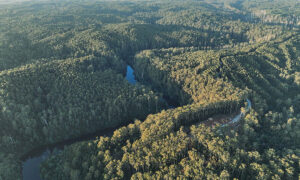
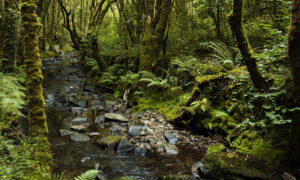
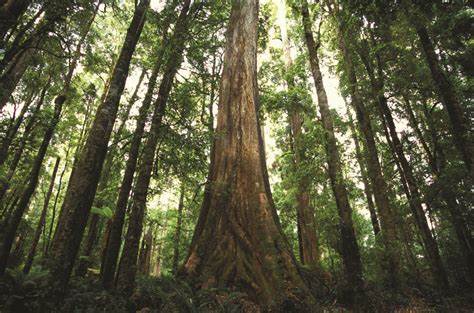
These forests are some of the most beautiful, carbon rich ecosystems on the planet. They were independently evaluated as of high conservation value and worthy of protection.
They should be in reserves, protected from the loggers for future generations in perpetuity.
Most Tasmanians would be opposed to logging these forests, which are located near communities at every point of the compass on this island.
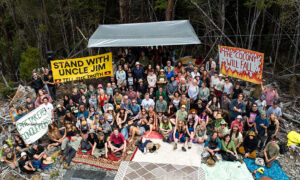
As long as they remain unprotected, these forests aren’t safe and the Tasmanian conservation movement will keep defending them.
We live in hope Mr Barnett and his colleagues will see the light and ensure the protection of these global treasures.
Media release – Wilderness Society Tasmania, 8 April 2020
Bunnings says “No Thanks” to wood from Tasmania’s ‘Future Potential Production Forest’
-
Strong signal that retailers do not want controversial wood—especially wood from forests that the public already paid to protect
-
Market rejection strengthens case for Tasmania’s uncommercial native forest logging industry to transition to plantations
-
Markets increasingly preference Forest Stewardship Council (FSC)-certified wood and paper
As the Tasmanian Gutwein Liberal Government moves to re-allow logging in high conservation value forests, important markets reject wood from forests and logging marred by conflict.
Bunnings Warehouse, Australia’s largest home improvement retailer, has made clear that it will not accept wood from Tasmania’s ‘Future Potential Production Forests’.
In a letter to the Wilderness Society, dated 29 October 2019, Bunnings confirmed:
“Bunnings will neither source nor sell wood from the Future Potential Production Forests in Tasmania. Bunnings has also sought confirmation from its Tasmanian suppliers that they will not source from the previously protected areas.”*
Tasmania’s so-called ‘Future Potential Production Forests’ were originally informally protected as Future Reserve Land through the Tasmanian Forest Agreement.
“The Gutwein Liberal Government has said that “where industry can demonstrate a need for the wood” the government will consider logging these forests. Markets are already rejecting this wood, which indicates a lack of need to destroy these high environmental value forests,” said Tom Allen for the Wilderness Society Tasmania.
“Regrettably, the Liberals’ policy puts a cloud over Tasmania’s entire wood and fibre industry, by considering re-commencing logging in forests that ought to remain protected.
“Now it’s clear wood from these converted reserves is being rejected by the markets, these reserves must be permanently protected as was always the intention. As we rebuild Tasmania’s economy, they should be added to existing national parks to create a new generation of iconic places for residents and visitors to experience for generations to come.
“Certainty for forests, industry and markets can come through credentialled certification by the Forest Stewardship Council and a transition to plantations. This is where the Gutwein government should be focussing its efforts, not on winding back protections and attempting to force controversial wood into the market.”
“Markets, retailers and consumers don’t want wood that’s unethical. This means wood tainted by conflict, lacking social licence and environmentally destructive, all of which this wood from Tasmania’s native forests would be.
“It’s beyond cynical that the logging industry would accept over $420 million in publicly funded exit package through the Tasmanian Forest Agreement in exchange for agreeing to protect and not log these areas but then, having taken the money, say it intends to log these forests anyway, enthusiastically helped all the way by the Tasmanian Liberals. What a scam.
“Victoria has set a 2030 deadline for its logging industry to transition out of native forests. Tasmania’s forestry industry should be on the same trajectory because plantations are where the future investment, job and resource security and better environmental outcomes lie,” said Mr Allen.
“Bunnings is to be congratulated for clearly excluding Tasmania’s high-risk, commercially toxic wood from its supply chains.
Bunnings also has clear preference for wood that is certified by the Forest Stewardship Council (FSC) from December 2020. Sustainable Timber Tasmania, like its Victorian counterpart VicForests, is still without the credentialled Forest Stewardship Council (FSC) standards or certifications.
*A copy is available on request.