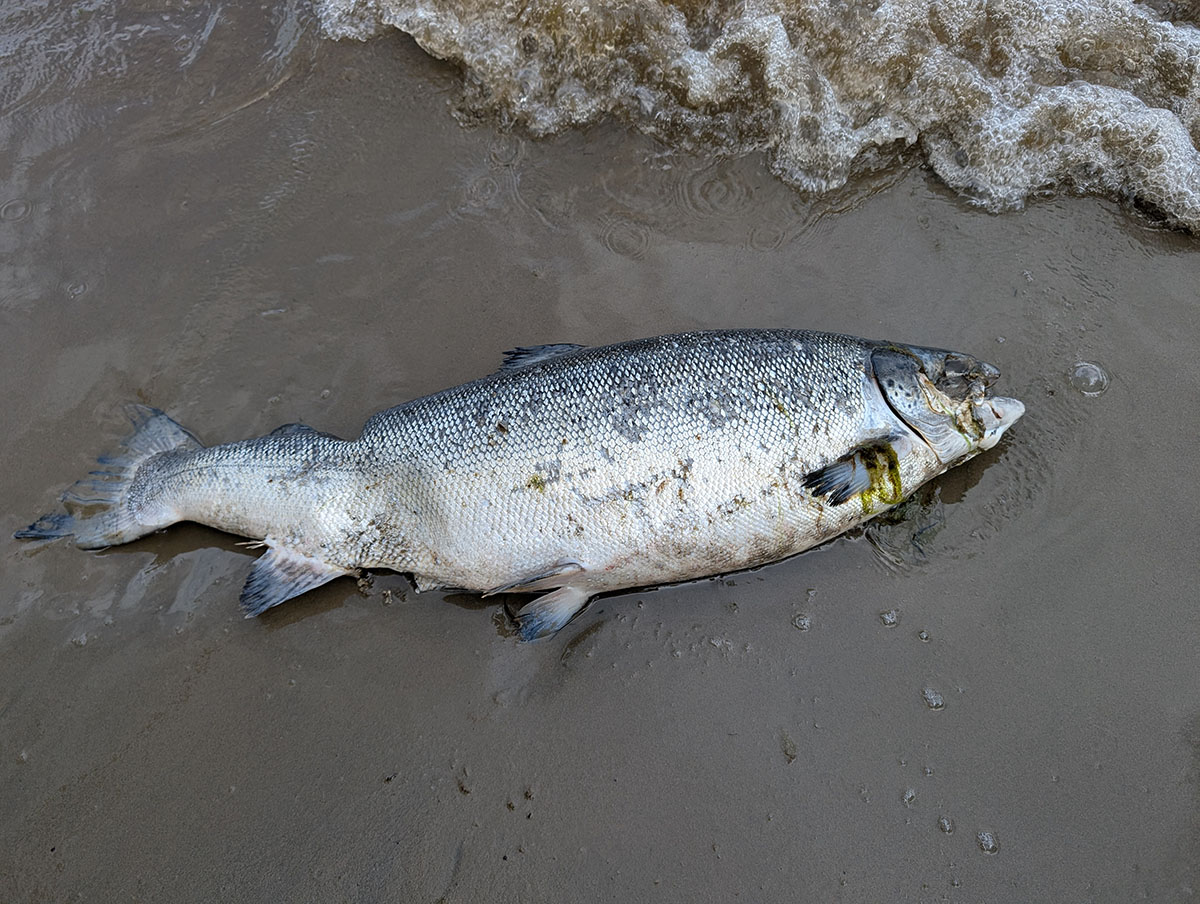
Scrutiny of the Tasmanian salmon industry has intensified this week as evidence of antibiotic bombardment in the D’Entrecasteaux Channel coincides with the discovery of deformed fish washing ashore.
While Huon Aquaculture’s Zuidpool lease prepares for its fifth round of antibiotic treatments in just over four weeks—amid concerns that safety rules regarding pen retreatment cannot be publicly verified—the launch of the “Salmon Busters” community reporting website has immediately highlighted the sector’s welfare issues. These developments, including the recovery of a salmon with severe spinal deformities at Gourlays Bay*, reinforce recent national warnings for consumers to avoid Tasmanian salmon this Christmas due to environmental and welfare risks.
*Located just west of Police Point and directly northwest of Huon Island, Gourlays Bay sits in the immediate vicinity of the “Zuidpool” salmon leases within the channel waters.
Zuidpool Saturation and the Transparency Gap
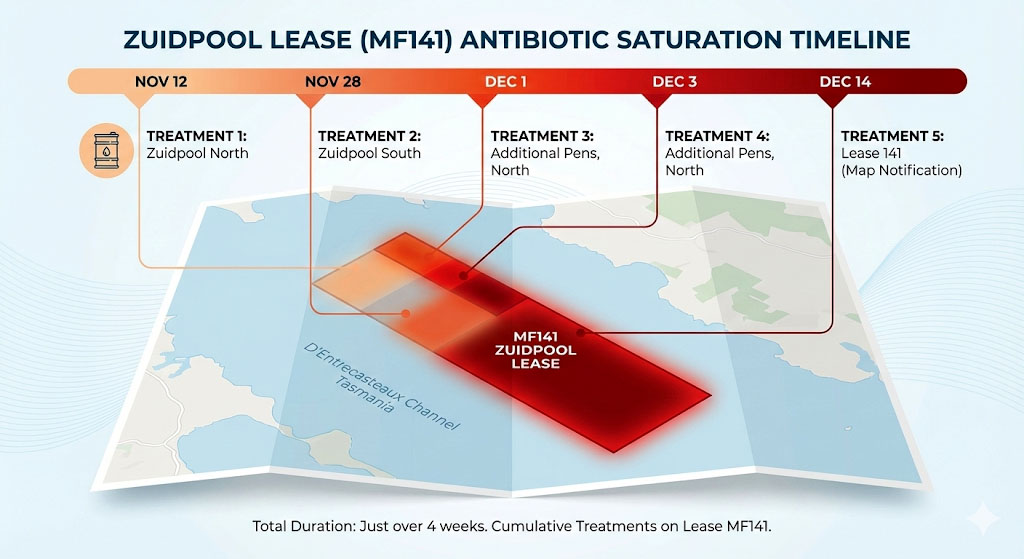
The chemical bombardment of the D’Entrecasteaux Channel is now intensifying far beyond the initial rollout. New departmental data reveals that Huon Aquaculture’s Zuidpool lease (MF141) is being subjected to wave after wave of antibiotic application.
The government’s own mapping service confirms yet another round of florfenicol treatment for Lease 141 was scheduled to begin today, 14 December 2025.
This follows a relentless schedule of notifications for the same lease commencing on 12 November, 28 November, 1 December, and 3 December.
Crucially, the treatment notifications state that “only pens inside the lease that haven’t been treated before will be treated“.
This condition exists because retreating salmon with the same antibiotic is prohibited due to the high risk of creating antibiotic-resistant superbugs.
However, the public has no way to verify if this rule is being followed.
The government’s public map identifies only the entire lease area (MF141), not the individual pens. With the lease being saturated with florfenicol five times in just over four weeks, the “trust us” approach from a regulator that has already been caught manufacturing an emergency is woefully inadequate. There is zero public reporting of which specific pens are being dosed, meaning the community must blindly trust that the prohibition on retreatment is being enforced while the lease itself glows red on the map.
Regulatory capture does not announce itself.
It hides behind technical language and official letterheads. But the NRE Secretary’s own warning that the pig antibiotic could not be used off-label because of the specific ‘Restraint’ clause proves they knew the rules, and chose to find a workaround rather than enforce them.
Tasmania’s democratic institutions have been captured by the interests they were meant to oversee. The evidence is no longer circumstantial—it is documented, official and damning.

Media Release – Bob Brown Foundation, 14 December 2025
A deformed salmon washing up on Tasmanian beach highlights industry cruelty
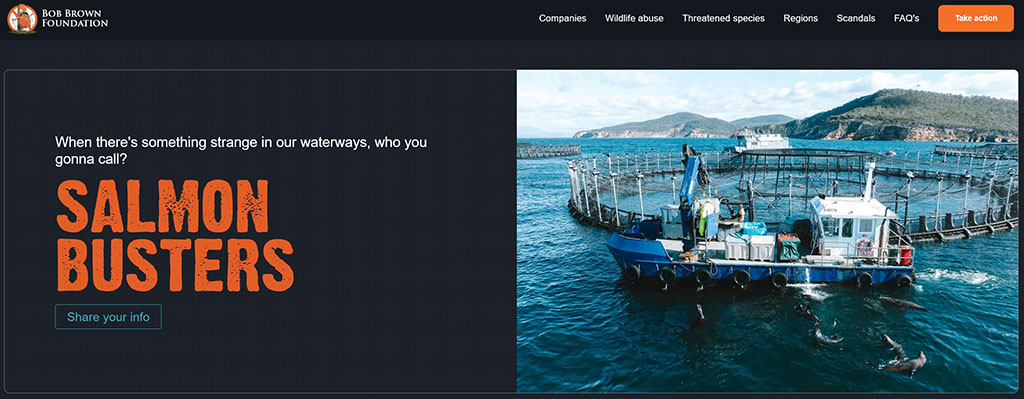
The launch of the community reporting website Salmon Busters is already exposing this secretive industry with images of a deformed farmed salmon washing up on Gourlays Bay beach being reported.
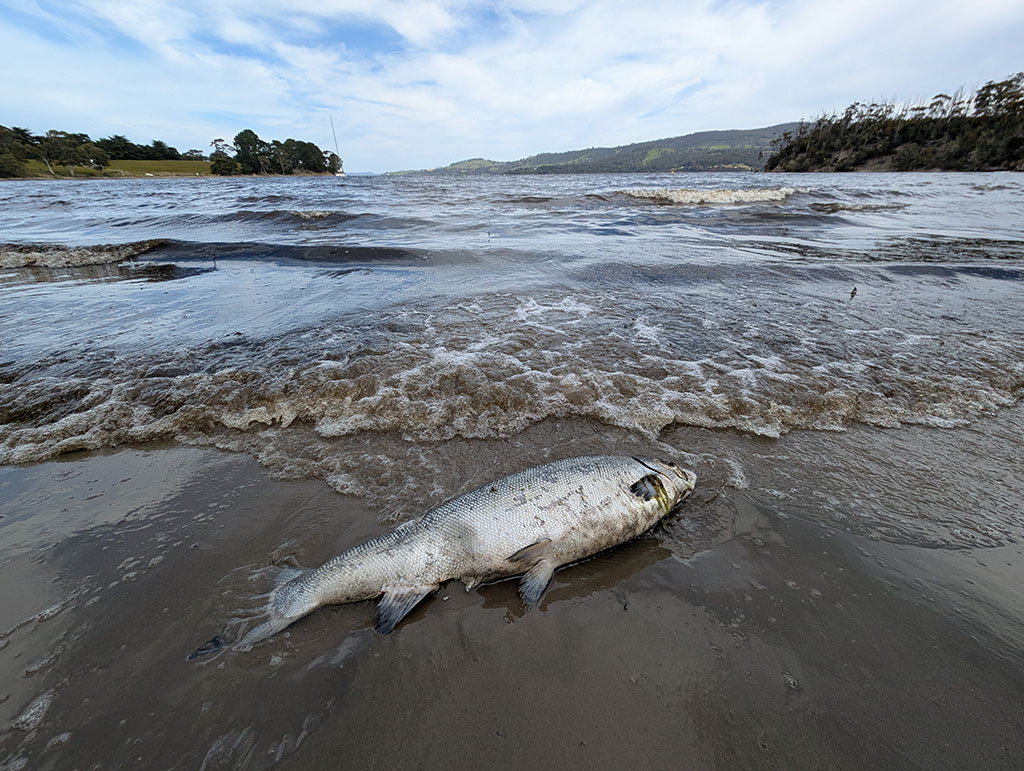
The salmon shows clear signs of deformation, with a bent and zig-zag lower back. This type of deformation is common in Tasmanian factory farmed salmon and a cruel truth about the industry. Bob Brown Foundation is calling for all citizens to report any incidents, pollution, increased vessel traffic or fish deaths to the new website.
“This deformed salmon that has washed up on a Tasmanian beach, highlights how cruel salmon farming is and why it should be off the table this Christmas,” said Alistair Allan, Antarctic and Marine Campaigner at Bob Brown Foundation.
“This industry causes pain and suffering to its farmed fish, as well as to native wildlife. The toxic salmon industry does all it can to hide the cruel truths of its factory farms from the public, but images like this one show the real the reality. The public has had enough of these polluting factory farms in their waters. Now they are going to start holding it accountable by using this new website, salmonbusters.”
“With the Sydney Morning Herald’s food guide on salmon specifically recommending avoiding Tasmanian salmon due to public concerns about rampant antibiotic use and environmental impacts, the toxic salmon industry has been shown for what it really is: an environmental and social disaster,” said Alistair Allan.
Graphics courtesy Gemini AI.
Tasmanian Times (TT) is a community-based news and current affairs service covering the island state of Tasmania. It exists to provide a diverse presentation of Tasmanian issues. TT creates and supports independent media content utilising the best of modern technologies and tried-and-true practices of public-interest journalism.
Support us in expanding our coverage and developing new content by and for Tasmanians.
New initiatives on the way include … what our contributors and readers suggest! Please get in touch with your suggestions.