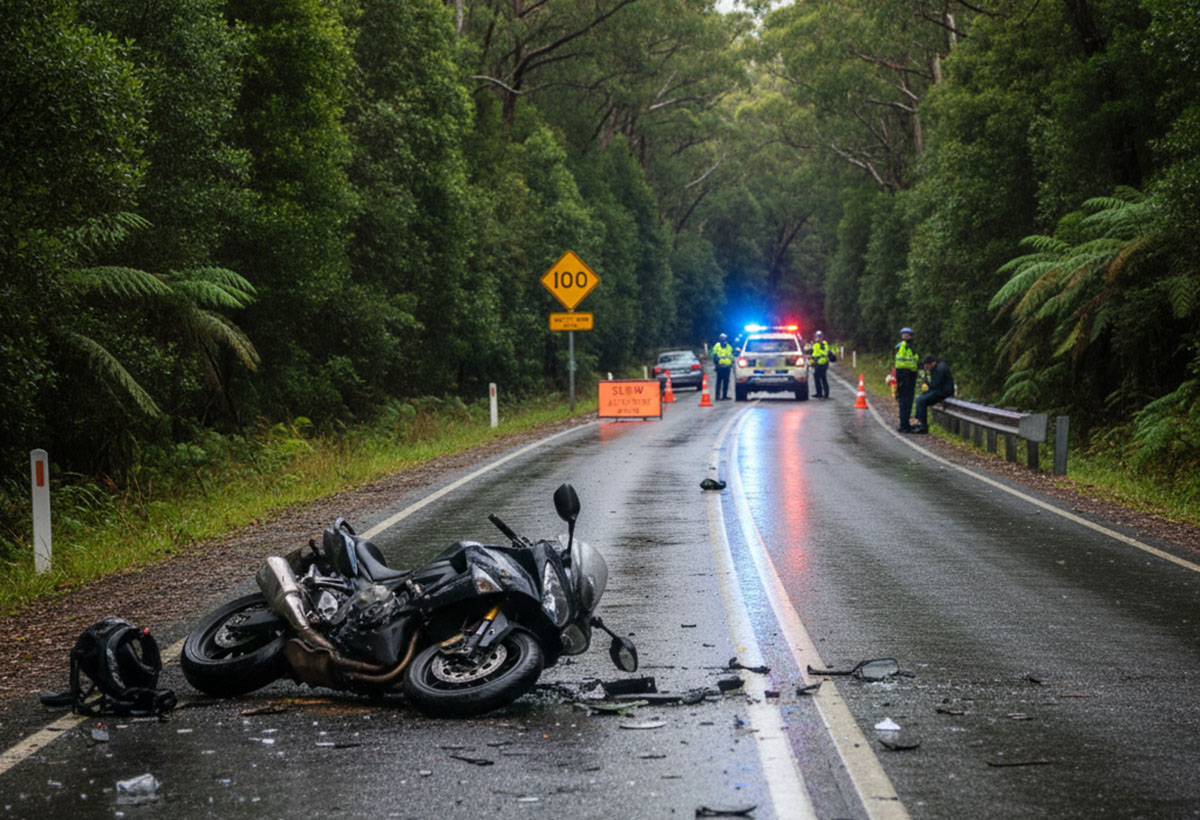
The crash on the West Tamar Highway last week, which claimed the life of yet another motorcyclist, was not just an isolated tragedy; it was a grim statistic on Tasmania’s deadliest year on the roads in over a decade.
As police cleared the scene near Legana, the state’s road toll ticked over to numbers that have not been seen since 2009.
With 38 lives lost by the end of October—a 52% increase compared to the same time last year—Tasmania is currently the worst-performing jurisdiction in the country for fatality rate growth. We are losing neighbors, friends and family members at a rate of 7.6 per 100,000 people, far outstripping the national average of 4.9.
It is against this backdrop of escalating trauma that a coalition of Australia’s leading road safety professionals released an Open Letter to the Australian Parliament this Monday.
Their message is blunt, uncomfortable and urgently necessary for Tasmania – the default open-road speed limit of 100 km/h is killing us.
The letter argues that the “she’ll be right” attitude toward default limits on undivided country roads is no longer sustainable. While we would never tolerate a 50% spike in airline or rail deaths, we seem paralysed to act on road trauma.
For Tasmanians, this debate is nuanced but critical.
We can rightly claim to be ahead of the curve in one respect – in 2014, the state government perhaps ‘bravely’ lowered the default limit on unsealed gravel roads to 80 km/h. But the majority of our rural network—those narrow, winding, tree-lined sealed roads that connect our regional towns—remains signed or defaulted to 100 km/h.
These are the roads where the safe system creates a dangerous illusion.
A driver is legally permitted to do 100 km/h on a road that might realistically only be safe at 80 km/h, leaving zero margin for error when a moment of inattention or a wet patch of bitumen intervenes.
The disconnect between enforcement and infrastructure has never been starker.
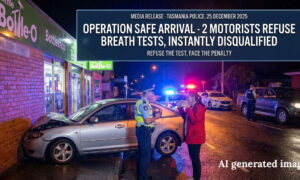
Tasmania Police have launched targeted operations to curb the motorcycle toll, which has seen 7 riders killed this year. They are executing multiple, focused and high-visibility enforcement efforts specifically to address the disproportionate rise in road trauma, including the rising motorcycle toll.
But the Open Letter suggests that relying on driver perfection is a failed strategy. If the default speed limit assumes a perfect driver in a perfect car on a perfect day, it is a system designed to fail.
Critics often argue that lower limits will grind the regions to a halt, but the data suggests otherwise.
The Open Letter points to international examples where dropping the default limit on high-risk rural roads saved lives without crippling the economy. It is a matter of physics, not politics – a collision at 80 km/h is survivable in modern cars; a collision at 100 km/h is frequently not.
Tasmania’s Road Safety Advisory Council has already admitted that the state is unlikely to meet its Towards Zero targets for 2026. This admission should not be read as a surrender, but as a wake-up call. The professionals have put the evidence on the table. The statistics from our own morgues confirm the crisis. The question for the Tasmanian Parliament is no longer about whether we can afford to slow down, but whether we can afford the human cost of speeding up.
References & Further Reading
- Road Safety Advisory Council Tasmania (RSAC): Current Crash Statistics & Towards Zero Strategy
https://rsac.tas.gov.au/statistics/ - Bureau of Infrastructure and Transport Research Economics (BITRE): Road Deaths Australia – Monthly Bulletins
https://www.bitre.gov.au/statistics/safety - Australasian College of Road Safety (ACRS): Policy Position on Speed Management & Open Letters
https://acrs.org.au/public-policy/ - Tasmania Police: Media Releases (General)
- https://www.police.tas.gov.au/news-events/media-releases/
Media release – Australasian College of Road Safety, 24 November 2025
Road experts call for safer open-road default speed limit
The Australasian College of Road Safety (ACRS) has joined leading road safety professionals in urging governments to adopt a safer open-road default speed limit, warning that Australia’s rising road trauma demands evidence-based action.
Each year, 1,300 people are killed on Australian roads and tens of thousands more suffer life-changing injuries.
Road trauma far exceeds that of air, marine and rail combined and Australia’s fatality rates sit above the OECD median. Several countries have achieved rates less than half of ours by acting on evidence and setting safer baseline speeds on high-risk roads.
The proposed change applies only to roads without posted limits, typically unsealed, narrow or winding rural roads.
If a road is engineered to support a higher limit safely, it can still be signed accordingly. This proposal does not target major highways or dual carriageways and it does not remove the need for individual risk assessments or safety improvements.
ACRS CEO Dr Ingrid Johnston said, “The starting point for speed on these roads should be a safe one. Other nations have shown that safer defaults save lives without grinding communities to a halt.”
The open letter signed by road safety researchers, engineers, practitioners, and community organisations states clearly: this loss is unacceptable, and it is preventable.
ACRS calls on the Australian Government to act on the evidence and adopt a safer open-road default speed. Lives depend on it.
Tasmanian Times (TT) is a community-based news and current affairs service covering the island state of Tasmania. It exists to provide a diverse presentation of Tasmanian issues. TT creates and supports independent media content utilising the best of modern technologies and tried-and-true practices of public-interest journalism.
Support us in expanding our coverage and developing new content by and for Tasmanians.
New initiatives on the way include … what our contributors and readers suggest! Please get in touch with your suggestions.