The 2025-26 interim budget has faced scrutiny from opposition and stakeholders. What the following media releases show is significant concern over fiscal management, infrastructure priorities versus essential services, adequacy of funding for housing and homelessness services, gender equity gaps, construction materials planning and investment in services for disadvantaged communities.
The budget commitments announced by government include $14.5 billion for health, $9.9 billion for education, $3.9 billion for public order and safety, $3.4 billion for infrastructure ($1.6 billion for roads and bridges, $696 million for hospitals, $300 million for education facilities), $600 million for 10,000 additional social and affordable homes by 2032, $1.2 million for homelessness services, $674,000 for Hobart Women’s Shelter and $202,000 for LGBTIQA+ Strategy implementation.

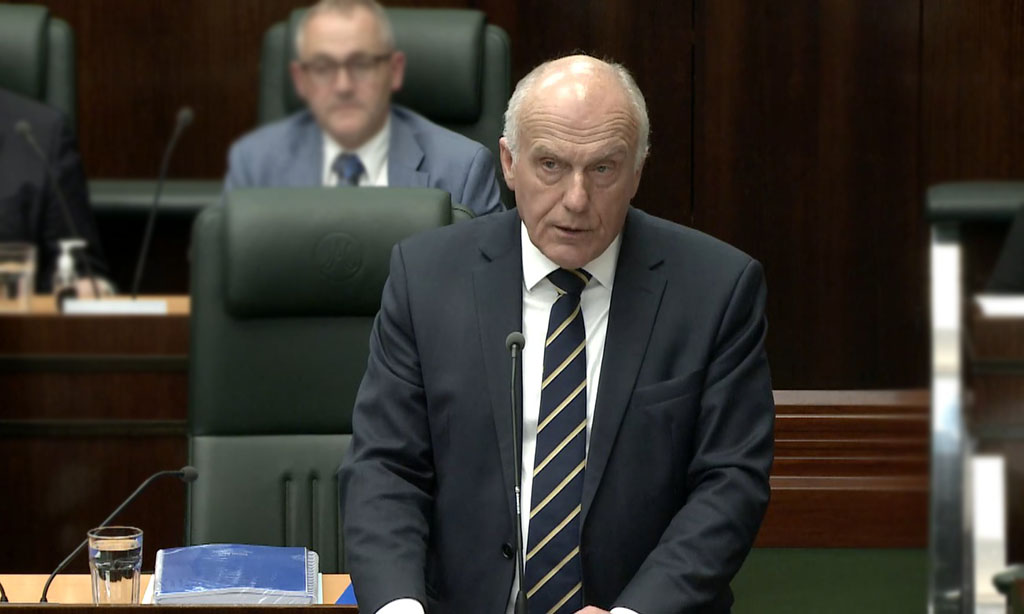
Media release – Eric Abetz, Treasurer, 6 November 2025
Budget Lays Foundation for Tasmania’s Future
Tasmania’s economy continues to perform well, with record-low unemployment leading the nation, consistent economic growth, and an additional 51,000 jobs created since 2014.
The resilience of our diverse economy has been on show, with the state navigating high inflation, high interest rates and ongoing global uncertainty.
Treasurer Eric Abetz said Tasmania’s economy is strong, and we are making it stronger through this fiscally responsible budget.
“Over the past seven years, Tasmania has been the strongest-growing state economy in Australia, achieving consistent, broad-based growth,” Abetz said.
“However, we must confront the structural fiscal challenges.
“The COVID-19 pandemic, two state elections, a federal election and the associated implementation and compensation from the Commission of Inquiry have all had material impacts on the Budget.
“These impacts are exacerbated by ongoing shortfalls from the Federal Government, volatile interest rates and global uncertainty have not been able to halt our steady growth.
“This is a Government that believes in strong finances, strong services and strong families, which together deliver a strong future for Tasmania.
“We have established the Efficiency and Productivity Unit to begin this important work, it is tasked with conducting performance audits, identifying inefficiencies and assisting agencies to deliver savings without undermining service quality.
“This work is backed by our approach, which will be guided by three interlinking core principles: Protect vital services like health, drive efficiency, and strengthen accountability and transparency.
“This is a sensible and calibrated approach that reinforces the fundamental principles of responsible government.
“The impacts of external shocks – the COVID-19 pandemic, combined with rising service delivery costs, particularly in the delivery of health services, and a tight labour market, have placed sustained pressure on our Budget.
“The 2025-26 interim Budget works towards ensuring Government services and expenditure are operating in a fiscally responsible way.”
The Government is continuing to work with the Multi Partisan Budget Consultation Panel. This panel provides a forum for constructive engagement between government and crossbench members on the long-term issues within the State’s finances.
Media release – Jeremy Rockliff, Premier; Eric Abetz, Treasurer, 6 November 2025
2025-26 Budget Supports Services, Economy
The Tasmanian Government’s significant investment in health, education, housing, and law and order has been outlined in today’s 2025-26 interim Budget.
This is a fiscally responsible budget that will continue to deliver the services that Tasmanians expect and deserve.
Investment in health, education and public order and safety accounts for over 68 per cent of total expenditure across the 2025-26 Budget and Forward Estimates.
Compared to the 2024-25 Budget, investments in health have increased by 12 per cent to $14.5 billion, education has increased by 5 per cent to $9.9 billion, and public order and safety have increased by 9 per cent to $3.9 billion over the next four years.
Premier Jeremy Rockliff said this budget looks to the future with optimism, building on the success of the past decade by delivering for Tasmanians.
“This is an interim Budget that balances our strong economic and social achievements,” Rockliff said.
“More than 51,000 jobs have been created since we came to Government, delivering opportunity for Tasmanians all over the State.
“In turn, Tasmanians have also seen more investment in their wellbeing than ever before.
“These are essential investments that are supporting Tasmanians right now and into the future – we will never apologise for investing in the wellbeing of all Tasmanians.”
Treasurer Eric Abetz said the Government was focussed on continuing the positive growth Tasmania has experienced.
“This is a Government that believes in strong finances, strong services and strong families, which together deliver a strong future for Tasmania,” Abetz said.
“We are continuing to invest in health, housing, and education services that Tasmanians rely on, while also recognising the fiscal realities that confront us and highlighting the need for remedial action.
“This interim Budget provides over $915 million to meet increased demand for health and mental health services, as part of our record investment of almost $10 million every single day into our health system.
“We are building on our record investment into health infrastructure, with over $770 million invested in this Budget across the forward estimates, which includes redevelopments at all our major hospitals.
“This interim Budget seeks to balance our strong economic and social achievements with a clear need to respond to the challenges we face.
“Building infrastructure is an investment in the future of our State, and this is underscored in our interim Budget with $3.4 billion for infrastructure over four years across the General Government Sector and a further $1.7 billion in equity funding to support infrastructure investment by Government businesses and other entities.
“On our State road and bridge network alone, the Government will invest $1.6 billion, with a further $696 million on hospitals and other health infrastructure and more than $300 million on schools.
“We are making strong progress on our target for 10,000 additional social and affordable homes by 2032. Over $600 million is budgeted to achieve this target, ensuring more Tasmanians can access safe, affordable housing.
“The interim Budget continues the Government’s 25 per cent uplift to the road maintenance investment, ensuring we maintain the quality of our existing roads.
“Today’s Budget is an interim budget, charting Tasmania’s pathway for a sustainable future.”

Media release – Dean Winter, Shadow Treasurer, 6 November 2025
Another Horror Budget as Tasmania Teeters
The $75 million TT-Line bailout headlines another horror Liberal Budget that predicts the economy to shrink this year, and cuts across health and housing to come.
They have ignored Treasury and experts like Saul Eslake for so many years that we now face a fiscal crisis with hundreds of millions being wasted every year just to service the debt.
After 11 years, the Liberals have taken Tasmania from having no net debt to the worst set of financials of any state in Australia.
This budget sets the scene for more cuts across health, housing and community services in next year’s budget to pay for a ballooning interest bill that will total almost $2 billion – more than twice what is spent on housing.
The interest bill goes up every year and Tasmanians will pay the price. 2,500 jobs will be slashed – all to help offset the Liberals’ interest bill.
This has not happened by accident. This situation has been created entirely by policy decisions made by the Liberal Government.
Media release – Rosalie Woodruff, Greens Leader, 6 November 2025
Budget Confirms Stadium Austerity Era
With Tasmania facing huge budget challenges, a responsible government would be making big corporations pay their fair share and avoiding unnecessary new infrastructure spends. Instead, the Liberals are forging ahead with building a costly stadium and ushering in an era of austerity in a vain attempt to lessen the blow to the state’s finances.
The Liberals’ era of stadium austerity will mean ongoing cuts to services already falling apart. It will inevitably lead to even worse outcomes for the majority of Tasmanians who rely on public services. And even with the pain these cuts will inflict, the stadium will still mean a huge increase in the state’s enormous debt.
Jeremy Rockliff and Eric Abetz have their priorities terribly wrong. They are doggedly pursuing the stadium, and delivering another budget that will cause more hardship for people already struggling.
The public housing waiting list is already at record levels, and this budget will mean it grows even further. Hospitals, schools, and other essential services are being told to do more with less, and Tasmanians will suffer the consequences.
Alarmingly, cuts are also being made to the government’s Commission of Inquiry response.
While this budget under Treasurer Eric Abetz starts the Liberals’ stadium austerity era, there is still time to change course. The Parliament can reject the stadium, reject the $2 billion of debt it will add to the state’s balance sheet, and reject the austerity that it will cause.
And that’s exactly what should be done.

Media release – Adrienne Picone, Chief Executive Officer, Tasmanian Council of Social Service (TasCOSS), 6 November 2025
Community Services Concern Over Budget Priorities
This interim Budget was at its core simply a vehicle for the Government to bide time — a repeat of what we saw in May — but this time with a thinly veiled warning of the need to find savings and efficiencies. Adrienne Picone, TasCOSS Chief Executive Officer, said the Tasmanian community services industry remained concerned about the ability to meet the increasing level of need in the community, with the Treasurer intent on reducing expenditure.
“We remain concerned at the level of debt we are taking on to fund infrastructure projects that could be deferred and the impact this has on the amount of funding available to deliver essential services to Tasmanians.”
Picone noted that new research finds one-in-seven Tasmanians are living in poverty, along with rising levels of housing stress and energy unaffordability.
“Community services represent a small fraction of the state’s total budget, but this investment prevents the need for higher expenditure across other portfolios, such as health, justice and education.”
“As we look to the budget next year, we urge the Treasurer to take a balanced approach to budget repair by considering a mix of revenue raising and targeted investment that prevents costly crises, not through cuts that guarantee them.”
“Community services are not a nice to have. Government expenditure should be prioritised to delivering essential services and supports to Tasmanians that will enable them to fully participate in our economy.”

Media release – Andrea Witt, Chair, Shelter Tas, 6 November 2025
Budget Must Deliver for Tasmanians in Housing Crisis
Shelter Tas, the state’s peak body for housing and homelessness, says this week’s State Budget is a vital test of the Government’s commitment to tackling Tasmania’s housing crisis.
Shelter Tas supports the Tasmanian Housing Strategy 2023–2043, which aims to build 10,000 new social and affordable homes by 2032. Andrea Witt, Shelter Tas Chair, said: “It’s the right goal, but we’re still not building fast enough.”
“Specialist homelessness services are at breaking point and figures released for September show that more than 5,300 households remain on the Homes Tas waiting list. The recently released report from Anglicare’s Front Door service highlights significant increase in demand across all cohorts, including among those who are working and who, historically, have not needed to access services (up by 34%).”
“Tasmanians are struggling. Year on year increases of demand can’t be sustained without investment which is why we are calling for increased funding for homelessness services and social and affordable housing,” Witt said. “We recognise this is an interim Budget with no real new gains. Yet our concern is that there will be significant cuts in the next State Budget at a time when our community is already living on the edge.”
“Systemic, coordinated reform and sustained investment are needed with housing at the centre of all of government decision-making. This is the only way we can rebuild a neglected housing system,” Witt said.
Women and children escaping domestic and family violence remain among those most at risk across the state. “When shelters are turning away nine out of ten women seeking help, it shows how urgent the need is,” Witt said. Shelter Tas’ research estimates that each year 933 Tasmanian women are returning to a violent partner or entering homelessness after experiencing family violence, due to a lack of housing. “This is an unacceptable situation, so we are encouraged to see $1.2 million funding for St Vincent de Paul Society (Vinnies) for women facing homelessness.”
Witt said: “We are also pleased to see five new units and $674,000 over four years for the Hobart Women’s Shelter.”
Disappointment was expressed at the lack of a Tasmanian Gender Budget Statement 2025-26, which provides important analysis for addressing housing support for women facing homelessness. “A dedicated housing strategy for women and children escaping domestic and family violence is also needed and is the next logical step to tackle this crisis, and we look forward to working with government to put this in place,” Witt said.
Witt noted disappointment that services did not receive a 20% increase in funding as recommended in the Shelter Tas Budget Submission last year. “Housing is a key social determinant of health, employment and education — without it, every part of society suffers,” Witt said. “If the next Budget doesn’t focus on housing and properly funding essential services, we risk becoming a state where a significant proportion of our population are only tentatively surviving at the margins.”
“We are a wealthy country, it is unacceptable that housing inequality is growing in Tasmania, which is a risk to social cohesion and to democracy itself. We need long-term economic investment beyond four-year election cycles. We can’t afford not to act cohesively and in partnership across all political parties, government departments and for purpose and private sectors,” Witt said.

Media release – Rodney Croome, Spokesperson, Equality Tasmania; Olivia Hogarth, Chief Executive Officer, Working It Out, 6 November 2025
Budget Funding for LGBTIQA+ Strategy Welcomed, More Needed
Tasmania’s peak LGBTIQA+ organisations have welcomed State Budget funding for Tasmania’s first LGBTIQA+ Strategy but have called on more resources to deal with continued disadvantage.
The Budget handed down this afternoon allocates $202,000 for initial Strategy implementation, as well as extra funding for the LGBTIQA+ Whole of Government reference group.
Rodney Croome, Equality Tasmania spokesperson, said the Strategy, to be released soon, is based on a survey commissioned by the State Government which found LGBTIQA+ Tasmanians experience much higher levels of discrimination, abuse, mental health risk and housing risk.
“We are pleased there has been an investment in improving outcomes for LGBTIQA+ Tasmanians and look forward to working with the Government to ensure there is further funding when it releases its more detailed LGBTIQA+ Action Plan in a few months’ time.”
“Particularly important for Equality Tasmania are dedicated legal officers to help LGBTIQA+ Tasmanians deal with growing levels of discrimination and hate in parts of the community.”
Olivia Hogarth, Working It Out Chief Executive Officer, said: “Our service sees the deep disadvantages still faced by LGBTIQA+ Tasmanians because of stigma, prejudice, discrimination and barriers to accessing services, so we welcome the Government’s allocation.”
“However, more is required to meet the needs of our communities, including a dedicated mental health service to address the worryingly high levels of trauma, anxiety, depression, self-harm and suicidality.”
Croome said increased budget allocations are required in part because of an increase in the state’s LGBTIQA+ population relative to other states. “Statistics recently released by the Bureau of Statistics from its Household Survey showed Tasmania has a higher proportion of LGBTIQA+ people than most other states, a marked increase from when ABS figures showed the proportion was below the national average.”

Media release – Michael Kilgariff, CEO, Cement Concrete & Aggregates Australia, 6 November 2025
Heavy Construction Materials Plan Needed for Budget Ambitions
Cement Concrete & Aggregates Australia has welcomed the Tasmanian Government’s 2025–26 Budget, which maintains strong investment in housing, health, transport and community infrastructure, but says these ambitions can only be achieved with a sustainable, affordable and low-carbon supply of construction materials.
Michael Kilgariff, Chief Executive Officer of CCAA, said: “This Budget recognises the importance of building the infrastructure and homes that Tasmanians need. Delivering these projects efficiently will depend on coordinated planning for quarry resources, streamlined approvals and better freight access.”
The Budget provides $3.4 billion in infrastructure investment over four years, including $1.6 billion for roads and bridges, $696 million for hospitals and more than $300 million for education facilities, alongside a continued commitment to deliver 10,000 new homes by 2032.
“These initiatives will drive strong demand for concrete, aggregates and sand across Tasmania,” Kilgariff said.
“That’s why CCAA is calling for a Heavy Construction Materials Plan to align resource protection, improve environmental approvals and ensure efficient freight links between quarries, batching plants and project sites.”
CCAA has consistently called for faster approvals, protection of key quarry sites, procurement reform to decarbonise cement and concrete and long-term planning certainty—priorities acknowledged by the Government in its July 2025 Economic Statement and Premier Rockliff’s subsequent correspondence.
Kilgariff said the sector also stands ready to help the State meet its sustainability goals. “By embedding performance-based standards and supporting the use of supplementary materials such as fly ash and slag, the Government can promote lower-carbon construction while supporting local jobs and innovation,” he said.
“The heavy construction materials industry is ready to partner with the Tasmanian Government to deliver the homes, hospitals, roads and renewable-energy infrastructure our communities need – built efficiently, affordably and sustainably.”

Media release – Robert Mallett, CEO, Tasmanian Small Business Council, 6 November 2025
It Will Be the Little Things That Count
Today’s interim budget highlights that there is a long way to go to return to positive fiscal daylight, but there does appear to be a plan. Small savings in lots of places to have a big effect in the long run.
Ongoing support for small business advice 24 /7 will enable small business people to access potentially business saving advice at any time of the day. Critical for people who spend so much time working in their businesses all day and only finding time to work on it, when the sun goes down.
Confirming a commitment to the Tasmanian Business Advice Service over the forward estimates ensures that existing small business people who need a confidential ear and a push in the right direction can still find and access it quickly and easily.
Assumptions on the reduction in expenses to drag Tasmania to net surplus are admirable but without some serious work by our most senior public servants to reign in expenses and make better use of available AI technologies, it may be challenging to achieve. The working bureaucracy has to be enabled to start taking advantage of the most contemporary technologies.
Tasmania must return to smaller government and a more efficient public sector. We are effectively at full employment and any reductions in numbers are more than likely going to be absorbed in a workplace crying out for skilled and willing staff. A win-win for all concerned.
Small steps in every place should assist the Treasurer of achieving the dream of net surplus in the foreseeable future. Some brave assumptions but without a plan, we have nothing.