The upcoming 4 November 2025 parliamentary vote on the new Macquarie Point stadium has plunged Tasmania into a political crisis defined by an alleged lack of government transparency and mounting public mistrust. The central conflict pits a fixed funding cap against evidence of further borrowing, turning the stadium debate into a fundamental choice between a high-cost project favoured by political vision and responsible investment in essential state services.
This choice, according to the Steve Loring, will define Tasmania’s social and economic future for generations.
The Stadium or the State: Tasmania’s Choice Between Vision and Delusion
Tasmania stands at a crossroads, shrouded in a fog of confusion and mistrust. The definitive decision on the new stadium will be tabled in parliament on 4 November a matter of days away. This impending deadline forces every Tasmanian to confront a deeply unsettling question – do we trust that our government has our best interests at heart, or do its actions warrant profound caution?
This climate of uncertainty is not accidental.
It is cultivated by an administration that, while demanding generational trust for a stadium, consistently fails the most basic tests of transparency. It has dismissed calls to properly fund the Integrity Commission and resists the publication of ministerial diaries a straightforward accountability measure successfully implemented in the Queensland Parliamentary System. This pattern of opacity is most glaring in the stadium’s financing. The government vehemently rejects accusations that it is misleading the public over its promise to cap funding at $375 million, even as it reveals that the Macquarie Point Development Corporation will borrow additional funds.
This creates an irreconcilable contradiction: Premier Jeremy Rockliff’s vow not to invest “one red cent more” than the cap is directly undermined by Minister Eric Abetz’s admission that the business case explicitly requires further borrowing.
If a government entity is taking on debt for the project, the notion of a fixed, taxpayer-funded cap is illusory.
This erosion of trust is further compounded by the dismissal of independent expertise. Both the government and opposition have disregarded the findings of the Tasmanian Planning Commission’s assessment of the Project of State Significance, which recommended against the project. Esteemed economists like Saul Eslake and Nicholas Gruen dispassionate analysts with no vested interest have consistently found the stadium to be financially unviable. This is no longer a simple debate over numbers; it is a fundamental clash between evidence and ideology.
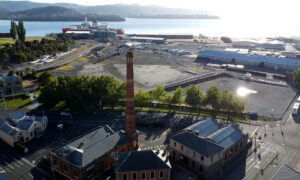
The project threatens to overshadow Hobart’s cherished Georgian architecture and historic character with a colossal roof, all while being championed by a political narrative whose optimistic benefits would make a snake oil salesman blush.
In such an environment, how can the average citizen possibly separate fact from fiction, visionary foresight from fiscal madness? The answer is that they cannot. They are left with a choice between blind hope and a reckless punt. Gambling with public money on such a scale is a profound betrayal of fiduciary duty.
This crisis strikes at the very heart of our social contract. This foundational concept of political philosophy, articulated by thinkers like Locke and Rousseau, represents the bargain of a civilized society: citizens consent to be governed, and in return, the state is obligated to act for their welfare and protection. When a government is perceived as prioritising a monolithic project over housing, health and education while obscuring its true cost and operating behind closed doors it does not merely break a promise; it actively unravels the social fabric that binds us. We are left to wonder whether we are citizens in a shared democracy or merely subjects bankrolling a vision we never endorsed.
The stadium debate forces a stark choice about the Tasmania we wish to become.
Do we aspire to a more egalitarian society, or one of deepening inequality? The project acts as a catalyst, accelerating us down one path or the other. As economist Thomas Piketty has documented, unchecked capital concentration creates oligarchic structures that thrive on the power and prestige of inequality. This venture, with its vast costs and limited public benefit, risks cementing such a dynamic, permanently altering our island’s social landscape.
This leads to the most critical question of all – how do our elected representatives see themselves? Do they see themselves as public servants, as Cicero implored, stating, “We are not born for ourselves alone,” or as modern-day pharaohs, building monuments to their own legacies? The line between a visionary and a madman is defined by their connection to reality. The former’s plan is grounded in observable truth; the latter’s springs from delusion.
Yet, within this crisis lies the seed of hope.
Has the stadium debate finally awakened the electorate, dissolving old partisan loyalties?
Could the next state election usher in a parliament comprised of individuals who understand that we all share this island as neighbours, and that selfishness is anathema to a functional society? The examples of the Nordic nations, Scotland and Canada demonstrate that a different political choice is possible one that embeds social welfare and public deliberation at its core.
The debate culminating on 4 November has illuminated the path forward. The future of Tasmania will be determined not by the concrete we pour, but by the values we choose to cement. It is imperative that Tasmanians now exercise their democratic right and voice their opinions on the stadium, sending a clear and unequivocal message: from this point onward, they demand to be involved in deciding their own futures. They will not stand for being left out of the conversation, for no single entity owns democracy. It is a shared inheritance, and its defence begins with the courage to demand leaders who remember they are, first and foremost, our neighbours, entrusted with the care of our common home.
At this crossroads, our collective choice will define Tasmania for generations to come.
Steve Loring was a recent Legislative Council election candidate for the Shooters, Fishers and Farmers Party and is a keen observer of the Tasmanian political scene.
Tasmanian Times (TT) is a community-based news and current affairs service covering the island state of Tasmania. It exists to provide a diverse presentation of Tasmanian issues. TT creates and supports independent media content utilising the best of modern technologies and tried-and-true practices of public-interest journalism.
Support us in expanding our coverage and developing new content by and for Tasmanians.
New initiatives on the way include … what our contributors and readers suggest! Please get in touch with your suggestions.