Tasmania is embroiled in a debate over the management of its feral deer population following the release of a government survey showing a 33% increase in five years, pushing the estimated number of wild fallow deer to over 71,000. The sharp rise has triggered immediate and conflicting responses from environmental groups, farmers, political figures and the hunting lobby (Shooters, Fishers and Farmers Party) with each side presenting drastically different solutions and interpretations of the data.
Conservationists and agricultural bodies are calling the numbers proof of policy failure demanding the removal of the deer’s “partially protected” status and a shift to professionally resourced eradication programs, including aerial culling to protect fragile habitats and offset an estimated $87 million in annual lost productivity for farmers. Conversely, recreational hunting groups welcome the findings as predictable and argue that the solution lies in expanding hunting opportunities and supporting hunters, while vehemently opposing the reclassification of the deer and the potential use of poisons like 1080.
The government, while acknowledging the increase, has pledged to streamline permits and work with hunters and landowners, signalling a pathway forward that continues to involve recreational hunting as a key management tool.

Media release – Invasive Species Council, 2 October 2025
Out of control: Tasmania’s feral deer population sky rockets, exposing policy failure
Tasmania is facing a feral deer crisis, as new population numbers show a dramatic increase of 33% in just 5 years, according to the government’s survey report released today.
The Invasive Species Council says the findings confirm that current management policies have failed, as successive governments prioritised maintaining deer numbers for recreational hunting at the expense of the state’s farmers, fragile habitats and local communities.
Dr Tiana Pirtle, Conservation Officer at the Invasive Species Council, said:
“These numbers are staggering and should be a wake-up call for the Rockliff Government. The population has dramatically increased by 33% in the past 5 years, despite the 2021 management plan promising numbers would decline. This is causing mounting losses for farmers, trampling fragile habitats and pushing native species closer to extinction.
“The scale of this crisis and the failure to reduce numbers is shredding the agricultural and environmental legacy of the Rockliff government.
“We call on the Premier to give his new Primary Industries Minister, Gavin Pearce, a free hand and the resources to bring Tasmania’s feral deer crisis under control and to stand up to the hunting lobby.
“We need a complete change of direction. Minister Pearce has the obligation to seize the opportunity, and if he is bold, he will be remembered as the minister who finally brought Tasmania’s feral deer crisis under control.
“Alarmingly, the survey has shown a huge jump in deer numbers outside the Midlands, where estimated numbers have increased by 3.5 times in just 5 years. This shows that poor management in the Midlands is having a spillover impact on other parts of Tasmania.
“It is also worrying that there has been a significant westward spread towards high conservation areas in the Wilderness World Heritage Area, around the Walls of Jerusalem and the Central Plateau.
“Policies to date have prioritised recreational hunting as the primary management tool and failed to curb deer population growth. There is a wealth of evidence to show that the only effective approach is properly resourced, long-term, coordinated professional programs to protect Tasmania’s native wildlife, farms and public land.
“We were encouraged to see the Liberal Party’s ambitious 100-day commitment during the election campaign to double down on managing feral deer and finalise a new Invasive Species Action Plan. We support the government turning those commitments into on-the-ground action, with clear targets, consultation with stakeholders, adequate funding and strong leadership.”
TasFarmers CEO Nathan Calman said:
“Feral deer are having a significant impact on our natural environment and our state’s farmers.
“Assuming that a deer will eat on average twice that of a sheep, the lost productivity cost of the deer population is estimated at $87 million annually based on current lamb market prices. A price our state’s primary producers know is far too high to justify the interests of a relatively small group of recreational hunters.
“Their ‘partially protected’ status as a hunting resource is nothing short of nonsense, with there being absolutely no difference in the classification of rabbits and deer.
“As we approach this tipping point, we need to acknowledge that what we have been doing since the 1980s simply isn’t working. Any change that can create a vacuum for removing deer from the landscape should be embraced.”
The Invasive Species Council is calling on the Rockliff Government to:
● Remove the legal protection of feral deer under the Wildlife Act
● Commit at least $8 million over the next 4 years for professional feral deer control, including aerial shooting.
● Urgently expand and intensify control programs in the no deer Zone, including the Tasman and Freycinet Peninsulas, Bruny and King Islands, around Hobart and Launceston
● Revise the zoning system in the Deer Management Plan from the 3 zones (sustainable hunting zone, mixed management zone and no deer zone) to 2 zones – a deer management zone and a deer eradication zone.
● Continue and expand the aerial control program on the Central Plateau to protect the World Heritage Area.
‘These are practical, highly effective measures that, with leadership, can get ahead of this problem now and avoid the kind of unmanageable feral deer disaster we’ve seen on the mainland – before it’s too late,’ said Pirtle.
Background:
In a letter to the Invasive Species Council, then-Primary Industries Minister Jane Howlett wrote: “A re-elected Liberal Government will finalise a new Invasive Species Action Plan within 100 days of coming into Government to tackle invasive species, including feral cats and rabbits.” This 100-day commitment included:
○ Finalise a new Invasive Species Action Plan to tackle invasive species
○ Finalise work required to streamline Zone 1 permits for the eradication of deer under the Deer Management Plan.
○ Double down on deer on crown lands
○ Make Zone 3 a complete eradication zone.
○ Develop a new deer plan following new survey data
The scale of the problem:
● Feral deer numbers have exploded across Tasmania – Within the boundaries of the 2019 survey area only the report finds “the population increased from 53,660 +/- 19% deer in 2019 to 71,655 +/- 19.6% deer in 2024, a multiplication factor of 1.3357, and thus a rise of 33.57% in 5 years (equivalent to a ~6% rise per annum).”
● The majority of feral deer are in the Midlands, but satellite populations have spread to the Tasman and Freycinet Peninsulas, Bruny and King Islands, around Hobart, Launceston and in the northwest.
● Feral deer cause damage to native vegetation and ecologically fragile areas through over-browsing, over-grazing and trampling, with negative impacts on biodiversity and the Aboriginal cultural landscape.
● They are costing farmers an estimated $87 million per year in lost productivity through damaged crops and infrastructure, with similar impacts on forestry.
● Large males weigh upwards of 80 kg and are a major risk on the road — between 2013 and 2021, 68 deer-vehicle collisions were recorded, with more likely going unreported.
● Feral deer remain legally protected in Tasmania as a game resource under the Wildlife (General) Regulations 2010. Tasmania and Victoria are the only states that continue to treat feral deer as a hunting resource instead of managing them as an invasive species.
Feral Deer Control: A Strategy for Tasmania. Invasive Species Council. August 2021.

Media release – Australian Deer Association, 2 October 2025
Survey confirms deer growth in line with expectations – hunting critical to control
The Australian Deer Association (ADA) has welcomed the findings of the 2024 aerial survey of fallow deer in Tasmania, which show the population has increased broadly in line with expectations.
The survey found that within the core survey area, deer numbers increased from approximately 53,600 in 2019 to around 71,600 in 2024, representing an annual growth rate of about 6 per cent. This result is consistent with long-term population modelling and confirms that without management intervention, deer numbers will continue to rise.
“The survey highlights what hunters and landholders already know – deer will keep increasing unless managed,” said Scott Freeman, ADA’s Tasmanian Co-Ordinator.
“Hunting plays a critical role in suppressing population growth and reducing impacts on farming, forestry and the environment.”
Freeman emphasised that recreational hunters make a significant contribution to population control and that the report itself recognises the need for more removals to meet management goals.
“Government and land managers need to continue to work with the hunting community. Expanding hunting access and opportunities is the most effective and cost-efficient way to keep deer populations in check,” Freeman said.

Media release – Gavin Pearce MHA, Minister for Primary Industries and Water, 2 October 2025
Taking action on Tasmania’s wild deer population
The Tasmanian Government has released the latest findings of an independent survey of wild fallow deer in Tasmania.
The aerial survey was conducted in late 2024 across the main deer range of central Tasmania to the east coast.
The results show that since the first baseline survey in 2019, wild deer numbers have increased within the survey area by an average of 6% year on year over the 5-year period with a population estimate of 71,655.
Minister for Primary Industries and Water, Gavin Pearce, said the aerial survey results provide much-needed evidence to inform discussion and decision making regarding the future management of wild deer in Tasmania.
“In 2022 our Government released the first Tasmanian Wild Fallow Deer Management Plan, providing a blueprint for managing wild deer across the state,” Pearce said.
“We’ve made strong progress in implementing the Plan, but we know more needs to be done.
“As a priority, we are working with industry to unlock more public and private land for recreational hunting and progressing our work to further streamline permits to remove red tape and make it easier for farmers, foresters and hunters to control deer.
“There is no one solution to bringing our deer numbers under control, but together, there is a pathway forward.”
To further back in our landowners and recreational hunters, we are continuing to:
• Explore a potential local Farm Assist Program connecting farmers and hunters in conjunction with TasFarmers and the Tasmanian Deer Advisory Committee, which includes the Australian Deer Association and Sporting Shooters Association of Australia representatives.
• Consult with stakeholders on the outcomes of the commercial wild shot deer trial.
• Work with farmers to develop property-based wildlife management plans.
• Increase deer farm compliance to avoid escapees contributing to the wild population.
• Plan for a third deer population aerial survey in 2027.
• Develop a new Deer Plan prior to the current Plan expiring in 2027.
A survey of the Forester Kangaroo population was undertaken at the same time and it shows that there is no significant difference in their abundance between 2019 and 2024.

Media release – Tabatha Badger MHA, Greens Primary Industries Spokesperson, 2 October 2025
Action Needed on Increasing Invasive Deer
The aerial deer survey results have shown an increase in both population numbers and spatial distribution. It should be a wake-up call for the Liberal Government to take action on invasive deer and remove protection over the species.
For years, the community has been sounding the alarm over the exponential rise in the fallow deer population in Tasmania. The Liberals haven’t listened to the community and taken the action needed to reduce feral deer numbers.
Invasive deer are creating irreversible environmental damage in our National Parks and in the Wilderness World Heritage Area. Their impacts hit farmers and primary producers in the back pocket.
The cost of inaction is too great. The Liberals must take decisive steps to eradicate fallow deer before it’s too late and the population becomes too big to control.
If we are to protect our wild places and primary producers, action on deer must be taken now by the Liberal Government. It begins by removing their partially protected species status, as was recommended by the State of the Environment Report.

Media release – Craig Garland MHA, Independent for Braddon, 2 October 2025
Oh Deer – Government fails to manage feral deer in Tasmania, as population continues to rise
The Invasive Species Council estimates that feral deer are costing Tasmanians up to $100 million a year — trashing farms, wrecking bushland, damaging cultural heritage and putting lives at risk on our roads. Meanwhile, the Liberal Government sits on its hands, preferring to partially protect this pest and fully protect the interests of a few wealthy elites who want them preserved for hunting.
A government-commissioned aerial survey, released today, has revealed deer populations have continued to grow by 30% since 2019. Independent MP Craig Garland says this is proof the Government’s so-called deer management plan has been an abysmal failure.
“The Liberals’ deer management plan fails farmers and it fails the environment,” Garland said.
“Deer numbers are not just growing — they’re spreading into our precious World Heritage areas. While the costs fall on farmers, road users and the environment, the Liberals continue to bow to a small number of privileged landowners and hunters.”
At the recent election, Garland called for deer to be reclassified from a “partly protected species” to a declared pest, as recommended in the 2024 State of the Environment Report. This would allow landowners and public land managers to do what it takes to get rid of them without red tape. The Government also needs to commence a feasibility study into regulated harvesting of feral deer for human consumption — supporting both ecological control and local enterprise. “This is a potential food resource,” Garland said.
Garland is also calling on the Government to:
• Crack down on deer farming by banning new farms in ‘no deer zones’ and enforcing regulations to stop re-infestation.
• Invest at least $8 million over four years into feral deer control, including the creation of regional deer controllers.
• Expand eradication programs in satellite populations — including the Tasman and Freycinet Peninsulas, Bruny and King Islands and around Hobart, Launceston and the north-west.
• Bring stakeholders together — farmers, road users, foresters, Landcare, councils, environment groups, tourism operators and scientists — to find real solutions.
“The Invasive Species Council laid out the answers in its feral deer strategy in 2021. The problem is that the Liberals don’t have the guts to stand up to their wealthy mates and the hunting lobby. Every year of inaction means more cost, more damage and more danger for Tasmanians,” Garland said.
“We can’t wait until 2027 for a new plan. We know this one is failing. Let’s get on with a review now.”

Media release – Carlo Di Falco, MHA, Shooters, Fishers and Farmers Party, 2 October 2025
Back hunters and landholders to tackle Tasmania’s growing deer numbers
Carlo Di Falco like many other responsible hunters looked forward to the latest fallow deer population data and urged the Tasmanian Government to adopt stronger measures led by responsible hunters rather than poisons or mass aerial culls.
Population growth – 71,655 deer in 2024 up from 53,660 in 2019 continuing an upward trend.
The report recommends 2–3 yearly aerial surveys and annual wilderness edge checks, with drones, thermal imaging and citizen sightings to catch new incursions early.
“This report proves deer are spreading and numbers are climbing. But it also shows they are still below some of the headline estimates quoted by the Invasive Species Council (100,000) and Tas Farmers (150,000).
There is an increased area of population of deer because there are increased areas converted to farming.
I queried the population growth with officials this week and was told that recreational hunters take on average (in recent years) more than 20,000 deer annually. Crop protection permit holders cull estimates are higher (the latest returns 40,000). An adult deer will bone out to 25-30kg of meat.
This equates to 1,000,000kg not utilised. By any metric, that is a fair proportion of the population every year and much wasted meat.
Based on these figures, there is no justification to change their classification from partly protected to feral. The advantage of allowing hunters to harvest the meat (as opposed to culling) means the animal is used to feed families and if we amend the meat hygiene act this will allow for the donation of much needed protein through charity partners to underprivileged communities.
What is not well known is that fallow deer were a gift from the Crown and were released two years before trout, which are also a game species not a feral pest.

Media release – Shooters, Fishers and Farmers Party Tasmania, 2 October 2025
SFF Tasmania: “Don’t Let Poison Politics Destroy Tasmania’s Deer Heritage”
The Shooters, Fishers and Farmers Party Tasmania has slammed TasFarmers’ CEO latest call to reclassify wild fallow deer as “feral,” warning the move is a thinly-veiled push to enable the widespread use of inhumane 1080 poison across Tasmania.
Adrian Pickin, Chair of the SFF Tasmania, described the campaign as “wildly speculative, anti-hunter and dangerously misleading.”
“The real agenda here is simple, reclassify deer so 1080 can be used more freely,” Pickin said.
“Tasmanians should be outraged.
“1080 is a horrific poison that causes agonising deaths and kills non-target species. It has no place in a modern, humane society and certainly not on our farms or in our bushland.”
The party pointed out that the claim deer are “out of control” is unsupported by hard data. The most recent aerial survey (2019) placed the deer population at just over 50,000 and even internal scientific projections place current numbers at around 80,000 not the speculative 150,000+ cited in the media.
Furthermore, a farmer survey in recent years did not rank deer as a top pest, instead placing cats, wallabies, possums and birds above deer in terms of damage and concern.
“This is not a deer crisis. It’s a political campaign against recreational hunting, dressed up as biosecurity,” Pickin said.
“We agree deer must be managed, but that means responsible, science-based, humane methods. Not poison. Not fear.”
The SFF Tasmania is calling for:
• Immediate rejection of any proposal to classify wild fallow deer as feral.
• A full ban on the use of 1080 poison in Tasmania.
• Expanded public land access for licensed recreational hunters.
• Support for landowners working with hunters for sustainable management.
Deer hunting already delivers close to $100 million to Tasmania’s regional economy, through tourism, meat processing, fuel, food and firearm services. Hunters also assist farmers with population control and help monitor illegal activity on remote properties.
“We are proud of Tasmania’s hunting heritage,” said Pickin. “Deer can be managed without turning our bush into a chemical warzone. Let’s work with facts, not fear.”
The government survey released today is available here.
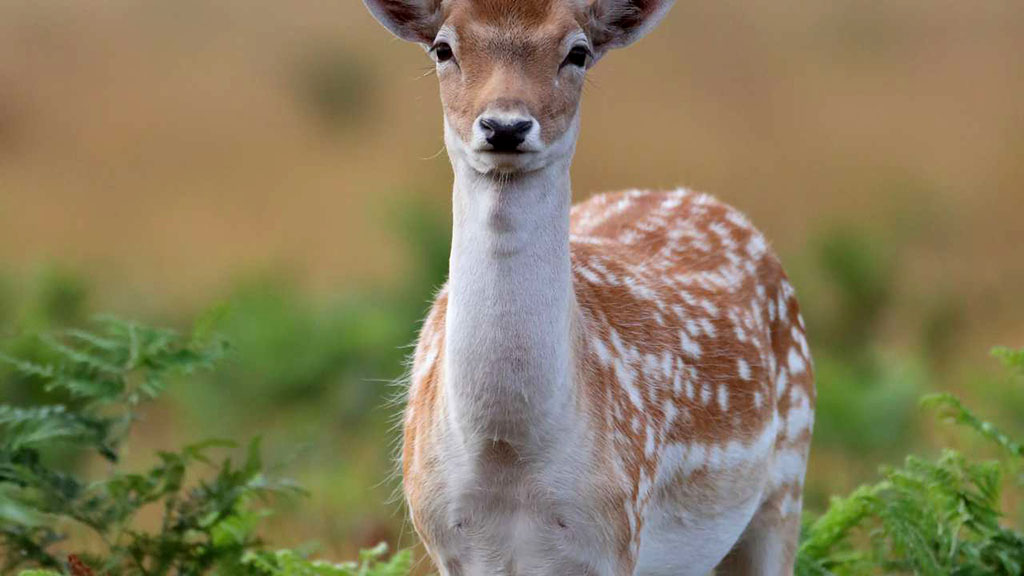
Image courtesy of Australian Deer Association.
Tasmanian Times (TT) is a community-based news and current affairs service covering the island state of Tasmania. It exists to provide a diverse presentation of Tasmanian issues. TT creates and supports independent media content utilising the best of modern technologies and tried-and-true practices of public-interest journalism.
Support us in expanding our coverage and developing new content by and for Tasmanians.
New initiatives on the way include … what our contributors and readers suggest! Please get in touch with your suggestions.