Rob Donnelly, the author of this short piece, argues that the fears we project onto new immigrants today—that they will take our homes, erode our way of life and change our society irrevocably—are the very same fears that underpinned the establishment of the colony itself.
Australia’s foundational story is one of an invasion that displaced an existing population and fundamentally altered the land. Donnelly suggests that to truly overcome our fears about immigration, we must first confront the collective trauma of our colonial past.
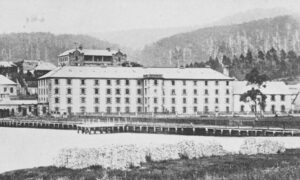
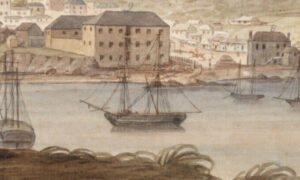
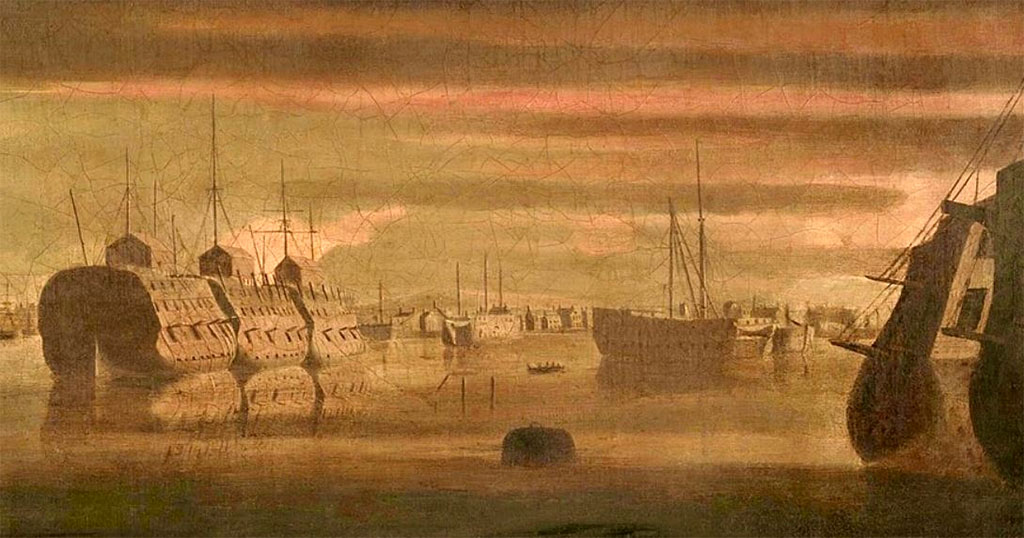
There was an evening, in February 1845, when a great mob of Hobartians gathered to protest the terrible imposition of transportation. Their passion was not fired by a humane protest against the degrading nature of convict life for those caught in the system. The mob were self-titled anti-pollutionists, or anti-transportationists for the more sobre and respectable in the gathering, and their agenda was vigorously self-serving.
New South Wales was closed for further convict arrivals, so Van Diemen’s Land was copping a tsunami of transported men and women. The old assignment system was dead and buried. Probation stations were now spread across the island like a contagion of sores.
The rhetoric of the mob is sadly familiar to our current times. Probationers were taking work from honest free settlers. The sheer number of these immoral newcomers meant good people didn’t feel safe in their own homes. Their criminality was dragging down the good order and moral character of the island.
The convict gangs, employed in public works, were lazy and poorly governed and the island’s political leaders were showing little sign of advocating with Britain for a better deal. And, on top of that, there was talk of imposing increased taxes in the island population.
There was, no doubt, a heavy degree of self-deception and hypocrisy at play among the sweaty ranks of the mob.
More than a few would have arrived on the island as convicts themselves. But their vigorous inclination to assert a new gained moral character, and social standing, drowned any sense of personal solidarity with the new arrivals.
The outrage of the evening’s meeting required a clear-cut differentiation. “They” were pollution, moral degradation, threat and criminality, and a sure sign the colony was going to hell. “We” were the morally upright victims, threatened by every boat arrival and poorly served by a weak-willed government.
It doesn’t take a great leap of imagination to read our present in the pages of our past: yesterday’s anti-transportation meeting is today’s anti-immigration march. The rhetoric concerning new arrivals is much the same. It is as old as the colony itself.
It shouldn’t come as a surprise that we are haunted by the idea of a devastating invasion.
It is, after all, our colonial origin story.
All the fears we project on the latest wave of immigrants – lessening our chance of having a home, impacting our well-established way of life and culture, changing our society in ways that might never be undone – are the foundational characteristics of the colony we inhabit today.
Maybe today’s fears will only be fully vanquished when we put aside our unfounded fears of newly arrived immigrants and finally address the trauma that is our collective past.
Rob Donnelly is a storyteller who draws inspiration from the physical beauty and tangled history of his island home, lutruwita Tasmania. He has a passion for the stories and wisdom of people who have been overlooked and silenced by mainstream society. Rob’s first book, Out of Order, is a memoir focused on the decade he spent as a member of a contemplative religious order and the drama involved in leaving that world. His second book, Con, is a vivid historical-fiction account of his ancestor’s experience of transportation and life in Van Diemonian exile. Con is the first of a trilogy of books that will ultimately span Tasmanian history from the 1840s to the 1920s. Rob is currently working on the second book of the trilogy, Donnellys Creek.
Tasmanian Times (TT) is a community-based news and current affairs service covering the island state of Tasmania. It exists to provide a diverse presentation of Tasmanian issues. TT creates and supports independent media content utilising the best of modern technologies and tried-and-true practices of public-interest journalism.
Support us in expanding our coverage and developing new content by and for Tasmanians.
New initiatives on the way include … what our contributors and readers suggest! Please get in touch with your suggestions.