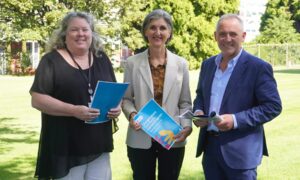

A report by Anglicare Tasmania and the Mental Health Council of Tasmania reveals that a shortage of affordable housing is negatively impacting the mental health of Tasmanians.
The report notes that 45% of those seeking housing assistance through the Housing Connect Front Door Service have a mental health condition.
Meanwhile, a separate report from the Tasmanian Council of Social Service (TasCOSS), the Youth Network of Tasmania, and CatholicCare Tasmania highlights a worsening homelessness crisis among children and young people.

Media release – Anglicare Tasmania, 5 August 2025
HOUSING ESSENTIAL FOR MENTAL HEALTH
Governments can improve the mental health of Tasmanians through major investment in affordable housing says Anglicare Tasmania and the Mental Health Council of Tasmania.
This Homelessness Week, the organisations described the life-changing importance of supported accommodation for people who live with mental health conditions.
New data from the first full year of the statewide Housing Connect Front Door Service showed 45% of people seeking housing support had a mental health issue.
“Stable housing has a positive impact on people’s mental health, but there is currently a massive shortage,”
said Mary Bennett, Coordinator of Anglicare’s Social Action and Research Centre.
“Our state requires more accommodation suitable for people experiencing acute mental health episodes or with poorly managed mental health symptoms. It’s also crucial to have long-term supported accommodation designed and delivered in a way that meets the needs of people with mental health conditions.”
In the past year, the Front Door service responded to 48,662 enquiries from people seeking housing support. Bennett said that over the past 12 months it had become increasingly difficult for people to access safe and affordable housing.
“Rental vacancy rates are lower across every region in the State, rents have risen almost twice as fast as income and the social housing register has grown by nearly 10% to a record 5,163 applications,” she said.
Bennett called on governments to scale up their investment in social housing and supported accommodation. “People need housing certainty and security; their mental health improves and it supports their recovery,” she said.
Mental Health Council of Tasmania CEO Dan Vautin said supported accommodation was an essential psychosocial support that needed to be available to more Tasmanians.
“We know that it makes a significant difference to people’s mental health and wellbeing,” he said.
“Access to safe and affordable housing results in fewer hospital admissions and re-admissions and provides people with better education and employment prospects. This has positive flow-on effects for family members including children, and for the wider community.”
Download the Housing Connect Snapshot here.
Background
The Housing Connect Front Door is the entry point for housing assistance in Tasmania. It is where people can get information about housing options and other supports. It can assist people to apply for social housing or to secure or maintain a private rental tenancy.
Anglicare delivers this service from its offices in Hobart, Launceston, Devonport and Burnie, as well as providing outreach at various community locations.
The Housing Connect Front Door does not make decisions about how social housing is allocated to people waiting for a home. Homes Tasmania manages the Housing Register in Tasmania.

Media release – Tasmanian Council of Social Service, 5 August 2025
Homelessness rates worsening, safety of children and young people at risk, Dashboard shows
Tasmania has a growing homelessness problem which is impacting hundreds of children and young people, new data shows.
To mark national Homelessness Week (4-10 August 2025), TasCOSS, in collaboration with the Youth Network of Tasmania and CatholicCare Tasmania, has released new child and youth homelessness indicators on the Tasmania’s State of Housing Dashboard, which highlight the increased rates of child and youth homelessness and the glaring gaps in the service system.
Youth Network of Tasmania CEO, Tania Hunt, said an alarming 39% (911) of homeless Tasmanians were children and young people aged 0-24 years.
“Homelessness affects a person’s mental and physical health, as well as their education and employment opportunities, and their ability to participate in society — these effects are particularly damaging for children and young people,” Hunt said.
TasCOSS CEO, Adrienne Picone, said the homelessness system in Tasmania is simply not adequately resourced to meet the needs of children and young people, with 61% of people turned away from homelessness services under 25 years of age.
“Tasmania’s rate of young people presenting alone to Specialist Homelessness Services (231.7 clients per 10,000 people) is the second highest of all states and territories, only after the Northern Territory,” Picone said.
“The Government has a choice: it can step up and act or sit by and watch more Tasmanian children and young people seeking support get turned away.
“We call on the next state government to work closely with existing providers, such as CatholicCare Tasmania, to expand homelessness supports and accommodation, along with crisis and transitional services, for children and young people, as a matter of urgency.”
CatholicCare Tasmania CEO, Julia Mangan, said growing and complex challenges are driving a rise in youth housing instability.
“Many young people are navigating trauma, family breakdowns, mental health challenges and substance use, often without the support networks they need,” Mangan said.
“Young people need ongoing, intensive and coordinated support to address these complex issues and support them to get back on their feet. It requires strong, cross-sector partnerships and a shared commitment to ensuring no young person is left behind.”
Hunt said the combination of record low vacancy rates and high demand in the private rental market was not conducive to young people finding a home.
“Young people, by virtue of their age, have lower incomes and usually lack a good rental or employment history to support their application, and frequently report being overlooked in favour of working couples or families,” she said.
“We need this Parliament to deliver on a dedicated Child and Youth Action Plan for Homelessness, which prioritises the specific care needs of children and young people.
This plan should include specific commitments to deliver more specialist support services and accommodation to homeless children and young people who are unaccompanied or have other complex needs.”
Tasmanian Times (TT) is a community-based news and current affairs service covering the island state of Tasmania. It exists to provide a diverse view of Tasmanian issues. TT creates and supports independent media content utilising the best of modern technologies and tried-and-true practices of public-interest journalism.
Support us in expanding our coverage and developing new content by and for Tasmanians.
New initiatives on the way include:
- a weekly podcast covering current affairs
- a revamped website
- a monthly cartoon competition
- a user-friendly app for both Android and Apple devices
- a weekly roundup of key stories