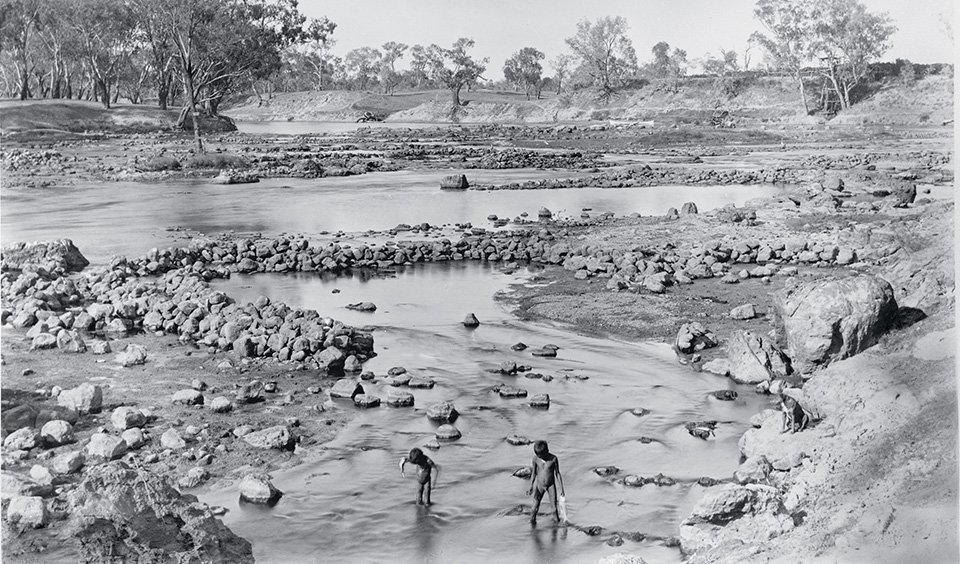

Author, Joshua Gilbert
First nations farmed the Australian continent for over 60,000 years prior to colonisation. Though we argue about the definitions of ‘farming’, a young cattle farmer and Indigenous man, Joshua Gilbert, is on a mission to reconcile Western and Indigenous agricultures.
He’s just authored a book on pathways to do just that: Australia’s Agricultural Identity – An Aboriginal Yarn.
Along with raising a family, running a farm, connecting with country and culture, doing a PhD and being on a host of boards and government committees, Gilbert’s quest is to unite what seem to be fundamentally different agricultural practices, to harness deep Indigenous knowledge and improve Western land management strategies.
With Australia’s thinning topsoil, unsustainable land-clearing, biodiversity crisis, rising population and the unpredictable extremes of climate change, Gilbert argues that all farmers and land managers can add to their tool kits with Indigenous approaches.
Gilbert also wants to see greater participation of mob in every agricultural practice, right across our continent.
“It’s estimated that Indigenous landholdings – a complex web of different land tenure systems with formally recognised rights and interests – cover almost 60 percent of this country.”
That percentage is set to increase, but Gilbert points to one of the problems in seeing more adaptive forms of food production.
“There is no Indigenous agricultural research organisation focusing on Indigenous-led research, and there is no black farmers’ collective to advance the interests of mob on the land.”
Why not? Historical and contemporary systemic racism, and non-indigenous refusal to support truth-telling and Treaty, block our ability to talk across the divides, which some politicians cynically exploit. To learn more, however, we have to engage, and as climate crises come thick and fast, we need to work together, including adaptions to our farming practices.
When early European farmers found themselves at a loss, and starving, it was local well-fed Indigenous folks they turned to out of desperation. Since those times, first nations have been working, largely unacknowledged and often unpaid, in Western agricultural enterprises of every sort. Indigenous men and women found that they could hold both sets of traditions, something of great value for strategic and adaptive approaches over time.
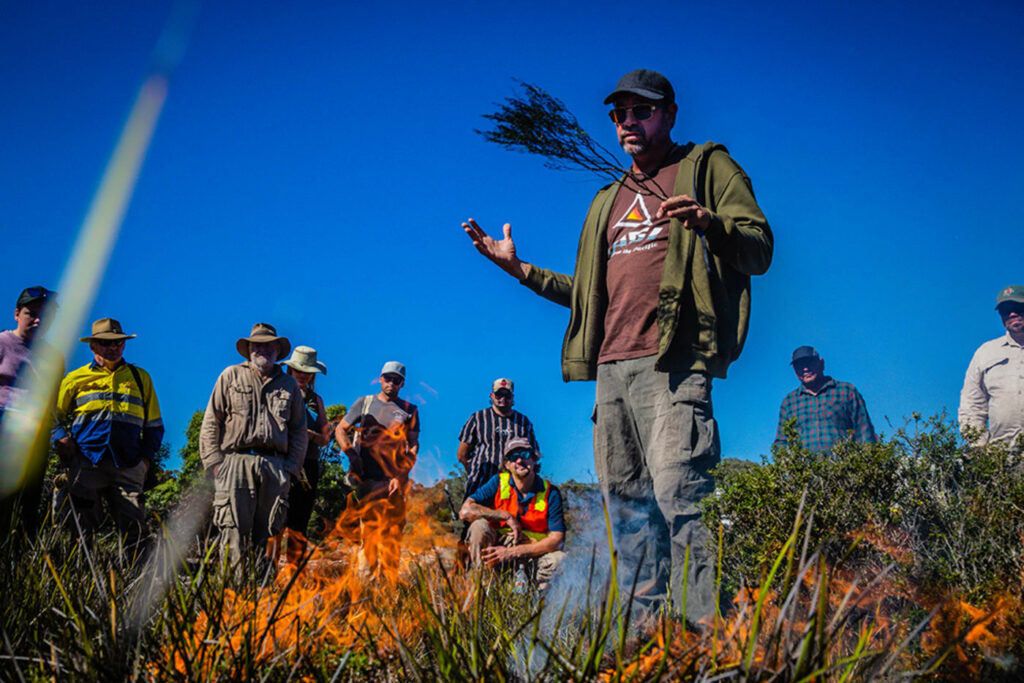
Firesticks Alliance Victor Steffensen sharing cultural burning practices. Photo: WWF
Gilbert argues: “Indigenous people’s input and talent is vital to modernising the agricultural sector. There is a huge opportunity to build employment pipelines from schools through universities into the broader agrifood industry.”
It’s long past time to put aside the culture wars and racism. We all need to work together for the best outcomes.
I put a few questions to Gilbert about pathways forward:
Joshua, are there ways to employ Indigenous perspectives at necessarily large Western / industrial agricultural scales? Do we need to deconstruct corporate capitalism and renegotiate socialism?
There is much to change to embed an Indigenous agricultural agenda, particularly when considering broadacre industrial farming. There are many ways to incorporate Indigenous principles into large-scale agriculture, but the starting point is the development of small-scale, Indigenous-owned and managed farms to prove the model/s.
We also need to unlock the Indigenous estate and utilise Indigenous rights in land to demonstrate these localised models. Finally, these approaches need to be inclusive – we know Western, industrial agriculture is not working across these landscapes, and we need to partner to develop a new, truly Australian agricultural model.
Are fences a quintessential divide between Indigenous and Western agricultural / land management approaches? How do we approach land ownership in new ways?
Personally, I feel that fences are more of a mental divide between Indigenous and Western agricultural methods. A farmer’s boundary fence creates comparison and restricts thinking between strainer posts, rather than broad ecosystems and application of that patch of ground to country more generally.
For farming methods to be successful in the future, landscape approaches need to be considered, with the overlay of Indigenous thinking and understanding of land pivotal to the interactions of the broader ecosystems.
To reduce emissions and land-clearing, we need to eat less meat and use less land to support livestock and feed for livestock. What is your thinking on new approaches to this set of intersecting issues?
Creating markets and supporting farmers who are farming more in alignment with country supports and encourages better farming practices. We need to be supporting those who are farming in more nature-positive and environmentally friendly ways, particularly unlocking opportunities for Indigenous farmers who want to do this but are often locked out due to finance.
Indigenous perspectives embed cultural practices that sometimes restrict specific knowledge to males or females. Is this ‘dual cultures’ aspect irrelevant or possibly helpful to the discussion about pathways forward?
Yes, Indigenous culture and practice at large needs to be affirmed, rebuilt and instilled into society today. This needs to be included in its entirety, strengthening culture and bringing all aspects to where we are now and where we need to head as a community into the future.
What kind of political / democratic structure would admit the discussion of greater Indigenous inclusion in agriculture and long-term planning at a high level? Our current system doesn’t seem capable.
Agriculture has been a laggard in listening to and promoting Indigenous views and self-determination. Currently, there are no bodies that advocate for Indigenous agricultural policy, research or interests across the broader definition of Indigenous agriculture.
Our existing agricultural organisations do not represent the rights and interests of Indigenous agriculture and we need to develop self-determined and appropriately-funded organisations that address this gap.
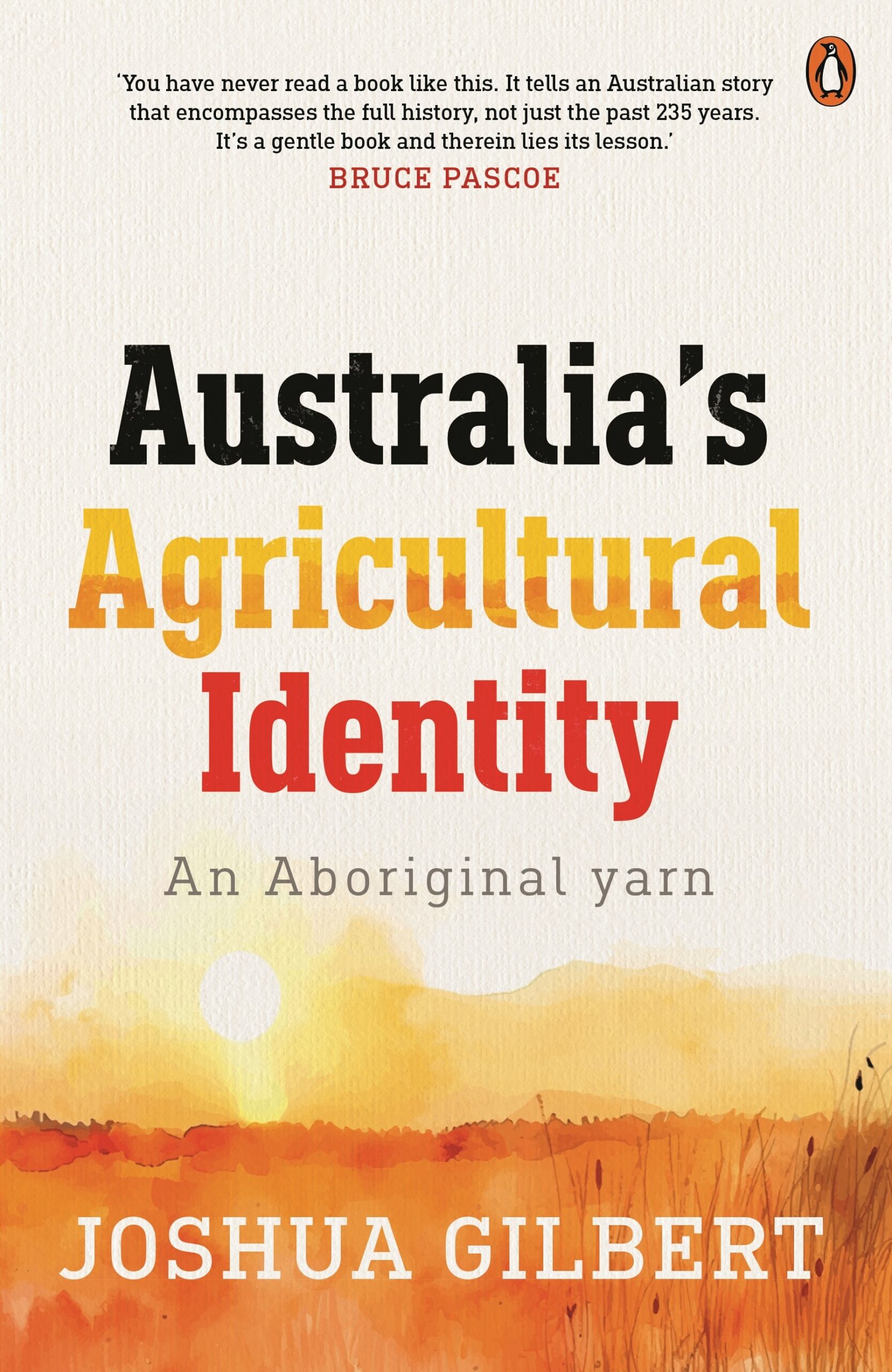
Australia’s Agricultural Identity – An Aboriginal Yarn, by Joshua Gilbert, Penguin Random House, 267pp, RRP $36.99
B.P. Marshall is a scriptwriter and author, who has also worked for and with First Nations on Country as a Remote Area Nurse.
Tasmanian Times (TT) is a community-based news and current affairs service covering the island state of Tasmania. It exists to provide a diverse view of Tasmanian issues. TT creates and supports independent media content utilising the best of modern technologies and tried-and-true practices of public-interest journalism.
Support us in expanding our coverage and developing new content by and for Tasmanians.
New initiatives on the way include:
- a weekly podcast covering current affairs
- a revamped website
- a monthly cartoon competition
- a user-friendly app for both Android and Apple devices
- a weekly roundup of key stories