Agriculture
The Greenwashing of ‘Regenerative Farming’

How are agri-business corporations selling you their business-as-usual as ‘regenerative farming’?
Let’s dive into their greenwashing and dismantle their fallacies.
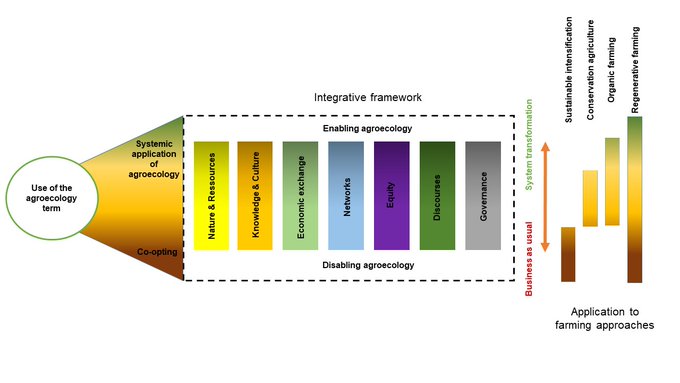
PROBLEM: There isn’t a common definition of regenerative farming. There are 3 different approaches to RF: 1) social-ecological, 2) agronomic (conservation agriculture), 3) commodification (sustainable intensification SI), precision farming PF).
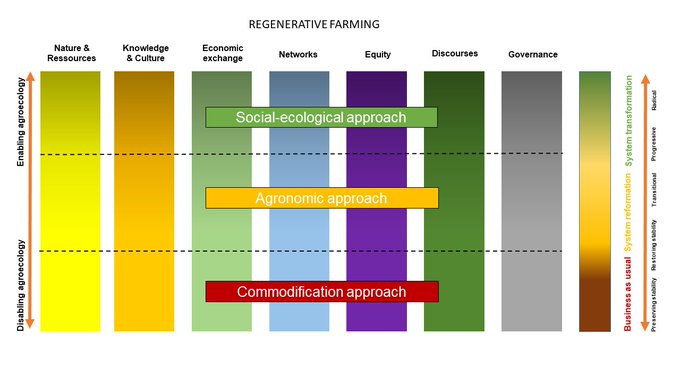

In the commodification approach sustainable intensification and precision farming are marketed as ‘regenerative’ practices.
REALITY: they are just based on improving efficiency and productivity to maximise profits.
AIM: selling their particular vision on the future of farming: their GMOs + their digital tools.
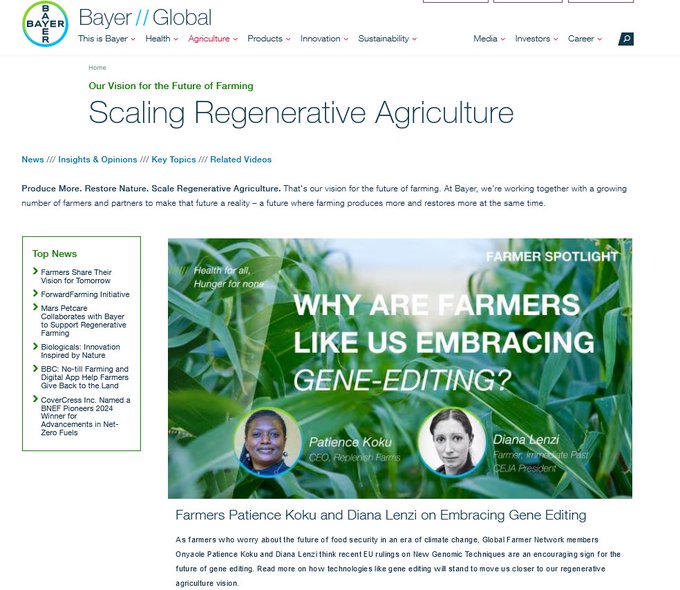

To justify that, their vision on RF is based on some fallacies:
1) closing the ‘yield gap’: there is still room for producing more with less
2) we can’t feed the world with the current land
3) increase profitability of farming
4) need of GMOs and digital tools.
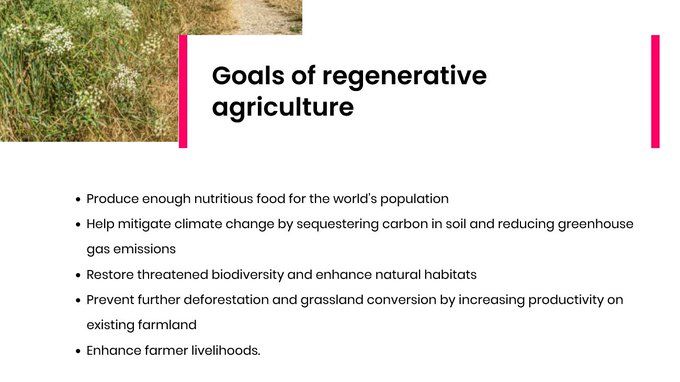

But what products exactly?
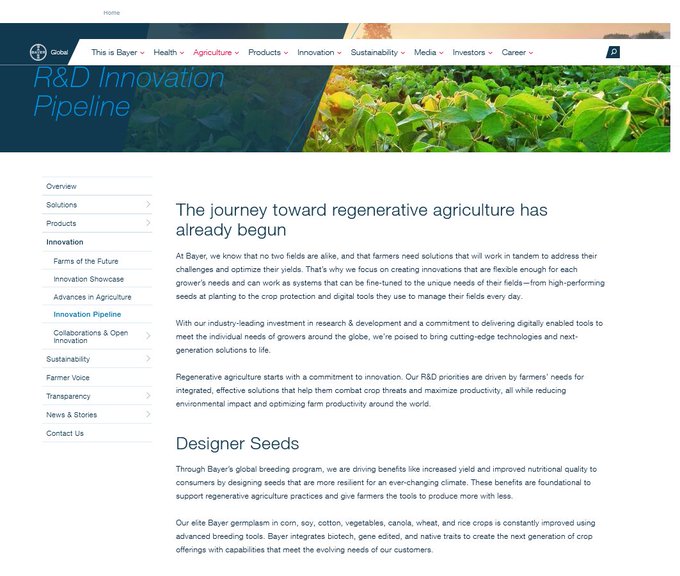
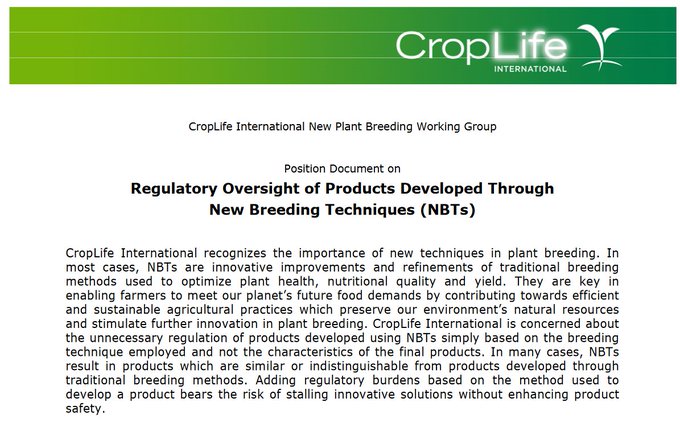
1) New breeding technologies(NBTs) (i.e. GMOs): to have seeds and varieties resistant to pests (to sell you the ‘pesticide free farming’) and increase productivity by reducing the need of some inputs (SI).

But these NBTs are not so popular. That’s why the lobby CropLife – formed by all the big agri-business corporations – is trying to influence so that regulations are not restrictive.

2) This particular vision on digital tools, based on the use of sensors, drones and the constant generation of high volumes of data managed by the companies (not by the farmer). A ‘smarter toolbox’, in this case from Bayer Crop (8/14)
More info: climate.com
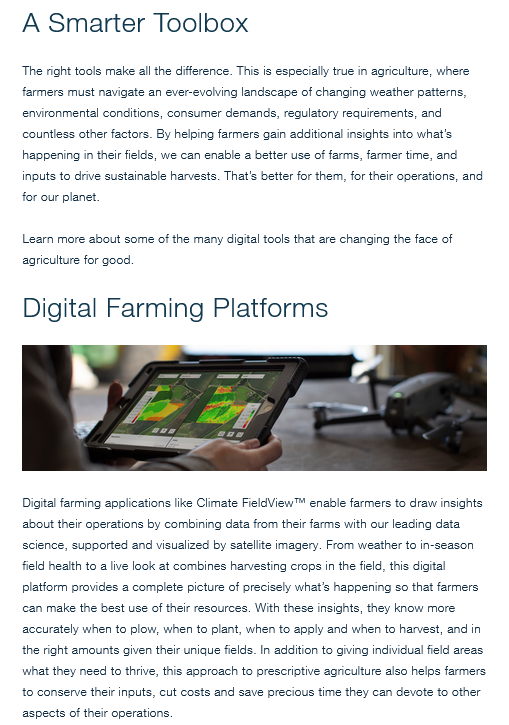

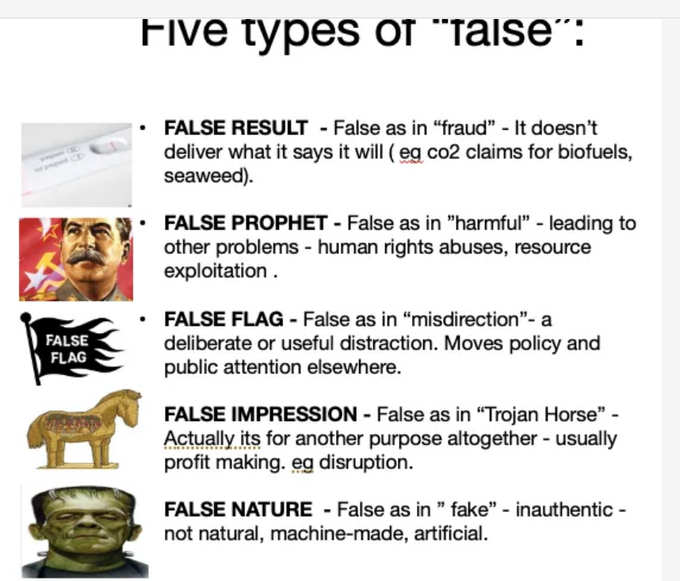
These measures are also called ‘false solutions’: they are not impacting positively on nature.
The real aim is to keep farmers dependent on these companies, through their seeds, inputs, digital tools, and data to increase their profits.
More: scanthehorizon.org/p/how-to-think

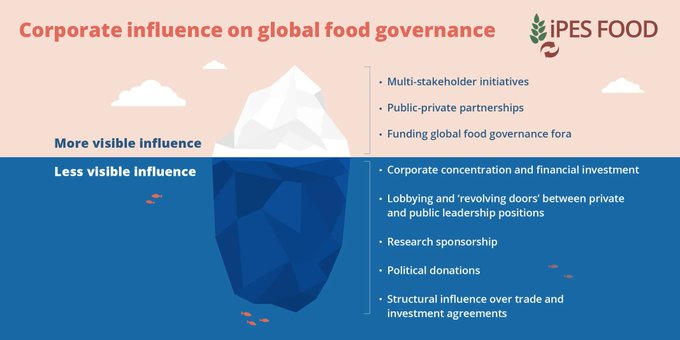
And… you might think, “there are many studies supporting these solutions” or “there is a lot of funding for them”. Well, let’s just try to explain it with a figure from @IPESfood.
Source: ipes-food.org/report-summary

In our recent paper we explain how agroecology and RF have been co-opted: sciencedirect.com/science/articl
There are wonderful reports on it, explain this in detail and the differences with holistic social-ecological approaches, such as agroecology and food sovereignty.
From @IPESfood ipes-food.org/_img/upload/fi
From @FoEint @TNInstitute foei.org/wp-content/upl
The consequences of these false solutions on people and nature are already visible.
GRAIN | Regenerative agriculture was a good idea, until corporations got hold of it