Media release – City of Hobart, 27 October 2023
Hobart’s economy shines after dark
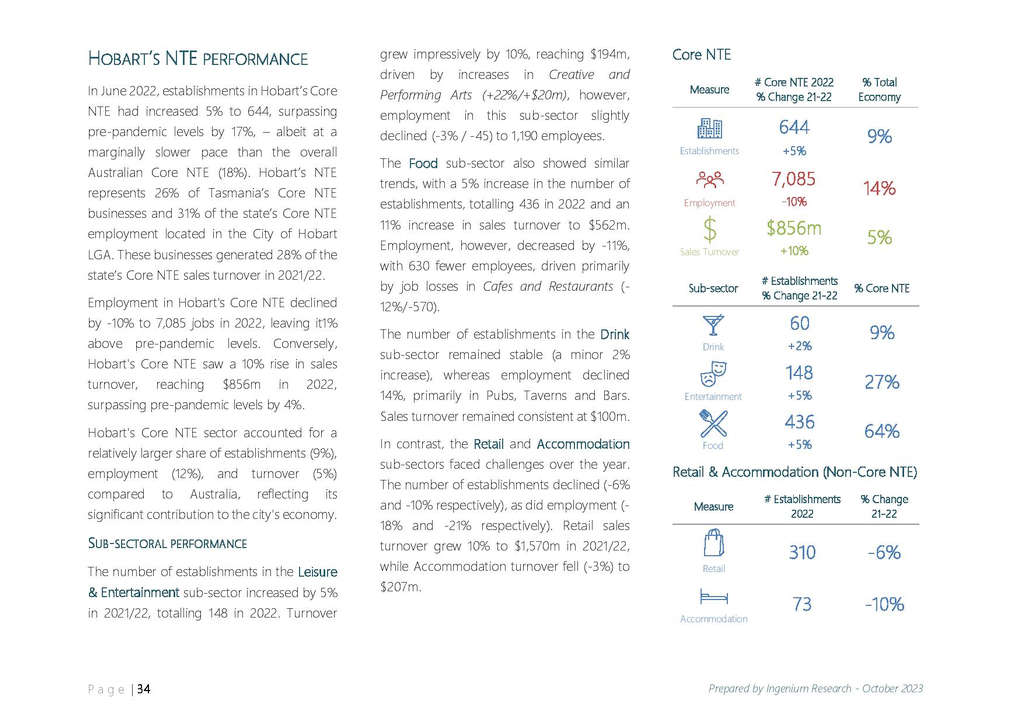
City of Hobart businesses that come alive after dark are having a significant impact on the local economy according to a new report released from the Council of Capital City Lord Mayors.
The independent research findings showed the City of Hobart supported a growth in night time economy turnover to $856m, up 10 per cent from last year, representing 5 per cent of the Hobart economy.
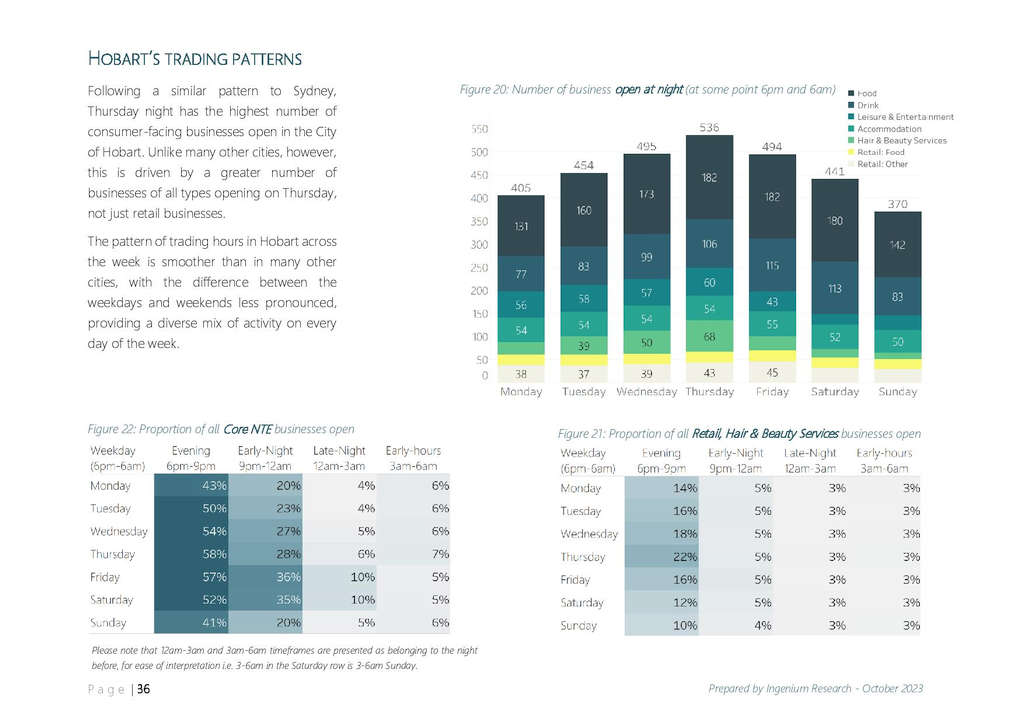
Thursday nights in Hobart has the highest number of consumer-facing businesses open in the City and is driven by a greater number of businesses of all types opening on Thursday not just retail, demonstrating a healthy broadening and expansion of NTE businesses.
Key take outs for Hobart:
- The number of Hobart businesses from the core night time economy sector also grew by 5 per cent to 644 in 2021-22, surpassing pre-pandemic levels by 17 per cent.
- Leisure and Entertainment establishments in particular have attracted spending with an impressive growth in turnover of 10 per cent to $194m, driven by increases in Creative and Performing Arts (+22 per cent/+$20m).
- The Retail and Accommodation sub-sectors faced challenges, with the number of establishments declining (-6 per cent and -10 per cent respectively) and employment dropping (-18 per cent and -21 per cnet respectively), while turnover grew by +10 per cent for the year.
Hobart Lord Mayor Anna Reynolds said Council acknowledged it was still a challenging environment for the sector.
“From this report, we know how powerful Hobart’s night time economy can be for the city, but we acknowledge that we are in tough economic times,” Cr Reynolds said.
“The night time economy employs more than 7000 people, which makes up more than 14 per cent of Hobart’s total employment.
“The City of Hobart’s recently released City Economy Strategy identifies strengthening and supporting the night time economy to grow as a as a key action for our city’s prosperity.
“A robust night time economy will strengthen the vibrancy of our city and make it more resilient, productive, liveable and sustainable.”
The City also provides grant programs aimed at supporting businesses participating in the night time economy and through dedicated projects like those to expand outdoor dining in the city.
Former Chair of Melbourne’s Night Time Economy committee Penny Miles was recently in Hobart and is an expert in the after-dark industry sector.
“Night-time businesses and programs are a vital part of the wealth, health and vitality of our cities,” Ms Miles said.
“They pump money into the economy and provide an array of jobs, but they are more than this.
“The after-hours sector makes our cities hum. They provide experiences and activities to connect us, showcase civic culture and celebrate our unique identity to attract and keep visitors coming back for more ”
“These latest figures speak to the tremendous opportunities but also the vulnerability of Hobart’s night-time economy.
“Now, more than ever, strategic care and cultivation is required to continue to rebuild, grow and see all facets of the ‘after dark’ industry flourishing.”

Media release – Council of Capital City Lord Mayors, 26 Oct 2023
Australians are enjoying the vibrancy of cities well into the night –
New research commissioned by the Council of Capital City Lord Mayors shows that Australia’s night time economy enjoyed a welcome boost during the 2021-2022 financial year, with an increase in sales turnover and night time businesses.
Lord Mayor Sally Capp, Chair of CCCLM and Lord Mayor of Melbourne, introduced the Measuring the Australian Night Time Economy Report, noting encouraging outcomes despite a year marked by partial pandemic restrictions.
The Lord Mayor says that the night time economy plays an essential role in a city’s gross domestic product.
“Our city councils understand the significance of the night time economy in enhancing the vitality and liveability of our cities,” the Lord Mayor says.
“The night time economy is where hospitality, events and accommodation providers really shine, and we are delighted to see Australians continuing to embrace food and entertainment after dark.”
This year’s report outlines the various initiatives aimed at supporting businesses in this sector, as cities adapt to their post-pandemic rhythms.
Highlights from the 2021-2022 NTE report include:
- The NTE generated $146 billion in sales turnover, marking a 10% increase from the previous financial year and a 5% rise compared to pre-pandemic levels in 2018-2019.
- The number of businesses operating within the sector increased by 7% compared to the previous financial year, totalling 131,373 businesses. The most significant growth was observed in the Leisure and Entertainment sub-sector, particularly in the Creative and Performing Arts category.
- The sector’s employment levels did not fully recover to pre-pandemic levels. Employment saw a 1% increase from the previous financial year but remained 6% lower than pre-pandemic levels.
The Lord Mayor says that these results indicate the resilience of the night time economy sector.
“Despite the ongoing external challenges presented by the pandemic, and the new rhythms of people travelling in and out of cities, it’s clear that that night time economies are continuing to thrive,” the Lord Mayor says.
“In 2023, the night time economy around Australia is thriving with unique and exciting businesses continuing to choose capital cities to make the most of the vibrant after dark scenes on offer.”
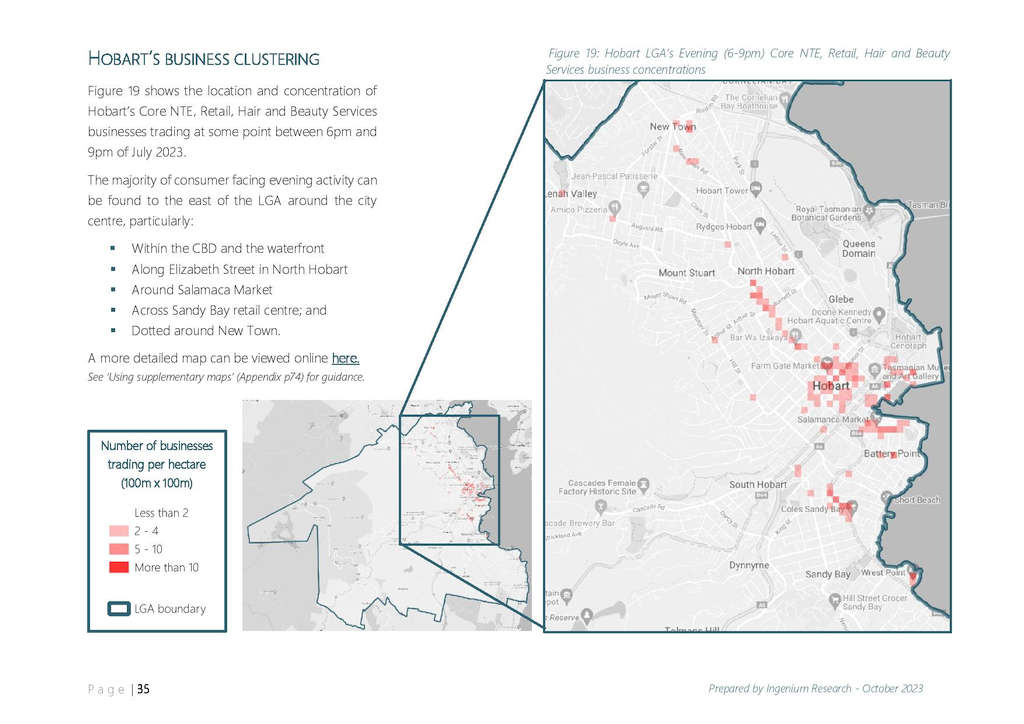
Additionally, this year’s NTE report introduces an analysis of trading patterns and a mapping of business clustering within cities.
The complete report is available to download here: https://www.lordmayors.org/wp-content/uploads/2023/10/Measuring-the-Australian-NTE-2022-FINAL-201023.pdf.