Media release – Save Our Loongana Valley Environment, 5 June 2023
Energy Development Conference again excludes the biggest stakeholder – Tasmanians
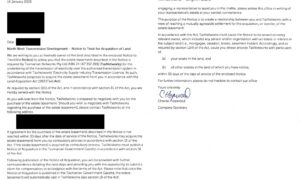
Loongana Valley, one of the communities most impacted by TasNetworks’ energy sector planning and worst-practice ‘community engagement’, will join others protesting outside the 2023 Energy Development Conference on Thursday.
We do so reluctantly, as working people taking time off, to call out the bad planning, and unfair and predatory practices, of the energy and transmission industry.
The conference is a networking event which will make decisions affecting Tasmania’s future, yet ordinary Tasmanians won’t be in the room to guide better actions, or to point out that current planning by jurisdictional planner, TasNetworks, will cost Tasmanians dearly, without genuine reciprocal benefit. These industries, TasNetworks, and their backers and beneficiaries in state government, need to be stopped for a reset, not given carte blanche to continue plans that we pay for but receive nothing substantive in return.
While Tasmanians are being told we have to subsidise the for-profit renewables and transmission industries, at no stage are the industry addressing local needs, sustainable practice, or social equity – they’re not even addressing climate, and claims to the contrary are greenwashing. The virtually unregulated Tasmanian renewables boom will only benefit investors, TasNetworks, and our state government.
How? Global renewables companies are given our wind energy, and may set up a windfarm knowing that energy can and will be sent for sale to the mainland via TasNetworks’ new grid and Marinus Link. It’s a win for investors, most of whom will never set foot in Tasmania.
Meanwhile, TasNetworks have spurned planning that might benefit Tasmania in favour of a plan that benefits themselves – a new grid we’ll pay for. In turn, their sole shareholder, the state government, anticipates increased ‘efficiency dividends’ if new wind farms, attracted by taxpayer-funded subsidies, cover our hills. It’s a clear pecuniary conflict of interest for both TasNetworks and the state government, and will socialise the costs of industry for private profit.
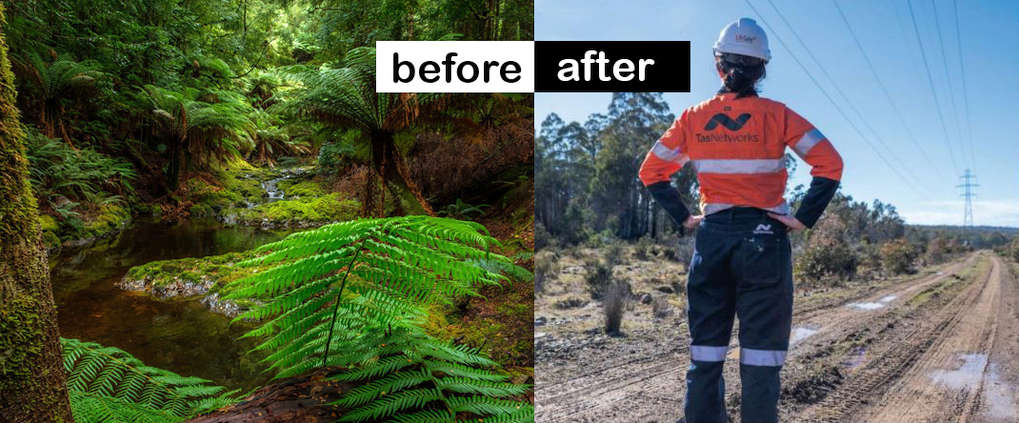
Jobs and economic growth will, like the energy, move offshore. Investment will only be in infrastructure here, not ongoing industry. The latter will be where the energy is intended for sale – the mainland. Meanwhile, communities like ours will see our farms and wilderness bulldozed within the so-called REZs, which currently cover half the state. There are, as yet, no no-go zones.
Inside the conference, industry and state government attendees can look down on communities like ours, protesting TasNetworks’ unfair plans which impose very real costs on us, our community, our environment, and our local economies. Speakers will give tips on ‘community engagement’, ignoring the fact that we outside have endured years of corporate PR, and well know PR lies when we hear them. Ask us what we think of TasNetworks’ ‘community engagement’.
The economic winners of the conference are inside, networking. The losers aren’t just the few protesters from Loongana, Central Highlands, Smithton and Circular Head, but all of Tasmania. The renewables boom is leading to exploitation of our resources and our people, and needs to stop and reset.
Marinus needs to stop, TasNetworks’ needs to be sacked from their Jurisdictional Planner role, and the state government needs to stop using government-owned enterprises as sock-puppets to extract general revenue from us – tax by stealth. Communities are increasingly realising that we get nothing from all this economic activity except state debt, environmental destruction, industrialised landscapes, fewer tourists, lower property values, higher fire risks, and higher power bills.
We cannot afford to let industry profiteering, and government revenue-raising, dictate our economy. We cannot afford a bad plan like Marinus. We certainly cannot afford to let TasNetworks run it all.