
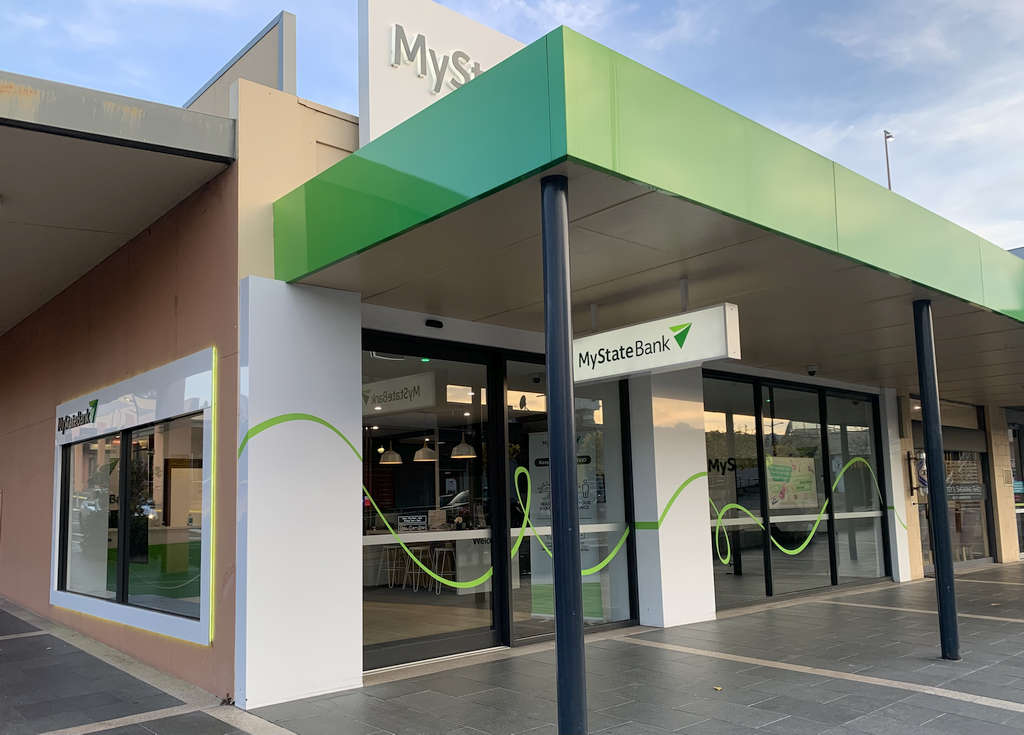
Recently a Tasmanian friend of mine was scammed out of $100,000, and her bank, MyStateBank was completely unsympathetic, rude, unhelpful, and refused to compensate her.
She is a competent businesswoman, whose focus is on counselling and helping people, not digital technology. If she can be a victim, then what hope for many older and less skilled in the community? She was interviewed on Win News – and remains very upset.
Last week a similar scam was reported by the ABC. And an almost identical scam was reported recently in the Sydney Morning Herald.
“Someone claiming to be from Optus called Ferrari, 69, in early February offering to help fix her internet connection. As an Optus customer with an unreliable connection, she agreed to co-operate by giving the caller access to her computer. The scammer then told her that Optus was offering $550 in compensation which had been deposited to her account. He suggested she check while he fixed her connection. The following day, $97,000 was drained from her savings account.
“There was absolutely no contact made by the bank when that scam occurred,” she said. “It was me that had to call them the next morning when I couldn’t get into my internet account.”
Over the past five years banks have radically changed their service models by closing branches across the country (a 30% decline was reported by the ABC in March 2023).
In Tasmania too bank branches are closing rapidly, with claims from banks that there is less ‘foot traffic’. Local councils have called for action and a Senate enquiry, which has not yet reported, but has received over 500 submissions.
The Mercury Reported in 2022,
“The number of cash machines has almost halved in Tasmania over the past three years, with more than 115 automated teller machines shut down by Australia’s big four banks.
The cutbacks come in addition to the closure of 13 bank branches in Tasmania since 2019, including five locations in Hobart alone.
The closures have left a record number of towns without a local bank or ATM, and some of the state’s regions were hit particularly hard in the latest cost-cutting wave.
They came despite rising, multibillion-dollar profits for Australia’s financial institutions, and the threat of a federal taskforce investigating regional banking services.”
Anna Bligh, CEO of the Australian Banking Association, observed that foot traffic in branches had declined by almost 70% in recent years. She also stated that the pace of change in the sector had been pretty rapid and “…for some people it’s a pretty big and quite difficult change to adjust to.”
What is being left unsaid in reports like this is that the change is far more than adaptation or convenience; it is a change that has dramatically shifted the risk of financial loss onto the shoulders of ordinary Australians.
Bank customers now are faced with a deluge of highly sophisticated scams.
Savings from the closure of branches and the active redirection of customers to online banking have delivered massive savings to banks. The costs from these changes are experienced daily through customers losing millions of dollars to financial scammers. The banks are standing back harvesting the profits and blaming the customer for their failures.
In the ‘old days’ banks invested in security to protect their money and staff. The banks controlled their risk with physical security, guards, safes, and vaults while imposing access controls on their customers by limited business hours and queues. Today, the branches have gone, the jobs lost, the savings harvested and handed to shareholders, and the customers left alone and vulnerable.
The federal government must act strongly and decisively to compel banks to protect customers against the daily risks of financial loss through sophisticated technology scams.
There is a link between the issue of branch closures with inconvenience and job loss in rural and regional communities.
Media reporting on scams in online banking is running which warns people to beware and protect themselves with the implication that the customer is to blame for their carelessness.
Phone banking and the ability to reach a live person in Australia generally is irritating for customers.
Media reporting fails to draw the clear links between reduction in face-to-face bank services and the redirection of customers to online banking with the scams and major financial losses now occurring.
Somehow the customer is suddenly and wholly responsible if they lose through scams and the banks have woeful supports in place to assist.
Banks are not acting on what is happening, not acting in good faith, not helping their customers, and not treating customers with respect and dignity.
Banks engage in ‘victim blaming’ toward those affected by scams. Most ordinary citizens of this country are not expert in digital operations and should not be expected to have comprehensive detailed knowledge of how to conduct safe banking transactions. The bank should provide that protection.
Once upon a time we had a bank book and went into the bank to conduct transactions. We had a cheque book and once a week or so paid our bills by cheque and posted them. There was little to no exposure to ‘scams’.
There are 3 million Australians over the age of 70 years, and many have limited skills in the digital space.
Furthermore, less than half (43.9%) of Tasmanians were assessed as having adequate numeracy skills to effectively manage and respond to the mathematical demands of diverse situations, compared with 47.4% for Australia. Literacy skills are similarly inadequate for the modern world. In 2012, the OECD found one in two adults in Tasmania had a literacy level below three. That means they lacked the basic skills required to understand and use information from newspapers, books, or magazines.
The Banking Royal Commission made it clear that banks were untrustworthy:
“Two years ago, the final report of the banking royal commission exposed a culture of rapacious greed, of profits and shareholders being put before customers and the law.”
The federal government recent media release and response to scammers is wholly inadequate. It will establish a National Anti-Scams Centre (NASC)
“The NASC will be the Government’s primary weapon to detect, disrupt and deter scammers and tackle online fraud. In a world-leading partnership between government agencies, banks, telcos and digital platforms, the NASC will:
- use cutting-edge technology to share intelligence across Government and with authorised industry participants to interrupt scams in real time;
- combine the expertise of Government and the private sector to disrupt scams and;
- raise consumer awareness on the risk of scams and how to avoid them.”
This still puts the blame on victims. It does not require restitution by banks.
Last month, corporate watchdog ASIC released a highly critical report covering the four major banks — ANZ, Commonwealth Bank, NAB and Westpac — and their responses to the threat of scams.
According to the report, about 31,100 customers at the big four banks collectively lost more than $558 million to scams in the 2021-22 financial year. The banks only paid about $21 million in compensation to the victims and the rate of reimbursement was very low, ranging between 2 and 5 per cent. Mean these same banks strolled to a casual $33 billion in profit.
“Banks are meant to be really good risk managers and they manage that risk by passing on those costs to customers.”
A strong government regulatory body and strong legislation is needed. There is a power imbalance between banks and customers.
Banks have profited hugely from branch closures and massive reduction in employment numbers. Those savings have flowed to the wealthy and institutional investors. The customers have been patronised with the spurious benefits of flexibility, while being subject to the real but hidden risks of scams and major loss.
Banks have demonstrated no real commitment to educating, supporting, and protecting customers from scams and failed to provide fair and reasonable compensation.
Where events occur banks consistently blame the customer and fear of humiliation and embarrassment is no doubt preventing people from revealing their personal tragedies.
The pathetic approach to holding banks to account, banks by successive governments, is unacceptable.
The federal government needs to act on three fronts,
- Mandate compensation or reimbursement to their customers who have been scammed. Otherwise, the banks will never put in place strong safeguards to ensure the protection of their customers.
- Mandate that banks invest in technology that supports client’s awareness, particularly those with low technology, literacy, and numeracy skills, and provide early warning of unusual activity in their accounts.
- Force banks to invest in new face to face service models in local communities that allow at risk people to learn how to be safer online, delivered in an accessible form, acknowledging low digital literacy and numeracy. Banks are not acting with these people in mind. Governments must.
Banks should be required to reimburse customers if they have been victims of a scam through no fault of their own and they did not act with gross negligence or criminality.
Assistant Treasurer and Financial Services Minister Stephen Jones must act decisively to level the power and risk imbalance now in place and protect the scarce financial resources of the many Australian families who are experiencing significant financial losses every day through the bank system’s flagrant and cynical disinterest in their well-being.
Dr Kathryn Barnsley is an Adjunct Researcher, School of Medicine University of Tasmania, former member of the federal National Expert Advisory Committee on Tobacco, former member of the federal National Women’s Advisory Committee, Member of Tasmanian Women’s Honour roll, member of the Australian Labor Party, Labor Environment Action Network. Adviser to governments of all political persuasions, and author of several key pieces of tobacco control and public health legislation.