
When the coronavirus pandemic hit in 2020, medical science took on new meaning to many. With the dark cloud of a new disease hovering above, people’s daily lives became curtailed by lockdowns, the inability to travel, mask mandates, not to mention the prospect of becoming ill and dying from COVID-19.
I found myself fielding questions from friends and relatives.
Why is this new type of flu such a big deal? Do masks actually work? Would the virus integrate into our bodies? Is the government telling us the truth? And then there were the vaccine questions…
The answers were not always clear-cut, but I did my best as a qualified biomedical scientist. It was gratifying to see my profession valued in an everyday sense, but also disappointing to encounter scepticism toward science. It is healthy to question things, indeed, it is part of science, but some of the doubts about vaccines were farfetched, especially considering how much modern life owes to vaccine science.
Mistrust in science is often attributed to social media and the maelstrom of misinformation it supports. I’ve also heard science called a victim of its own success. This argument says that scientific advances have made our lives so comfortable through technology and medicine that we no longer see the natural world as a threat and think we don’t need science, the activity which studies the natural world.
While these explanations might be valid, I couldn’t help wondering if part of the reason for mistrust in science lay closer to home. Perhaps the experts in science and medicine weren’t communicating well.
To illustrate, during the pandemic people were told ‘Talk to your health professional’ or otherwise directed to the website of what was usually a government body. It was very common for people to be warned not to look online, with Dr Google particularly frowned upon, presumably because of the fear of lurking misinformation and conspiracy theories. Wasn’t this advice futile though – what aspects of life do we not consult the internet on these days?
I also found it misleading. Obviously, unreliable medical information abounds on the internet, but there are also reliable sources. Rather than try to steer people away from the internet wouldn’t it be better to suggest they use it judiciously. Telling people not to search online about COVID-19 made it look as though medical and scientific experts had not discovered of the power of electronic communication. It created the impression they guarded their knowledge like military secrets, which hardly instilled confidence and, moreover, was not true.
Vast databases covering reliable medical information are, in fact, on the internet and at the tips of most people’s fingers. This information is in a form of literature that is the basic reference material of science and medicine. This literature records the coalface of science and medicine, and is immense, international, continuous and up to the minute. It provides the source material for all textbooks, teaching and guidelines in science and medicine, including those written by experts and government bodies.
The primary scientific and medical literature is admittedly not easy reading. Arcane and intimidating are descriptive words that spring to mind. Mostly written by experts, it is composed of articles held by several thousand journals with forbidding titles and, there’s no denying its jargon is ‘next level’. In describing it as reliable, some qualification is needed. It is reliable overall because each article undergoes vetting by independent experts prior to publication, but even so single articles on their own are not necessarily ‘set in stone’, because the literature supports debate and an article must be interpreted in this context. To cut through the ‘background noise’ present in the primary literature many journals publish review articles which summarise developments and are particularly valuable references to a nonexpert.
The most obvious scenario in which someone from the general community turns to the scientific and medical journals is to learn more about a medical condition they or someone close to them has, including COVID-19, however there are other scenarios as well.
Even if one does not read the journal literature of science and medicine, just knowing about it goes a long way toward an appreciation of science. Almost every scientific and medical advance in the last few hundred years has been announced and recorded precisely in this literature, so its relevance is hard to overstate. Each article is a small piece of knowledge and, overall, the literature is a storehouse of knowledge for all time. The journal literature is fundamental to not only medicine and health, but also technology, agriculture, industry, the environment, economics, the list goes on… What’s more it concerns the whole globe and beyond. It underpins modern life and shows science in action with its detail, rigor, theory, method and debate.
Call me biased, but I see the scientific and medical journal literature as the ultimate art form, as well as a vital knowledge storehouse. It has an aesthetic appeal which comes from its subject matter of the natural world, but also from the human curiosity, ingenuity and imagination it showcases. This is where Einstein published his groundbreaking ideas afterall.
Yet the importance of the journal literature seems inversely proportion to its profile – most people barely realise it exists.
During the pandemic occasional mentions were made of The Lancet or New England Journal of Medicine when they published developments about COVID-19. These are among a handful of ‘glamour’ journals of the medical literature with content that attracts mainstream attention but they do not operate in isolation and are far from typical. They are tiny branches of an immense communication network.
The sketchy presence of the journal literature of science and medicine in the general community is not helped by it being poorly organised. Even though it operates as a single body of reference literature, it is not assembled as such and presents as a bewildering maze to the uninitiated. While its true that anyone can access this literature through the internet today, it does depends on how you define ‘access’.
The most well known gateways to the literature are the search engines PubMed, covering biomedicine run by the United States of America (US) government and Google Scholar, covering most disciplines, with both offered as a public service. A search engine, though, might only show that an article exists. Depending on the article one is after, the access to its full text from the search results may or may not be direct, it may or may not involve logins, it may or may not involve paywalls.

This variation is a result of the different policies on access between journals regarding their content, rather than subject matter. The publishers of academic journals are a mixed bunch, some commercial and some nonprofit, with nearly all based overseas. Generally, nonprofit publishers have more liberal access policies for journal content, but not always.
The reason for the fetters around journal literature can be traced to academia, and unfortunately does nothing to dispel academia’s ivory tower image. It is here that the experts who write the literature are mostly found and it is they who ultimately determine the access arrangements. Experts who author journal articles are also found in industry and hospitals, but while the literature is integral to these environments, it is generally because it is read more than it is written.
One might think that academic experts would favour journals with wide reach in publishing their work to maximise its dissemination but, on the whole, this is not the case because they do not see the general community as part of their audience.
This somewhat blinkered view of publication holds sway, but it is far from universal and troubling to some.
The disquiet arises because of the assumptions the view makes about potential readers of the journals and, moreover, it arises because, although academic experts write most of the literature, they do not fund it – the general community does. The literature is overwhelmingly the product of medical and scientific research funded by tax and charity dollars. A developed country spends approximately 2% of their gross domestic product on research and development and a large chunk of this goes to the basic research that produces the journal articles of the reference literature.
The cost of the literature is not just money. The medical literature is composed largely of clinical studies in which people have volunteered to participate in good faith. Often the people are ill or dying. A single study reported in a single article can take years, have thousands of participants, involve international collaborations and cost millions of dollars. The biomedical literature is founded to a large extent on animal experimentation. These experiments are subject to strict ethical oversight, but are widespread, and yield precious knowledge that could come no other way.
Information communication technology, as its name suggests, is ideally suited to knowledge dissemination. As it stands, though, the scientific and medical community, and specifically its experts, have not taken full advantage of the technology’s capabilities in spreading, organising and archiving the knowledge of the journal literature. This is seen as problematic because of the unique and precious value of the literature, and is especially stunning when one considers that the journals are mostly shaped by the academic researchers of science and medicine who are supposedly at the cutting edge.
The failure of academia to move with the times in their publishing models has been dogged with concern. In 2000 a trio of eminent US biomedical researchers, seeing the snafu developing in academic journal publishing in the digital age, called for all of the primary journal literature of science and medicine, both past, present and future to be assembled into a single open access repository. They vowed to boycott any scientific and medical journals that would not take part in the move and called upon other researchers to join them. They established the Public Library of Science (PLOS) with its own journals that, just like traditional journals would publish scientific and medical advances, but with open access arrangements. They were actually not the first publisher to do this as it had been seen a natural evolution for the journals in the digital age.
Open access academic literature has a similar philosophy to open source software in that it is readily accessible to anyone, but unlike software it cannot be altered after release. It is published under Creative Commons licence, rather than traditional copyright which means the publisher does not end up owning journal content. Open access publishers use a different business model to traditional ones, in most cases using upfront charges for authors, thus it has no paywalls. The traditional model with paywalls, which still dominates, is mainly supported by subscriptions from academic institutions, so works best as a means for large institutional experts to deliver knowledge to other large institutional experts. It is not very effective in delivering knowledge to the general community, even members of the community who are highly qualified or working in healthcare and technical fields.
The launch of the PLOS created a stir in stuffy medical and scientific academia, not least because the leader of the campaign was Harold Varmus, a Nobel Laureate and former director of the National Institutes of Health, US, straight from the ‘establishment’ of this world.
Traditional journals could hardly ignore the campaign and certainly it captured my imagination
Caught up in the moment, I expected the PLOS campaign to unshackle all knowledge in science and medicine overnight and, basically, make the world a better place. Open access primary scientific and medical literature would cause knowledge ‘osmosis’ everywhere with profound benefits for education, innovation, new technologies and quality of life. The universality of the literature would lead to less division between nations and reduced inequality. It even had implications for democracy because, as they say, knowledge is power, and democracies are founded on basic knowledge being free.
My expectations were unrealistic, but nonetheless I was dismayed at what ensued. The academic establishment of the developed world debated unimaginatively about the challenges to research administration that a switch to open access publishing would entail. They explored what would seem to be the contradictory solution of making research literature free while requiring no change to the business model of established publishers. Meanwhile, they continued to encourage academic experts to support the traditional ‘readers pays’ journals in the writing of, submission and vetting of content, for which the experts receive no payment. In the 20 years since the PLOS campaign, academic institutions have supplied journal content for free to traditional publishers probably worth more than a trillion public dollars with much of this content now in private databases coralled by paywalls.
Today, only a minor portion of the scientific and medical primary literature is effectively open to the world with the rest of this majestic form of literature accessible, and I use the term loosely, through a clunky dog’s breakfast arrangement controlled by private interests who generate billions of dollars in revenue from it every year. Indeed, if there is anything that demonstrates just how vital this literature is, one need only look at how much money is paid each year to search and read it. Most of the money comes from the subscriptions of academic institutions who need to read the literature to produce more of it. Essentially, the institutions buy content they have collectively given away using public money in large sum transactions. The literature is so immense, though, that even the richest institution cannot afford all of it.
It is said that all scientific revolutions meet resistance to begin with. While only a small portion of the medical and scientific journal literature enters the world open access under Creative Commons licence today, rather than traditional copyright, it is through publishers, including PLOS who have demonstrated their business model is viable for the long term. Indeed, most traditional academic journal publishers have quietly adopted the open access model alongside the old ‘reader pays’ model, presumably as a way of hedging their bets. They have not transitioned away entirely from the old publishing model because it has unreal profit margins (copyright lasts a long time and there’s a captive consumer base for their literature databases) and, moreover, the academic experts continue to support it with the blessing of their employers.
The vision of an open repository of knowledge in science and medicine had stuck in my mind even though it never came to be and during the pandemic I wondered if it existed would we have dealt with COVID-19 differently. Would people have been more knowledgeable and trusting of science in confronting the virus and believing the experts?
Who knows, perhaps it would have prevented the pandemic altogether through free flowing communication across national borders that nipped the outbreak in its bud.
What better way to fight ignorance, mistrust and misinformation generally than with a vast user-friendly ocean of dependable information readily available to everyone?
The oversight of experts in communicating with the general community can be seen locally at the Menzies Institute for Medical Research, based in Hobart, which produces several hundred journal articles a year from $20 million of government funds and donations. The Institute’s website has brief information on its research projects only and no information on its many research articles or how to read them. At the same time the website has prominent ‘buttons’ encouraging people to donate to or participate in the Institute’s research. Some of the Institute’s articles are available in the University of Tasmania (Utas)’s electronic repository, although not necessarily in the final published version.
For the remainder, the repository directs one to the respective publisher’s website, where one often encounters a paywall. In some cases, articles behind a paywall can be found as author manuscripts through Google Scholar. This arrangement whereby articles are made available as manuscripts represents the strategy of academic administrators to make literature free while still enabling traditional publishers to gain copyright of the final version of articles. Author manuscripts are not always identical in wording to final published versions and are clunky to find, read and navigate.
Here are examples of Menzies Institute journal articles owned by publishers with their prices.
What are the health and socioeconomic impacts of allergic respiratory disease in Tasmania? $35
Rates and reasons for emergency department presentations of patients wait-listed for wait-listed for public bariatric surgery in Tasmania, Australia USD25
Neither leg muscle strength nor balance are associated with the incidence of falls in middle-aged women: A 5-year population-based prospective study €41
On the positive side, a few of the Menzies Institute journal articles in the Utas repository are covered by Creative Commons licence, which means their authors chose to publish them open access, so they are user friendly to find and read (although not on the Institute’s website). Some of them, crucially, are also in the US government PubMedCentral, the full text equivalent of PubMed, which is the nearest thing to a central public archive the world has. This makes the articles fully searchable in an international database as well as being readily accessible, maximising their potential impact into the future. In the US, all federally funded journal articles more than 2 years old are in PubMedCentral, according to regulations, but Australia has no similar requirement.
Here are examples of open access articles.
Seasonal asthma in Melbourne, Australia, and some observations on the occurrence of thunderstorm asthma and its predictability
Regional differences in the care and outcomes of acute stroke patients in Australia: an observational study using evidence from the Australian Stroke Clinical Registry
Effect of treatment of clinical seizures vs electrographic seizures in full-term and near-term neonates
10.1001/jamanetworkopen.2021.
Further information
Paywalls: The business of scholarship
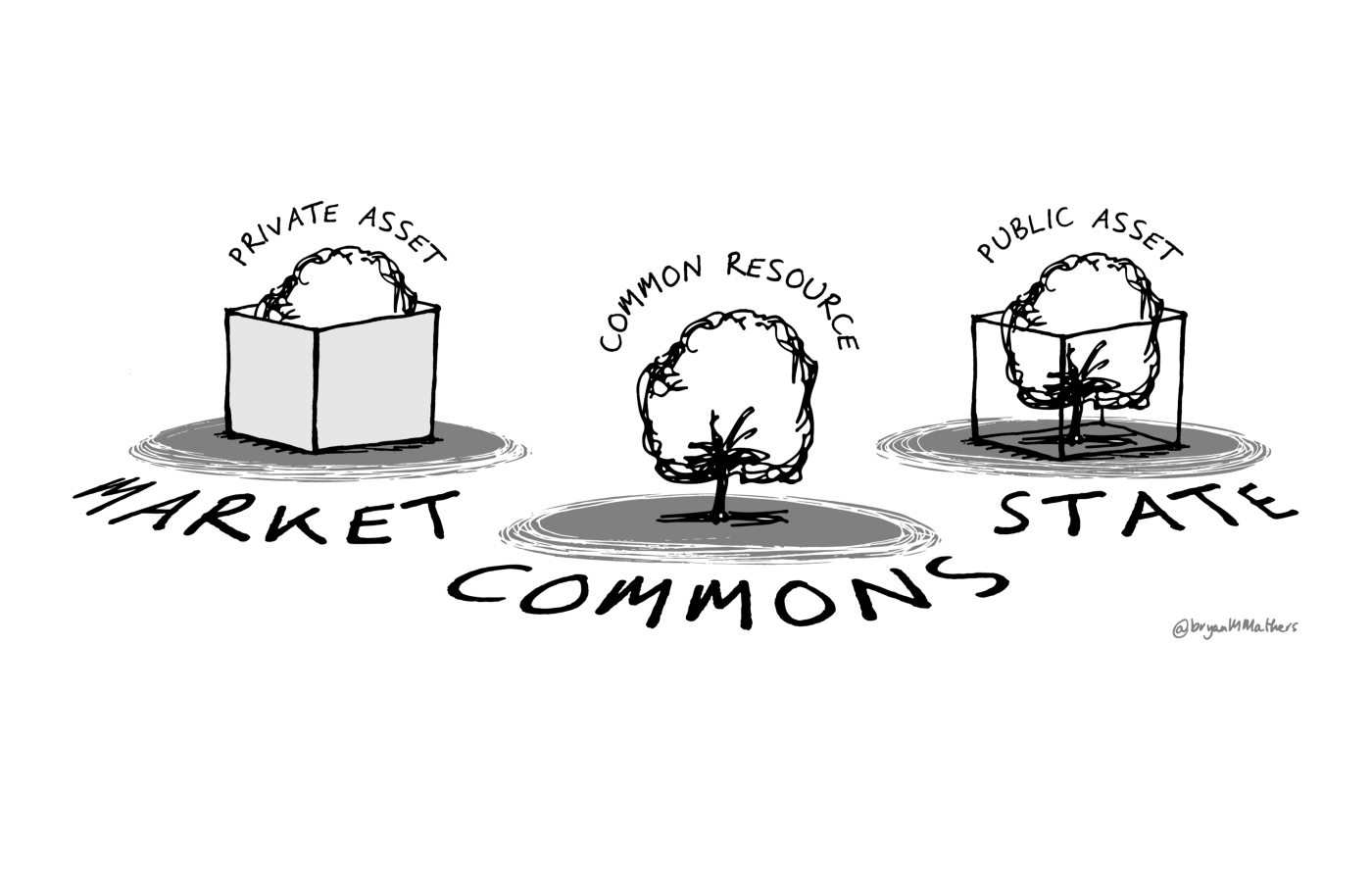
Featured image above by Bryan Mathers, CC BY-SA.
Diane Lester was a biomedical researcher in Australia and overseas, in healthcare, biotechnology and academia during which time she wrote several journal articles, including an influential review of gluten detection methods. She is writing a book The literature of science and medicine: Central to our lives, yet unseen.