Media release – Department of Health, 3 June 2022
Mitigating the risk of burns this winter
The onset of winter and cooler temperatures can present an increased risk for members of the public to sustain burns as they try to stay warm.
That is why it is so important for the broader Tasmanian community to be aware of the risks associated with burns and to take proactive measures to reduce the chance of suffering such an injury.
June not only heralds the start of winter, but also signals Kidsafe’s National Burns Awareness Month, an important annual initiative to educate and warn people about the risk of burns. A range of resources are available to provide education to the Tasmanian community about the dangers associated with burns, and what to do to effectively treat them if they do unfortunately occur.
Through a joint partnership involving the Department of Health and the Royal Hobart Hospital’s Burns Unit, Australian and New Zealand Burns Association (ANZBA), Tasmania Fire Service, Red Cross and Kidsafe, these educative resources are now available in a number of different languages, including Farsi, Vietnamese, Arabic, Karen, Samoan, Hindi, Punjabi, Simplified Chinese and Nepalese. This ensures new arrivals to Tasmania are informed of key safety messages and burns prevention strategies.
This nation-leading project has been taken up across Australia, and also in New Zealand and the Pacific Islands through the support of the ANZBA.
Through the prevent, remove, cool, cover and seek message around burns management, Tasmanians are advised to take simple steps to prevent accidents in their home. If they unfortunately do occur, there are measures people can take to effectively treat them.
- Prevent – take action to prevent burns and scalds
- Remove – take off clothing or jewellery near to the burn, unless it is stuck to the skin
- Cool – place the burn under cool, gently running water for 20 minutes
- Cover – cover the burn with a clean dressing
- Seek – seek medical attention as soon as possible. For larger or more serious burns, dial 000.
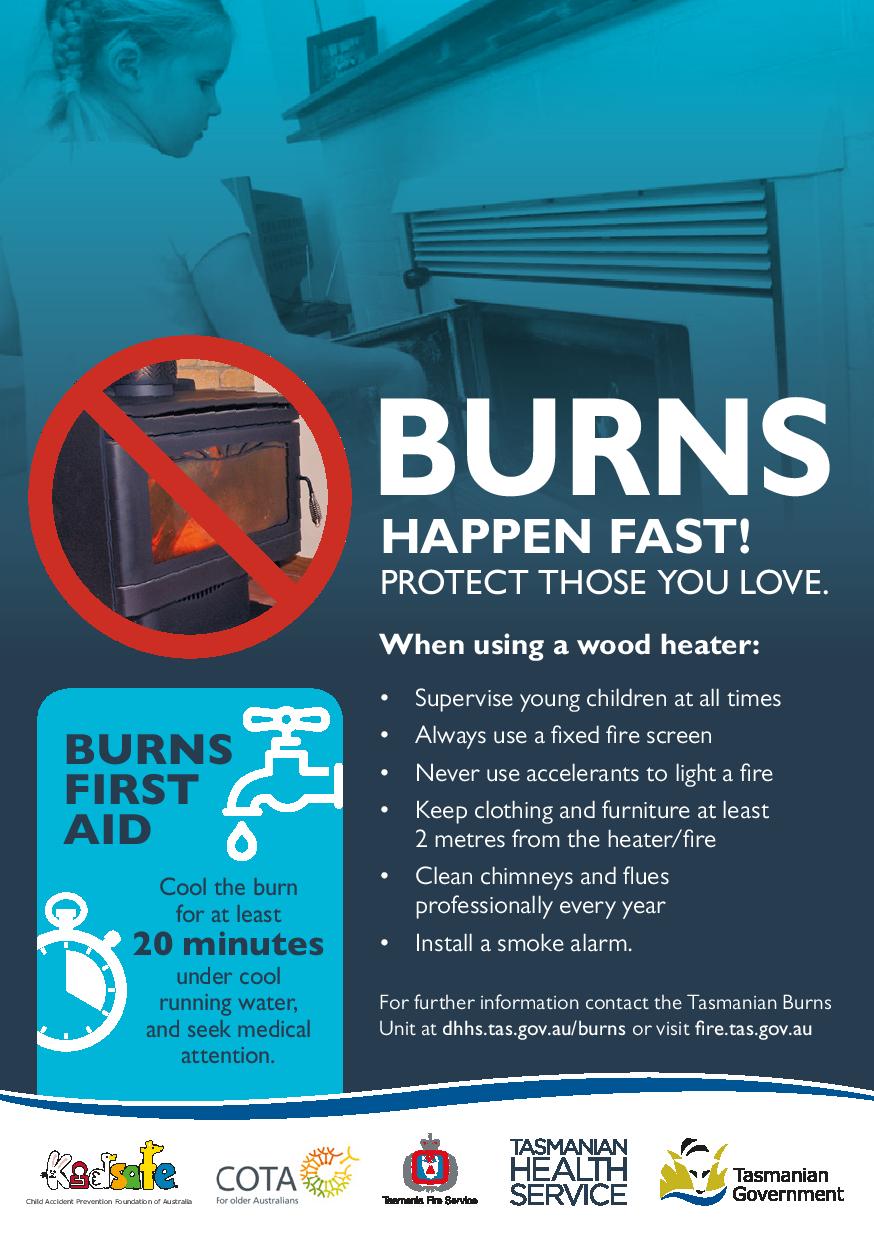
Leading into winter this year, there is a particular focus being given to educate Tasmanians about the risks posed by burns from hot water bottles, friction burns, along with safety around wood heaters and fire pits.
Rebecca Schrale, Nurse Practitioner from the Tasmanian Burns Unit at the Royal Hobart Hospital, said: “This year we continue to focus our message on burns first aid as we know that 26% of children and 43% of adults who sustained a burn injury in 2020-2021 did not receive adequate first aid.
“Cool running water for at least 20 minutes will not only reduce the size and depth of the burn but also reduce the need for hospital admissions, surgery and long term follow up for scar management.
“The Burns Unit has seen a significant rise in burn injuries sustained by hot water bottles, wood heaters and friction burns. We are incredibly grateful for the support we have received for the project on burns prevention for new arrivals to Tasmania and all the support of our key stakeholders.”
Sandra McCann, Station Officer from TFS Community Development and Education, said it was important both children and adults have a basic understanding of home fire safety.
“These resources complement our school fire education program, which teaches kids lifelong lessons that can be shared with their families at home,’’ she said.
“Simple things like knowing to stop, cover your face, drop and rock ‘n’ roll if your clothes catch fire, can make a significant difference in an emergency.
“We also cover things like the importance of smoke alarms, keeping ourselves and other items at least two metres away from heaters, remembering to turn off cooking before turning away, and that matches and lighters are tools for adults, not toys for children.”
Kidsafe Tasmania CEO Jenny Branch-Allen said: “For children, most burns and scalds occur in the home. Throughout this month, Kidsafe Tasmania will be raising awareness through social media, our website and radio about how to prevent and give first aid for burns.”
Carlos Rodriguez, from the Australian Red Cross Migrant Support Program, said: “Red Cross is delighted to have contributed to this suite of resources that help migrant parents understand how to protect their children from burns risks.
“The multi-lingual material explains to migrant and refugee parents what to do in case a burns accident occurs, who they can contact, and what first aid procedures they should follow while they wait for medical attention.”
For more information, visit: www.health.tas.gov.au/health-topics/burns/burns-prevention-and-first-aid-home and www.health.tas.gov.au/health-topics/burns/burns-prevention-and-first-aid-home/burns-prevention-guides-and-resources and https://kidsafe.com.au/national-burns-awareness-month