Report – Climate Council, 23 May 2022
The 2022 climate election: unpacking how climate concerned Australians voted
Votes are still being counted, but one thing is indisputable: climate action is the winner of this election. Millions of Australians put climate first at the ballot box, and the politicians who dragged their heels on the most important challenge of our time are paying a price for that. It’s clear the Australian Parliament is now set for an unprecedented shake up, and all eyes are on what climate action will be achieved by the incoming government. This Climate Council analysis of key seats in the 2022 Federal Election makes a compelling case for the strong connection between climate concerned Australians and their voting behaviour.
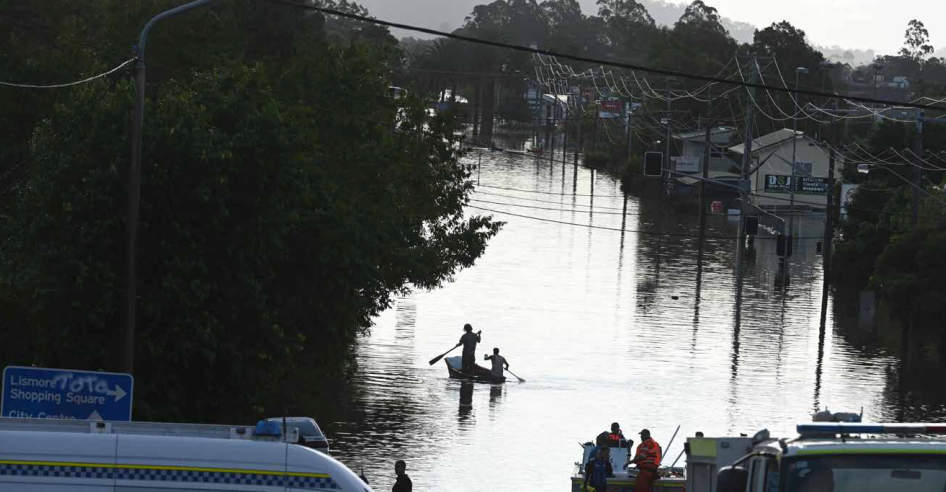
Featured image above: People canoeing down a flooded street in Lismore during the floods in February 2022. Image supplied.
KEY FINDINGS
› Climate change is a defining issue of this election in the city, the suburbs and the regions. Candidates championing strong climate action were rewarded by voters across the country.
› Voters in most electorates hit by climatefuelled disasters, like the Black Summer Bushfires and the 2022 floods, swung away from the Coalition and towards those championing stronger climate action.
› The Senate is likely to have a climate action-friendly majority with candidates who ran on strong climate platforms performing well.
› The new Australian Parliament has a strong mandate for game-changing climate action, and pressure will continue to be applied (both domestically and abroad) on the federal government to accelerate its efforts this decade.
ABC’s Vote compass shows that climate change was a top issue across the country, from the cities, through the suburbs, to the regions. In almost 90% of electorates (132 out of 151) climate change was rated as the most important issue by more than one in five people. In the seats where there was a teal independent candidate concern was even higher. With 42% of people rating it as the most important issue in Wentworth, 40% in Kooyong and 39% in North Sydney. Climate concern was also very high in seats where there have been recent climate change-driven extreme weather events like Richmond (34%), Macquarie (30%), Gilmore (30%) and Eden Monaro (31%). In fact, climate concern was very high across the board including in communities within traditional “coal seats” like Newcastle (33%) and the Hunter (23%). Polling run throughout the election campaign also consistently found that climate change was a top voter issue.
VOTERS IMPACTED BY EXTREME WEATHER EVENTS TURNED AWAY FROM THE LIBERALS
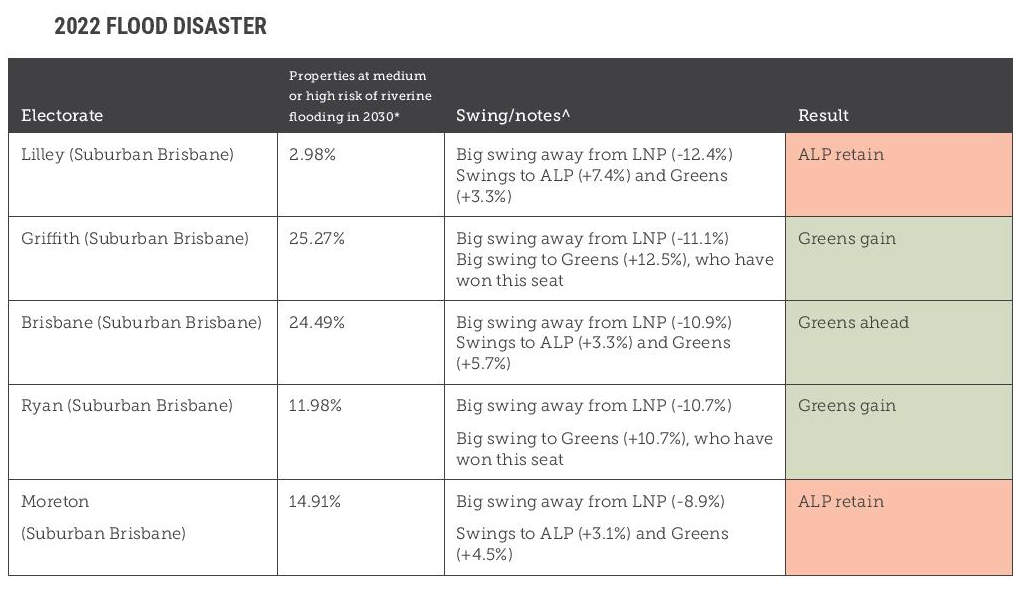
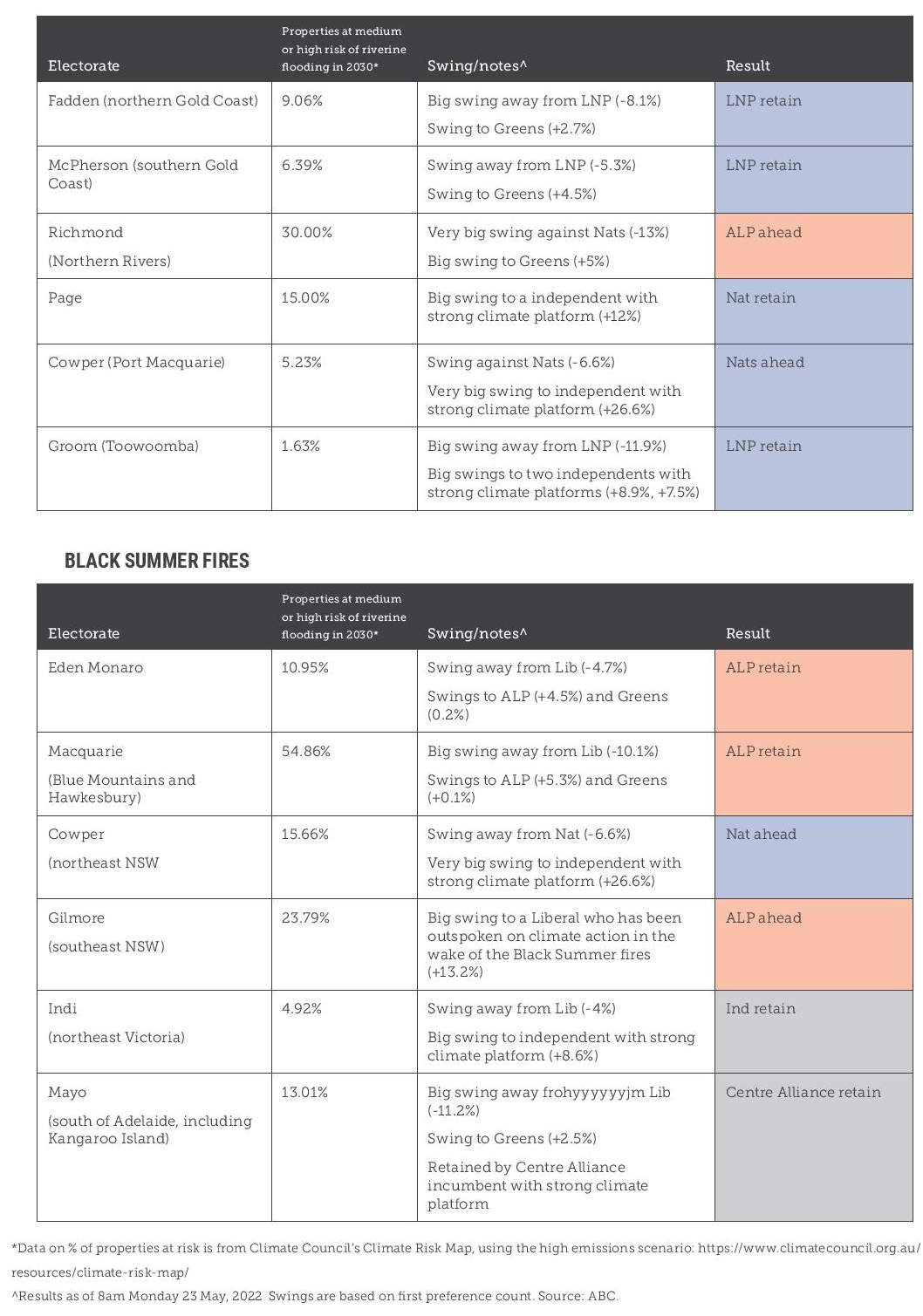
The following table considers seats across many parts of Australia that have suffered from catastrophic floods and fires in the previous term of government. There have been swings away from the Coalition towards candidates with strong climate platforms – whether they were standing for the Greens, an independent or the ALP – across the majority of seats in the Northern Rivers and Southeastern Queensland affected by the 2022 flooding disaster. Similarly, in seats where communities suffered the most during Black Summer voters turned away from the Liberals.
The table below highlights a range of seats in South East Queensland, New South Wales, Victoria and South Australia.
Read the original format report here: The 2022 climate election: unpacking how climate concerned Australians voted