by Professor Andrew Pask, University of Melbourne
Bringing extinct animals back from the dead is no longer the realm of science fiction but is fast becoming a scientific reality.
Around the world, research is ongoing to bring back key species using modern science advances in DNA sequencing, DNA editing and reproductive technologies.
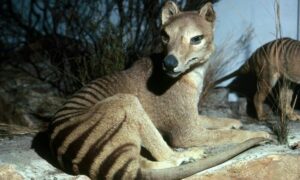
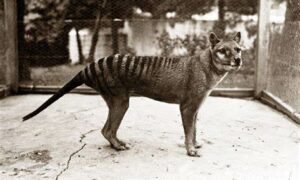
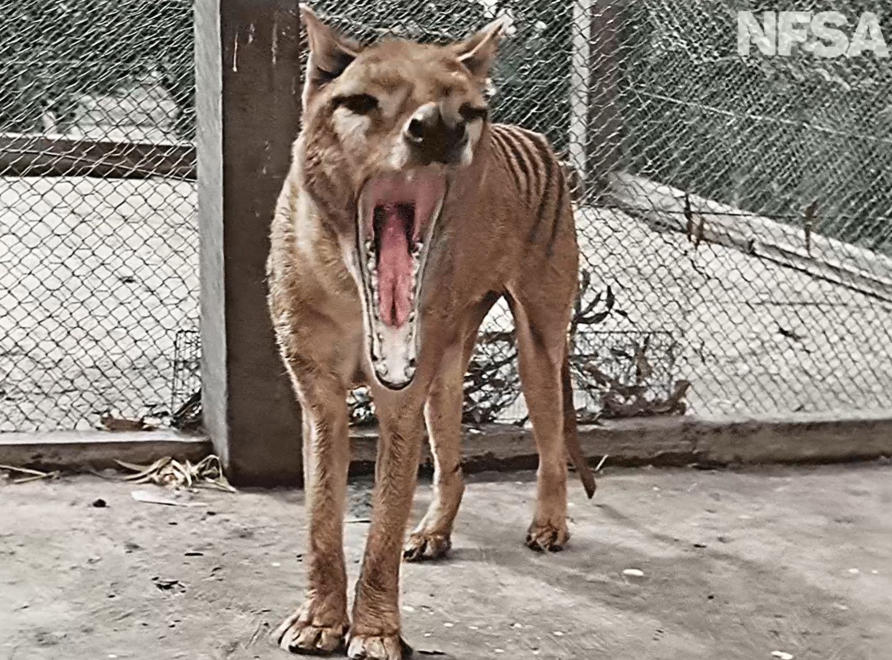
Our research focuses on the marsupial, thylacine – also known as the Tasmanian tiger – which is in fact one of the best candidates for de-extinction.
The history of the thylacine is a sad one. The thylacine was broadly distributed across Australia before becoming extinct on the mainland around 3,000 years ago. But it continued to exist in Tasmania.
However, this unique animal was hunted to extinction by European settlers who thought it a threat to the Tasmanian sheep industry and the last known animal died in captivity in 1936.
The thylacine was completely unique among extant marsupials at the time. It had an iconic wolf or dog-like appearance, often described as a long dog with stripes, because it had a long, stiff tail and a big head.
Read the full story here: The 9 steps to de-extincting Australia’s thylacine | Pursuit by The University of Melbourne (unimelb.edu.au)