Article
The Condemned Well – a Parliamentary Inquiry into TasWater

Michael Brewster has been the CEO of TasWater since 2013. By the time of his planned retirement on 14 March, 2022, Brewster will have accumulated a total salary approximating $4M.
The 2021 parliamentary inquiry in the Legislative Council handed down its final report to the parliament on 9 November 2021.
The inquiry’s broad task was to consider any and all problems state-wide relating to TasWater.
In the township of Pioneer a heavy-metal contamination journey spans nine years and three months, from November 2012 to February 2022, ongoing.
The Inquiry’s Findings about Pioneer
The inquiry made two findings about Pioneer:
- ‘TasWater did not act in a timely manner in addressing the issue of providing safe drinking water to Pioneer residents.’
- ‘After unreasonable delays, TasWater appear to be addressing the issue with Pioneer.’
The inquiry made one recommendation about Pioneer:
- ‘TasWater follow through on its commitment to provide piped water to Pioneer as a matter of priority.’
Pioneer’s residents have been customers of TasWater (and Ben Lomond Water) since before the original alert for lead-contamination in November 2012, when lead (Pb) was found to be at high levels in the town’s reticulated drinking water system.
Information revealed during the following months showed that Ben Lomond Water (now TasWater) were aware of data, 2009 – 2012, pre-alert, showing many high detections of lead in Pioneer’s water supply – but an alert was not called until November 2012.
At a public meeting at Pioneer Hall five years later, in 2017, Brewster denied any knowledge of these test results, pre-alert, 2009 – 2012.
During the years 2012 – 2017, and beyond, TasWater became the agent for a second and new source of heavy-metal contamination for the people of Pioneer.
In 2019, twelve homes – one-third of the township – were discovered to be using heavy-metal contaminated set-ups for drinking water, all of which were installed and approved by TasWater.
In 2019 TasWater won an award from the Australian Water Association (AWA) for the ‘24 Glasses’ program. Pioneer is one of the towns included in the ‘24 Glasses’ program. This award was granted to TasWater just a few weeks after the public announcement of laboratory results revealing that twelve homes at Pioneer were using heavy-metal contaminated drinking water set-ups. TasWater and the AWA ignored all written requests to explain why this award was granted. The AWA failed to retract the award; and TasWater did not return it.
The inquiry did not make a finding in relation to the impact upon the health of the people of Pioneer, nor in relation to the potential impact upon the health of people at Pioneer during the years 2012 -2022.
The committee for this inquiry in the Legislative Council were Tania Rattray (Chair ~ IND), Jo Palmer (LIB), Sarah Lovell (ALP) and Ivan Dean (IND [retiring from the parliament mid-way through the inquiry]).

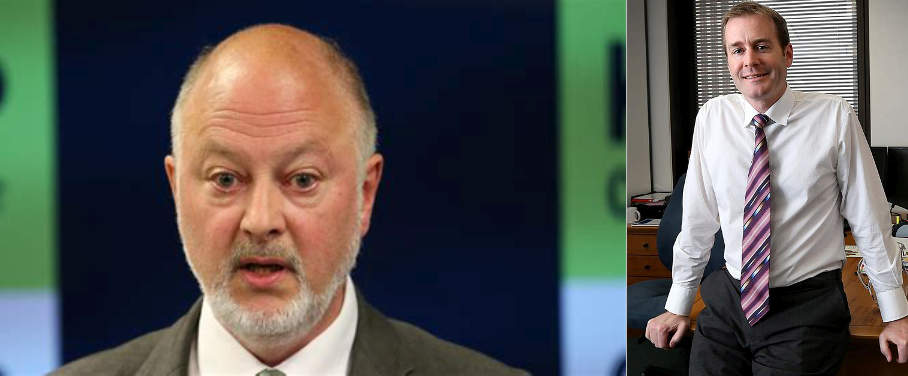
Dr Mark Veitch, Tasmanian Director of Public Health, and the previous Minister for Health, Mr Michael Ferguson.
What about Human Health?
For this inquiry the committee did not call the Tasmanian Director of Public Health, Dr Mark Veitch. The committee did not call any person from the Department of Health and Human Services (DHHS).
On 19 November 2019, Frances Vinall of The Examiner questioned the DHHS as to why they did not actively recommend blood tests for the people of the twelve affected homes at Pioneer.
The response from the DHHS in 2019 was as follows:
“…appropriate advice is for any person with any health concern to see their GP.”
The window for valid blood testing of lead (Pb) in the human body is approximately three months, but the Tasmanian DHHS did not actively recommend blood tests at Pioneer.
During this inquiry Michael Ferguson, the Minister for Health for the years in question, was called to give evidence to the committee, but Ferguson was not asked a single question about Pioneer, 2012-2021.
Ferguson is on public record as denying help to Pioneer over years. In the final instance, he did so by referring to obsolete legislation. This letter, from Michael Ferguson to Tania Rattray, 23 May 2019, was tabled to the Inquiry by Tim Slade, a resident of Pioneer.
In full knowledge about the change of ownership of TasWater almost one year earlier – the hottest media story in Tasmania at that time – Ferguson, in writing, denied assistance for Pioneer on the basis of obsolete legislation.
New ownership legislation for TasWater brought with it for the state government a seat at the table with TasWater. The state government are able to make representations to TasWater. Ferguson’s letter to Rattray was false.
Tania Rattray MLC for Apsley did not reply to refute Ferguson’s letter of 23 May 2019.
The Tasmanian government did not make a representation to TasWater on behalf of Pioneer. The Tasmanian government failed to utilise their new seat at the table with TasWater.
A Champion for Pioneer


Dr Alison Bleaney OBE.
Dr Alison Bleaney OBE is a GP in St Helens. In support of the residents of Pioneer, Dr Bleaney wrote a submission to the inquiry, however during the hearings the committee did not present Dr Bleaney’s submission to any person.
In her written submission, Dr Bleaney OBE wrote:
“The inability to provide a water supply free of lead, after removing the potable supply due to lead contamination… an abrogation of duty of care by Dr Veitch and Public Health.
Public Health has ultimate responsibility for the provision of safe potable drinking water to their residents. Public Health oversees TasWater, who report to them.
The cost to the residents; psychological, medical and financial, has not been canvassed.
TasWater’s actions, and lack of action, demands scrutiny. The CEO’s behaviour in this matter is indefensible.”
TasWater’s CEO, Michael Brewster, was the only person questioned about Pioneer during the inquiry.
The committee failed to present any of the tabled source documents for matters relating to Pioneer. Key letters tabled to the inquiry were not presented. These tabled documents include letters from – Will Hodgman, Premier (now retired); Dr Veitch, DHHS (to Mike Brewster); Michael Ferguson, Minister for Health (no longer has this portfolio); Doug Chipman, President of the 29 owner-councils, Owner’s Representatives Group (ORG); and Mike Brewster, CEO of TasWater.
During the 2021 inquiry there were six public hearings. Mike Brewster was called to two of these public hearings.
To begin, from Hansard:
CHAIR (Ms Rattray) – Also in the electorate of McIntyre [Pioneer’s electorate].
MR BREWSTER – Couldn’t get it better, could we, Tania? There is a lot for us to be proud of but still a lot to do, as I have said regularly.
Throughout Brewster’s evidence to the 2021 inquiry, he was eager to suggest that at all times his timeline of response at Pioneer has been reasonable and pragmatic.
Brewster referred to a letter he received from Dr Veitch, DHHS (December 7, 2018):
Mr BREWSTER – That’s how it played out. Mark Veitch wrote to me. We sat down and said, Well, okay, we are where we are. There’s not an instruction; you can’t instruct us on a guideline. We made the decision that we can’t go forward as it is, so we need to look at a solution. We then hired a local consultant and had all the places inspected…
The committee did not ask Brewster one of the most important questions of the nine years, 2012-2021:
After receiving Dr Veitch’s letter of concern in relation to Pioneer, December 7, 2018, why did Brewster wait eleven months to begin the first ever whole-town testing program?
The fact for Pioneer is that eleven months elapsed before Brewster began this whole-town testing at Pioneer in late 2019.
When the whole-town program began, twelve homes were found to have heavy-metal contaminated set-ups for drinking water, all of which had been installed by TasWater during the years 2013 – 2017.
“It was likely none of them were compliant”
Brewster’s major assertion during the 2021 inquiry is that when connecting rainwater tanks to roofs at Pioneer, 2013 – 2017, TasWater did not know that these roofs were painted with lead-based paint.
Brewster asserts that TasWater are not to blame for the major discovery in 2018, that one-third of the installations by TasWater in Pioneer – twelve homes – were heavy-metal contaminated.
Hansard from the 2021 inquiry reads:
MS RATTRAY – TasWater offered to test residents’ roofs for lead paint on a voluntary basis. Yet it took five years for the roof inspection program to be undertaken. I am interested in that five-year period. I do not need a lengthy response; I just want to get this cleared up once and for all.
MR BREWSTER – I think it is pretty straightforward. [In 2013] We asked people whether they wanted their roofs tested for lead. We could not force them. From recollection, four people asked for them to be tested. We got the four results back. At the time they were misinterpreted – which I did not find out for a number of years later – as being clear and then there was an inquiry on behalf of a customer who asked for a record of his roof results. From recollection I said, sure, send it back out. Then I was notified at that time, which would have been four or five years later, that there was a problem. They have gone back through the data and the staff advised me there had been a mistake. It was a decimal place error and that the roof was not compliant, and it was likely none of them were compliant…
The committee for the inquiry accepted CEO Brewster’s narrative. The committee did not significantly contest Brewster’s assertions.
CEO Brewster’s assertions should have been contested by the committee, for the following reasons:
- After sustained pressure from the community over years, in 2019 all homes at Pioneer were tested by TasWater. This was TasWater’s first ever whole town testing program. The 2019 program, whereby twelve homes were found to have heavy-metal contaminated set-ups, proves that a whole-town testing program was always an achievable option for TasWater in 2013 / 14. But TasWater tested only four roofs at this time.
- The Tasmanian Director of Public Health, Dr Veitch, in a letter to the CEO of TasWater, Brewster, December 7, 2018, wrote:
-
- a) “…TasWater…does not address foreseeable future risk from high lead content roof paint.”
-
- b) “…the Department of Justice… the condition of the roofs should have been identified as part of the scope of works, with remedial works done to ensure that rainwater collection for drinking was compliant with contemporary standards.”
-
- c) “TasWater’s submission in June 2017 to the Office of the Tasmanian Economic Regulator (OTTER)… cited earlier discussions and agreement that service replacement would involve “…repair [of] roof, gutters and downpipes etc. to a standard suitable for collecting rainwater for drinking”… I am concerned that this assistance appears not to have been provided.”
-
- d) “The national guidance document… Australian Government Department of Health and the Environmental Health Standing committee… risks from using rainwater tanks: “Do not collect rainwater from roofs painted with products containing high lead concentrations (for example, pre-1970s paint).”
-
- e) “I believe that completion of the undertaking as expressed in the original submission to OTTER is necessary and would provide a safe drinking water supply to Pioneer residents…”
- TasWater’s CEO, Brewster, has personally ignored over many years all written requests to him for the original laboratory reports for the four roof tests from 2013/14. Brewster and the chairman of TasWater, Dr Gumley, have received multiple written requests over years for the original 2014 laboratory reports. One such request was in the major submission from Pioneer (from Slade), November, 2019.
This second major submission, containing many other concerns, was ignored by Chairman Gumley and the Board for seventeen months.
In TasWater’s ultimate reply, on behalf of Chairman Gumley, June 3, 2021, the formal position of TasWater was communicated. John J. Murray wrote that there are no items within the submission that have not been previously responded to. This is factually incorrect. This and countless other items, all of major significance, have not been responded to by TasWater.
The original and complete 2014 laboratory reports, those which Brewster says were misinterpreted, have never been publicly released.
Since an intervention from the Tasmanian Ombudsman in 2018, TasWater’s position is that they ‘misinterpreted data’ in relation to the four roof tests in 2013 / 2014. But this does not account for the detail that all laboratory reports comprise of data results and written results. If a misinterpretation of data occurred in the first instance, and for multiple residents, the written component of the laboratory results will have made clear the results for TasWater.
- Legal advice from a Tasmanian barrister, Mr Ross Hart, who at the time was the Federal member for Bass, suggests that TasWater had a duty of care to test every roof prior to installing rainwater tanks.
This legal view with regards to Pioneer interprets that a roof is clearly an integral part of each rainwater catchment system, which includes guttering, pipes and a rainwater tank.
This legal advice was communicated to the committee for the 2021 inquiry (Slade’s written submission) within the published articles by Tim Slade.
Brewster Asks for a Refresh about Roofs
During the 2021 inquiry Brewster said:
Mr BREWSTER – The agreement was to repair the roofs…
Mr DEAN – Was there a written agreement in place?
Mr BREWSTER – I would have to check…
Going to Pioneer’s concern that TasWater did not act transparently from the outset, in 2013 / 14 and beyond, the inquiry asked the following question of Brewster:
MS RATTRAY – The next question is around the property owners who were advised verbally of the results. This is in the second box of page 17 of the report. Why would a verbal response have been given? I would have expected that always there would be a written paper trail around that. Some sort of explanation, please.
Mr BREWSTER – All I can say is that possibly in 2014 maybe that is what we did. I would have to go back and check, Chair. Maybe we just advised them verbally. As it goes onto say: Residents are provided with test results in writing each time their tank water is tested. So maybe in 2014 we did not provide them the formal test results, we only provided them verbally but since then we provide everything in writing.
Brewster’s comments here during the inquiry reveal that TasWater did not follow basic ethical and duty of care requirements in relation to the reporting and communication of results for heavy-metal contamination.
If TasWater had carried out this duty of care at Pioneer, it is unlikely that the service replacement program would have been allowed to continue.
A Pattern of Secrecy


In 2018 Brewster personally ignored written requests by two residents at Pioneer for a copy of written results from their 2014 roof tests.
For the first resident, who was found to have high levels of lead, cadmium, manganese and arsenic in his feeder tank, and elevated levels of lead in his TasWater-installed tank, Brewster provided the historic 2014 results only after the intervention of the Tasmanian Ombudsman.
For the second resident, even after the Tasmanian Ombudsman requested in 2018 that these results be provided in writing to the resident, CEO Brewster ignored this resident’s requests, which were lodged directly to CEO Brewster’s e-mail address. This resident battled for a further six months before he ultimately received his 2014 results, which revealed elevated lead (Pb) in roof paint.
The committee for the 2021 inquiry were made aware of these historical facts (Slade’s submission), but the committee failed to ask a question of CEO Brewster about these failures.
TasWater Failed to Check Work
TasWater’s works to install rainwater tanks were never checked and assessed for compliance. Not by TasWater; and not by Dorset Council. TasWater employed contractors to complete the entire town project at Pioneer, but TasWater did not visit properties to check for compliance.

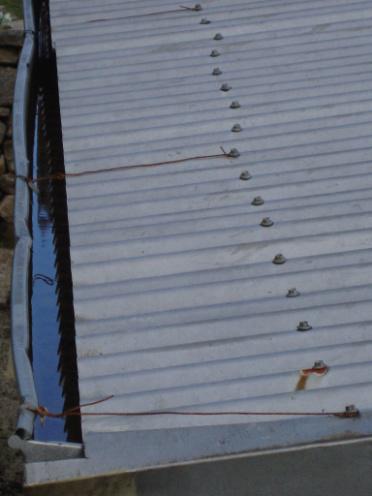
TasWater’s work at Mr Slade’s home in Pioneer
In addition to the unsatisfactory policy and work in relation to lead (Pb) paint on roofs, the majority of homes had only a fraction of their roof catchment area connected to their rainwater tank. This provided a grossly inadequate quantity of water supply for the families of Pioneer.
Other forms of defective works were common. At Slade’s property, for example, wires were attached to roofing screws, and then attached to the gutter, to pull it into a higher position to achieve gravity flow. This method failed. The foreman for the building company employed by TasWater became verbally abusive to Slade when he complained to the foreman. TasWater never once checked the work.
At first Slade did not complain formally – not until years later, in 2019 / 2020, when a marginally elevated reading for lead (Pb) was detected in his rainwater tank. TasWater then visited to assess, agreeing that the works were ‘defective’. A quote for repairs was offered to Slade, the value of which was approximately $4000 in labour and parts.
On several occasions Slade advised TasWater’s Mercer, the then project manager for Pioneer, and later, Acting CEO, that he would not proceed with the repairs for defective works until Chairman Gumley and the Board of TasWater, replied in writing to Pioneer’s second major written submission, November, 2019.
Slade waited seventeen months before Chairman Gumley and the Board replied. The reply comprised of a half-page letter, wherein TasWater did not respond to any item from the submission.
A long wait, and lots of silence

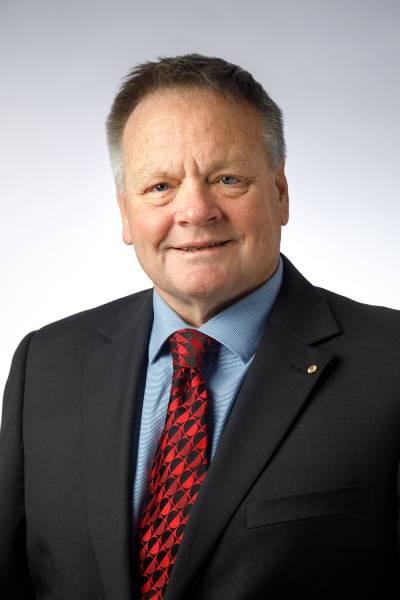
Dr Stephen Gumley AO, Chairman of TasWater.
During the 2021 inquiry, with regard to Pioneer’s 2019 major submission to Chairman Gumley and the Board of TasWater:
MS RATTRAY – I know you cannot speak on behalf of the TasWater chairman [who was not asked to speak about Pioneer], but I am interested in why Slade was not advised by letter there was no further information to provide. That probably would have been a useful process to undertake.
MR BREWSTER – I think the chairman rightly responded, from recollection, to Slade’s concerns in writing and then he reiterated them again in a slightly different format. I think the chairman said, ‘Well, I’ve already answered these, so I don’t intend to keep writing back saying the same thing in a different language’.
This response from the CEO of TasWater is willfully false. The letter on behalf of the Mr Gumley and the Board, a half-page reply, containing incorrect dates throughout, ignores countless major and documented items, raised by Pioneer via Slade, matters which have never been responded to by TasWater, not in any form.
When the protocol for written replies at TasWater is ten days, Pioneer’s major submission (care of Slade) was not replied to, nor acknowledged, for one year and five months.
This failure of Chairman Gumley and the Board to reply is notwithstanding polite requests:
- To Dr Gumley and the Board, by e-mail, on several occasions;
- To Juliet Mercer, by e-mail and telephone conversations, on several occasions. Mercer was Brewster’s executive assistant. Later, Mercer became the Acting CEO of TasWater,
- To the 2021 inquiry, during Slade’s oral testimony, February 1, 2021.
- To John J. Murray and four other TasWater employees during a public meeting at Pioneer hall in 2021.
In 2021, under sustained pressure Chairman Gumley employed TasWater’s John J. Murray to conduct an internal review into TasWater’s failure to reply to Pioneer’s second major submission of November, 2019.
Murray’s half-page written reply, June 3 2021, stated the following:
[*Please note Mr Murray’s use of incorrect dates for the years within his letter to Slade. Mr Murray writes ‘2020’, but the correct year on each occasion is ‘2019’.]
3 June, 2021.
Dear Tim
Re: Letter to TasWater Chairman Dr. Steven Gumley
I have reviewed your reply to the board from 29 November 2020 and I believe your issues were addressed in their communication to you on 4 November 2020.
Given the extensive ongoing communication, we will not be replying to any further correspondence on these issues…
Mr John J. Murray
During the 2021 inquiry, the Chairman of TasWater, Dr Gumley, who sat beside Brewster during his two hearings, did not volunteer any information about Pioneer. The committee for the inquiry did not ask Dr Gumley to appear as a witness to talk about Pioneer.
Palmer (LIB) and Lovell (ALP), two members of the committee for the inquiry, were invited to ask Brewster questions about Pioneer.
Palmer declined – as a member of the committee, the only mmber representing the Tasmanian state government. Palmer failed to ask a question about Pioneer during the entire 2021 parliamentary inquiry.
Lovell did not ask a single question about Pioneer during the first hearing. Lovell was seen to be scrolling through her telephone for the majority of Brewster’s first hearing. During Brewster’s second hearing, Lovell asked a single question on behalf of the Tasmanian Labor Party:
What is the timeline for the completion of the mini-treatment plant at Pioneer?
What is the cost (non-human) of TasWater’s failures at Pioneer, 2012 – 2021?
The committee did not ask CEO Brewster to supply the details of financial debt incurred by TasWater due to the failures of their service replacement program at Pioneer, 2012 – 2021, ongoing.
Brewster has been the CEO for all of the years in question in relation to Pioneer. For most of these years Brewster’s annual salary has been $400K. In recent years his annual salary has risen to $600k.
*TasWater has defended the salary of their outgoing CEO, while ASU slams figure
CEO Brewster is set to retire from TasWater on 14 March, 2022. He will be replaced by George Theo, who is presently the CEO of Queensland’s UnityWater.
At Brewster’s retirement, he will have accumulated nine years in salary, totaling approximately $4M.
The Jacobs Report
At no time during the inquiry did the committee for the inquiry ask Brewster about the secret sixty-six page Jacobs report of 9 October 2015, authored by Bass Gamlin of Jacobs Group Pty Ltd.
This report was released to the public many years later.
The finding of the Jacobs report was that a treated reticulated supply to Pioneer was feasible – from a financial and an engineering point-of-view.
The details of the Jacobs report were provided to the inquiry before its commencement.
The recommendation of the 2015 Jacobs report found that a treated supply for Pioneer would be financially equitable with other projects by TasWater, such as for towns like Avoca.
But during the 2021 inquiry, Brewster made the following comment, nine years after the ongoing alert began at Pioneer in 2012:
Mr BREWSTER – What we don’t have right now is an agreed solution that balances the costs with the number of customers.
Last year TasWater made a net profit after tax of $45.7M. This is $30.7M higher than in the previous year.
Why didn’t the inquiry call Peter Gutwein, Premier of Tasmania?


The committee for the inquiry did not take the opportunity to call Gutwein during the months before the 2021 Tasmanian state election, where Gutwein was elected as the new Premier of Tasmania. Nor did the committee call him to the inquiry at any time after his election as Premier.
It was well within the inquiry’s remit to call Gutwein as a witness, to enable the Tasmanian public an informed vote for their next Premier.
In this way, the Legislative Council may be seen to have prevented Tasmanians from making an informed vote at the state election with regard to drinking water – the most fundamental human right.
This was the most serious crisis affecting Gutwein’s portfolio of drinking water, as the Minister for Local Government (and Treasurer). Tasmania’s 29 local councils own TasWater, therefore during the years in question the portfolio responsibility for Tasmania’s drinking water fell to Peter Gutwein.
As the minister responsible for drinking water he did not at any time make a representation to TasWater on behalf of Pioneer, not even at the assent of TasWater’s new ownership legislation, on 14 September 2018, whereby the state government gained a seat at the table with TasWater.
Gutwein has never once met with the community of Pioneer; nor has he set foot inside the township of Pioneer at any time during the nine years, 2012 – 2022.
Who is the Responsible Minister?
In response to the regular experience of Tasmanians who have been unable to determine who is the minister with responsibilities for drinking water, the following recommendation is made by the committee for the 2021 final report:
“The Government should clarify which Minister has primary responsibility for TasWater and this is made easily identifiable on the TasWater website.”
This recommendation by the committee is an indictment upon the past and present workings of oversight for TasWater, where it is not clear to any person, who is indeed the minister responsible for drinking water in Tasmania.
Will Hodgman’s Role
The Premier of Tasmania for the years 2014 – 2020, Hodgman is now the Australian High Commissioner to Singapore. Given that Hodgman does not reside in Australia, he could not be called to witness for the parliamentary inquiry into TasWater. However since many other key witnesses were not called to the inquiry, or if they were, did not receive questions about Pioneer, it seems unlikely that Hodgman would have been called to the inquiry in any case.
Hodgman is on public record (Slade’s tabled letter, from Premier Hodgman to Slade, 10 September 2018), denying assistance to Pioneer just four days before the assent of new ownership legislation for TasWater.
This legislation had been agreed to in the parliament, whereby the state government would gain a seat at the table with TasWater, allowing the Premier to make representations to TasWater for Pioneer.
If Hodgman had written to Slade just four days later, he would have been able to offer direct representation for Pioneer to TasWater. Hodgman never wrote to Slade again.
The Owners of TasWater are Allowed to Remain Silent


Doug Chipman, President of the Owners’ Representatives Group (ORG),
representing the 29 owner-councils of TasWater. Chipman is also the Mayor of Clarence.
The committee called Doug Chipman to the 2021 inquiry. Chipman is the president of TasWater’s 29 owner-councils, the Mayor of Clarence, and the previous president of the Local Government Association of Tasmania (LGAT).
The committee did not ask a question of Chipman about Pioneer.
Chipman is on public record (documents tabled, a text message from Chipman to Slade, May 29, 2018) as being opposed to the testing of rainwater tanks at Pioneer.
Letters from Slade to the current president of LGAT, Christina Holmdahl, have been ignored at all times.
The committee for the inquiry did not call Greg Howard, the Mayor of Dorset, Pioneer’s local government area.
Mayor Howard is on public record as refusing, over years, to make a written representation for Pioneer to the owner-council’s group, the Owners’ Representatives Group (ORG).
When Mayor Howard was asked, during a public meeting at Pioneer, 18 February 18 2019, if the ORG is ‘a defunct organisation’ – Howard replied: “It is!”
During the 2021 inquiry, the CEO of TasWater made the following promise for an increase in dividends to the ORG’s 29 council-owners:
Mr BREWSTER – I am pleased to inform the committee that last week we were able to advise councils that TasWater’s six-monthly results to 31 December 2020 are materially better than forecast. As a result, the board has recently approved the payment of an interim dividend of $5 million paid on 15 February. A further dividend will be considered in June 2021 if this is supported by the underlying full year results.
Intermission

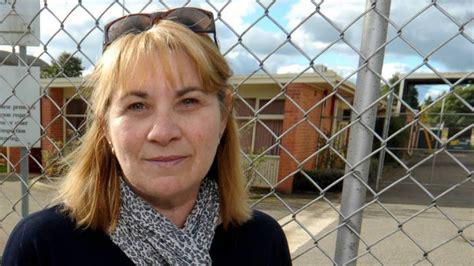
Tania Rattray MLC, Chair of the committee for the 2021 Parliamentary inquiry into TasWater.
There were several months’ intermission during the 2021 inquiry – for various reasons, including Covid restrictions, and the retirement from the parliament of a committee member for this inquiry, Ivan Dean.
During this intermission, Slade wrote to the committee, on several occasions, to express Pioneer’s concerns about the committee’s performance during the inquiry to that point.
Only one letter of reply was received from the committee, 4 August 2021. In this letter from the Chair, Rattray, she did not attempt to address any of the written concerns from the list brought to the committee.
A letter of reply from Slade to Rattray, 10 August 2021, is provided below. The committee’s Chair, Rattray, did not reply to the following letter.
From: Tim Slade
Date: Tue, 10 Aug 2021 at 10:25
Subject: Re: LegCo inquiry into TasWater
To: Tania. Rattray, Public Health (Health) <public.health@health.tas.gov.au>, The Premier (DPaC) <premier@dpac.tas.gov.au>
Dear Tania Rattray MLC, Chair of the Inquiry into TasWater, and to the Members of the Committee for the Inquiry into TasWater.
In your letter to me last week, August 5, 2021, where you state reasons for delay to the continuation of the inquiry, you do NOT in any way explain, nor attempt to explain, the failures of your committee, as communicated to you by me in multiple correspondence, relating to the witnesses who have already been called to the inquiry by your committee, including the following:
1) Calling Minister Ferguson, but NOT raising Pioneer.
2) Calling Mr Chipman, president of the Owners’ Reps Group, but NOT raising Pioneer.
3) Failing to call the minister responsible for drinking water, for the years 2013-2021, Mr Gutwein – now Premier of Tasmania.
4) Failing to Table to parliament the reply from Dr Veitch, following the committee’s promise during my oral testimony that they will seek clarification of the source document quoted in Dr Veitch’s letter to CEO Brewster, 2018 (December 7).
5) Calling CEO Brewster, but NOT presenting the key document, tabled by me, Dr Veitch’s letter to CEO Brewster, 2018, wherein three failures of process are listed.
6) Calling CEO Brewster but NOT asking the key question of the more than eight years:
How do you as CEO justify taking eleven months from the day you received the letter from Dr Veitch, before you began the first ever town testing of roofs and water at Pioneer, the results of which were than 12 homes had heavy-metal contaminated set-ups, all directly installed by TasWater, rainwater tanks to lead-painted roofs, known by TasWater only to be lead-painted from their own testing? How do you as CEO justify this eleven month time lapse before testing? The committee failed to ask this fundamental question.
7) Calling CEO Brewster, but NOT asking other key questions, all supported by source documentation, all tabled by me in the inquiry.
8) Calling Chairman Gumley, but NOT raising Pioneer with him.
9) Calling CEO Brewster and Chairman Gumley but NOT questioning about the CEO’s blocking of my access to the Board.
10) Calling CEO Brewster and Chairman Gumley but not questioning their claim that TasWater ‘misinterpreted’ historic paint tests. (Two of only five roofs tested historically, at the beginning of the program.)
11) Calling Chairman Gumley but NOT questioning about his failure to reply to Pioneer’s major submission of December 2019.
12) Calling CEO Brewster and Chairman Gumley, but NOT presenting key tabled source documents relating to failures in process, policy and procedure at Pioneer by CEO Brewster, who remains to this day in charge of all decisions relating to Pioneer’s drinking water.
13) To this day, the committee has NOT called Dr Veitch (DHHS). The DHHS have not been asked to explain why they did NOT actively recommend blood tests for the residents of the twelve heavy-metal contaminated homes, whereby the window for accurate blood tests for lead (Pb) is less than a couple of months.
14) Other failures, including those listed in my previous correspondence to the committee, sent via Natasha Exel, secretary for the inquiry.
Therefore, none of the information your present to me in your letter to me of August 5, 2021, no part of it addresses in any way the failures of the committee, nor do you attempt to explain these listed failures, which are failures that have already occurred, unrelated to the delay of the inquiry, failures that cannot be corrected unless the committee recalls previously called witnesses and calls for the first time other key witnesses.
Ms Rattray, therefore you have not answered to any of these blatant failures of the committee, and nor has any member of the committee.
Please do so.
Thank you,
Sincerely,
Tim Slade (B.Ed.), Pioneer, Tasmania.
The Parliamentary Secretary for the TasWater inquiry
Earlier in the intermission, Tim Slade wrote to the parliamentary secretary for the inquiry, Natasha Exel, asking that she recommend a place or person where complaints about the committee may be raised.
The parliamentary secretary for the inquiry advised that there is not a person or body that is equipped to receive such concerns.
Exel confirmed to Slade that earlier communications to her had been forwarded to the committee for the 2021 inquiry.
The parliamentary secretary for the inquiry confirmed that the committee had sought and received from Dr Veitch (DHHS) the source documents from which he quoted in his key letter to CEO Brewster on 7 December 2018.
The parliamentary secretary confirmed that these source documents, fundamental to the case for Pioneer, had not been formally tabled by the committee for the inquiry, as had been explicitly promised to Slade during his oral testimony during the inquiry, on 1 February, 2021.
More Silence
Slade shared Pioneer’s concerns about the inquiry in letters to Dr Veitch, Tasmania’s Director of Public Health. Dr Veitch did not reply; nor did any other person from the DHHS.
Slade shared Pioneer’s concerns about the inquiry in letters to the Premier of Tasmania, Peter Gutwein. The Premier did not reply.
Slade wrote to other members of the parliament and local government, seeking assistance, in the form of a letter from Members to be sent to the committee. None of the members were willing to do so. These members are: Doug Chipman, president of the owner-councils (ORG); Rebecca White, leader of the ALP; Michelle O’Byrne (ALP); Ruth Forrest MLC (IND); Meg Webb MLC (IND); Rosalie Woodruff (Greens). Slade provided to each member a full documentation about the failures in process so far during the parliamentary inquiry into TasWater.
Problems with the 2021 inquiry before it began
It appears that there are further concerns about the 2021 inquiry – even before the inquiry began.
A town petition from Pioneer in 2020, tabled in the Tasmanian parliament, was the catalyst for the formation of this parliamentary inquiry into TasWater.
However the Legislative Council opposed a dedicated inquiry into Pioneer, preferring a broader terms of reference, for any and all TasWater matters, state-wide.
It is now understood that a major reason for this refusal for a dedicated inquiry into Pioneer, by the Legislation Council, may be that, during Rattray’s 2020 application to the members for a dedicated inquiry into Pioneer, Rattray did not provide source documentation – none whatsoever.
A simple letter served as Rattray’s submission to Members of the Legislative Council, on behalf of the people of Pioneer.
If the Members of the Legislative Council had been brought into full knowledge by Rattray, or if members had expressed an interest to receive this documentation and knowledge, then it is possible that a dedicated inquiry for Pioneer would have been forthcoming.
Slade wrote to Ruth Forrest MLC, to ask her if she would have voted differently to the motion for a dedicated parliamentary inquiry, if Rattray had provided full documentation with her application to members. Forrest failed to respond to this question. She answered other written questions, but not all, from Slade.
TasWater’s Monthly Data Portal is Unusable
Tim Slade’s three-year campaign to achieve a timely and affordable policy for data reporting, was assisted by the Legislative Council’s in-principle support for the policy in 2016.
The portal was not activated until 2019, following several more years of campaigning by Slade, in the face of opposition from TasWater’s CEO, Brewster, Dr Veitch (DHHS), Mayor Tucker (Break O’ Day), and indifference from Dorset Council, the Owner’s Representatives Group (ORG) and the Local Government Association of Tasmania (LGAT).
From the first opening of the portal on TasWater’s website in 2019, it exhibited fundamental problems for users. Minor improvements were made in 2021, two years later, however most of the major problems persist to this day:
- TasWater have not provided Health Guideline Values with the data. All data is therefore impossible to read and interpret.
- The portal is difficult to find on TasWater’s homepage. In the drop-down menu, the portal can only be found via the non-descript heading ‘Your drinking water’.
- TasWater are failing to update data on a monthly basis as per the agreement. A search conducted on 28 November revealed that the data for Hobart and Launceston had not been updated for two months.
- TasWater have not included any data for pesticides.
- The portal does not include data for Pioneer.
These failures were brought to the attention of the committee for the parliamentary inquiry: in Slade’s written submission, in his oral testimony on February 1, and during multiple written communications to the parliamentary secretary for the inquiry.
Notwithstanding several communications to the Tasmanian Greens’ Woodruff, in 2020 and late 2021, Woodruff refused to respond to questions about the portal, nor has she offered to make any enquiries to TasWater. Woodruff has not provided any explanation as to why the Tasmanian Greens will not acknowledge these problems with the portal.
In 2016 the Legislative Council gave their in-principle support for the policy and the portal (Ruth Forrest MLC, and others, were in opposition), so it is remarkable that during the 2021 inquiry the only mention of TasWater’s monthly data portal was as follows:
MS RATTRAY – I note the ‘Your Drinking Water’ app was down for a while but all up and running now. I can see some nodding there so the community is able to access that in a timely manner. Thank you.
Tasmania’s monthly drinking water data portal can be found at TasWater’s website, under the heading ‘Your Drinking Water’… Home | TasWater
The Australian Drinking Water Map
The Australian Drinking Water Map was created by Anthony Amis, Friends of the Earth (FoE).
This map is available at the following link: About us – A slow work in progress – Australian Drinking Water Map (australianmap.net) OR Lead Archives – Australian Drinking Water Map (australianmap.net)
According to the website for the Australian Drinking Water Map, the most frequent substances breaching Australian Drinking Water Guidelines are:
1) E.coli, 2) Trihalomethanes, 3) Lead, 4) Sodium, 5) Chloroacetic Acids, 6) Aluminium, 7) Chlorine, 8) Chlorate, 9) Cryptosporidium, 10) Fluoride.
Lead (Pb) adds ductility to brass in plumbing items, making it easier to bend or machine into desired shapes. The lead however can crystallise at surfaces with tiny fragments corroding into water column.
The Health of Tasmania’s Rivers – DPIPWE actively hid data

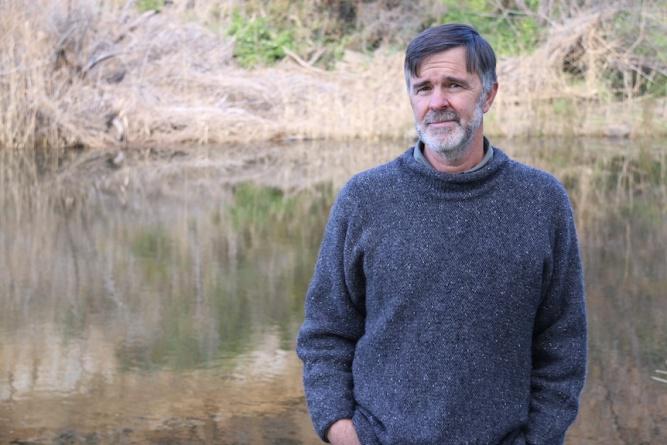
Chris Bobbi, a water ecologist, formerly with DPIPWE Tasmania
Just sixteen days after the final hearing of the 2021 parliamentary inquiry into TasWater, the ABC’s Ellen Coulter, 8 September, 2021, reported that a former DPIPWE water ecologist, Chris Bobbi, resigned from DPIPWE because of their failure to publicly release a major report showing a serious decline in the health of Tasmania’s rivers.
From this ABC article:
Chris Bobbi says Tasmania’s Department of Primary Industries, Parks, Water and the Environment are “not fulfilling its duty of care to maintain … the health of river systems. In the period of 25 years or so that I was working there, there was a noticeable decline in the condition of the rivers”, Mr Bobbi said. But one of the last straws for Mr Bobbi was when the department did not publicly release a major report detailing declining river health across the state.
Here is the link to this story in full: Tasmania has a reputation for being clean and green, but experts are worried about its rivers – ABC News
The ABC’s Ellen Coulter reported again on 28 November 2021, citing DPIPWE’s concern that the major report may be a ‘bombshell’ for Tasmania.
“A major report showing a deterioration in Tasmanian rivers was not publicly released after the department directed staff to make it an internal document, following acknowledgements some stakeholders might have found it ‘difficult to accept’ and the department did not want a ‘bombshell’.”
The report drew on more than 20 years of monitoring data from 85 sites on Tasmanian rivers, and showed 46 per cent of those sites had declined in recent years, with many severely or significantly impaired.
The independently reviewed report linked agricultural land use and water extraction to poor river condition.
Here is the link to this story in full: Tasmanian report showing waterways deteriorating was kept secret, department did not want a ‘bombshell’, documents show – ABC News
Fast-forward to the Parliamentary GBE for TasWater, 30 November – 1 December 2021, the Tasmania Greens’ Rosalie Woodruff questioned the CEO of TasWater, Brewster, in relation to this hidden DPIPWE report about the declining health of Tasmania’s rivers.
Brewster said that he has not read the report.
During the GBE there were no questions about the problems with TasWater’s monthly website portal for drinking water data. The Liberal government, Labor and the Greens did not ask a question about TasWater’s monthly data portal.
In this 2021 GBE, not a single question was asked about Pioneer’s drinking water, 2012 – 2021.
At Pioneer, Life Goes On
Since 2021, TasWater have a new policy to conduct quarterly testing of rainwater at all homes in Pioneer.
For the twelve homes where the roof has necessarily been disconnected from the rainwater tank because of a heavy-metal contaminated set-up, potable drinking water is delivered to the home by truck.
In 2019 TasWater proposed a mini-treatment plant for Pioneer. This proposal by TasWater closely followed the discovery of twelve homes with heavy-metal contaminated drinking water set-ups, all installed by TasWater.
However, seemingly at the stroke of a pen, a two-year plan for construction became a three-year plan.
TasWater say that a mini-treatment plant will be built for Pioneer by May 2023. If it happens, this will be three-years and six months since TasWater’s announcement in parliament in December 2019.
Today at Pioneer, TasWater has failed to begin construction.
If TasWater meet their timeline, it will be one decade and six months after TasWater’s first and ongoing ‘Do Not Consume’ alert for heavy-metal contamination at Pioneer.
Was this 2021 inquiry Worthwhile?
The committee’s questioning of CEO Brewster was minimal. Key questions relating to Brewster’s oversight at Pioneer, about duty of care, risk to health, and timelines (micro and macro) were not adequately explored. Other key overseers, including the DHHS, were not called to witness. Not one tabled document was presented for Pioneer during the hearings. Significant inaccuracies in the responses from the CEO, Brewster, were not pursued by the committee.
About the specific effects or potential effects for the health of the people of Pioneer as a result of the actions of TasWater, 2012 – 2021 and ongoing, the committee did not make a single finding, nor a recommendation.
It is difficult to imagine a softer touch upon TasWater by the committee for the 2021 inquiry.
Does the parliament believe that the people of Pioneer are be happy with this outcome?
On the Facebook page for Tania Rattray MLC, where she regularly announces items of interest from her work as a member for Bass in the parliament, Rattray has not made any mention of her inquiry’s work and findings about Pioneer’s lead-contamination crisis, 2012-2021.
Chair Rattray made the following comment in her introduction to the final day of hearings:
MS RATTRAY – I want to get that on the record and you have what is called quality at the table, in regards to the Legislative Council committee, not quantity. Thank you.
Brewster remains in Charge of Pioneer’s Drinking Water
To this day Brewster remains in charge of all decisions in relation to Pioneer. This is notwithstanding written requests, for years, to Chairman Gumley and the Board, and to Mercer, that it is the view of the residents of Pioneer that it is no longer reasonable, nor safe, for Brewster to continue to oversee and make decisions about Pioneer’s drinking water.
No person at TasWater has ever been sanctioned for their policies and/or practices at Pioneer, 2012 – 2022 ongoing.
I will conclude this article by providing to readers the remarks by Rattray to Brewster at the conclusion of the inquiry:
MS RATTRAY – Also, we would like to acknowledge your announcement, Mike, of your retirement. As we all do, our focus on family and doing something else, we sincerely wish you all the best. We know it is not for a few months; we will certainly see you around, I am sure. We want to acknowledge that. The work you have put into the TasWater organisation and beyond has not gone unnoticed. Thank you. And thank you to your team this morning.
This is Tim Slade’s twenty-sixth published article about Tasmania’s drinking water, 2013-2022. For his articles and advocacy for Pioneer, and state-wide, Tim was a finalist in the 2021 Tasmanian Disability Awards – for Volunteer of the Year and Excellence in Advocacy. Tim’s debut collection of poems is The Walnut Tree (2021, Bright South). Website: www.tim-slade.jimdosite.com
Tim Slade of Pioneer, Tasmania.
Further Reading
- The final report of the committee can be read at the following link: twt.rpt.final combined signed.pdf (parliament.tas.gov.au)
- All Hansard, tabled documents and forty written public submissions can be read at the following link: Parliament of Tasmania – Disability Services in Tasmania committee
Key Dates
There were six public hearings during the inquiry:
3 November 2020;
1 February 2021;
2 February 2021;
18 February 2021;
5 March 2021;
23 August 2021.
The LegCo’s final report was tabled in the parliament on 9 November 9 2021.
The Condemned Well, by George Mackay Brown
Turgid, sweet. The well on the brae
Wet fifteen mouths all summer.
To the sisters of Scorran
The well was lover, the water kisses and secrets.
Shall we mention Linky the tailor
Who stitched that silk through his rum?
We shall not forget that drunken cross-legs.
The horse of Quoygarth
Raised there an ecstatic streaming skull,
With square barbarous teeth, black curling lips!
This was the theatre
When Coghill, hotly pursued
By lawyer, creditor, lover
Drenched his deliberate throat with death.
Shall any complain
Because a golden bee hung here
For his tiny ration?
Fool, thou poet, thou rememberest
Ada and Mary and Ann
Who sank bright buckets here.
Poet, those were beautiful girls
Nor could thy net of words hold one.
All these, certainly more,
Drank from that rocky breast,
For always were tinkers passing
And flies that drown
And raging Sabbath thirsts from the ship beyond.
Fool, thou poet,
Tomorrow is the day of the long lead pipe.