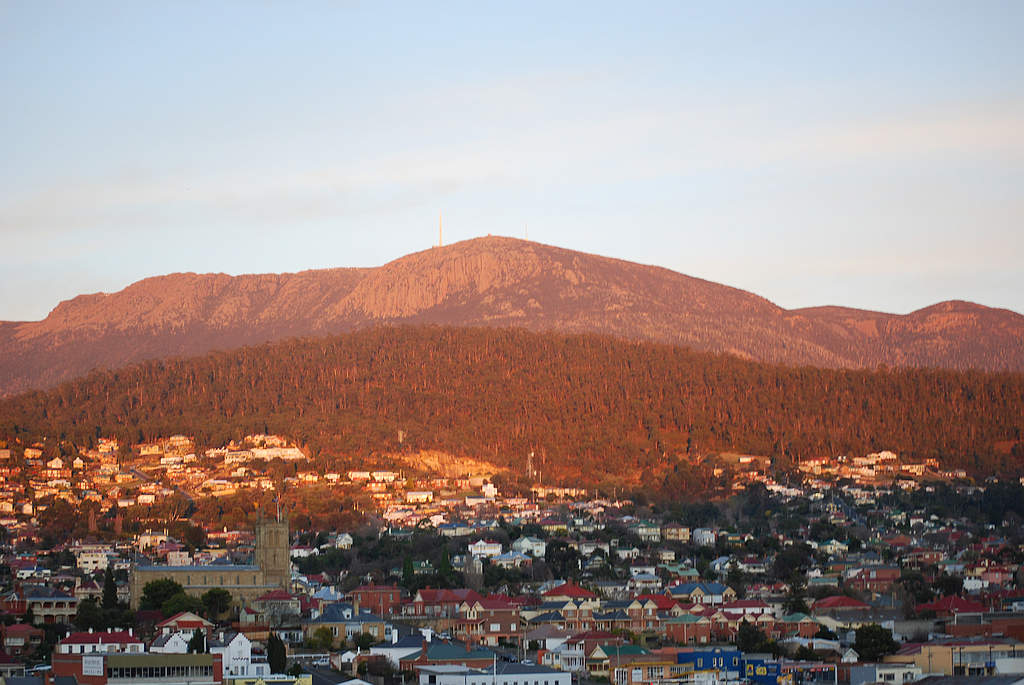
The latest move in the game to privatise national parks and reserves across the country occurred on Tuesday this week (27 July) as the Hobart City Council met to vote on the proposal by the Mount Wellington Cableway Company (MWCC).
The proposal was for a cable car, a private road to be bulldozed through threatened forest, a large base station and carpark, three massive towers (the third hanging off the top of the Organ Pipes like a monstrous alien insect) and a large restaurant/whisky bar/café/visitor centre/viewing platforms to be sited on a beautiful terrace of alpine vegetation at the Pinnacle. The alpine garden set in dolerite boulder fields atop the Organ Pipes was to be ripped, blasted and excavated to make way for the tourist building extravaganza and tower.
The vote was the climax of several years of an intense and often divisive campaign by the proponent and opponents in Hobart. The proponent never really came to grips with the fact that there was so much local fervent appreciation for kunanyi/Mt Wellington just as it is, without the trappings of touristic attractions like a cable car and all its infrastructure.
There was little real consultation with the locals, especially those who were right on the front-line to be affected the most.
‘Just build it!’ shrieked the MWCC groupies and trolls who could see only the fairground-fun aspects of riding in an aerial bus large enough to hold eighty people standing, to take them to the Pinnacle where they could do all the things that they could do anywhere in the city or the suburbs – drink and eat (and look at the view if the restaurant was not shrouded in cloud).
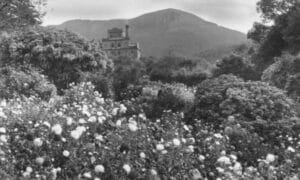
Many locals, including the large rally at the Cascades Gardens, saw this attitude as arrogance.
So the vote was taken and nine Hobart City councillors voted to accept the recommendations by the independent, expert planners who were commissioned to assess the Development Application; three voted to reject the advice. One of these was Councillor Will Coats, the HCC’s representative or ‘deputy’ on the Mount Wellington Park Management Trust. The others were Simon Behrakis and Marti Zucco.
I understand why Behrakis and Zucco voted the way they did. They have consistently been pro-development. Councillor Coats’s vote bothers me though. I think he breached his responsibility, as the HCC’s representative on the Mount Wellington Trust, to uphold the Purposes and Values of the Mount Wellington Management Plan which was developed by the Trust.
The Plan states: “[t]he Trust’s primary role is to provide a co-operative and effective management and planning structure, and to ensure the protection and maintenance of the values for which the Park is reserved”. (My italics.)
The Plan contains just about everything that must be observed in that protection and maintenance of values. Any development – whether it be track upgrades, a signpost, a toilet block or a cable car, restaurant, gift shop, or large towers with cables strung across the hunting field of wedge-tailed eagles – has to be assessed according to how it meets the values and purposes of the park and how the activity is classified.
I wrote to Councillor Coats expressing my disappointment that as a deputy member of the Mt Wellington Park Management Trust, he voted to reject the considered advice of the independent and expert planning committee. I would expect that he, because of his position with the Trust, would defend the purposes and values of Mt Wellington Park and recognise the inherent damage that the proposed development would inflict upon kunanyi/Mt Wellington.
His reply was interesting. In it he stated that the cable car is an allowable activity on kunanyi/Mt Wellington, yet if you were to read the Plan it is clearly defined as a discretionary activity. As such it is subject to the Requirements outlined in Chapter 8 of the Plan. The expert planning committee assessed the proposal accordingly and found it did not meet the Requirements – on 21 separate grounds it failed to meet the Requirements of the Plan or the Planning Scheme. Will Coats should have accepted their assessment, both as a councillor with a duty to the council as landowner and as a Trust member with an obligation to uphold the Purposes, Values etc of the Plan.
So what is happening here? The answer, I think, lies in a national trend to privatise our public places, especially our much-loved, treasured spaces, the parks and reserves that have been in the public domain for a long, long time. Queensland, NSW, Kangaroo Island (South Australia) and, under the Hodgman and Gutwein governments, Tasmania – all are feeling the bite of hungry developers wanting a slice of our precious national parks and reserves and our governments are actively facilitating this action.
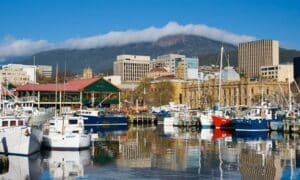
kunanyi/Mt Wellington, the loved back-yard to the cities of Hobart and Glenorchy which nestle in its foothills, is therefore seen as simply prime real estate to be exploited, called ‘regional development’, for private gain.
The long game seems to have been if private development on kunanyi/Mt Wellington could be pulled off successfully after nine years of carefully amending relevant acts and the specific management plan, then what a showcase it would be for the rest of the state.
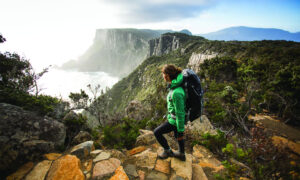
The Three Capes Track development came first of course and was hailed as a triumph of private enterprise gaining access to national park and reserve land but at what cost. Lake Malbena and a rash of other potential developments are threatening to turn the Tasmanian Wilderness World Heritage Area into a mosaic of privately leased tourist developments. The South Coast Track, one that many would never believe would be touted for such development, is up for a string of private luxury huts. And so it goes.
Our beautiful, quiet, wild places are under siege. As a community we are under siege. We depend upon those who are given statutory roles and responsibilities to protect and defend these places to do their jobs.
Denise Brown is a graduate of the University of Tasmania with a PhD and a career that includes twenty-odd years in public administration. Having travelled extensively and also lived and worked overseas, she has witnessed the devastating impact of mass tourism upon cultural and natural heritage.in public administration.