A $11bn digital dividend is the economic uplift Tasmania could unlock by fast-tracking investments in next-generation ‘software as a service’.
The projection is based on an economic analysis released today which quantifies for the very first time the economic benefits of accelerating Australia’s digital transformation over the next decade.
Tasmania’s GSP could also grow an additional 2.5% by eliminating spending on redundant technology.
The report – prepared by IBRS and Insight Economics – identifies and quantifies an $11bn benefit if the public and private sectors embrace new innovations and replace redundant IT platforms with next-gen software as a service (SaaS) technology.
The economic predictions concord with the aims of the government’s ‘Digital Future for Tasmania’ strategy which encourages government agencies adopt a ‘cloud first’ approach to new services.
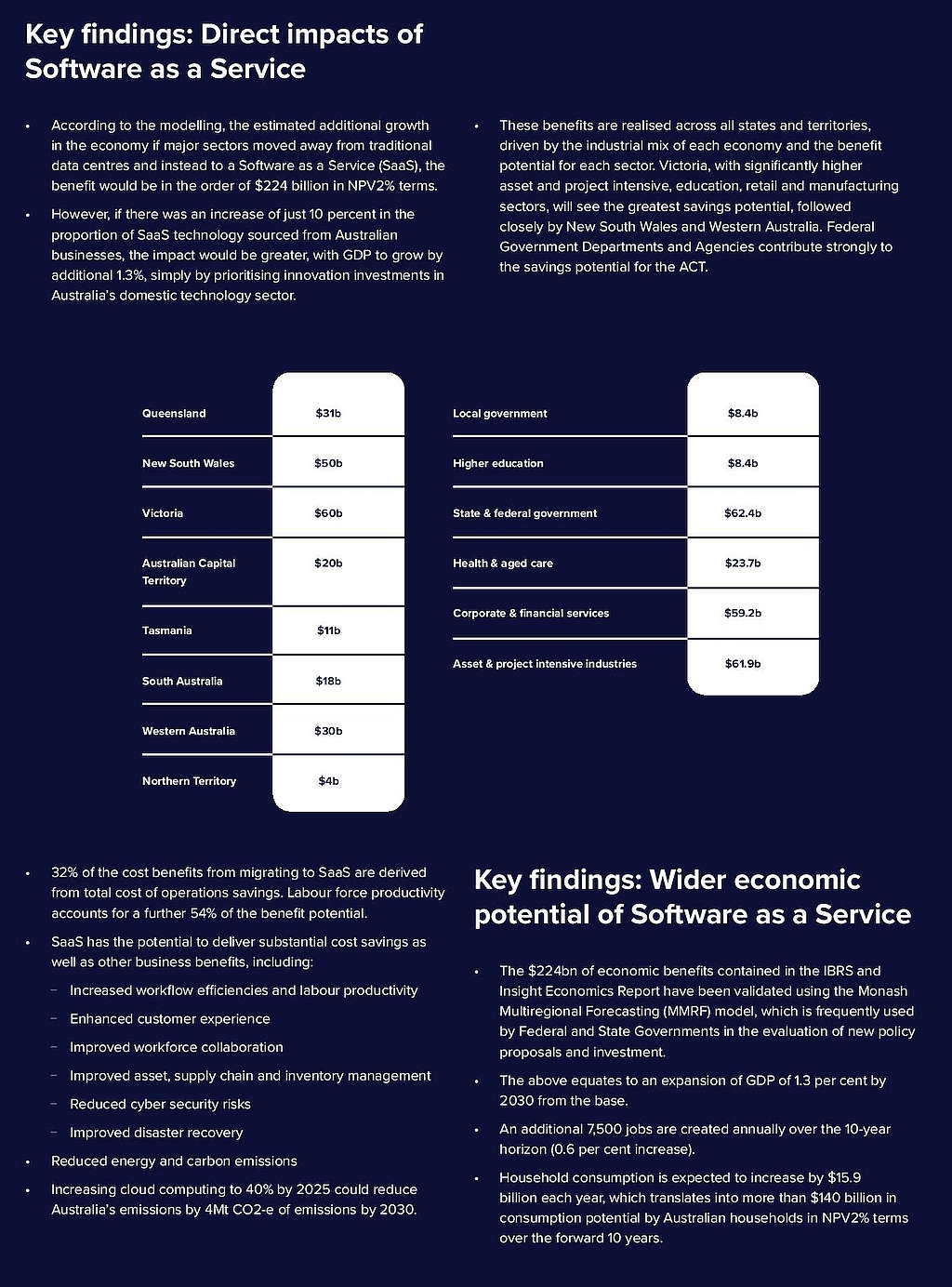
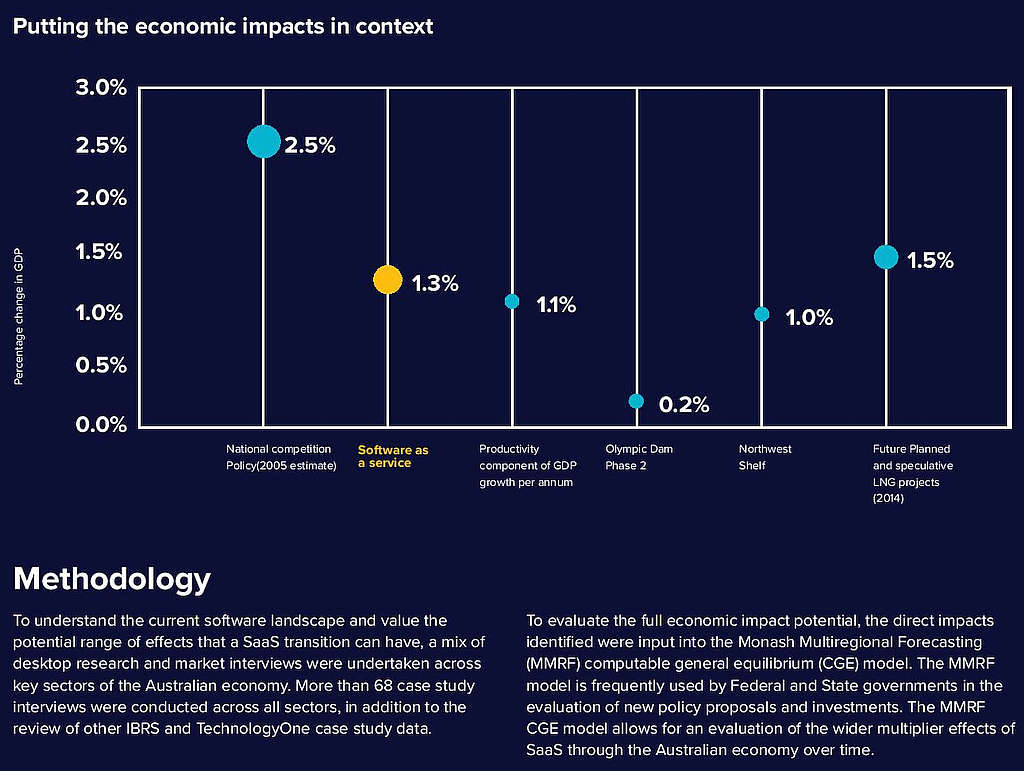
Nationally, the economic opportunity of fast-tracking this digital transformation is $224bn over a decade, growing Australian GDP by 1.3%.
Every year more than $70bn of the $98bn spent in Australia on software is directed towards legacy on-premise platforms, a cost to the economy that also has a detrimental environmental impact through higher emissions.
Future digital transformation will likely be driven by SaaS, which drives substantial cost savings from eliminating the cost of software ownership, along with productivity benefits realised by the automation, scalability and security of SaaS.
According to the The Economic Impact of SaaS report, the economic benefits of accelerating cloud technology investments and innovation will be felt nation-wide. Victoria’s economy will receive a $60bn economic benefit over a decade, followed by New South Wales ($50bn), Queensland ($31bn), West Australia ($30bn), ACT ($20bn), South Australia ($18bn), Tasmania ($11bn) and the Northern Territory ($4bn).
The reports was sponsored by SaaS company TechnologyOne, who claim the $11bn digital dividend for government and business ‘is simply too big to ignore’.
“With the research quantifying the economic benefits for the first time, it should spur action at every boardroom and for governments at all levels in Tasmania around how they think about their technology priorities,” said TechnologyOne CEO Mr Edward Chung.
“While this transformation is already underway for many in Australia, for some it’s still happening too slow.
“As a nation, we have a choice. We can continue to waste money on redundant on-premise technology, or we can fast-track the digital transition to SaaS where a $224bn economic windfall can be reinvested back into Australia.”
“The reinvestment of these funds could transform the lives of Australians for generations.”
The report suggests household wealth would be further accelerated by $9.7 billion if Australian providers secured just 10% more of available contracts. Currently, 85% of all SaaS sales go to foreign entities, coming at the expense of local jobs, local taxes and the local Australian technology industry.
“The research also clearly highlights the substantial costs savings and other business benefits of SaaS including increased productivity, an enhanced customer experience and reduced cyber security risks,” said Chung. “We also know SaaS will reduce Australia’s carbon footprint and is one of the most efficient and rapid pathways of achieving net zero.”
The $224bn of economic benefits contained in the report have been validated using the Monash Multiregional Forecasting (MMRF) model, which is frequently used by federal and state governments in the evaluation of new policy proposals and investment
The research is the first detailed analysis to explore the direct savings, productivity impact and broader national interests of SaaS across federal, state and local governments, and large industries including health and aged care, higher education, asset and project intensive, and corporate and financial services.