A point of contention in the directions hearing on 16 June in the Resource Management and Planning Appeal Tribunal with the Northern Midlands Council decision to sell the Campbell Town Hall, was the existence of a report on the Town Hall that the council was keeping secret, even though it was the key document in the first part of the decision of council to sell on 15 March.
The Town Hall document was finally released to the public on 9 July 2021, but the decision to do so had been made in the council meeting of 28 June.
“The Northern Midlands Council at its meeting of 28 June 2021 agreed to release the attached report prepared by Watershed Solutions regarding the future of the Campbell Town Hall.”
https://www.northernmidlands.tas.gov.au/news/2021/campbell-town-hall-report
Campbell Town Hall Review Anastasia Bonython from Watershed Solutions
https://www.northernmidlands.tas.gov.au/source-assets/images/Campbell-Town-Hall-Review_-Final-Report.pdf
Why did the council delay acting on their decision by nearly two weeks?
One can note that the release date of 9 July fell after the due by date for any addition to the grounds of appeal in the tribunal.
An additional problem with the document is in the legislation that the tribunal works under, where only matters relating to the final decision of the council can be considered, which was at the meeting of 17 May.
This is not a problem when dealing with normal tribunal business of development applications, where all information and documents come together for a council decision.
The decision to sell public property, such as the Campbell Town Hall, is a two part process, and with a history of events leading up to the final decision.
Is this a failure in the legislation concerning public property?
Faced with a tribunal hearing with police tape limiting the area of evidence, is a situation like falling down a rabbit hole into a legal wonderland, where the appellant is left wondering what can be said, and what can’t be seen.
This is a living nightmare, where costs can be awarded against anyone appealing.
I have previously suggested to the Registrar, that as the appellants are in handcuffs in the tribunal, should the minister be approached about fixing this faulty legislation, so a fair trial of the Campbell Town Hall can proceed.
The present situation creates a fantasy tribunal hearing, better set in Alice in Wonderland, curiouser and curiouser.
So, even though we now have the key document that the council used in the decision process to sell the Town Hall, because it was part of the first part of the decision, which was held in closed meeting, we have no idea how much of the document can be used in the appeal, not being part of the final decision.
Will the Tasmanian government fix this hole in the legislation, if the sale of public land is going to be dealt with as an appeal in the tribunal?
When looking through the document, no mention of the COVID-19 pandemic was made, even though this tragic global and historic event is having a major impact on the commercial viability of the Town Hall, with the normally permitted capacity of 300 people attending, being reduced to 78.
This limit makes it tough work organising an event in the Town Hall, especially when many meetings are now held over the internet with video applications, and many people have been fearful about attending large gatherings in closed venues like the Town Hall.
The Watershed Solutions document explores how the right decision with the Town Hall has the potential to inspire confidence in a whole region with arts, and adventure tourism in a land drenched in history and humming with agriculture.
After holding a community meeting in the Town Hall on 6 June, I came to see that there was potential for a new civic and cultural centre on public land next to the Town Hall, which would include the hall.
This bolder approach is not considered in the document, but I suggest would be the ideal way to meet all the hopes expressed in that report.
The new building could include a larger smarter office for Service Tasmania, now in the Town Hall, a larger brighter library, now located next to the Town Hall, and an excellent space for the Campbell Town Museum, now split up between three unconnected rooms in the Town Hall.
The report notes: “…the nature of the museum and gallery spaces are poorly aligned to the needs of visitors and despite the efforts of a committed volunteer group, the space available is inadequate to create an engaging and changing experience. It was noted that the current format of display and interaction with visitors would not encourage repeat visitation.”
So, there is a clear need for a new and proper gallery space for the museum.
The Visitor Information Centre might remain in the Town Hall, and include the sale of books and souvenirs.
The fire brigade would need to be moved to a new location, with a building that may better fit their needs, just as the ambulance service was moved in recent times in Campbell Town.
The new building could also include a cafe and public art gallery, with a passage to the Town Hall, allowing access to the cafe and new toilets, as the report notes how the Town Hall facilities do not meet modern standards.
Success with financial support and grants from the Tasmanian and Australian governments would deliver the level of funding needed to create the new civic and cultural centre, as well as cover the cost of improving and maintaining the Town Hall, where theatrical productions could be staged, film nights held, functions had, exhibitions staged, and meetings hosted, with access to the café and better toilets.
The café would be in position to serve functions and events in the Town Hall.
Where the new multi-purpose function centre at the sports ground, described by councillors as the new Town Hall, has limits, the new civic and cultural centre, with the Town Hall, could expect to brim with activity daily and nightly.
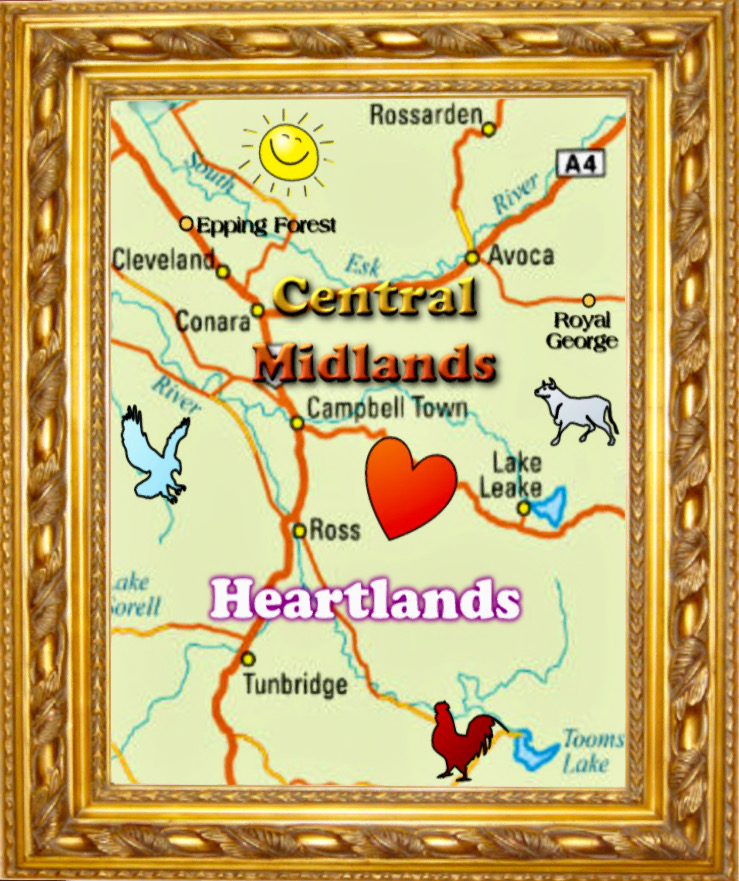
Where the report calls for a project that will lift the commercial environment of Campbell Town, and boost the confidence of the region, the proposed new civic and cultural centre would become the hub of the wheel that hums for the communities of the central Midlands, which includes Tunbridge, Ross, Campbell Town, Lake Leake, Conara, Avoca, Rossarden, Royal George, Cleveland and Epping Forest.
Inspired by the new vision for a civic and cultural centre, people would have the confidence to engage in the care and management of the Town Hall, a distinct problem raised in the report.
Since 2015 I have been calling for a footpath and cycle way between Ross and Campbell Town, which could be like the one between Oatlands and Parattah.
From the new civic and cultural centre at the Campbell Town Hall, footpaths and cycle ways could in time fan out across the whole region, opening a new form of adventure tourism among the farms, suggested in the report, which could connect with a footpath and cycle way network across Tasmania.
When residents see people passing by their residence and farm on foot and by cycle, some would be inspired to open a cafe, gallery or accommodation, to catch the passing trade.
A regional vision for the Campbell Town Hall would create a whole new vision for the central Midlands, an approach explored in the document.
This future will not be delivered out of a tribunal hearing, but will rise from the actions of citizens who decide that this will work for them.
In the coming days and weeks I will be taking this vision for the central Midlands, to the towns, residents and businesses of the region, beginning with Campbell Town.
We are also launching a Facebook page for the central Midlands, the heartlands of Tasmania:
https://www.facebook.com/Heartlands-of-Tasmania-112302834449210
I am keen to hear, from the heart, what the residents of the region believe will work best for the heartlands of Tasmania.
Kim Peart is a long-time resident of Ross, a writer, a keen aficionado of Second Life, and the founder of Space Pioneers.
KIM PEART: Call to Suspend Tribunal Hearing on Council Sale of Campbell Town Hall.
KIM PEART: Heartlands Need a Tasmanian Rural and Regional Art Gallery.