Wine
Apogee by Name and by Nature

When Andrew Pirie left home in search of a green field site from which to produce wine with distinctly European characters, few of his university peers could have anticipated a career-defining move to northern Tasmania would follow a year later.
It wasn’t something the Sydneysider with a Masters Degree in Agriculture had given much thought to either, back in 1972.
“I’d toured Europe the year before and then again in early 1972, looking at how vines work in different climates,” he recalls.
“I came down here for a bit of a look around. It wasn’t just because Tassie had a cool maritime climate. When I looked at the data available at the time, I found temperature, humidity, evaporation and a whole lot of other measures lined up with many of the French regions I’d visited.
“No-one knew quite how important those figures were at the time. I can remember having a gut feeling they might be important, but these were still early days for cool climate viticulture in Australia.”
Now, almost 50 years later, you don’t have to look too far beyond the front gate of Lebrina’s Apogee Vineyard to see that this industry pioneer not only has a good nose and palate for wine, he has a head for numbers as well.

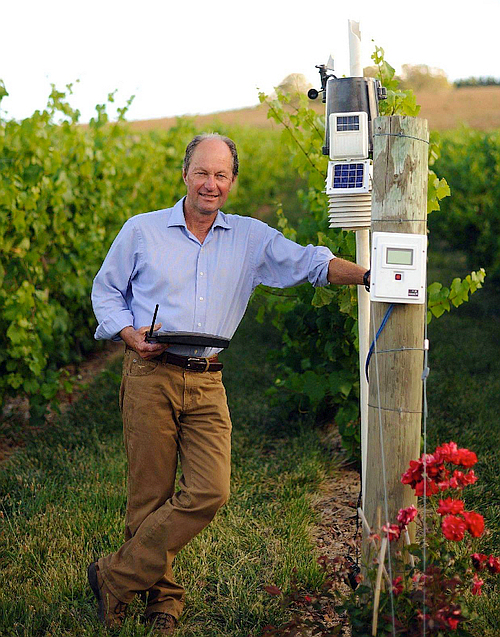
Checking the weather data. Image supplied.
The 2ha vineyard is equipped with a state-of-the-art weather station and wireless substation that measure and log no less than 23 different environmental factors. Many of these can significantly impact vines being grown on the site. Records are updated every five minutes and can be readily accessed anywhere on the planet via cloud computing.
Measures of temperature, humidity and barometric pressure provide Pirie with the broad-brush strokes that help define his sparkling wine artistry. Finer details are managed via enhanced understanding of heating and cooling degree days, leaf canopy temperature, rainfall rate, leaf wetness, wind chill, solar energy and solar radiation.
“The records are constantly being created and refreshed,” Pirie explains.
“When you look at the quality of the data that’s being maintained, it’s possible to see the critical moments that define a season and a vintage. They certainly make you aware of the small changes that take place in the environment around you. To some extent, it’s a bit of unfinished business that dates back to the research I undertook for my PhD back in the 1970s.
“The climatology of the day was pretty crude by today’s standards. Our hope was that if we could establish a vineyard here in Tassie that was climatically similar to Burgundy and Champagne, then we might expect to get similar results in terms of fruit and wine quality.
“According to the data we’ve collected over the years, our average growing season temperature (GST) is 14.5°C, which puts us at about the middle of the temperature range for Champagne.
I’m able to ripen fruit to sparkling wine maturity somewhere around the first week in April. That confirms us as a high-quality sparkling wine site.”
The warm, dry conditions of the 2017-2018 growing seasons brought Apogee’s picking dates forward to mid-March. What’s so remarkable in the resulting wine is its combination of power, elegance and ultra-refined grape tannin. Pirie attributes the latter to a vineyard climate that is fundamentally cool-humid rather than cool-dry.
Time surely flies in the rarefied atmosphere of this pocket handkerchief vineyard.
The former Pipers Brook Vineyard founder and CEO of Tamar Ridge has just released his seventh vintage of Apogee Deluxe Vintage Rosé from the Lebrina property. Not only does this prestige sparkling from the outstanding 2018 vintage look good on paper, it’s a world-class wine of tremendous stature and breeding.
Equally important, this carefully crafted blend of Pinot Noir (76%), Chardonnay (19%) and Pinot Meunier (5%) has a promising future for anyone willing to part with $450 to purchase six bottles of one of Tasmania’s finest sparkling Rosés.

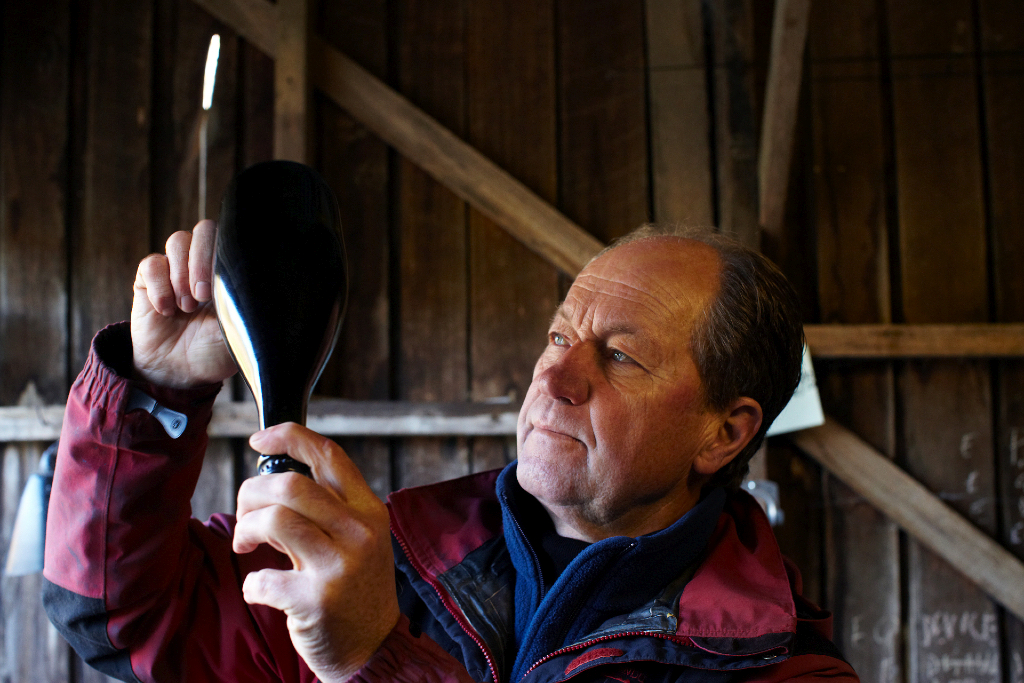
Disgorging Apogee sparkling wine. Image courtesy Wine Australia.
Pirie’s track record to date is no form guide for mug punters.
The vineyard’s previous Deluxe Vintage Rosé from the 2016 vintage was named Sparkling Rosé of the Year 2020 by Champagne and sparkling wine expert, Tyson Stelzer.
“Piper’s River is my favourite zone for sparkling winemaking outside Champagne,” he observed in his critical acclaim of that 2016 wine.
“Rosé is its finest expression, and Andrew Pirie is due more credit more establishing its vineyards than any other. In ripening time and humidity, he compares his little vineyard in Lebrina to the lauded Champagne Grand Cru village of Aÿ. It’s no surprise that Pinot Noir is the hero here.”
Pirie’s measured and methodical approach to growing his three Champagne varieties is also reflected in Apogee’s unique vineyard trellising system. It’s something he devised himself prior to planting the site in 2007.

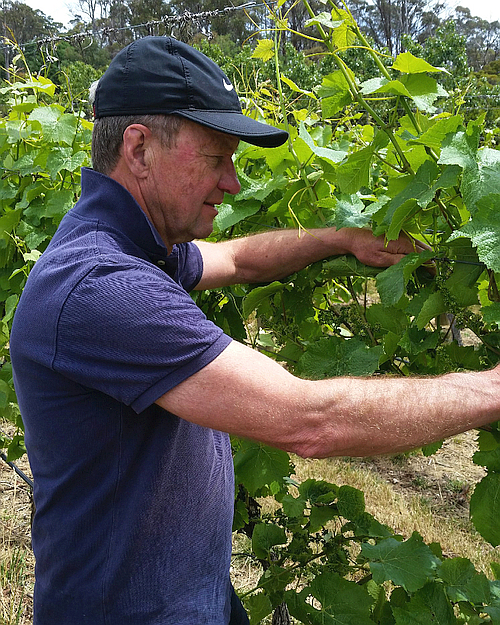
Checking fruit set on the high trellises. Image supplied.
In essence, it blends some traditional vineyard practices of the Old World with the more analytical and innovative methods developed in the New World during the 1980s.
It was Apogee’s astute design and management right from the start that helped it win the Royal Agricultural Show Society of Tasmania’s 2013 Tasmanian Vineyard of the Year award.
Standing tall at around 2.2 metres in height, the site’s trellising system appears to define vast walls of vines across the landscape. Closer inspection, however, reveals significant empty spaces between one vine and the next. Their primary goal is to alleviate overcrowding of leaf canopies.
“That allows us to create better air and sunlight penetration, ensuring our fruit remains relatively free from disease risk,” Pirie explains.
“We then run a very simple vineyard spray regime, highlighting the fact that when you do the necessary work in the vineyard you don’t need the big technology of larger vineyards to maintain fruit and vine health. When you’re small, you don’t have the scale and opportunities to reduce costs.
“I think it’s no coincidence the average Champagne vineyard is around 2ha. That’s a very realistic response to the kind of intensive, hands on work that systems like this require.
And when you look around Tasmania, you can see plenty of opportunities for the establishment of similar profitable 2ha vineyards.
“That’s a good prospect for the industry’s future.”
Featured image above: Winemaker Andrew Pirie with his unique trellis system. Image courtesy Mark Smith.
ADVERTISEMENT – ADVERTISEMENT – ADVERTISEMENT


Hobart’s Mark Smith wrote his first weekly wine column back in 1994. Now more than 1700 features and 25 years later, he continues to chart the successes of Tasmania’s small scale, cool climate wine industry with regular contributions to some of Australia’s leading industry publications.
PICK OF THE CROP
Mark gives you his honest opinions about the best wines available right now from Tasmania’s wine makers.
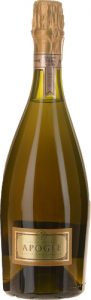

2018 Apogee Deluxe Vintage Rosé $86
Dr Andrew Pirie’s glittering sparkling wine career began with the 1995 Pirie Vintage two decades ago. When the 1996 followed suit, one UK critic described it as the ‘greatest sparkling wine made outside Champagne.’ History may need to be re-written for this superb release. The wine combines power and intensity with welcome restraint. Many will love its engaging aromas of red apple, watermelon and forest sassafras. Others will admire the complex, lees-derived secondary notes that reveal time and an artist at work. But it’s the fullness of ripe Pinot that really steals the show. This is an act of generosity, devoid of bitterness. Citrussy Chardonnay completes the performance in ways that only cool climate viticulture can provide. Encore. www.apogeetasmania.com
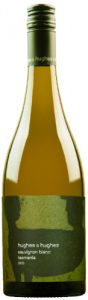

2020 Hughes & Hughes Sauvignon Blanc $30
As a former Young Gun of Wine Best New Act and Best New Winery in the Halliday Wine Companion, Jonny Hughes and Mewstone Wines are proving forces to be reckoned with in the cool D’Entrecasteaux Channel. Their stylish, drink-soon Hughes & Hughes products are fashioned from purchased fruit resources and typically provide good value. This ripe, full-flavoured Sauvignon comes from two sites in the warm, dry Coal River Valley and actually defies fashion. Forget green and weedy Marlborough look-alikes. It’s a very attractive wine, with tropical, passionfruit and citrus characters supported by pleasing texture and lingering natural acidity. Good stuff. www.mewstonewines.com.au
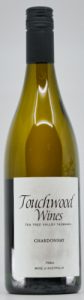

2019 Touchwood Wines Chardonnay $25
The Coal River Valley outside Hobart has been the source of high-quality Chardonnay since Tolpuddle Vineyard was established there some three decades ago. Bright summer days and chilly overnight temperatures lay foundations for rich, flavoursome, barrel-fermented wines. This release comes from Tea Tree near Brighton and bears the thumbprints of industry newcomer George Drew. Pale in colour, the wine possesses abundant power and intensity. Ripe melon and smoked ham characters are subtle but distinctive, with accompanying savoury notes and neatly integrated French oak, making it very food friendly. It provides good, palate-cleansing drinking with roasted pork loin. Excellent value. Website not available. Phone 0447 681528.


2018 Velo Premium Pinot Noir $40
Velo Wines at Legana Estate outside Launceston is home to some of the oldest vines in northern Tasmania. First planted by the Curtis and Wiltshire families in 1966, the vineyard enjoys superb exposure, with sunlight lasting well into the afternoon, thanks its proximity to the Tamar River. This current release comes from the property’s oldest Pinot Noir and showcases the region’s high-toned cherry plum and red berry fruits. Some cola and raspberry notes add vibrancy, ensuring it will be a real crowd-pleaser around the dinner table. Oak is sensitively handled. Drink now with BBQ quail and charcuterie or cellar short-term. www.velowines.com.au
ADVERTISEMENT – ADVERTISEMENT – ADVERTISEMENT

