
Caretaker Convention: State Election 2021
By convention, during the period preceding a general election for the House of Assembly, the government assumes a ‘caretaker role’.
The caretaker period recognises that:
- With the expiration or dissolution of the House of Assembly, Executive Government cannot be held accountable for its decisions in the normal manner; and
- Every general election carries the possibility of a change of government.
In general terms, the caretaker period begins at the time the House of Assembly is dissolved or expires and continues until the election result is clear or, if there is a change of government, until the new government is appointed.
At the time of the dissolution or expiry of the House of Assembly, the Premier will write to Ministers advising them of their role as the caretaker government and providing them with a copy of these Guidelines.
The Secretary, Department of Premier and Cabinet, will write to all Tasmanian Heads of Agency advising them of the commencement of the caretaker period and that the caretaker conventions are to apply to all agency activities.
A letter will also be sent to all Government Business Enterprises and State Owned Companies advising them of their obligations during the caretaker period.
While government business continues, as it applies to ordinary matters of administration, the caretaker conventions do affect some aspects of Executive Government. In summary, the conventions are that the Government avoids: • making major policy decisions that are likely to commit an incoming government or limit its freedom to act; • making or renewing significant appointments; and • entering into major contracts or agreements.
There are also established conventions and practices associated with the caretaker conventions that are directed at:
- protecting the apolitical nature of the State Service;
- preventing controversies about the role and work of the State Service during an election campaign; and
- avoiding the use of government resources in a manner to advantage a particular party.
These Guidelines are intended to explain the conventions and practices in more detail and to provide guidance for the handling of business during the caretaker period. The conventions are neither legally binding nor hard and fast rules. Their application in individual cases requires sound judgment and common sense.
The Guidelines in this document apply to all Tasmanian Government Ministers, Ministerial staff and all employees and officers of Tasmanian State Service agencies.
The relationship between Ministers and bodies that are not agencies under the State Service Act 2000, such as, Government Business Enterprises and state-owned companies, varies from body to body. However, those bodies should observe the caretaker conventions and practices unless doing so would conflict with their legal obligations or compelling commercial/organisational requirements.
The Secretary, Department of Premier and Cabinet, will write to the heads of these bodies advising them of the guidelines and the commencement of the caretaker period and that the caretaker conventions apply to their organisation.
Given the election was called on 26 March and the letter from the Ministerial delegate on proposed decommissioning was dated 30 March how can this be so?
Is the Government not in a caretaker mode and the decision by the Ministerial delegate a breach of political protocols?
Do we have a Government in denial?
John Powell was Born in Rushworth Victoria; educated at Dandenong High School and Monash University; National Service during the Vietnam War; employed in oil/gas, water, and the resources sectors; proud Celt; protector of environment and Aboriginal heritages; stubborn and resolute.
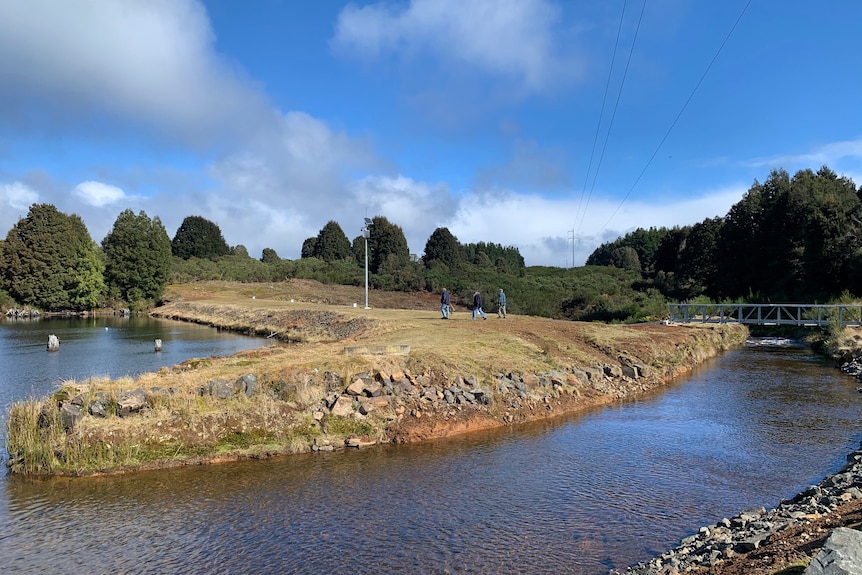
Residents have been fighting for several years to save the local waterway.(ABC News: Jessica Moran).
ABC: Waratah residents in last-ditch bid to save dam to shore up tourism recovery.
Waratah in Tasmania’s north-west is an unassuming and quaint town with a reputation for some of the state’s coldest and wettest days.
But it’s a chilly wind of discontent that has gripped the town in recent years.
Waratah was once home to Tasmania’s biggest tin mine, Mount Bischoff, but these days the town relies on the tourist dollar. On one side of the main street is the beautiful Waratah Falls, while a handful of small businesses and original mining cottages line the other.
The local dam is another feature drawing in visitors.
The town is a popular spot for those wanting to get away from the hustle and bustle, with the Waratah Dam typically featuring on people’s list of sites to see.
But that could soon change, with TasWater’s recent application for a permit to decommission the dam approved.
…