Wine
Hooked on Tasmania
Our regular wine columnist Mark Smith does his best to demystify Pinot Gris.


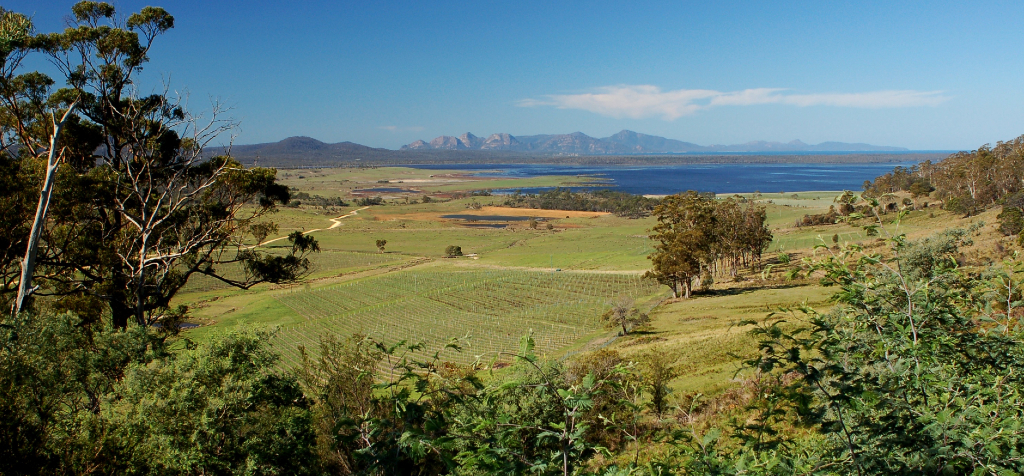
Vineyard developments, east coast Tasmania. Image courtesy Mark Smith.
When Huon Hooke joined the 1992 judging panel of what was then the Tasmanian Regional Wine Show, change was in the air.
Less than a month earlier, Paul Keating had dislodged Bob Hawke from the nation’s top job in Canberra. Liberal leader Ray Groom would soon take over from Labor’s Michael Field as Premier of Tasmania. Some of our most fundamental institutions were being re-evaluated.
The Sydney-based journalist arrived to lend support to the chairman of judges, James Halliday. The Coldstream Hills winemaker and critic had been the arbiter of good taste at the 1991 event. He spent less than two hours deciding medal winners in that inaugural show. From among the 43 wines exhibited, Halliday had deemed the 1989 GlenAyr Cabernet Sauvignon its Best Dry Red Table Wine.
Mere mention of the noble Bordeaux grape evokes memories of another era, Hooke says.

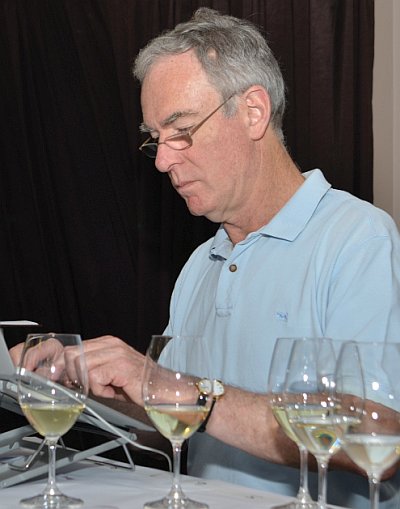
Huon Hooke in judging mode. Image courtesy Mark Smith.
“GlenAyr has always been a really good site in Tasmania, but of course in those days it was largely planted with what was fashionable on the mainland, rather than what was best suited to the site and the state’s cool climate,” he explains.
“That was often the case with vineyards established in the 1970s and 1980s.”
Back in 1989, when that inaugural trophy winner was first being picked by the Casimaty family, Cabernet Sauvignon was indeed king in Tasmania. Official Department of Primary Industry records indicate 170 tonnes of the variety topped its vintage tally sheets. Next came a red grape few consumers knew much about, Pinot Noir. That produced 124 tonnes in 1989, with Riesling (78 tonnes) and Chardonnay (75 tonnes) being the other varieties of significance in the state.
Hooke recalls his first year of judging uncovering a Pinot Noir of gold medal standard. There hadn’t been one at the previous show. Cabernet Sauvignon still had a flagship wine in 1992, in the form of the trophy-winning 1990 Panorama. But the noble variety was already under threat. Relbia’s 1991 Sharman Glenbothy Pinot Noir impressed the panel such much it was awarded trophies for Best Pinot Noir and Best Wine in Show.
“Three decades later, the most planted variety in Tasmania is Pinot Noir, accounting for around 44 percent of the State’s 2000 or so hectares of vineyard area,” Hooke notes.
“Chardonnay is next line, with around 27 percent of Tasmanian vineyards having established it, along with Pinot Noir, as a dual-purpose variety. They are not only entirely suited to the state’s cool climate wine industry, they’re also responsible for its world-class sparkling wines. That was something considered inconceivable when I first took on my role at the 1992 Show.”
Hooke has relished his long association with the event that has since grown to become one of the most significant regional wine shows anywhere in the country.
Sadly, due to travel concerns arising from the coronavirus pandemic, the outgoing chair of judges was unable to take part in his final show a fortnight ago.

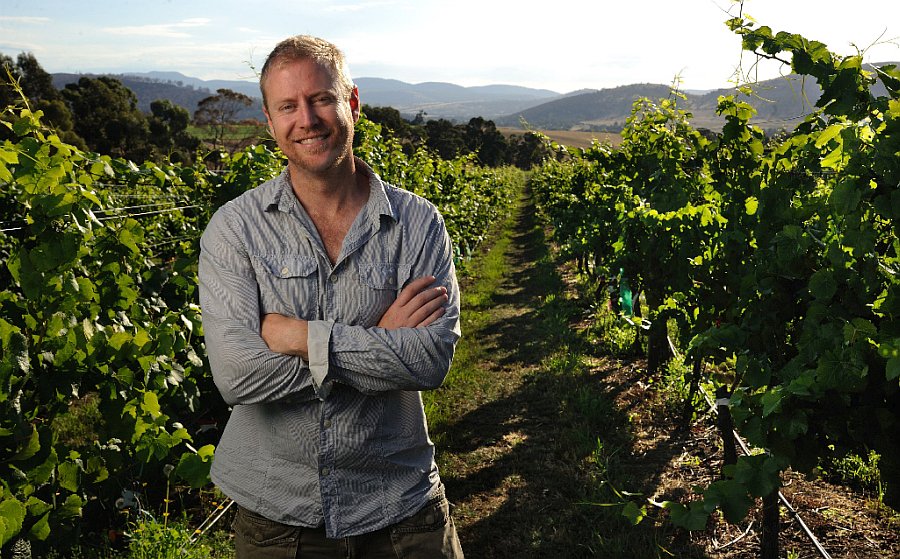
New judge outstanding in his field. Image courtesy Tolpuddle Vineyard.
Instead, a small contingent of suitably experienced local winemakers were enlisted to support new panel chair, Adam Wadewitz. South Australian winemaker Natalie Cleghorn also played a key role as senior judge.
During almost 30 years of involvement, including eight years as chair of judges, Hooke says he has been witness to significant growth and change in the state’s cool climate wine industry.
In addition to seeing an increasing number of large vineyard developments –including those of Hill-Smith Family Vineyards, Brown Family Wine Group, and Fogarty Wine Group – Hooke has been greatly encouraged by the skill and professionalism of a new generation of winemakers in Tasmania.
“There’s no doubting the contributions made by industry pioneers like Dr Andrew Pirie – and by trained professionals like Andrew Hood who were just getting underway in the early 1990s – but wine quality has been improving in leaps and bounds during the last decade or so,” he adds.
The local industry also boasts more than 2000 FTE workers and contributes around $150 million to the Tasmanian economy each year through employment, wine sales and wine-related tourism.
But not everything is perfect, of course.

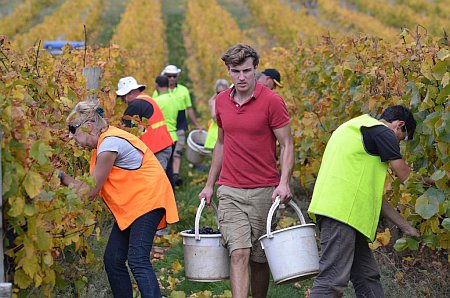
Pinot Noir harvest, Pipers Brook Vineyard. Image courtesy Mark Smith.
“For most of the time I’ve been going to Tassie, Riesling has been the stand-out variety,” Hooke observes.
“Even when people ask me now what is the best variety for Tasmania, I still say Riesling. It was really the first variety that Tasmania was able to make a big splash with, even before Tassie sparkling wine became big news. It’s still one of Australia’s best varieties, capable of producing beautiful wines in a range of different styles.
“It’s also an age-worthy variety, one that can improve over many, many years. Sadly, its share of wine production in Tasmania is only about 6 percent. Hopefully, one day, more people will wake up to the joys of Tasmanian Riesling.”
Yes, let’s all drink to that.
Visit www.taswineshow.org for all 2021 Tasmanian Wine Show results.
ADVERTISEMENT – ADVERTISEMENT – ADVERTISEMENT

Contributions honoured
The past week saw awards of a different kind being made in Tasmania’s cool climate wine industry. On January 26, Home Hill founders Rosemary and Terry Bennett were announced recipients of Order of Australia Medals in the country’s Australia Day Honours.
The awards were made in recognition of the couple’s ‘service to the wine industry, and to the community.’
Speaking on the ABC’s Tasmanian Country Hour on Tuesday, Rosemary Bennett said the couple were both excited and honoured by the significance of their latest medal win.
“It’s probably going to put a little story out there that if you set yourself up to doing something really well – and you have enthusiasm and foresight to forge ahead – really good things can come to you,” she added.

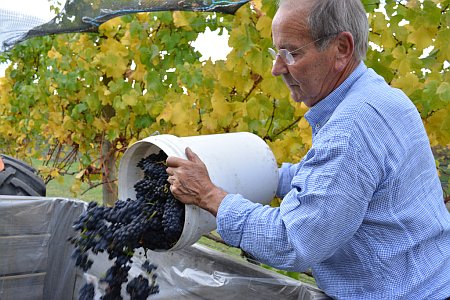
OAM winner Terry Bennett. Image supplied.
The Bennetts’ first moves into viticulture were made in 1992 with the planting of six rows of vines on a former orchard the family owned at Ranelagh.
After first growing apples and then grazing cattle, Terry Bennett says the game-changer had been the success and encouragement of Panorama Vineyard’s Steve Ferencz. The former Hungarian immigrant was a wizard vigneron, battling the elements on a challenging 3ha site at Cradoc, barely 15km from the Bennetts’ home.
Three decades later, Home Hill Winery plays host to 11 hectares of carefully tended vines, along with an attractive vineyard cellar door and function centre. Award-winning sparkling and table wines are made on site.
Home Hill is one of the jewels in the crown of Tasmanian Pinot Noir production. Among the armloads of trophies the small family company has won in national and international competition is Australia’s celebrated Jimmy Watson Trophy. The Bennetts won the coveted silverware for exhibiting the best two-year-old red wine at the 2015 Royal Melbourne Wine Awards.
Once a sleepy hollow, the couple’s Ranelagh hometown has since become the focal point for A Taste of the Huon. It’s an annual celebration of regional food, wine and Tasmanian lifestyle that typically brings 20,000 visitors to the township.
The Bennetts have played key roles in the not-for-profit organisation that has owned and operated the two-day event since it was first held in 1992.

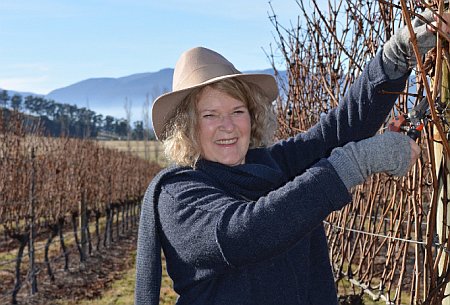
OAM winner Rosemary Bennett. Image supplied.
Sadly, its volunteer committee will be having a little downtime this March, according to committee president Rosemary Bennett. The planned 2021 event was cancelled on January 22.
“Give the unpredictability of COVID-19 and considering the recent outbreaks in other parts of Australia, the safety of our attendees is our number one priority,” she says.
An understandably sad bunch, the Bennetts and their fellow committee members expect to be back in festival mode in 2022.
Hobart’s Mark Smith wrote his first weekly wine column back in 1994. Now more than 1700 features and 25 years later, he continues to chart the successes of Tasmania’s small scale, cool climate wine industry with regular contributions to some of Australia’s leading industry publications.
PICK OF THE CROP
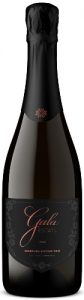

2016 Gala Estate Sparkling Vintage Rosé $65
The year has started well for Cranbrook’s Grainne and Adam Greenhill. Their historic Gala property on the east coast celebrates 200 years of family ownership in 2021. Its vintage sparkling won a gold medal at the Tasmanian Wine Show. This is a beautifully crafted blend of Chardonnay and Pinot Noir, combining age with freshness. Pale salmon in colour, the wine is as easy on the palate as it is on the eye. Its long, refined, creamy palate delivers gentle red berry and pastry notes with subtlety and finesse. Delightful. www.galaestate.com.au
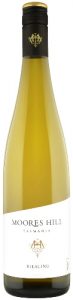

2019 Moores Hill Riesling $35
Winemaker Julian Allport is a dab hand at making modern, stylish Tasmanian Riesling that is both age-worthy and attractive to drink young. The Tamar Valley property has an impressive show record stretching back almost two decades. This gold medal winner is the equal of many of its predecessors. It’s fresh and zingy, with apple and lime/citrus characters that make it the ‘go to’ choice for freshly shucked Tasmanian oysters. Textbook specs, including a neat 11.5% alcohol, suggest there’s easily a decade ahead in the cellar. www.mooreshill.com.au/
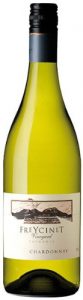

2017 Freycinet Vineyard Chardonnay $40
Freycinet’s 2010 Chardonnay practically stole the show at last year’s event, winning a well-deserved gold medal and trophy in the museum class. It was a Peter Pan example of top Tasmanian Chardonnay and this very attractive release from the 2017 vintage appears to be treading a similar path at the moment. Subtle smoky gunflint and stone fruit aromas introduce a palate that is lightly oaked and creamy. Clear varietal flavours follow, with white nectarine, melon and citrus elements being beautifully sustained; a meeting of nature and sheer artistry. www.freycinetvineyard.com.au
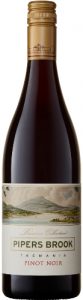
2018 Pipers Brook Reserve Pinot Noir $65
Pipers Brook continued its winning streak of wine show accolades with a pair of trophies at the recent Tasmanian Wine Show. This is the older sibling of that wine and it’s worthy of success in its own right. Sourced from Block A10 on the company’s home turf, it’s a testament to the foresight of Heemskerk pioneer Graham Wiltshire who planted the vines almost half a century ago. Rich, fragrant and wonderfully complex with spice, berry and floral notes, it is a little piece of history with time on its side. www.kreglingerwineestates.com
ADVERTISEMENT – ADVERTISEMENT – ADVERTISEMENT

